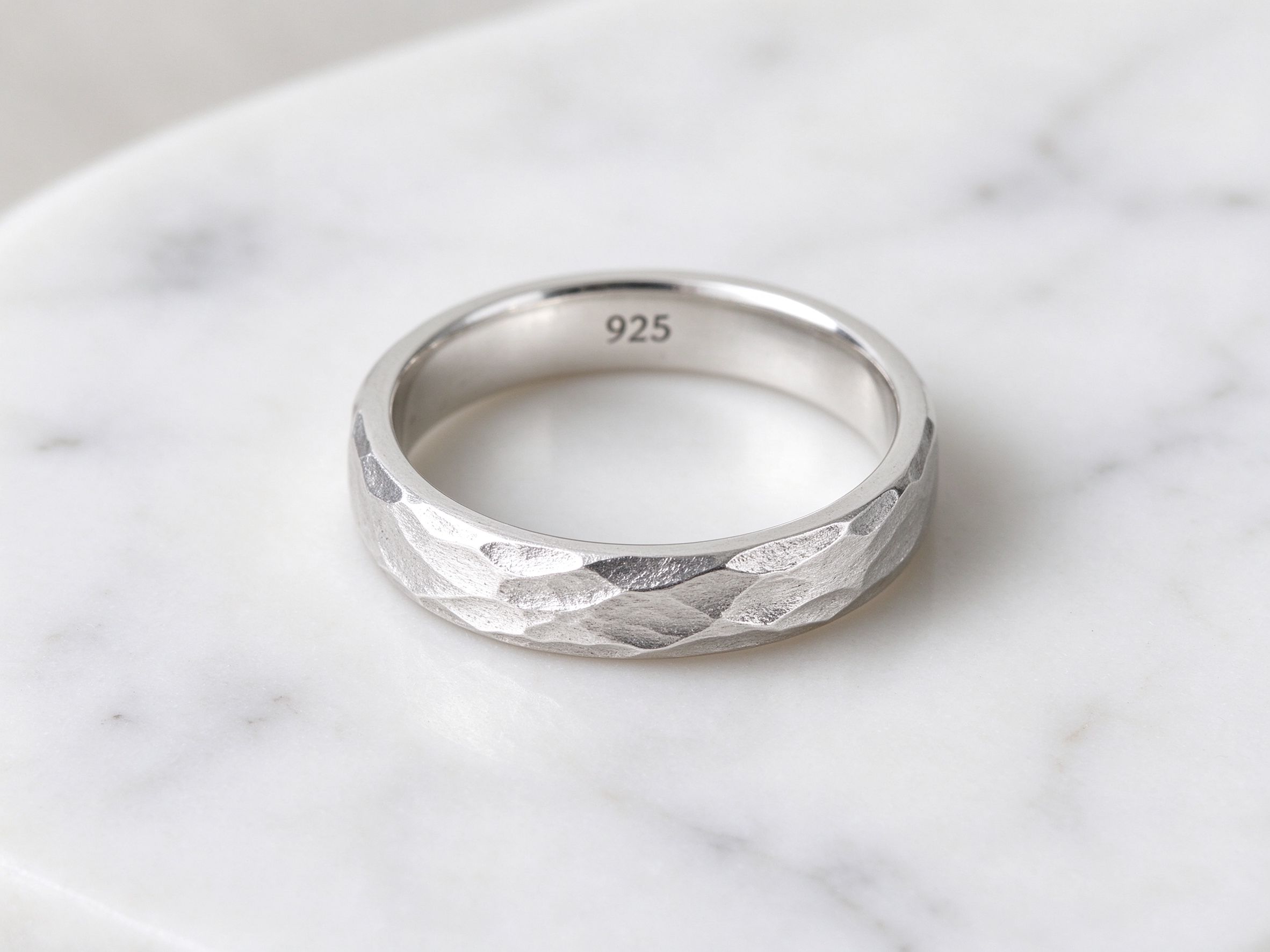
Silver Casting vs Stamping: How Production Method Changes Cost and Design
Two silver rings can both be 925 sterling and yet cost very differently to make. The difference is often the production method: casting or stamping. This guide explains how each works, when a factory chooses one over the other, and what it means for the cost and design of moissanite settings.
How Casting Produces Silver Jewellery
Casting is the process of creating a mould - usually from a wax or 3D-printed pattern - and pouring molten silver into it. Once cooled, the cast piece is cleaned, filed, polished and set. Casting excels at complex, three-dimensional designs: ornate settings, detailed shanks, sculpted forms and pieces with texture. It is the method behind most moissanite engagement settings, because those designs need shape and depth. Casting produces a piece with solid weight and detail, but it involves more finishing labour, because the cast surface needs cleanup after the mould. It is flexible for custom designs, which is why OEM work leans on casting.
Electroplating layers are built in sequence. Copper or nickel underlays may improve adhesion, then the silver layer, then the final rhodium top. Each layer adds cost and time, and the number and thickness of layers is why two silver rings at the same weight can quote at noticeably different prices.
Silver spot prices move, and honest quotes reflect it. We lock pricing for a defined validity window and adjust material surcharges transparently when the metal market swings, rather than hiding the change in a fudged stone price. Buyers who understand this rhythm can time larger orders to favourable windows.
Recycled sterling silver is now standard at scale. Responsible factories source refined recycled silver, which lowers environmental impact without changing the 925 specification. For brands marketing sustainability, recycled alloy is a selling point that costs little extra and is documented in the material certificates we supply.
Weight is a feature, not just a cost. A heftier setting feels premium, holds prongs better and resists bending, but it consumes more silver and more polishing time. Buyers choose the weight tier to match their price point: light for fashion turns, solid for engagement and wedding lines that must last years.
We test alloy samples for hardness and finish response before production, because the same 925 stamp can hide slightly different blends. A consistent alloy means consistent plating and setting behaviour. Buyers who work with us over time learn to trust that each batch matches the last, which is the whole point of verified sterling.
Silver pricing is transparent on our quotes, with the metal component broken out so buyers can follow the market. When silver moves, the adjustment is visible rather than buried. This honesty lets professional buyers plan purchases around favourable windows and avoid the surprise cost spikes that come from opaque pricing.
How Stamping Produces Silver Jewellery
Stamping, or pressing, cuts and forms silver sheet metal between hardened steel dies under a press. It is fast, precise and ideal for simple, flat or symmetrical designs: plain bands, slim stacking rings, simple pendants. Because stamping is a high-speed mechanical process, the per-unit labour is low, making it cost-effective for large runs of simple shapes. The trade-off is design limitation: stamping cannot easily create deep, three-dimensional sculpting, and it produces lighter, thinner pieces. For a plain silver wedding band, stamping is efficient; for a detailed moissanite halo, casting is required.
The finish on a silver ring is only as good as the prep beneath it. We degrease and electro-clean every piece before plating, because a clean surface is what lets rhodium bond. This invisible work is why our plated silver stays bright long after a rushed piece has yellowed, and it is a key reason buyers return.
Hallmarking and stamp placement are treated as finishing details, not afterthoughts. A clear, well-placed 925 and maker mark signals quality to the customer. We position stamps discreetly and legibly, so the mark reinforces trust rather than disrupting the design. Buyers notice this attention on the pieces they receive.
Recycled content is documented, not claimed. We can provide material certificates for buyers marketing sustainability, so environmental claims are backed by paperwork. This turns a responsible sourcing choice into a credible selling point that customers can verify rather than just hope for.
925 sterling silver is 92.5 percent silver alloyed usually with copper, a balance chosen because pure fine silver is too soft to hold prongs and survive daily wear. The copper adds hardness and spring, which is exactly what a stone setting needs. Buyers should treat the 925 stamp as a mechanical spec as much as a purity claim.
Casting and stamping are two cost paths. Casting pours molten silver into moulds and suits detailed, three-dimensional designs; stamping presses sheet metal and suits simple, high-volume bands. Each leaves a different weight and price, and a factory chooses the method to match the design rather than forcing every ring into one process.
Silver loss is a real cost line. Filings, sprues, casting gates and polishing dust are recovered and refined, but recovery is never 100 percent. That small loss is baked into the quote, which is why a heavier, more labour-intensive ring carries a material premium beyond the raw silver weight alone.
Why Method Drives Cost
The production method directly shapes the cost structure. Casting has high labour per unit - each piece is cleaned, finished and polished by hand - and casting loss from sprues and gates. Stamping has high upfront die-making cost but low per-unit labour, so it shines at volume. A factory chooses the method to match the design and order size: a custom sculpted ring at low volume is cast, because stamping dies would be uneconomical; a simple band at high volume is stamped, because the press spreads the die cost across thousands. Buyers sometimes ask why a simple band is cheap but a detailed setting is not - the production method is the answer.
Rhodium plating thickness on silver is a spec, not a mood. We measure it by X-ray fluorescence and quote the micron build, because a flash plate and a heavy plate look identical on day one but age very differently. Buyers selling daily-wear engagement and wedding rings should specify the heavier build to protect their return rate.
Tarnish resistance starts at the alloy, not just the plate. Well-finished, fully plated, anti-tarnish-packaged silver resists sulphur far longer than a rushed piece. Our finishing line controls the degrease, the plate and the packaging as one system, because a weak link anywhere in that chain shows up as yellowing within months.
Hallmarking and stamping are compliance steps. A legitimate 925 piece carries a stamp of purity and often a maker mark, and for export markets we match the local hallmarking requirements. These marks are inexpensive to apply but they are what let a retailer sell the piece with confidence that it is genuinely sterling.
Electroplating layers are built in sequence. Copper or nickel underlays may improve adhesion, then the silver layer, then the final rhodium top. Each layer adds cost and time, and the number and thickness of layers is why two silver rings at the same weight can quote at noticeably different prices.
Silver spot prices move, and honest quotes reflect it. We lock pricing for a defined validity window and adjust material surcharges transparently when the metal market swings, rather than hiding the change in a fudged stone price. Buyers who understand this rhythm can time larger orders to favourable windows.
Recycled sterling silver is now standard at scale. Responsible factories source refined recycled silver, which lowers environmental impact without changing the 925 specification. For brands marketing sustainability, recycled alloy is a selling point that costs little extra and is documented in the material certificates we supply.
Weight and Feel: Cast vs Stamped
Casting tends to produce heavier, more solid pieces, because the mould creates a full form. Stamping produces thinner, lighter sheet-metal pieces, which can feel flimsy on the hand. For moissanite settings that need to hold a stone securely, weight is a virtue: a solid cast cathedral setting holds the moissanite firmly, while a thin stamped bezel may bend. Buyers choosing between a cheap stamped piece and a cast one should compare the weight and feel, not just the price. A heavier setting costs more silver but protects the stone and feels premium. The method explains why the two pieces sit at different price points.
Weight is a feature, not just a cost. A heftier setting feels premium, holds prongs better and resists bending, but it consumes more silver and more polishing time. Buyers choose the weight tier to match their price point: light for fashion turns, solid for engagement and wedding lines that must last years.
We test alloy samples for hardness and finish response before production, because the same 925 stamp can hide slightly different blends. A consistent alloy means consistent plating and setting behaviour. Buyers who work with us over time learn to trust that each batch matches the last, which is the whole point of verified sterling.
Silver pricing is transparent on our quotes, with the metal component broken out so buyers can follow the market. When silver moves, the adjustment is visible rather than buried. This honesty lets professional buyers plan purchases around favourable windows and avoid the surprise cost spikes that come from opaque pricing.
The finish on a silver ring is only as good as the prep beneath it. We degrease and electro-clean every piece before plating, because a clean surface is what lets rhodium bond. This invisible work is why our plated silver stays bright long after a rushed piece has yellowed, and it is a key reason buyers return.
Hallmarking and stamp placement are treated as finishing details, not afterthoughts. A clear, well-placed 925 and maker mark signals quality to the customer. We position stamps discreetly and legibly, so the mark reinforces trust rather than disrupting the design. Buyers notice this attention on the pieces they receive.
Recycled content is documented, not claimed. We can provide material certificates for buyers marketing sustainability, so environmental claims are backed by paperwork. This turns a responsible sourcing choice into a credible selling point that customers can verify rather than just hope for.
Design Freedom and Custom OEM
Casting is the gateway to custom design. A new wax or 3D pattern lets us produce almost any shape a brand imagines, which is why OEM and bespoke lines are cast. Stamping locks a design into a die, so changes mean new tooling. For a private-label buyer developing a signature setting, casting is the natural route: low minimums, design flexibility, and the ability to refine the model. As a design proves popular and order volumes grow, some simpler elements can be transitioned toward stamped or semi-stamped production to lower unit cost. We help buyers decide which parts of a line are cast and which can be optimised, balancing design freedom and cost.
925 sterling silver is 92.5 percent silver alloyed usually with copper, a balance chosen because pure fine silver is too soft to hold prongs and survive daily wear. The copper adds hardness and spring, which is exactly what a stone setting needs. Buyers should treat the 925 stamp as a mechanical spec as much as a purity claim.
Casting and stamping are two cost paths. Casting pours molten silver into moulds and suits detailed, three-dimensional designs; stamping presses sheet metal and suits simple, high-volume bands. Each leaves a different weight and price, and a factory chooses the method to match the design rather than forcing every ring into one process.
Silver loss is a real cost line. Filings, sprues, casting gates and polishing dust are recovered and refined, but recovery is never 100 percent. That small loss is baked into the quote, which is why a heavier, more labour-intensive ring carries a material premium beyond the raw silver weight alone.
Rhodium plating thickness on silver is a spec, not a mood. We measure it by X-ray fluorescence and quote the micron build, because a flash plate and a heavy plate look identical on day one but age very differently. Buyers selling daily-wear engagement and wedding rings should specify the heavier build to protect their return rate.
Tarnish resistance starts at the alloy, not just the plate. Well-finished, fully plated, anti-tarnish-packaged silver resists sulphur far longer than a rushed piece. Our finishing line controls the degrease, the plate and the packaging as one system, because a weak link anywhere in that chain shows up as yellowing within months.
Hallmarking and stamping are compliance steps. A legitimate 925 piece carries a stamp of purity and often a maker mark, and for export markets we match the local hallmarking requirements. These marks are inexpensive to apply but they are what let a retailer sell the piece with confidence that it is genuinely sterling.
Choosing the Right Method for Your Product
The right production method depends on the product. Fashion stacking rings and simple bands suit stamping: low cost, clean lines, high volume. Engagement settings, statement pieces and custom designs suit casting: detail, weight and stone security. A buyer building a range should not expect a sculpted setting to cost the same as a stamped band, nor demand a stamped method on a detailed design. We quote based on the most sensible method for each piece, and explain the reasoning. Understanding casting versus stamping helps buyers read a factory quote intelligently and design products that are both beautiful and cost-effective to produce.
Electroplating layers are built in sequence. Copper or nickel underlays may improve adhesion, then the silver layer, then the final rhodium top. Each layer adds cost and time, and the number and thickness of layers is why two silver rings at the same weight can quote at noticeably different prices.
Silver spot prices move, and honest quotes reflect it. We lock pricing for a defined validity window and adjust material surcharges transparently when the metal market swings, rather than hiding the change in a fudged stone price. Buyers who understand this rhythm can time larger orders to favourable windows.
Recycled sterling silver is now standard at scale. Responsible factories source refined recycled silver, which lowers environmental impact without changing the 925 specification. For brands marketing sustainability, recycled alloy is a selling point that costs little extra and is documented in the material certificates we supply.
Weight is a feature, not just a cost. A heftier setting feels premium, holds prongs better and resists bending, but it consumes more silver and more polishing time. Buyers choose the weight tier to match their price point: light for fashion turns, solid for engagement and wedding lines that must last years.
We test alloy samples for hardness and finish response before production, because the same 925 stamp can hide slightly different blends. A consistent alloy means consistent plating and setting behaviour. Buyers who work with us over time learn to trust that each batch matches the last, which is the whole point of verified sterling.
Silver pricing is transparent on our quotes, with the metal component broken out so buyers can follow the market. When silver moves, the adjustment is visible rather than buried. This honesty lets professional buyers plan purchases around favourable windows and avoid the surprise cost spikes that come from opaque pricing.
Frequently Asked Questions
What is the difference between cast and stamped silver?
Casting pours molten silver into moulds and suits detailed 3D designs; stamping presses sheet metal into simple shapes at high speed. Each suits different designs and order sizes.
Which method is cheaper?
Stamping has low per-unit labour at high volume but needs expensive dies. Casting has high hand-finishing labour but low upfront tooling, suiting custom and detailed work.
Do cast rings feel heavier?
Usually yes. Casting creates solid forms, while stamping produces thinner sheet. Heavier cast settings hold moissanite more securely and feel more premium.
Which method is used for custom OEM designs?
Casting, because wax or 3D patterns allow almost any shape at low minimums. Proven designs may later transition simpler parts to stamping to cut unit cost.
Why does a detailed setting cost more than a plain band?
The detailed setting is cast with hand finishing and solid weight, while the plain band is stamped cheaply at volume. The production method, not just the silver, drives price.
Conclusion
Casting and stamping are two cost structures, not two qualities. Casting delivers detail, weight and stone security for settings; stamping delivers low-cost volume for simple bands. Smart buyers design for the method that fits each piece, and read quotes accordingly, so their range is both beautiful and economically produced.