Silver Loss in Manufacturing: Why Casting Waste Is in the Price
The silver in a finished ring is not the only silver that went into making it. Casting sprues, filings, polishing dust and offcuts are all part of the process, and none of them is fully recovered. This guide explains how silver loss works in manufacturing and why it is a legitimate part of the price buyers pay.
Where Silver Loss Happens in Production
Casting begins with a wax pattern attached to a sprue - a channel that feeds molten metal. When the piece is cast, the sprue solidifies into a block of silver that is cut away and recycled. Filings from shaping, dust from polishing, and offcuts from stamping are further losses. Although all of this scrap is collected and refined, recovery is never 100 percent: some polishing dust is lost to the cloth and water, some metal oxidises, and refining itself has a small yield loss. A factory therefore starts with more silver than ends up in the finished piece, and the difference is the loss baked into the quote.
Rhodium plating thickness on silver is a spec, not a mood. We measure it by X-ray fluorescence and quote the micron build, because a flash plate and a heavy plate look identical on day one but age very differently. Buyers selling daily-wear engagement and wedding rings should specify the heavier build to protect their return rate.
Tarnish resistance starts at the alloy, not just the plate. Well-finished, fully plated, anti-tarnish-packaged silver resists sulphur far longer than a rushed piece. Our finishing line controls the degrease, the plate and the packaging as one system, because a weak link anywhere in that chain shows up as yellowing within months.
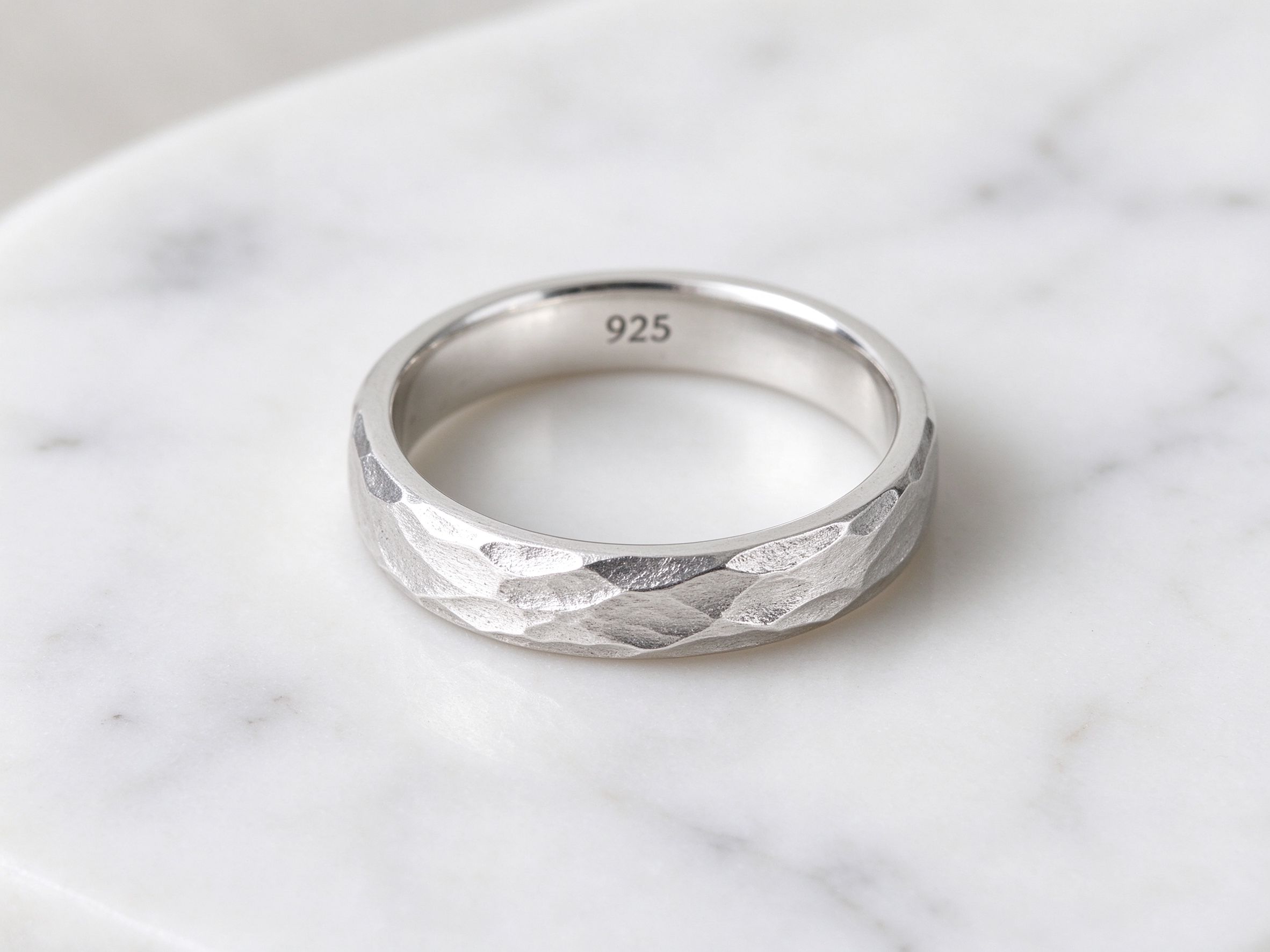
Hallmarking and stamping are compliance steps. A legitimate 925 piece carries a stamp of purity and often a maker mark, and for export markets we match the local hallmarking requirements. These marks are inexpensive to apply but they are what let a retailer sell the piece with confidence that it is genuinely sterling.
Electroplating layers are built in sequence. Copper or nickel underlays may improve adhesion, then the silver layer, then the final rhodium top. Each layer adds cost and time, and the number and thickness of layers is why two silver rings at the same weight can quote at noticeably different prices.
Silver spot prices move, and honest quotes reflect it. We lock pricing for a defined validity window and adjust material surcharges transparently when the metal market swings, rather than hiding the change in a fudged stone price. Buyers who understand this rhythm can time larger orders to favourable windows.
Recycled sterling silver is now standard at scale. Responsible factories source refined recycled silver, which lowers environmental impact without changing the 925 specification. For brands marketing sustainability, recycled alloy is a selling point that costs little extra and is documented in the material certificates we supply.
Why Recovery Is Never Perfect
Responsible factories recycle nearly all casting scrap - sprues, gates and filings go straight back to the refiner. But polishing generates fine dust that is hard to capture, and small amounts of metal are lost with consumables like polishing wheels. Refining recycled silver also returns slightly less than the input, because oxidation and handling take a small cut. The result is that for every gram of silver in a finished ring, the factory may have started with one and a half or more grams. That extra silver cost is a real line in the production budget, not wasteful extravagance.
Weight is a feature, not just a cost. A heftier setting feels premium, holds prongs better and resists bending, but it consumes more silver and more polishing time. Buyers choose the weight tier to match their price point: light for fashion turns, solid for engagement and wedding lines that must last years.
We test alloy samples for hardness and finish response before production, because the same 925 stamp can hide slightly different blends. A consistent alloy means consistent plating and setting behaviour. Buyers who work with us over time learn to trust that each batch matches the last, which is the whole point of verified sterling.
Silver pricing is transparent on our quotes, with the metal component broken out so buyers can follow the market. When silver moves, the adjustment is visible rather than buried. This honesty lets professional buyers plan purchases around favourable windows and avoid the surprise cost spikes that come from opaque pricing.
The finish on a silver ring is only as good as the prep beneath it. We degrease and electro-clean every piece before plating, because a clean surface is what lets rhodium bond. This invisible work is why our plated silver stays bright long after a rushed piece has yellowed, and it is a key reason buyers return.
Hallmarking and stamp placement are treated as finishing details, not afterthoughts. A clear, well-placed 925 and maker mark signals quality to the customer. We position stamps discreetly and legibly, so the mark reinforces trust rather than disrupting the design. Buyers notice this attention on the pieces they receive.
Recycled content is documented, not claimed. We can provide material certificates for buyers marketing sustainability, so environmental claims are backed by paperwork. This turns a responsible sourcing choice into a credible selling point that customers can verify rather than just hope for.
How Loss Drives the Price of Heavier Pieces
A heavy, elaborate casting generates more sprue and polishing loss than a slim, simple band, because there is more metal in the process and more surface to finish. This is part of why a bulky cathedral setting costs more than a slim solitaire beyond the raw silver weight. Buyers comparing two rings should expect the more complex piece to carry a higher material cost, reflecting both the silver in the final piece and the loss around it. Transparent factories account for this in the quote, so the price reflects the true cost of production rather than just the listed weight.
925 sterling silver is 92.5 percent silver alloyed usually with copper, a balance chosen because pure fine silver is too soft to hold prongs and survive daily wear. The copper adds hardness and spring, which is exactly what a stone setting needs. Buyers should treat the 925 stamp as a mechanical spec as much as a purity claim.
Casting and stamping are two cost paths. Casting pours molten silver into moulds and suits detailed, three-dimensional designs; stamping presses sheet metal and suits simple, high-volume bands. Each leaves a different weight and price, and a factory chooses the method to match the design rather than forcing every ring into one process.
Silver loss is a real cost line. Filings, sprues, casting gates and polishing dust are recovered and refined, but recovery is never 100 percent. That small loss is baked into the quote, which is why a heavier, more labour-intensive ring carries a material premium beyond the raw silver weight alone.
Rhodium plating thickness on silver is a spec, not a mood. We measure it by X-ray fluorescence and quote the micron build, because a flash plate and a heavy plate look identical on day one but age very differently. Buyers selling daily-wear engagement and wedding rings should specify the heavier build to protect their return rate.
Tarnish resistance starts at the alloy, not just the plate. Well-finished, fully plated, anti-tarnish-packaged silver resists sulphur far longer than a rushed piece. Our finishing line controls the degrease, the plate and the packaging as one system, because a weak link anywhere in that chain shows up as yellowing within months.
Hallmarking and stamping are compliance steps. A legitimate 925 piece carries a stamp of purity and often a maker mark, and for export markets we match the local hallmarking requirements. These marks are inexpensive to apply but they are what let a retailer sell the piece with confidence that it is genuinely sterling.
The Environmental Side of Silver Recovery
Silver loss is not just an economics issue; it is an environmental one. Mining new silver carries environmental cost, while recycling existing silver dramatically reduces impact. Modern factories therefore capture and recycle casting scrap diligently, both to recover value and to lower their footprint. For brands marketing sustainability, the recycled silver loop is a genuine selling point, and we can supply documentation on recycled content. Minimising loss and maximising recovery is both good economics and good environmental practice. The same process that saves the factory money reduces the need for new mining.
Electroplating layers are built in sequence. Copper or nickel underlays may improve adhesion, then the silver layer, then the final rhodium top. Each layer adds cost and time, and the number and thickness of layers is why two silver rings at the same weight can quote at noticeably different prices.
Silver spot prices move, and honest quotes reflect it. We lock pricing for a defined validity window and adjust material surcharges transparently when the metal market swings, rather than hiding the change in a fudged stone price. Buyers who understand this rhythm can time larger orders to favourable windows.
Recycled sterling silver is now standard at scale. Responsible factories source refined recycled silver, which lowers environmental impact without changing the 925 specification. For brands marketing sustainability, recycled alloy is a selling point that costs little extra and is documented in the material certificates we supply.
Weight is a feature, not just a cost. A heftier setting feels premium, holds prongs better and resists bending, but it consumes more silver and more polishing time. Buyers choose the weight tier to match their price point: light for fashion turns, solid for engagement and wedding lines that must last years.
We test alloy samples for hardness and finish response before production, because the same 925 stamp can hide slightly different blends. A consistent alloy means consistent plating and setting behaviour. Buyers who work with us over time learn to trust that each batch matches the last, which is the whole point of verified sterling.
Silver pricing is transparent on our quotes, with the metal component broken out so buyers can follow the market. When silver moves, the adjustment is visible rather than buried. This honesty lets professional buyers plan purchases around favourable windows and avoid the surprise cost spikes that come from opaque pricing.
How Buyers Can Reduce Loss in Their Orders
Some silver loss is inherent, but design choices can minimise it. Overly heavy, bulky designs that add no visible value increase the sprue and polishing loss unnecessarily. Working with a factory to optimise the design - achieving the desired look without excess metal - reduces both the silver weight and the loss component. This is where design collaboration pays off: a well-engineered setting looks as good but uses less metal and generates less waste. Buyers who ask us to optimise weight for their price point get a piece that looks premium without paying for silver that is simply polished away.
The finish on a silver ring is only as good as the prep beneath it. We degrease and electro-clean every piece before plating, because a clean surface is what lets rhodium bond. This invisible work is why our plated silver stays bright long after a rushed piece has yellowed, and it is a key reason buyers return.
Hallmarking and stamp placement are treated as finishing details, not afterthoughts. A clear, well-placed 925 and maker mark signals quality to the customer. We position stamps discreetly and legibly, so the mark reinforces trust rather than disrupting the design. Buyers notice this attention on the pieces they receive.
Recycled content is documented, not claimed. We can provide material certificates for buyers marketing sustainability, so environmental claims are backed by paperwork. This turns a responsible sourcing choice into a credible selling point that customers can verify rather than just hope for.
925 sterling silver is 92.5 percent silver alloyed usually with copper, a balance chosen because pure fine silver is too soft to hold prongs and survive daily wear. The copper adds hardness and spring, which is exactly what a stone setting needs. Buyers should treat the 925 stamp as a mechanical spec as much as a purity claim.
Casting and stamping are two cost paths. Casting pours molten silver into moulds and suits detailed, three-dimensional designs; stamping presses sheet metal and suits simple, high-volume bands. Each leaves a different weight and price, and a factory chooses the method to match the design rather than forcing every ring into one process.
Silver loss is a real cost line. Filings, sprues, casting gates and polishing dust are recovered and refined, but recovery is never 100 percent. That small loss is baked into the quote, which is why a heavier, more labour-intensive ring carries a material premium beyond the raw silver weight alone.
Why Transparent Loss Accounting Builds Trust
When a factory explains that the price includes casting loss and recycled scrap, it signals honesty. A buyer who only ever sees the final weight might wonder why the price is higher than the silver spot value, but understanding the loss and recovery loop makes the cost sensible. We break down the material component of quotes so buyers see the logic. This transparency matters because silver spot prices fluctuate, and buyers who understand the cost build-up can follow price changes intelligently. Silver loss is not hidden profit; it is a real cost of turning metal into jewellery, and a good factory says so plainly.
Rhodium plating thickness on silver is a spec, not a mood. We measure it by X-ray fluorescence and quote the micron build, because a flash plate and a heavy plate look identical on day one but age very differently. Buyers selling daily-wear engagement and wedding rings should specify the heavier build to protect their return rate.
Tarnish resistance starts at the alloy, not just the plate. Well-finished, fully plated, anti-tarnish-packaged silver resists sulphur far longer than a rushed piece. Our finishing line controls the degrease, the plate and the packaging as one system, because a weak link anywhere in that chain shows up as yellowing within months.
Hallmarking and stamping are compliance steps. A legitimate 925 piece carries a stamp of purity and often a maker mark, and for export markets we match the local hallmarking requirements. These marks are inexpensive to apply but they are what let a retailer sell the piece with confidence that it is genuinely sterling.
Electroplating layers are built in sequence. Copper or nickel underlays may improve adhesion, then the silver layer, then the final rhodium top. Each layer adds cost and time, and the number and thickness of layers is why two silver rings at the same weight can quote at noticeably different prices.
Silver spot prices move, and honest quotes reflect it. We lock pricing for a defined validity window and adjust material surcharges transparently when the metal market swings, rather than hiding the change in a fudged stone price. Buyers who understand this rhythm can time larger orders to favourable windows.
Recycled sterling silver is now standard at scale. Responsible factories source refined recycled silver, which lowers environmental impact without changing the 925 specification. For brands marketing sustainability, recycled alloy is a selling point that costs little extra and is documented in the material certificates we supply.
Frequently Asked Questions
Why is a finished ring heavier than its listed silver weight?
It is not - but the factory started with more silver than ends in the piece. Sprue, filings and polishing dust are recycled but never fully recovered, and that loss is built into the quote.
Do factories recycle silver scrap?
Yes. Sprues, gates and filings are collected and refined. Recovery is near but not perfect, because fine polishing dust and refining yield losses are unavoidable.
Why do heavier settings cost more?
They carry more sprue and polishing loss beyond the raw silver weight. Complex castings generate more scrap than slim bands, which is reflected in the price.
Can I reduce silver loss in my designs?
Yes. Optimising the design to achieve the look without excess metal lowers both weight and loss. We help engineer settings that look premium without waste.
Is recycled silver good for sustainability?
Yes. Recycling silver reduces mining impact, and we can document recycled content. Good recovery is both economical and environmentally responsible.
Conclusion
Silver loss is a real, explainable cost: sprue, filings and polishing dust are recycled but never fully recovered. Heavier designs carry more of it, transparent factories account for it openly, and smart buyers optimise weight to reduce it. Understanding the loss loop makes the price of a silver moissanite setting make sense.