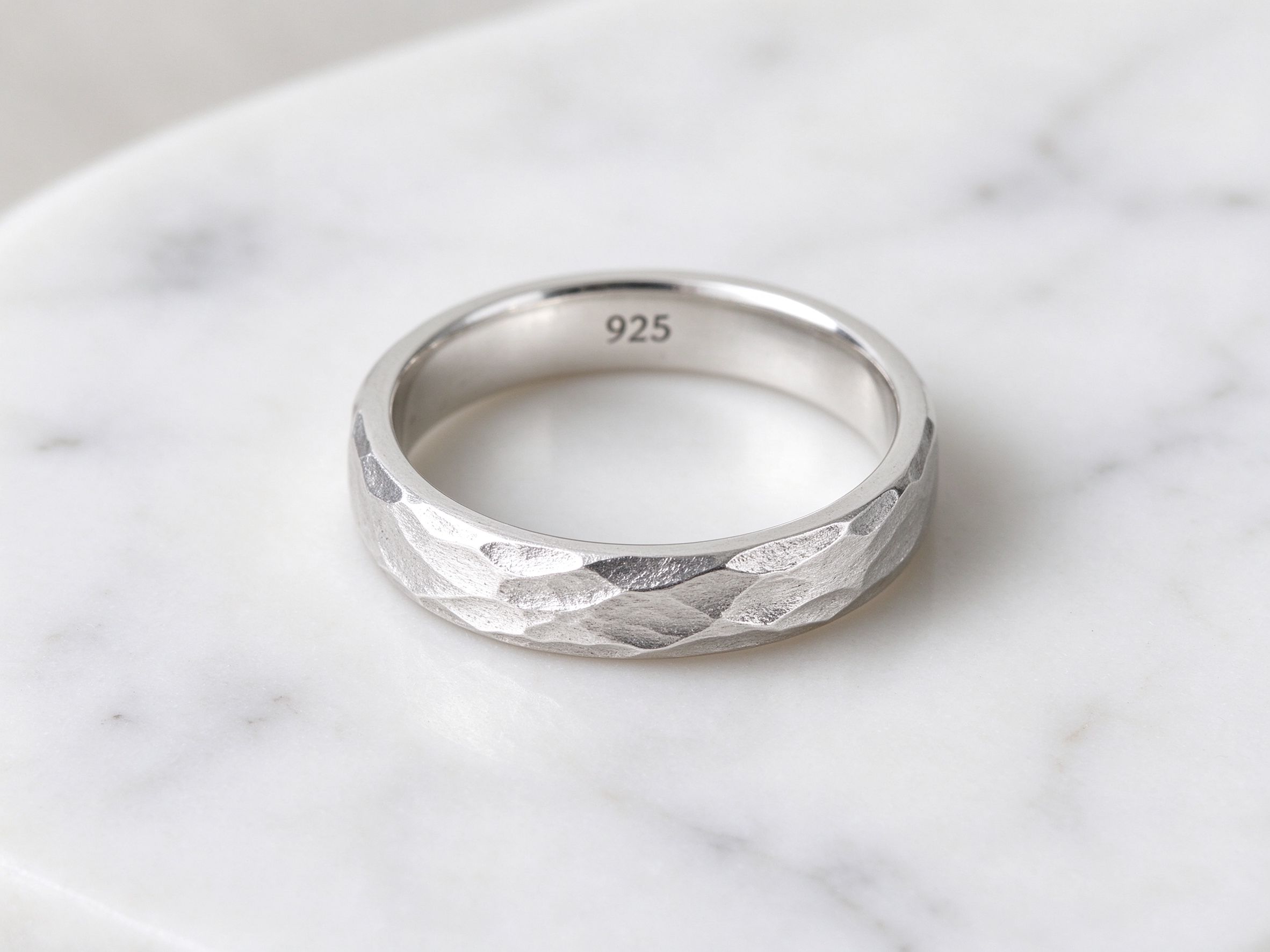
Nickel allergy is one of the most common jewelry complaints, especially on earrings and rings. Customers with sensitive ears often wonder whether sterling silver is safe. The answer depends on the alloy, the plating and how the piece is finished.
Does 925 silver contain nickel?
Sterling silver is 92.5% silver mixed with other metals for strength. Traditional sterling uses copper as the main alloy metal, which is generally well tolerated. However, some cheaper or recycled silver alloys add nickel or zinc to adjust hardness and color. That nickel can leach onto skin and cause a reaction.
Why plating matters
Rhodium plating acts as a barrier between the silver alloy and the skin. A well-plated earring post rarely causes reactions, even if the underlying alloy contains trace nickel, because the plating seals it off. The problem appears when plating wears thin on posts and backs, exposing the alloy underneath.
What sensitive customers need
- Nickel-free alloy certified by the supplier.
- Rhodium plated posts and ear wires.
- Solid 925 backs rather than plated steel backs.
- Avoidance of cheap steel or brass posts mixed into orders.
What buyers should ask factories
Ask whether the silver alloy is nickel-free and whether the factory can provide a compliance statement. For earrings specifically, confirm the posts are sterling silver, not plated brass. Reputable factories serving export markets already test for nickel release under the relevant standards.
Other hypoallergenic choices
For customers who react even to silver, titanium and niobium posts are essentially inert. Surgical stainless steel is another option for less severe sensitivities. Stocking a small range of truly hypoallergenic earrings captures customers who otherwise give up on fashion jewelry.
FAQ
Is all sterling silver hypoallergenic?
Most is, because the alloy is mainly copper. But "sterling" alone does not guarantee nickel-free.
Why do my ears itch after a few months?
The plating on the post has worn, exposing the alloy underneath.
Can I wear silver earrings if I have a nickel allergy?
Yes, if the posts are nickel-free silver and kept rhodium plated.
Material safety is part of product value. See 925 Silver Value and all knowledge.
How nickel allergy actually works
Nickel allergy is not an immediate rash for everyone. It often builds up over years of exposure, then suddenly a metal that was fine before starts itching. The body's immune system reacts to nickel ions that leach onto the skin. This is why a customer may wear silver earrings for years and then develop sensitivity. The allergy is to the nickel, not to the silver itself, which is why a nickel-free alloy usually solves it.
Plating is the practical barrier. Even if the alloy has trace nickel, a continuous rhodium layer stops the ions reaching the skin. The problem appears when plating wears on high-friction spots like earring posts. This is why upgrading the post material matters more than the front of the earring. For sensitive customers, a solid nickel-free post under the rhodium is the real fix.
Building trust with sensitive customers
Sensitive buyers are loyal once they find jewelry that does not react. Stocking certified nickel-free pieces and labeling them clearly captures a customer group that otherwise gives up. Provide a simple care note: keep posts plated, avoid harsh chemicals, and replace backs if they are not sterling. Over time, these customers buy repeatedly and recommend you to other sensitive friends. The small cost of nickel-free alloy is returned many times in repeat sales.
Bottom line
Most sterling silver is well tolerated, but nickel can hide in cheap alloys and thin plating. For sensitive customers, ask for certified nickel-free alloy and keep posts rhodium plated. Stocking a small hypoallergenic range captures loyal buyers who otherwise give up. A nickel-free claim backed by documentation builds trust and reduces reaction complaints.
A worked example: sensitive ears that finally stopped itching
A woman could not wear fashion earrings for more than a few hours without itching. She assumed she was allergic to all metal. When she switched to nickel-free sterling silver posts with rhodium plating, the itching stopped. The issue was never silver itself; it was the nickel in cheap alloy posts and thin plating that wore off. Once the post material was truly nickel-free and plated, her ears tolerated the earrings. The lesson is that "silver" is not the problem; the hidden alloy is. Asking for nickel-free posts solved it.
Labeling for sensitive customers
When you stock nickel-free pieces, label them clearly. Sensitive buyers search specifically for hypoallergenic and will pay a little more for it. Provide a simple statement: nickel-free sterling silver, rhodium plated. This attracts a loyal group that otherwise cannot wear your jewelry at all. It also reduces returns from irritation. Treat hypoallergenic as a feature, not a footnote.
Quick reference checklist
- Ask for certified nickel-free alloy, especially on earring posts.
- Rhodium plating acts as a barrier between alloy and skin.
- Replace worn backs with sterling silver, not plated steel.
- Label hypoallergenic pieces clearly to attract sensitive buyers.
- Nickel allergy can develop over years, even if metal used to be fine.
Sensitive customers are loyal once they find jewelry that does not react. Stocking certified nickel-free pieces and labeling them clearly captures a group that otherwise cannot wear your jewelry. The small cost of nickel-free alloy returns many times in repeat sales and fewer irritation complaints.
The takeaway is that sensitive buyers need real nickel-free posts, not just a silver label. Stock them, label them, and the customers who cannot wear ordinary jewelry will become your most loyal repeat buyers. It is a small product decision with a surprisingly large payoff.
For earring buyers, the post matters more than the front. Make sure posts and backs are the same nickel-free sterling, not cheap steel. A sensitive customer who finally finds earrings that do not itch will buy again and again, and bring friends.
Ask your factory for a nickel release statement and keep it on file. It is a small document, but it protects you in regulated markets and reassures sensitive customers. Honest labeling wins repeat business from people who finally found jewelry they can wear.