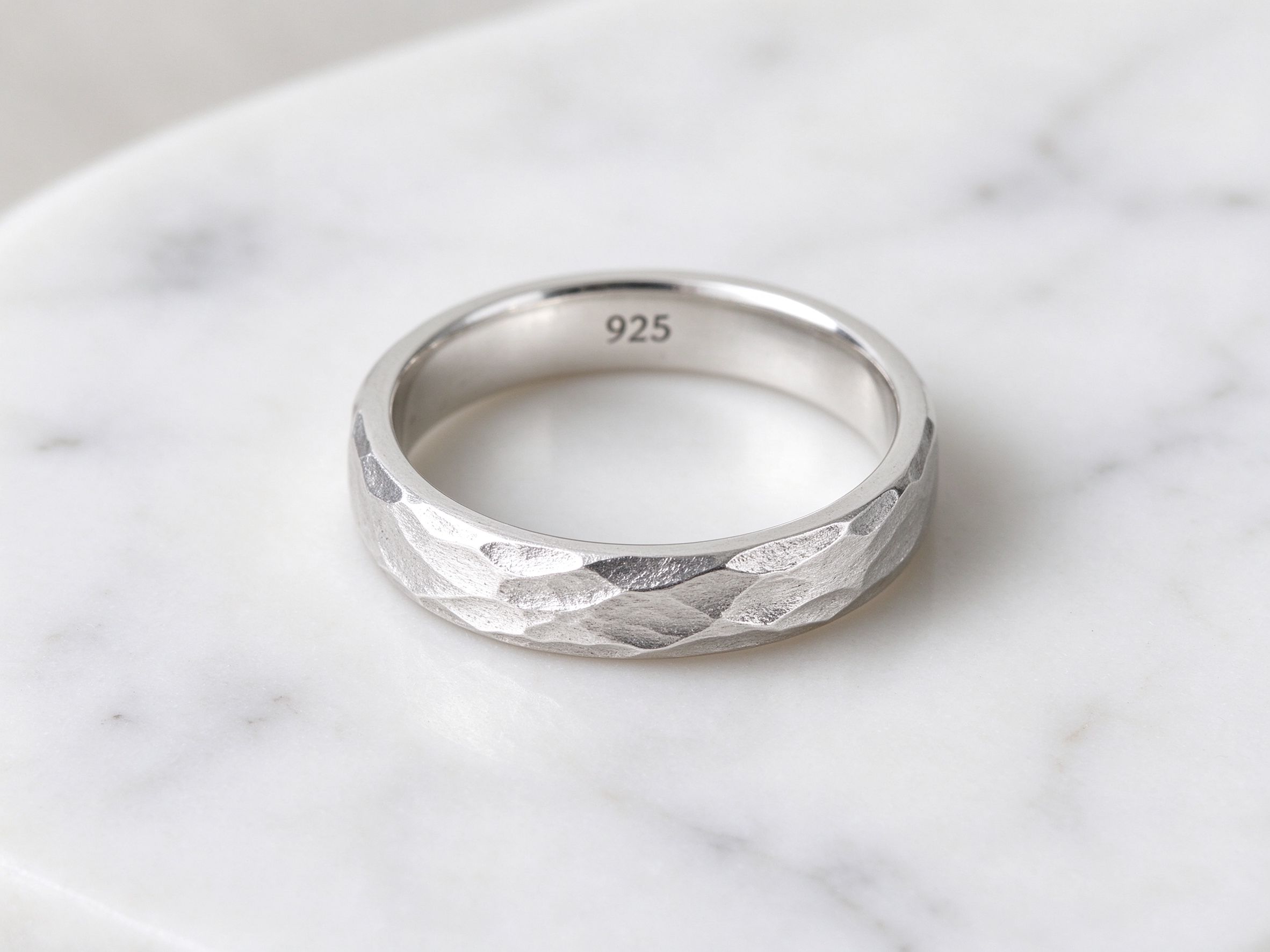
Nickel-Free 925 Silver: Alloy Choices and Their Impact on Wholesale Value
The word nickel appears on almost every jewelry spec sheet these days, and for good reason. Nickel allergy is the most common contact allergy in the world, affecting somewhere between ten and fifteen percent of adults, mostly women whose ears have been pierced with cheap posts as teenagers. For a brand selling sterling silver jewelry into Europe, North America, or Australia, nickel content is not a technical detail, it is a regulatory and commercial requirement. The EU Nickel Directive limits the amount of nickel that can leach from skin-contact jewelry to 0.5 micrograms per square centimeter per week, and the US has similar state-level rules in California and New York. A piece that fails that limit cannot legally be sold in those markets, and a brand that ignores it will eventually get a customs hold, a recall, or a class action.
What most buyers do not see is that there are several ways to make a 925 silver alloy nickel-free, and each one costs a different amount, polishes a little differently, and carries a different risk of tarnish. This article walks through the alloy choices we make in our factory every week, from the classic copper-alloyed sterling silver that most people know, to the zinc and silicon alloys that are increasingly common for export, to the specialty alloys that are used for hypoallergenic lines. If you are a brand building a silver collection and trying to decide which alloy to specify, the difference between the choices is worth real money, and it is worth understanding before you commit to a production run.
Why Sterling Silver Is Alloyed at All
Pure fine silver, 99.9 percent pure, is too soft for jewelry. It bends under finger pressure, scratches with a fingernail, and cannot hold a prong or a setting for long. The 925 standard exists because adding 7.5 percent of a harder metal makes the silver strong enough to wear every day while keeping the silver color and the hallmark. The question is which metal makes up that 7.5 percent, and that choice determines whether the piece tarnishes, how it polishes, whether it leaches nickel, and how much the alloy costs.
The classic alloy is copper. Sterling silver with 7.5 percent copper is the traditional formula used for hundreds of years, and it produces a slightly warm, soft grey color that takes a beautiful polish. Copper alloy does not contain nickel, so it is naturally nickel-free, but it tarnishes faster than other alloys because copper oxidizes. This is the reason old sterling silver pieces develop that dark patina, and it is the reason most modern silver jewelry is rhodium plated: the plating covers the silver and prevents the copper oxidation from reaching the surface.
Zinc and silicon alloys are the modern alternative. Some factories blend 925 silver with smaller amounts of zinc, silicon, and sometimes tin, instead of copper. These alloys tarnish more slowly, stay brighter under plating, and produce a cooler, whiter finish. They are also slightly more expensive to source, because the zinc and silicon additions require more careful melting and casting. The trade-off is that zinc alloys can be a little harder to polish, because they are stiffer and do not buff as quickly on the wheel. Most of the export silver we produce today uses a zinc-silver alloy, because the customer in Europe and the US expects a bright white piece that does not tarnish quickly.
Where Nickel Actually Comes From in Silver Jewelry
If sterling silver is alloyed with copper or zinc, where does the nickel come from? It comes from two places. The first is contamination in the scrap loop. If a factory melts silver scrap that includes nickel-containing solder, nickel-plated parts, or stainless steel tools, the nickel can end up in the alloy. This is why we sort our scrap carefully, as we described in another article, and why every melt is assayed before it is poured. A nickel-contaminated melt can fail the EU nickel limit even if the original formula was nickel-free.
The second source is the plating process. Some cheaper plating baths use nickel as an undercoat between the silver and the rhodium or gold, because nickel improves adhesion. That nickel undercoat can leach through the plating over time, especially where the plating wears thin, and it is the most common source of nickel allergy complaints from customers. The EU rules explicitly ban nickel undercoat in skin-contact jewelry, even if the top layer is rhodium, because the nickel will eventually reach the skin. We do not use nickel undercoat on any export piece, even though it would make plating adhesion easier, because the regulatory risk is not worth the savings.
For a brand, the practical takeaway is that nickel-free is not just about the alloy. It is about the whole process, from the scrap sorting to the plating bath to the solder used in repairs. A factory that claims nickel-free but uses nickel solder to attach a jump ring is going to fail a nickel test, because the solder is in contact with the skin. We specify nickel-free solder on every piece we ship, and we can provide a nickel test report from an independent lab if your customer or your customs broker asks for one.
The Three Alloy Options We Offer for Export
We stock three standard alloy formulas for export silver, and we can also custom-blend to a customer spec if the volume justifies it. The first is traditional copper-alloyed 925, which we use for pieces that will be oxidised, antique-finished, or sold into markets that expect the warm patina. It is the cheapest alloy, it polishes beautifully, and it tarnishes at a normal rate. The second is zinc-silicon 925, which we use for most bright white rhodium-plated export pieces. It tarnishes more slowly, it stays whiter under plating, and it costs a few percent more than the copper alloy. The third is a specialty low-tarnish alloy that uses a small amount of germanium, which is the most expensive option but offers the best tarnish resistance for pieces that will be sold without plating.
The specialty germanium alloy is worth a paragraph on its own. It is sometimes called Argentium silver, and it contains a small percentage of germanium instead of part of the copper. Germanium forms a thin oxide layer on the surface that slows tarnish dramatically, so a piece made from it can be worn without rhodium plating and stay bright for months. It is popular with brands that want an unplated, hypoallergenic silver piece with a natural finish, and it is naturally nickel-free. The trade-off is that it costs about twenty to thirty percent more than standard sterling silver, and it is harder to cast, because the germanium oxidizes during melting and requires careful fluxing. We use it for a small number of premium brands that specifically request it.
For most brands, the zinc-silicon alloy is the sweet spot. It is nickel-free, it tarnishes slowly, it polishes well, and the cost premium over traditional copper sterling is small enough that it does not change the unit price much. We default to it for any export order, and we only switch to copper alloy when the customer specifically wants the antique or oxidised look.
How the EU Nickel Directive Actually Works
The EU Nickel Directive, formally known as Directive 94/27/EC and updated in 2004, is the regulation that drives most of our alloy choices. It does not ban nickel entirely. It limits the rate at which nickel can leach from parts that come into direct and prolonged contact with skin, such as earring posts, rings, bracelets, necklaces, and watch cases. The limit is 0.5 micrograms per square centimeter per week for posts and 0.2 micrograms per square centimeter per week for items that are inserted into piercings. If a piece exceeds that limit, it cannot be sold in the EU, and customs can seize it.
The test itself is not a simple X-ray scan. It is a leaching test, where the piece is placed in a synthetic sweat solution for a week, and the solution is analyzed for nickel. This means that even a piece with no visible nickel on the surface can fail if the nickel is underneath a thin plating that wears away. It also means that a piece with a nickel undercoat beneath a rhodium top layer will fail, because the nickel will leach through the plating over time. This is why we stopped using nickel undercoat entirely, even though it made plating easier.
For brands selling into the EU, the compliance burden is real. You need a test report from a notified lab, you need to keep the report on file for ten years, and you need to be able to trace each batch back to the melt it came from. We provide that traceability, because we log every melt number on every piece we ship. If a customer complains about nickel allergy on a specific piece, we can trace the piece back to the melt, test the remaining scrap from that melt, and determine whether the problem was our alloy, our plating, or the solder. That traceability is part of the cost of doing business, and it is one of the reasons a fully compliant export line costs more than a line sold domestically. It is also the reason we will never promise a nickel-free price that looks too good to be true, because compliance has a real cost that cannot be negotiated away.
What Happens When a Piece Fails the Nickel Test
A failed nickel test is not a small problem. In the EU, customs can detain an entire shipment, and if the problem is systematic, they can order a recall of every piece already sold. The brand, not the factory, is legally responsible for the recall, because the brand is the importer of record. We have seen small brands go out of business after a nickel recall, because the cost of notifying customers, accepting returns, and disposing of unsold stock can exceed their annual revenue. This is why we test every batch, not just every design, and why we refuse to cut corners on the plating process even when a buyer asks us to.
In the US, the rules are less federal and more state-level. California has a Proposition 65 warning requirement for nickel, and New York has introduced jewelry-specific nickel limits in recent years. The enforcement is patchy, but the trend is toward stricter rules, and brands that sell online into all fifty states eventually have to comply. The safest approach is to build every piece to the EU standard, because it is the strictest, and then the piece can be sold anywhere without modification. It costs a few percent more up front, but it prevents a recall later.
For brands that already have a line on the market, we recommend testing a sample of each SKU once a year, even if the pieces were made by a compliant factory. Alloys can drift, plating baths can change, and scrap contamination can happen. The annual test costs a few hundred dollars per SKU, and it is cheap insurance against a surprise recall. We can arrange the testing through our own lab network, and we will share the report with you directly.
How Alloy Choice Affects Your Wholesale Cost
The alloy choice changes the unit price by a few percent, but it changes the downstream cost much more. A copper-alloyed piece that tarnishes quickly will generate more customer complaints, more returns, and more warranty work. A zinc-silicon piece that stays bright will have a lower return rate and a higher repeat purchase rate. Over a year, the difference in return and warranty cost is usually larger than the small premium on the alloy itself, which is why we recommend the better alloy even though it costs a little more up front.
Alloy choice also affects plating adhesion. Copper alloys can develop a slightly uneven surface under plating, because the copper oxidizes during the plating process. Zinc-silicon alloys plate more uniformly, because the surface is more stable in the plating bath. This means the plating lasts longer on a zinc-silicon piece, and the customer gets a brighter piece for longer. A brand that switches from copper to zinc alloy often sees a measurable drop in plating-related complaints, even though the piece looks the same on day one.
For brands that sell into the EU, the nickel test report is a cost of doing business. We include a basic nickel test report with every export shipment, because we know the customs broker will ask for it. If your customer requires a formal lab report from SGS or Intertek, we can arrange that as well, but it adds a few hundred dollars per batch and a few days of lead time. The cost is small compared to the risk of a shipment being held at the border for failing a nickel test.
Common Questions About Nickel-Free Silver
Is all sterling silver naturally nickel-free? Traditional copper-alloyed sterling silver is naturally nickel-free, but modern alloys can contain trace nickel from scrap contamination or plating undercoats. We test every melt and every plating batch to make sure, and we can provide test reports on request.
Does nickel-free silver cost more? A standard zinc-silicon nickel-free alloy costs a few percent more than traditional copper sterling. A specialty low-tarnish alloy costs twenty to thirty percent more. The difference in unit price is usually under ten cents per piece, which is small compared to the return risk.
How do I know if a piece I already sell contains nickel? You can send a sample to an independent lab for a nickel leach test, which costs a few hundred dollars. If you are selling into the EU, the test is required anyway, so it is worth doing before you place a large order.
Can I wear nickel-free silver if I have a nickel allergy? Yes, but you should also make sure the plating is free of nickel undercoat and that the solder used in the piece is nickel-free. A reputable factory can provide documentation for all of these.
Do I need to test every batch, or just the first production run? We recommend testing the first run of every new design, and then spot-checking subsequent runs once or twice a year. Alloys are consistent, but plating baths can drift, and scrap contamination can happen. Spot testing is cheaper than testing every batch, and it catches any systematic change.
What is the difference between nickel-free and hypoallergenic? Nickel-free means the piece contains no nickel that can leach. Hypoallergenic is a marketing term that means the piece is less likely to cause an allergic reaction, but it does not have a legal definition. We recommend specifying nickel-free on your spec sheet, because it is a concrete, testable claim.
Working With Sensitive-Ear Customers
Nickel allergy is most visible in earrings, because ear piercings are a direct route into the skin, and a nickel-containing post can cause a reaction within hours. For brands selling stud earrings, the post material is as important as the alloy in the front. We offer three post options: a sterling silver post, a 316L surgical stainless steel post, and a titanium post. The sterling silver post is naturally nickel-free if the alloy is clean, but some customers react to copper in the alloy as well. The stainless steel post is more durable and cheaper, but it can contain trace nickel, so we only use medical-grade 316L that is tested to be below the EU limit. The titanium post is the safest option for highly sensitive ears, and it is what we recommend for brands that advertise hypoallergenic earrings.
The earring back matters too. A cheap friction back made from plated brass can contain nickel, and it sits against the back of the earlobe for hours a day. We use silicone backs or tested stainless steel backs on all hypoallergenic lines, because a nickel back on a silver front defeats the purpose. Brands that advertise hypoallergenic earrings but ship with cheap brass backs eventually get complaints, even though the post itself was fine.
For a brand, the marketing of hypoallergenic earrings is a strong sales tool, because customers with sensitive ears are a loyal, underserved segment. But the marketing has to be backed by the actual product. If you advertise nickel-free, every component of the piece, including the post, the back, the solder, and the plating, has to be nickel-free. We can help you spec the whole system, and we can provide the documentation that lets you make the claim honestly on your product page.
The Bottom Line
Nickel-free 925 silver is not a single material; it is a family of alloys, each with its own cost, polish, and tarnish behavior. The choice you make at the spec stage changes the unit price by a few percent, but it changes the return rate, the warranty cost, and the customer perception by much more. For most export brands, the zinc-silicon alloy is the right default, because it is nickel-free, it stays bright under plating, and the cost premium is small. For premium unplated lines, the germanium alloy is worth the extra money. For antique and oxidised pieces, traditional copper sterling is still the best choice.
If you are planning a silver collection and want to see how the alloy choice changes the unit price on your designs, send us the CAD and we will quote you against two or three alloy options. Most brands we work with default to the zinc-silicon alloy for export, because it hits the price, the brightness, and the compliance targets all at once, and we would rather recommend the right alloy up front than have you deal with a recall later.
Reach our team at service@holycome.com, and for more on how the silver composition affects your piece, read our guide to 925 sterling silver composition for buyers and our breakdown of hypoallergenic sterling silver for sensitive skin.