925 Silver vs Brass vs Stainless Steel: Which Setting Metal Delivers Value?
For a moissanite setting, the choice of base metal shapes the price, the durability and how customers perceive the piece. 925 silver, brass and stainless steel all appear in fashion jewellery, but they deliver very different value. This guide compares them so wholesale buyers can choose the right metal for each product.
925 Sterling Silver: The Premium Balance
Sterling silver is the precious-metal option. It carries real intrinsic value, polishes to a bright finish, takes rhodium plating beautifully, and feels substantial on the hand. It is the expected setting for mid-range and bridal moissanite pieces, because customers recognise it as genuine jewellery. Its drawbacks are that it tarnishes without plating and costs more than base metals. But for a brand selling moissanite as a real, desirable product rather than a costume piece, 925 silver is the foundation. It pairs the stone's brilliance with a setting customers trust as precious.
Weight is a feature, not just a cost. A heftier setting feels premium, holds prongs better and resists bending, but it consumes more silver and more polishing time. Buyers choose the weight tier to match their price point: light for fashion turns, solid for engagement and wedding lines that must last years.
We test alloy samples for hardness and finish response before production, because the same 925 stamp can hide slightly different blends. A consistent alloy means consistent plating and setting behaviour. Buyers who work with us over time learn to trust that each batch matches the last, which is the whole point of verified sterling.
Silver pricing is transparent on our quotes, with the metal component broken out so buyers can follow the market. When silver moves, the adjustment is visible rather than buried. This honesty lets professional buyers plan purchases around favourable windows and avoid the surprise cost spikes that come from opaque pricing.
The finish on a silver ring is only as good as the prep beneath it. We degrease and electro-clean every piece before plating, because a clean surface is what lets rhodium bond. This invisible work is why our plated silver stays bright long after a rushed piece has yellowed, and it is a key reason buyers return.
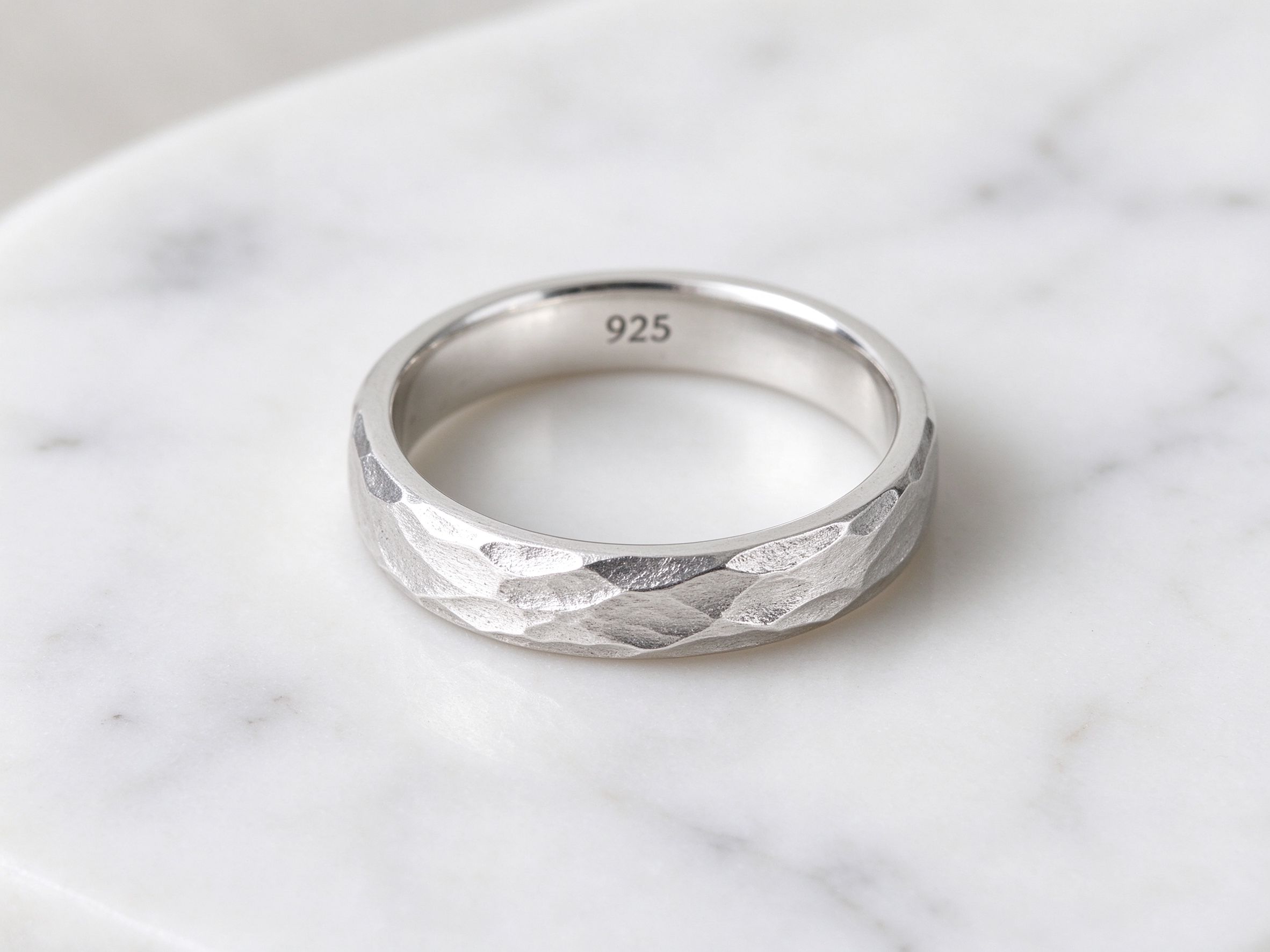
Hallmarking and stamp placement are treated as finishing details, not afterthoughts. A clear, well-placed 925 and maker mark signals quality to the customer. We position stamps discreetly and legibly, so the mark reinforces trust rather than disrupting the design. Buyers notice this attention on the pieces they receive.
Recycled content is documented, not claimed. We can provide material certificates for buyers marketing sustainability, so environmental claims are backed by paperwork. This turns a responsible sourcing choice into a credible selling point that customers can verify rather than just hope for.
Brass: The Cheap Costume Option
Brass is an alloy of copper and zinc, inexpensive and easy to cast into shapes. It is widely used in fast fashion, but it is a base metal, not a precious one. Brass tarnishes readily, can react with skin causing green marks, and plating over it tends to wear faster because the base metal oxidises beneath. For disposable, low-cost fashion it has its place, but for moissanite - a stone marketed as brilliant and durable - brass undersells the product. A moissanite in a brass setting looks like costume jewellery, which undercuts the value story. We use 925 silver for moissanite settings because the stone deserves a precious setting.
925 sterling silver is 92.5 percent silver alloyed usually with copper, a balance chosen because pure fine silver is too soft to hold prongs and survive daily wear. The copper adds hardness and spring, which is exactly what a stone setting needs. Buyers should treat the 925 stamp as a mechanical spec as much as a purity claim.
Casting and stamping are two cost paths. Casting pours molten silver into moulds and suits detailed, three-dimensional designs; stamping presses sheet metal and suits simple, high-volume bands. Each leaves a different weight and price, and a factory chooses the method to match the design rather than forcing every ring into one process.
Silver loss is a real cost line. Filings, sprues, casting gates and polishing dust are recovered and refined, but recovery is never 100 percent. That small loss is baked into the quote, which is why a heavier, more labour-intensive ring carries a material premium beyond the raw silver weight alone.
Rhodium plating thickness on silver is a spec, not a mood. We measure it by X-ray fluorescence and quote the micron build, because a flash plate and a heavy plate look identical on day one but age very differently. Buyers selling daily-wear engagement and wedding rings should specify the heavier build to protect their return rate.
Tarnish resistance starts at the alloy, not just the plate. Well-finished, fully plated, anti-tarnish-packaged silver resists sulphur far longer than a rushed piece. Our finishing line controls the degrease, the plate and the packaging as one system, because a weak link anywhere in that chain shows up as yellowing within months.
Hallmarking and stamping are compliance steps. A legitimate 925 piece carries a stamp of purity and often a maker mark, and for export markets we match the local hallmarking requirements. These marks are inexpensive to apply but they are what let a retailer sell the piece with confidence that it is genuinely sterling.
Stainless Steel: The Durable Budget Option
Stainless steel is tough, tarnish-resistant and inexpensive, making it popular for men's jewellery and everyday wear. It does not tarnish and needs little maintenance. However, it is difficult to set stones into, cannot be cast into the delicate shapes silver can, and it lacks the precious, bright-white jewellery feel. It also cannot be rhodium-plated in the same way. Stainless steel works for rugged, utilitarian designs, but it is not the setting for a refined moissanite engagement look. Its durability comes at the cost of design elegance and the precious-metal association customers expect.
Electroplating layers are built in sequence. Copper or nickel underlays may improve adhesion, then the silver layer, then the final rhodium top. Each layer adds cost and time, and the number and thickness of layers is why two silver rings at the same weight can quote at noticeably different prices.
Silver spot prices move, and honest quotes reflect it. We lock pricing for a defined validity window and adjust material surcharges transparently when the metal market swings, rather than hiding the change in a fudged stone price. Buyers who understand this rhythm can time larger orders to favourable windows.
Recycled sterling silver is now standard at scale. Responsible factories source refined recycled silver, which lowers environmental impact without changing the 925 specification. For brands marketing sustainability, recycled alloy is a selling point that costs little extra and is documented in the material certificates we supply.
Weight is a feature, not just a cost. A heftier setting feels premium, holds prongs better and resists bending, but it consumes more silver and more polishing time. Buyers choose the weight tier to match their price point: light for fashion turns, solid for engagement and wedding lines that must last years.
We test alloy samples for hardness and finish response before production, because the same 925 stamp can hide slightly different blends. A consistent alloy means consistent plating and setting behaviour. Buyers who work with us over time learn to trust that each batch matches the last, which is the whole point of verified sterling.
Silver pricing is transparent on our quotes, with the metal component broken out so buyers can follow the market. When silver moves, the adjustment is visible rather than buried. This honesty lets professional buyers plan purchases around favourable windows and avoid the surprise cost spikes that come from opaque pricing.
Cost, Perception and the Price Equation
The metal choice shapes both cost and perceived value. Brass is cheapest but positions the product as costume; stainless steel is low-cost and durable but utilitarian; 925 silver costs more but reads as real jewellery. For moissanite, which already competes on value versus diamond, the silver setting is what lets a retailer price the piece as desirable and keep healthy margin. A brass-set moissanite priced like costume leaves margin on the table and cheapens the brand. The metal is not just a cost; it is part of the product's positioning. Choosing 925 silver means the moissanite is sold as the brilliant, lasting stone it is.
The finish on a silver ring is only as good as the prep beneath it. We degrease and electro-clean every piece before plating, because a clean surface is what lets rhodium bond. This invisible work is why our plated silver stays bright long after a rushed piece has yellowed, and it is a key reason buyers return.
Hallmarking and stamp placement are treated as finishing details, not afterthoughts. A clear, well-placed 925 and maker mark signals quality to the customer. We position stamps discreetly and legibly, so the mark reinforces trust rather than disrupting the design. Buyers notice this attention on the pieces they receive.
Recycled content is documented, not claimed. We can provide material certificates for buyers marketing sustainability, so environmental claims are backed by paperwork. This turns a responsible sourcing choice into a credible selling point that customers can verify rather than just hope for.
925 sterling silver is 92.5 percent silver alloyed usually with copper, a balance chosen because pure fine silver is too soft to hold prongs and survive daily wear. The copper adds hardness and spring, which is exactly what a stone setting needs. Buyers should treat the 925 stamp as a mechanical spec as much as a purity claim.
Casting and stamping are two cost paths. Casting pours molten silver into moulds and suits detailed, three-dimensional designs; stamping presses sheet metal and suits simple, high-volume bands. Each leaves a different weight and price, and a factory chooses the method to match the design rather than forcing every ring into one process.
Silver loss is a real cost line. Filings, sprues, casting gates and polishing dust are recovered and refined, but recovery is never 100 percent. That small loss is baked into the quote, which is why a heavier, more labour-intensive ring carries a material premium beyond the raw silver weight alone.
Plating Performance on Different Bases
How a plated finish lasts depends heavily on the base metal. Rhodium over 925 silver adheres well and gives a clean white look. Plating over brass is less stable: brass oxidises underneath, causing the plate to lift and tarnish to show through faster. Stainless steel is hard to plate effectively. This is why a plated brass ring dulls quickly while a plated silver ring stays bright. For a product expected to hold its appearance, silver's plating compatibility is a major advantage. Buyers who compare plating longevity across metals will find silver outperforms base metals over time, reducing returns.
Rhodium plating thickness on silver is a spec, not a mood. We measure it by X-ray fluorescence and quote the micron build, because a flash plate and a heavy plate look identical on day one but age very differently. Buyers selling daily-wear engagement and wedding rings should specify the heavier build to protect their return rate.
Tarnish resistance starts at the alloy, not just the plate. Well-finished, fully plated, anti-tarnish-packaged silver resists sulphur far longer than a rushed piece. Our finishing line controls the degrease, the plate and the packaging as one system, because a weak link anywhere in that chain shows up as yellowing within months.
Hallmarking and stamping are compliance steps. A legitimate 925 piece carries a stamp of purity and often a maker mark, and for export markets we match the local hallmarking requirements. These marks are inexpensive to apply but they are what let a retailer sell the piece with confidence that it is genuinely sterling.
Electroplating layers are built in sequence. Copper or nickel underlays may improve adhesion, then the silver layer, then the final rhodium top. Each layer adds cost and time, and the number and thickness of layers is why two silver rings at the same weight can quote at noticeably different prices.
Silver spot prices move, and honest quotes reflect it. We lock pricing for a defined validity window and adjust material surcharges transparently when the metal market swings, rather than hiding the change in a fudged stone price. Buyers who understand this rhythm can time larger orders to favourable windows.
Recycled sterling silver is now standard at scale. Responsible factories source refined recycled silver, which lowers environmental impact without changing the 925 specification. For brands marketing sustainability, recycled alloy is a selling point that costs little extra and is documented in the material certificates we supply.
Choosing the Metal for Your Market
The right metal depends on the product and market. A premium moissanite bridal or fashion line should use 925 silver: it matches the stone's quality and supports the price. A very low-cost, disposable accessory line might consider brass, but it risks cheapening the moissanite brand. Rugged everyday pieces might explore stainless steel, though with limited design flexibility. We recommend most moissanite brands anchor on 925 silver, because it is the metal that makes the whole product coherent. The stone is brilliant and durable; the setting should be precious and reliable. That pairing is what builds a brand customers trust.
Weight is a feature, not just a cost. A heftier setting feels premium, holds prongs better and resists bending, but it consumes more silver and more polishing time. Buyers choose the weight tier to match their price point: light for fashion turns, solid for engagement and wedding lines that must last years.
We test alloy samples for hardness and finish response before production, because the same 925 stamp can hide slightly different blends. A consistent alloy means consistent plating and setting behaviour. Buyers who work with us over time learn to trust that each batch matches the last, which is the whole point of verified sterling.
Silver pricing is transparent on our quotes, with the metal component broken out so buyers can follow the market. When silver moves, the adjustment is visible rather than buried. This honesty lets professional buyers plan purchases around favourable windows and avoid the surprise cost spikes that come from opaque pricing.
The finish on a silver ring is only as good as the prep beneath it. We degrease and electro-clean every piece before plating, because a clean surface is what lets rhodium bond. This invisible work is why our plated silver stays bright long after a rushed piece has yellowed, and it is a key reason buyers return.
Hallmarking and stamp placement are treated as finishing details, not afterthoughts. A clear, well-placed 925 and maker mark signals quality to the customer. We position stamps discreetly and legibly, so the mark reinforces trust rather than disrupting the design. Buyers notice this attention on the pieces they receive.
Recycled content is documented, not claimed. We can provide material certificates for buyers marketing sustainability, so environmental claims are backed by paperwork. This turns a responsible sourcing choice into a credible selling point that customers can verify rather than just hope for.
Frequently Asked Questions
Why use 925 silver for moissanite instead of brass?
Silver is a precious metal that polishes and plates beautifully and reads as real jewellery. Brass is a base metal that tarnishes, can mark skin and cheapens the moissanite value story.
Is stainless steel good for moissanite?
It is durable and tarnish-proof but hard to set stones into and lacks a refined jewellery feel. It suits rugged designs, not elegant moissanite settings.
Does plating last the same on all metals?
No. Rhodium bonds well over silver; brass oxidises underneath and lifts faster. Silver's plating compatibility means the finish stays bright longer.
Which metal gives the best margin?
925 silver costs more but lets you price moissanite as desirable jewellery with healthy margin. Brass underprices the product and cheapens the brand.
Should I ever use brass or steel?
Brass suits disposable costume accessories; steel suits rugged utility. Most moissanite brands should anchor on 925 silver to match the stone's quality.
Conclusion
925 silver is the setting that matches moissanite: precious, bright, platable and trusted. Brass cheapens the product, stainless steel limits the design, while silver supports the price and the longevity. For a brand selling moissanite as a real alternative, the base metal is part of the promise.