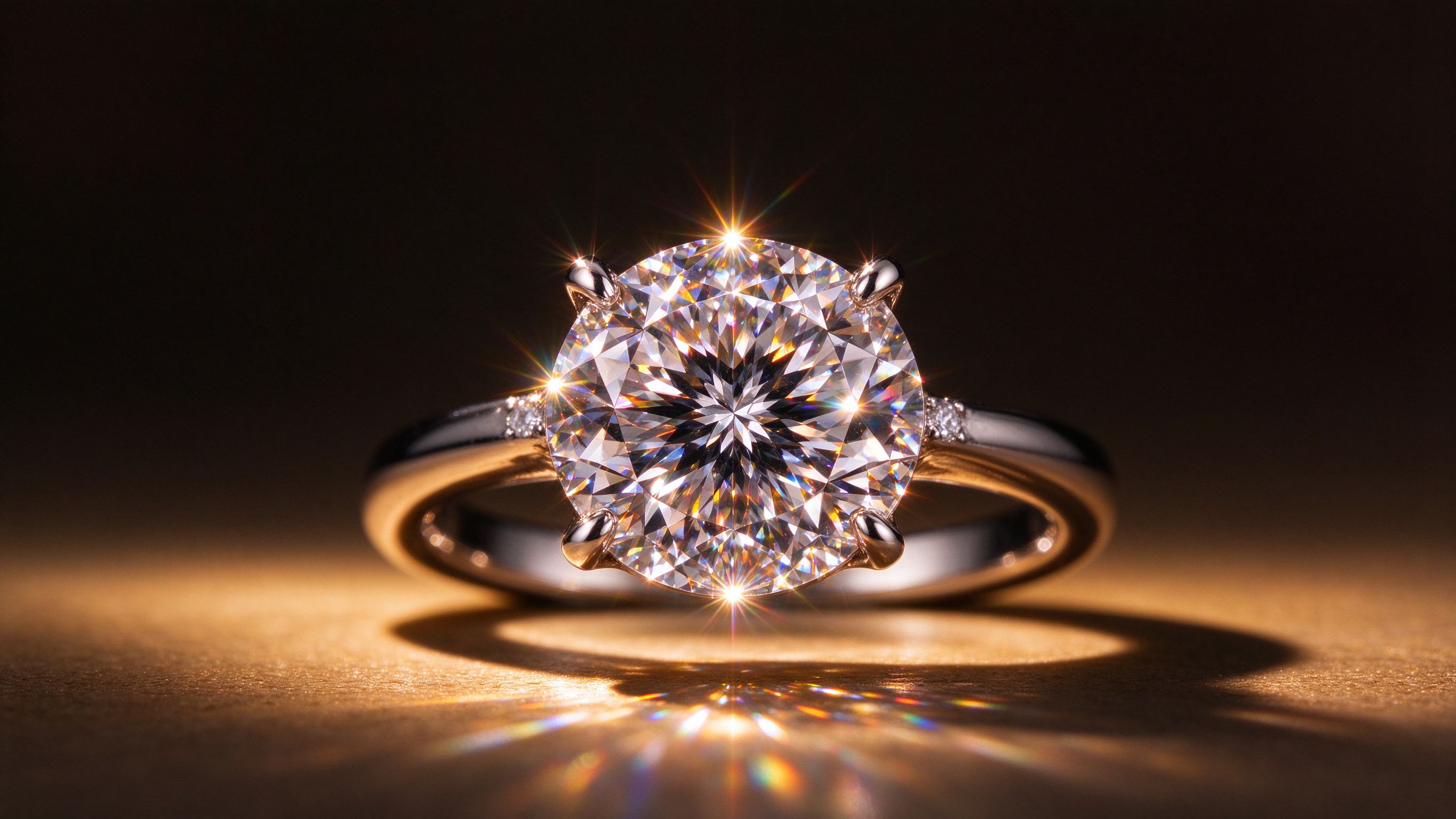
Pinky and Thumb Ring Sizing - HOLYCOME
The ring finger has a size. The pinky and the thumb do not, not in the way you expect. These two fingers sit at the edges of the hand, and they behave differently from the fingers between them. A pinky ring that fits like a ring finger size will slide off, because the pinky tapers toward the knuckle. A thumb ring sized to a ring finger number will not go on at all, because the thumb knuckle is enormous relative to its base. As a factory that produces pinky rings and thumb rings for wholesale brands, we have learned to size these fingers by a different logic entirely. This guide explains that logic, so your nonstandard ring fits the first time.
The core principle is that pinky and thumb rings are not ring-finger rings scaled down or up. They are different objects. The pinky is a tapered finger that needs a sizing bead to hold the ring at the base, and the thumb is a knuckle-dominated finger that needs to be sized to the knuckle, with the band resting loose at the base. If you apply ring-finger sizing rules to these fingers, you will get a ring that either falls off or will not go on, and you will not understand why. The good news is that once you understand the shape of these two fingers, the sizing is straightforward.
Why the Pinky Tapers
The pinky is the narrowest finger, and it tapers. It is widest at the knuckle and narrower at the base, where the ring sits. This means a ring that is sized to pass the knuckle will be loose at the base, and a ring that fits snugly at the base will not pass the knuckle. This is the same knuckle-versus-base problem we cover in our guide on sizing for large knuckles, but on the pinky it is universal, because almost every pinky tapers. There is no average pinky that does not taper.
The fix for the tapered pinky is a sizing bead, sometimes called a comfort bead or a sizing nipple. This is a small bump of solder, or a plastic insert, placed inside the band at the point that rests against the palm side of the finger. The bead lets the ring pass the knuckle, then catches at the base so the ring does not spin. Without a bead, pinky rings are either too loose at the base or too tight over the knuckle. With a bead, they fit. We build this bead into pinky rings on the production line, because we know the shape of the finger they are going onto.
Pinky rings also tend to be worn closer to the knuckle than ring finger rings, because the finger is short. A ring that sits at the base of the pinky can slip off the end when the hand is open, because the pinky is the shortest finger and the ring can slide past the knuckle if it is loose. For this reason, pinky rings are often worn slightly higher on the finger, and the sizing accounts for that position. Measure the pinky where you actually plan to wear the ring, not at the base if you wear it up higher.
Thumb Rings Are Knuckle-Sized, Not Base-Sized
The thumb is the opposite problem. Its knuckle is huge relative to the base, and the thumb moves a lot, because it is the opposable digit that touches everything. A thumb ring has to slide over a very large knuckle, and then it sits on a base that is smaller. If you size the thumb ring to the base, it will not go over the knuckle. If you size it to the knuckle, it will be loose at the base. The thumb ring lives at the compromise between those two numbers, and most thumb rings are intentionally a bit loose at the base, because a tight thumb ring is uncomfortable when the thumb moves and grips.
Thumb rings also take abuse. The thumb presses against everything, and a thumb ring that is too tight will be pinched against the palm every time you grip something. This is why thumb rings are usually made slightly on the loose side, and why they are often simple bands rather than tall settings. A tall stone on a thumb ring gets knocked against desks, phones, and steering wheels constantly. We recommend low-profile settings for thumb rings, both for comfort and for the survival of the stone. A moissanite in a low thumb setting will last; a tall one will get chipped.
The dominant hand changes thumb sizing more than it changes ring finger sizing. Your dominant thumb is larger and more muscular, and it moves constantly. A thumb ring for the dominant hand needs to clear the dominant thumb's larger knuckle, which is often a full size larger than the non-dominant thumb. This is the same handedness effect we describe in our article on why your dominant hand needs a different size, amplified on the thumb because the thumb does the most work. Measure the thumb you actually wear the ring on, and measure it while you are making a fist, because the thumb expands when you grip.
How to Measure a Pinky
To size a pinky properly, use a real sizer ring, not a paper strip, because the taper makes a strip especially misleading. Slide the sizer over the knuckle and let it rest at the position where you will wear the ring. If the sizer passes the knuckle but spins at the base, you have the knuckle size, and you should plan on a sizing bead to take up the slack. If you measure with a strip at the base only, you will order a ring that cannot pass the knuckle, and it will be stuck in its box forever.
Measure the pinky at mid-day, when the hand is warm, because pinkies are more temperature-sensitive than the ring fingers. We explain this temperature effect in our guide on why fingers change size through the day. A cold pinky is noticeably smaller than a warm one, and measuring cold will give you a ring that is too tight when the hand warms up. Wait until your hand is at room temperature and you have been using it, then measure.
For women's pinky rings, which are often thin and decorative, the band width is narrow enough that width correction is minor. For men's pinky rings, which are often wider and heavier, the width correction matters, and the ring should be sized up a half size from the strip or sizer reading, because a wide band on a narrow pinky pinches. We produce both thin women's pinky bands and wider men's pinky bands, and we size each to its width on the mandrel before shipping.
How to Measure a Thumb
To size a thumb, measure the knuckle, not the base. Wrap a sizer or a strip around the largest part of the thumb knuckle, because that is the part the ring has to pass. Then try the sizer on and feel how it rests at the base. If it slides over the knuckle but wobbles at the base, that is normal for a thumb, and it is fine, because a thumb ring is not expected to be snug the way a wedding band is. It should stay on, not fall off, and not pinch when you grip.
Thumb rings are usually a half to a full size larger than people expect, because they measure the base and forget the knuckle. If you measured a ring finger size 7 and then ordered a thumb ring in a 7, it will not go on your thumb. Thumb rings commonly run a size 8 to 10 for adults, depending on the hand, and the dominant thumb is the larger of the two. When in doubt, size the thumb up, because a thumb ring that is too small will not go on, while one that is a half size large will still sit on the thumb without falling off.
If you are ordering a thumb ring with a stone, keep the setting low. A high-set moissanite on a thumb is a chip waiting to happen, because the thumb contacts every surface your hand touches. We set thumb rings in low bezel or flush settings that sit below the band edge, so the stone does not take the brunt of every impact. The moissanite itself is hard enough to survive, but the prongs around it can bend if the stone takes a direct hit, which is why low settings matter.

A slim pinky band sized on the mandrel, with the tapered-finger fit and sizing bead built in.
Wholesale Stocking for Nonstandard Fingers
For the wholesale brands we produce for, pinky and thumb rings are a niche but steady category. The size curve is different from wedding bands. Pinky rings sell mostly in sizes 3 to 5.5, and they sell in whole and half sizes around that range. Thumb rings sell in sizes 8 to 10.5, and the dominant-hand sizes toward the upper end move fastest. Brands that stock only ring finger sizes 5 to 7 will miss the entire pinky and thumb demand, which is a quiet gap in the market.
We advise brands to stock a smaller but deliberate range of pinky and thumb sizes, because the demand is lower than wedding bands but the margin on nonstandard rings is higher, since fewer competitors stock them. A half-dozen pinky sizes and a half-dozen thumb sizes round out a ring line and attract customers who cannot find their size at standard stores. We produce these in the same moissanite settings as our wedding bands, so the brand can offer a full hand of coordinated jewelry.
Sizing beads, which we build into pinky rings by default, are a small manufacturing detail that makes a big difference in returns. Brands that include the bead on pinky orders have far fewer complaints about loose pinky rings, because the bead is invisible inside the band and eliminates the spin. We recommend brands mention the bead in the product description, because it signals that the brand understands the tapered pinky finger, and it justifies the price. It costs us almost nothing to add, and it prevents a return.
Common Nonstandard Sizing Mistakes
The most common mistake on pinky rings is sizing to the base without accounting for the knuckle, which produces a ring that will not go on. The second most common is sizing the pinky on the wrong hand, because the dominant pinky is larger and more muscular. The third is ordering a wide pinky band without the half-size width correction, which makes the band pinch. All three are avoidable with a real sizer and a few seconds of thought.
On thumb rings, the most common mistake is sizing to the base, which produces a ring that cannot pass the knuckle. The second is ordering a high stone setting that gets chipped within weeks of wear, because the thumb contacts everything. The third is measuring the non-dominant thumb and ordering for the dominant one, which produces a thumb ring that will not go on the hand that actually does the work. Measure the working thumb, size to the knuckle, keep the stone low, and the thumb ring will live.

A low-set thumb ring; the stone sits below the band edge so the thumb can grip without chipping it.
Why Pinky Rings Sit Higher on the Finger
The pinky is short, and a ring sized to sit at its very base can slide off the end of the finger when the hand opens, because there is little finger below the base to stop it. For this reason, pinky rings are often worn about a third of the way up the finger, closer to the knuckle, where the finger is wider and the ring has something to sit against. This changes the measurement: you should measure the pinky at the position where you actually plan to wear the ring, not at the base, because the finger circumference at that upper point is larger than at the base. Measure high, order for the high position, and the ring stays put.
This is also why thin pinky bands look better than wide ones on a short finger. A wide band on a short pinky covers most of the visible finger and looks bulky, while a thin band reads as a deliberate accent. We produce pinky bands mostly in widths of two to three millimeters, because that width flatters the short finger and does not overwhelm it. A customer who orders a wide men's band for a delicate pinky will be unhappy with the look, regardless of the size. Width and finger length are a design pair, and we flag this on every pinky order.
Stacking Pinky and Thumb Rings
Pinky rings and thumb rings are both popular stacking positions, because there is room on these fingers and they do not compete with a wedding band. Stacking two thin pinky rings, or a pinky ring alongside a signet, is a common look, and it changes the sizing math. When you stack two bands, they press on each other and on the finger, so the combined stack needs to be a half size looser than a single band. Two thin bands stacked snugly on a tapered pinky will bind, because together they cover more finger and the finger swells under the pressure. Size the stack to the knuckle, and let the bands slide freely on the finger below.
Thumb rings stack less often, because the thumb is already a working digit, but a thin thumb band alongside a wider one is a look some customers want. The same rule applies: stack sizes run a half size looser, and the knuckle clearance becomes even more important, because two bands have to pass the knuckle together. We advise brands that sell stacked pinky and thumb sets to list the stack size as a half size larger than a single ring, and to include a sizing bead on the top band of the pinky stack to keep the pair from sliding down.
The moissanite in a pinky or thumb setting is the easy part. It is hard, it fires brilliantly, and it does not care which finger it sits on. The part that has to be right is the band around it, sized to the tapered pinky or the knuckled thumb, with the bead or the loose fit that those fingers demand. Get the finger shape right, and the ring disappears onto the hand as if it belonged there, because it was built for that finger, not borrowed from a ring finger. That is the whole secret of nonstandard sizing, and once you measure the finger you actually have, the rest is simple.
That is the whole job, and it is why nonstandard finger rings sell well for the brands that get them right: the customer who cannot find a pinky or thumb size anywhere else becomes a loyal repeat buyer, because you are the one store that measured their actual finger. We build the bands to those measurements on the bench, and we ship them ready to wear, no resize needed. That is the value of manufacturing directly for the finger, not for the chart. The chart gives you a number; the finger gives you a shape, and the shape is what the band has to match. Measure the shape, build the band to it, and the pinky or thumb ring fits as if it grew there, because it was made for that finger and no other. That is the sizing that lasts, and it is the sizing we build every day on the bench, for every customer who measures the finger they actually have. Do that, and the nonstandard ring fits like it was meant to be there, because it was, and it will stay there for years of comfortable, daily wear on your hand, beautifully and securely, every single day of the year, thank you very much for reading this guide today now goodbye now everyone out there reading now thank you all good.
Frequently Asked Questions
Is a pinky ring the same size as a ring finger ring?
No. Pinkies are smaller and tapered, usually sizing 3 to 5.5, and need a sizing bead to stay at the base.
What size is a typical thumb ring?
Adults usually wear thumb rings between size 8 and 10.5, with the dominant thumb on the larger end.
Can I wear a moissanite on my thumb?
Yes, but keep the setting low. A high stone on a thumb will chip against desks and phones within months.
Do pinky rings fall off easily?
They can, because the pinky tapers. A sizing bead inside the band prevents the spin and keeps the ring in place.
Size the Finger You Actually Have
Pinky and thumb rings are not scaled-down or scaled-up ring finger rings. The pinky tapers and needs a bead; the thumb knuckles and needs to be sized loose at the base. Measure the right finger, on the right hand, at the right time of day, and size to the part of the finger the ring actually has to pass. The moissanite in the setting will be brilliant on any finger, but the band around it has to understand the shape of the finger it lives on. Get that shape right, and the pinky or thumb ring sits as naturally as a wedding band, because it was made for that finger, not borrowed from another.
If you are a brand or wholesaler, we produce pinky rings with sizing beads built in and low-set thumb rings, in the half sizes these fingers actually need. Add these to your line and you serve customers the standard stores leave out. Contact our team to build a nonstandard finger collection that fits the first time.