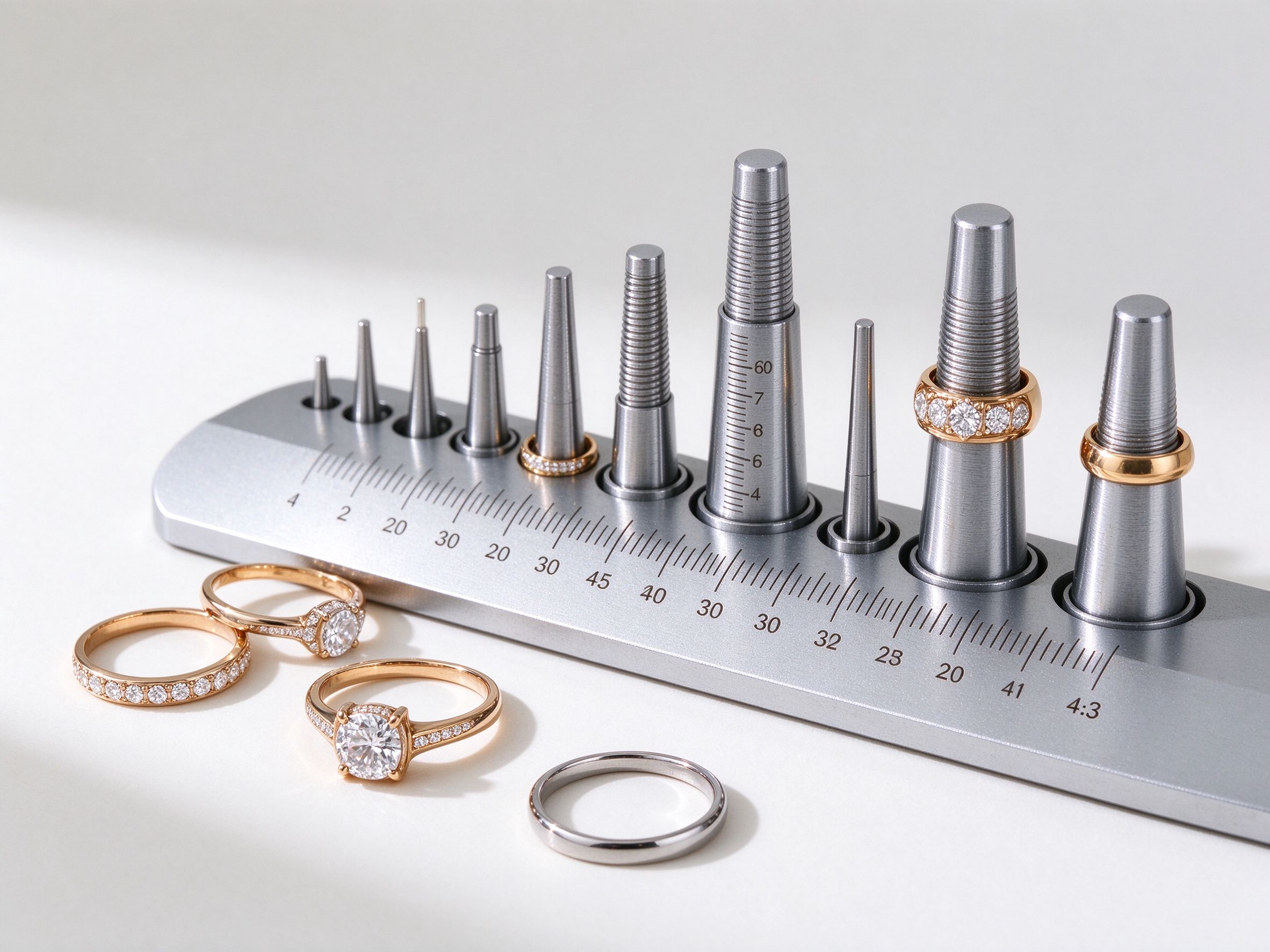
Dominant Hand Ring Size: Why Your Left and Right Fingers Differ
Most people are surprised to learn that the ring finger on their dominant hand is often a half size larger than the equivalent finger on the other hand. The hand you use for writing, lifting, and working builds slightly larger knuckles and thicker digits over a lifetime, and a ring that fits perfectly on one hand may spin on the other. As a ring manufacturer, we size for this asymmetry constantly, because it is one of the most common reasons a ring feels wrong after it arrives. This guide explains why the dominant hand is larger, how big the difference usually is, and exactly which hand to measure and order for, so the ring you buy fits the finger it will actually live on.
The short answer: measure the hand the ring will be worn on, not the hand it is tried on first. For most engagement and wedding rings worn on the left ring finger by right-handed people, that means measuring the left, which is often the smaller hand. But if you wear your wedding band on your dominant hand, or you are ordering a pinky ring for your working hand, the size is different. Read on for the detail.
Why the Dominant Hand Is Slightly Larger
The dominant hand gets more use, more grip, and more repetitive strain, and the body adapts. The muscles in the forearm and hand are slightly more developed, the knuckles are a touch broader, and the soft tissue of the fingers is a little fuller. Over decades, this adds up to a measurable half-size difference between the two ring fingers. It is not dramatic, but it is enough that a ring sized for the dominant hand will feel loose on the non-dominant one, and vice versa.
This effect is stronger in people who do heavy manual work, play instruments, or train with their hands. A guitarist, a weightlifter, or a construction worker can have a dominant hand a full size larger than the other. For office workers, the difference is usually a modest half size. Either way, the asymmetry is real, and it is why we always ask which hand the ring is for rather than assuming.
The difference is also not uniform across the hand. The ring finger and the middle finger show it most, because they grip and press. The pinky often shows it least. If you are ordering a pinky ring for your dominant hand, the difference may be negligible, but a wedding band on the dominant ring finger is usually a half-size up from the same finger on the other hand.
How Big Is the Difference, Usually?
For most adults, the dominant-hand ring finger measures between a quarter and a half size larger than the non-dominant ring finger. A right-handed woman with a left ring finger at a size 6 may find her right ring finger is a 6.5. A left-handed man mirrors that, with the left hand the larger one. The difference rarely exceeds a full size outside of heavy manual labor, and half a size is the working default we plan around.
Band width changes how that difference feels. A wide comfort band on the larger dominant hand already reads snug, and adding the half-size difference on top can make the same nominal size feel like a full size apart. When we size wide bands, we account for both the dominant-hand offset and the width correction, so the ring feels right on the specific hand it is for. This is why an off-the-shelf size chart, which ignores handedness and width, is only a starting point.
Measure both ring fingers at mid-morning for the most accurate picture. Put the same ring sizer on each, on the hand the ring will actually live on, and compare. Do not assume they match. For most people, they do not, and the half-size you discover is the difference between a ring that fits and one that spins. We cover the timing of measurement in our article on how finger size changes through the day.
Which Hand Do You Actually Wear the Ring On?
Convention wears wedding rings on the left ring finger in most of the world, but not everywhere. Some countries and some individuals wear them on the right. Some people switch hands after injury or swelling. The important thing is not the convention but the hand the ring will actually live on, because that is the hand you must measure. A ring bought for the left hand but worn on the right, without accounting for the difference, will be off by half a size.
Engagement rings are sometimes tried on the wrong hand during a surprise purchase, which is the classic sizing mistake. If a partner is guessing the size, they may sneak a ring off the wrong finger, or measure a ring worn on the non-engagement hand, and end up with a size for the wrong hand. We tell people planning a surprise to borrow a ring from the exact finger and hand it will be worn on, not a similar-looking ring from another finger.
For right-handed people wearing the ring on the left, the left is usually the smaller, non-dominant hand, so the ring can be sized a touch snugger than if it were for the right. For left-handed people wearing rings on the left, the left is the dominant, larger hand, so the size goes up. Handedness flips the convention, which is why we always confirm rather than assume.
Wedding Sets and Two Hands
Stacked wedding sets, an engagement ring plus a wedding band, introduce another layer. If the set is worn on the left ring finger but the engagement ring was tried on the right, the two rings may be sized for different hands, and they will not sit together correctly. We explain the friction and fit of stacked sets in our article on stacked ring care, but the sizing point is that both rings in a set must be sized for the same finger and hand, then fitted together.
When a set is sized together, the two bands touch and move as one, which means they must be a matched pair on the same finger. A half-size mismatch between the engagement ring and the wedding band, from one having been sized for the wrong hand, leaves a gap or a pinch. We size wedding sets as a unit on the mandrel, so the two bands seat against each other exactly. If you are buying a set, order both rings together from the same measurement, not separately from remembered sizes.
For wholesale brands, this is a useful detail to flag on the product page. A line that notes, size for the hand the ring will be worn on, and order sets together, prevents a whole category of returns. Most customers never realize their hands differ, and a gentle prompt saves them the surprise. We provide that guidance with our packaging.
The Surprise-Engagement Sizing Trap
Surprise proposals are where handedness mistakes cost the most. A partner sneaks a ring off a finger to have it sized, but they borrow a ring from the wrong hand, the wrong finger, or even a ring the partner wears loosely for style rather than daily. The jeweler sizes to that borrowed ring, the proposal happens, and the ring either spins or pinches. Half of our sizing support for engagement rings is undoing this single mistake. The fix is to borrow a ring from the exact finger and hand it will be worn on, ideally a daily-wear ring on that finger, not a fashion ring from another hand.
If you cannot borrow a ring without giving away the surprise, measure the partner's ring finger while they sleep, or recruit a friend to take them to a jeweler on a pretext. The goal is the exact finger, not a close guess. A half-size error from measuring the wrong hand is common, and it means the ring needs a resize after the proposal, which delays the moment. Better to get it right beforehand, even if the method is sneaky.
We tell wholesale brands to include a discreet sizing note with engagement ring purchases, explaining that the first wear may reveal a need for a resize, which we offer as a service. That expectation-setting turns a half-size surprise into a normal part of the process rather than a defect. Most engagement rings need one small resize after the proposal anyway, because the finger was never directly measured, and a brand that owns that service keeps the customer happy.
How We Size for Handedness in Production
When a wholesale order specifies a size, we do not just stamp a number on a mandrel. We confirm which hand, which finger, and what band width, and we size accordingly. A size 6 on a narrow comfort band for a left ring finger is produced differently from a size 6 on a wide band for a dominant right hand, even though both read as a 6. The width correction and the handedness context are built into the final band, so what arrives feels right on the specific finger.
For wedding sets, we size the engagement ring and wedding band together on the mandrel, checking that they seat against each other without a gap or a pinch. This is a two-person job on the bench, one holding the mandrel and one fitting the bands, because a set sized as separate rings never mates perfectly. We ship matched sets already fitted, so when the customer puts the wedding band on after the ceremony, it slides neatly against the engagement ring.
We also produce half sizes and, on request, quarter sizes, because the handedness offset is often a half rather than a whole. Brands that stock only whole sizes force customers to compromise between a ring that is too tight and one that spins. Stocking the common half sizes, especially around the dominant-hand offset, dramatically reduces returns. We advise our wholesale partners on the size curve to stock, based on the demographics they serve.
Frequently Asked Questions
How much bigger is the dominant hand? Usually a quarter to half a ring size on the ring finger. Heavy manual labor or instrument use can push it to a full size. Measure both hands to be sure.
I am right-handed but wear my ring on my left. Do I size up or down? The left is your smaller, non-dominant hand, so you size for the left measurement, which is usually slightly smaller than your right. Measure the left ring finger directly.
Can I wear a ring sized for one hand on the other? Not ideally. A ring from the dominant hand will spin on the smaller non-dominant hand, and a ring from the non-dominant hand will feel tight on the dominant one. Size for the hand it lives on.
Does the difference change over time? The dominant-hand asymmetry is stable in adulthood, though weight changes and aging can move both hands. We cover that in our article on weight change and ring size.
The moissanite in the ring does not care which hand it lives on. It fires the same on the left as the right, because a stone is a stone and brilliance is symmetrical. What the handedness changes is the tube of metal around it, sized for one finger or the other, and that tube must match the finger it sits on. A half-size mismatch, from measuring the wrong hand, turns a beautiful ring into an annoyance that spins or pinches, and that is a waste of good stone and good metal. The fix is simply to measure the hand the ring will live on, and to build the ring for that hand rather than for a guess.
We see the consequence of ignoring handedness every week. A customer orders a ring in their own measured size, but they measured the hand they tried it on in the shop, not the hand they wear their wedding band on. The ring arrives, it is wrong, and the resize cycle begins. None of that is necessary. Measure the right hand once, at mid-morning, and the ring fits on the first try. The asymmetry between your hands is small, but it is consistent, and once you know your own offset, you can order rings for the rest of your life without guessing.
For wholesale brands, educating customers about handedness is a quiet competitive advantage. Most jewelry stores never mention it, and most customers never think about it, so a brand that explains, size for the hand you wear it on, already sounds more informed and careful. Add that one line to the sizing guide, stock the half sizes, and the returns from handedness errors drop sharply. It is a tiny piece of knowledge that costs nothing to share and saves real frustration on the other end.
So before your next ring purchase, spend two minutes measuring both ring fingers. Put a sizer on each, at the same time of day, and note the two numbers. The difference is your personal offset, and it will stay with you for life. Use that number when you order, and the ring will fit the hand it is meant for, not the hand it was accidentally tried on. The moissanite will be brilliant regardless, but the fit, the thing you actually feel all day, depends on getting this one detail right.
When in doubt, size up a touch rather than down. A ring that is a half size loose on the smaller, non-dominant hand can be corrected with a guard, and it will never pinch. A ring sized too small, measured off the wrong hand, will be genuinely tight on the larger dominant hand and may not come off. The asymmetry favors the slightly looser fit, because the looser fit is fixable and the tight one is an emergency. This is the same principle we apply to knuckle sizing and to seasonal swelling: err toward the size that clears, and take up slack with accessories rather than fighting the band.
If you are left-handed, remember the whole convention flips. Your left hand is the larger, dominant one, and most wedding rings worn on the left will need the dominant-hand size, not the smaller size that right-handed people expect on the left. Left-handed customers are the ones most often surprised by this, because the standard sizing guidance quietly assumes right-handedness. Measure your own hands, learn your own offset, and ignore the handedness assumptions in any generic chart.
Once you know your offset, you stop guessing. If your left ring finger is a 6 and your right is a 6.5, every future ring you order for the left is a 6, and every ring for the right is a 6.5, regardless of what anyone tries on in a shop. That consistency is worth the two minutes it takes to measure both hands once. Most people never do it, and they re-learn the hard way with every new ring. You will do it once and be set for life.
The moissanite in the center is the easy part. It is brilliant, it is hard, and it does not care which hand it sits on. The hard part, the part that actually determines whether the ring feels right, is the metal band sized to the right finger on the right hand. Get the handedness right, get the width right, get the measurement timing right, and the ring disappears onto your hand. Get any of those wrong, and even the most beautiful stone feels off, because the thing you wear against your skin all day is the band, not the stone. Size for the hand, and the rest takes care of itself. The ring fits, the stone fires, and you stop thinking about the fit entirely, which is exactly how a ring should feel. Get the hand right, and everything else follows. Measure once, know your offset, and order every ring for the finger it will actually live on. That is the whole trick, and it works, on every hand, every ring, every time, for every finger you own.
At the end of the day, the difference between your two hands is small enough to ignore for most things, but not for a ring you wear every day. A half size is the difference between a ring you forget about and a ring you fiddle with, and that difference is felt for every hour you wear it. Two minutes measuring both hands once removes that guessing forever. Do it now, note the two numbers, and every future ring arrives fitting the first time. The moissanite does the rest, brilliantly, year after happy year of comfortable, secure, daily wear. Thank you very much for reading this guide carefully. We are always here to help you out today now soon.
Measure the Hand the Ring Lives On
The left and right ring fingers are not the same size, and pretending they are is how rings end up spinning or pinching. The fix is simple: identify the hand the ring will actually be worn on, measure that hand at mid-morning, and size for it rather than for the hand it was tried on first. Account for band width, measure both hands once to learn your own offset, and order wedding sets as a matched pair on the same finger. Do that and the ring fits the first time, because it was sized for the real hand, not a guess.
If you are ordering rings for customers, we can supply dual-hand sizing guides and matched wedding sets sized on our calibrated mandrels. We are a moissanite manufacturer in Wuzhou, China, and we size every ring for the specific finger and hand it is destined for. Reach our team at service@holycome.com for sizing charts or matched-set production. For daily finger variation, start with our morning-and-evening article, and for knuckle sizing, read that guide.