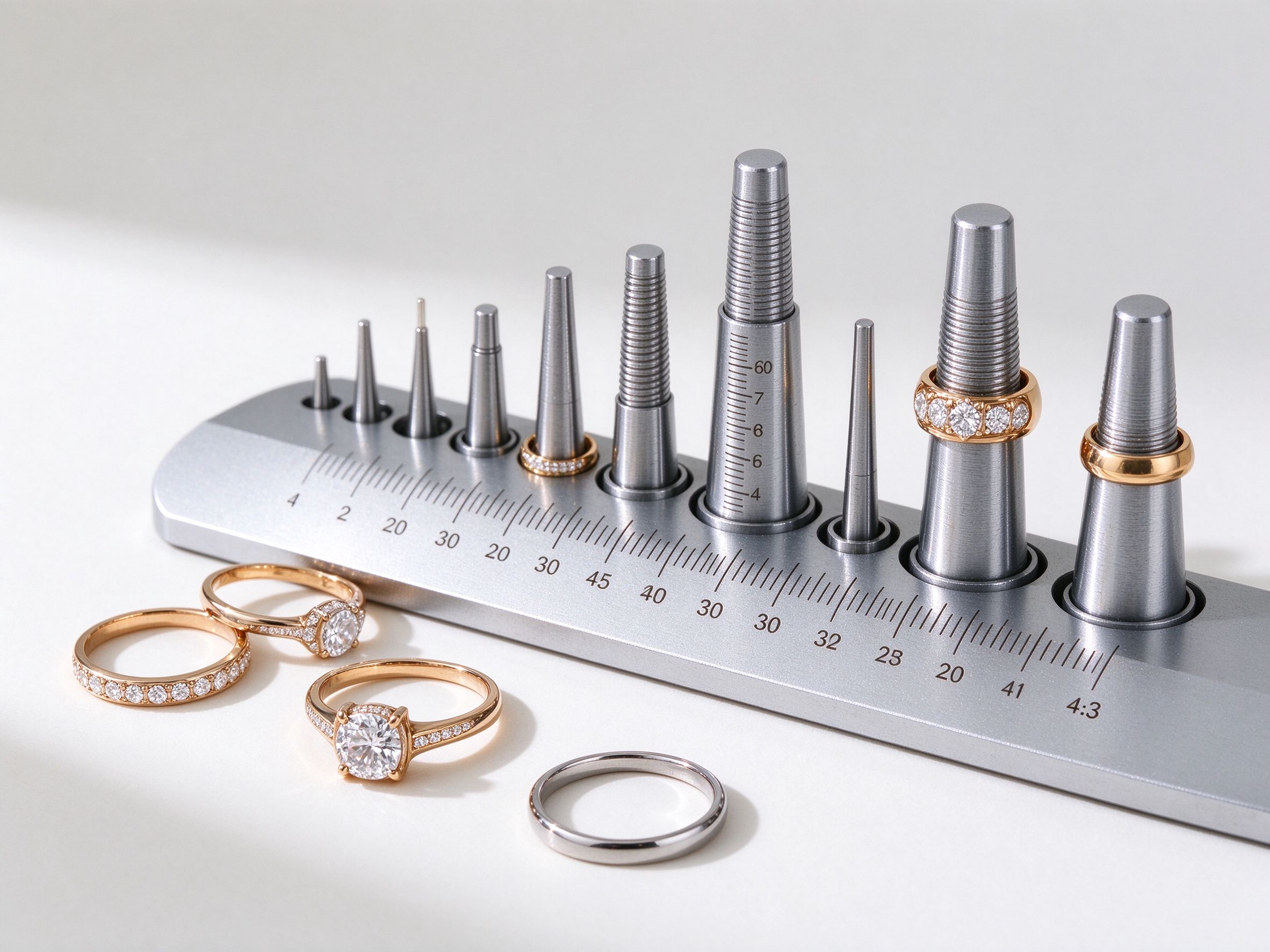
Large Knuckles: How to Size a Ring When Your Knuckle Is Bigger Than Your Finger
Some fingers are shaped like a smooth tube, and sizing them is easy. Others have a knuckle that is noticeably wider than the base of the finger, and the ring has to climb over the knuckle to land on the finger below. For those hands, the usual rule, a ring that slides on snugly and sits comfortably, falls apart: the size that slips over the knuckle is too loose on the finger, and the size that fits the finger is impossible to put on. As a ring manufacturer, we size for this shape every day, and there are reliable ways around it. This guide explains how knuckle-sized fingers actually measure, what to choose, and the design tricks that make a big-knuckle ring stay on without a struggle.
The core problem is that you are not measuring a single size. You are choosing a compromise between two sizes, the knuckle that the ring must pass over and the finger where it must sit. Get the compromise right and the ring goes on with a little effort and sits securely. Get it wrong and you fight the ring every morning, or wear something that spins. Read on for how we solve this on the bench.
Why the Knuckle Is the Real Obstacle
The knuckle is bone, joint, and tendon, and it does not shrink or swell the way the soft finger below it does. Fingers swell and slim with heat and time of day, but the knuckle stays put. For someone with a large knuckle, the knuckle becomes the fixed bottleneck, and everything has to be sized to clear it. The soft part of the finger, by contrast, can vary by half a size across a day. So the ring is sized to the hard knuckle, and then judged on the soft finger.
This means a knuckle-sized ring will always feel a touch loose on the finger below, especially in the morning when the finger is slimmest. That looseness is not a sizing mistake; it is the necessary cost of clearing the knuckle. The mistake is fighting it by sizing smaller, which makes the ring impossible to put on without soap, pain, and the risk of getting stuck halfway. We tell customers: size to the knuckle, accept a little morning looseness, and use the tricks below to take up the slack.
Many people with large knuckles naturally avoid rings entirely, because the last one they tried either would not go on or spun off. That is a shame, because the shape is very workable with the right band design and a few accessories. You do not have to abandon rings; you just have to size for the knuckle rather than the finger.
The Right Way to Measure a Big-Knuckle Finger
Measure both points. First, measure the base of the finger where the ring will sit, the comfortable size. Then measure over the knuckle, the size the ring must climb. Compare the two. If the knuckle reads a half size larger than the finger, size the ring to the knuckle and use a guard. If the knuckle reads a full size larger, you are in the range where a comfort-fit band is almost essential, because its rounded inside edge slides over the bone much more easily than a flat inside band.
Do the measurement at mid-morning, when the finger is average, for the same reasons we cover in our article on how finger size changes through the day. Measure the knuckle at its widest point, not the base. If you are using a paper strip, pull it over the knuckle the way the band would travel, and mark where it overlaps. That travel-over-the-knuckle measurement is the one that matters, not the snug base measurement.
If at all possible, try a ring on over the actual knuckle you will wear it on. The feel of a band passing over bone tells you more than any measurement. A ring that slides over the knuckle with a slight twist and sits securely below is the target. A ring that jams halfway is too small. A ring that falls off the finger on its own is too large. Feel your way to the compromise rather than trusting a single number.
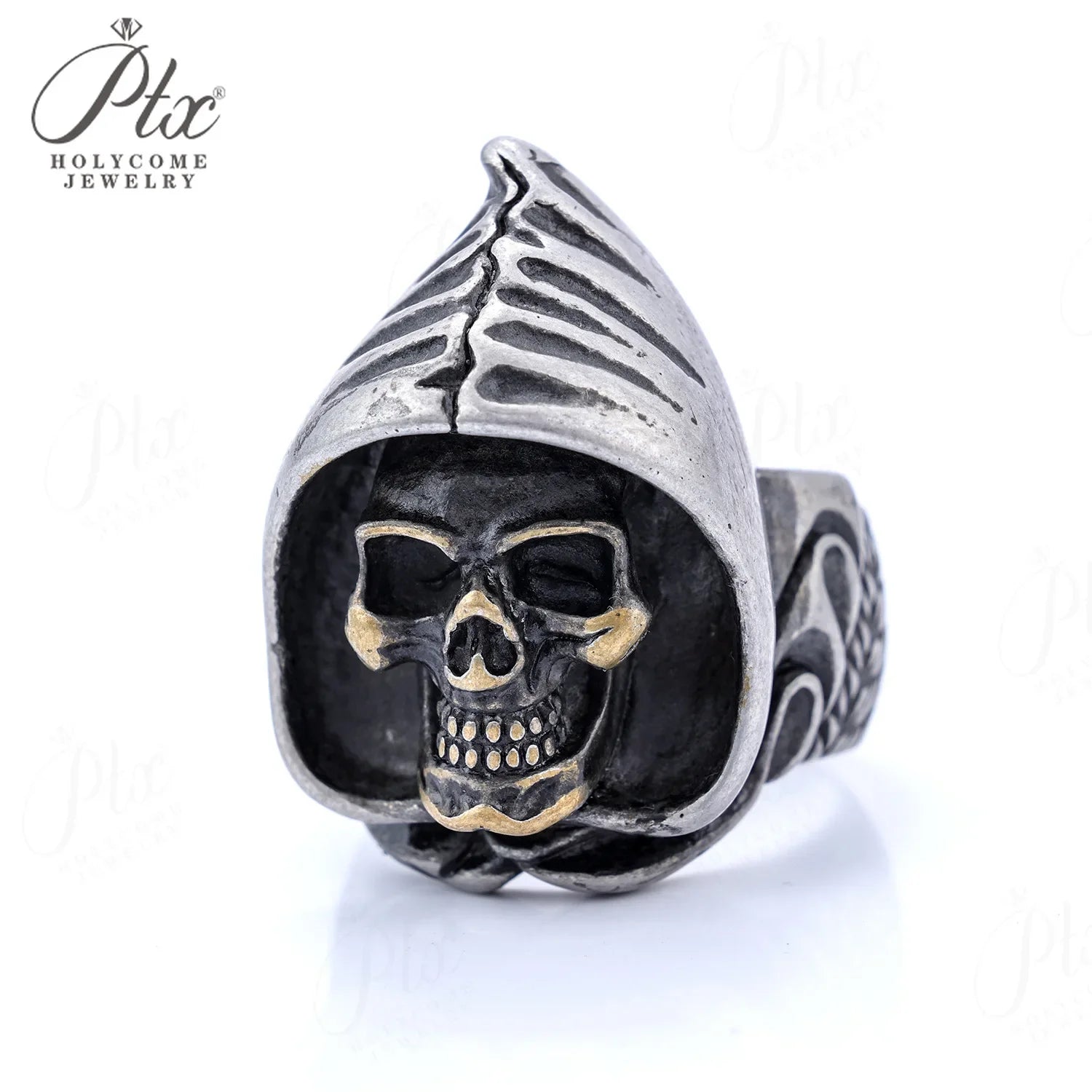
Comfort Fit: The Design That Solves Most of It
A comfort-fit band has a rounded, domed inside edge rather than a flat one. That curve slips over a knuckle dramatically more easily, because it is pushing against less surface as it climbs the bone. For large-knuckle fingers, comfort fit is not a luxury, it is the standard. We build comfort-fit bands for exactly this reason, and they are our default for anyone whose knuckle reads larger than the finger. The same nominal size slides on with half the effort of a flat-fit band.
Comfort fit also means the ring can be sized slightly smaller than a flat band for the same finger, because it travels more easily. When we quote a comfort-fit ring, we account for that. A customer who wears a flat band in a size 6 may wear our comfort band in a 5.75 or even a 5.5, because the rounded edge clears the knuckle without the extra half-size up that a flat band would need. This is why trying on the actual band profile matters more than the number alone.
The trade-off is that comfort-fit bands use slightly more metal and cost a little more to produce. For large-knuckle wearers, that cost is trivially worth it, because it is the difference between a ring that goes on easily and one that is a daily battle. We offer both profiles, but for knuckle-shaped fingers we always recommend comfort fit, and we explain the difference clearly on the product page so the customer orders the right thing.
Ring Guards and Resizers for the Loose Finger
Once the ring is sized to clear the knuckle, the finger below is often a touch loose, especially in the morning. A ring guard solves this. Guards are small inserts, plastic, metal coils, or adjustable bars, that sit inside the band and take up the slack on the finger. They are cheap, reversible, and they let you keep the knuckle-friendly size while wearing the ring securely. We recommend them as the default for knuckle-sized rings, rather than sizing smaller.
Spiral resizers, the coiled metal kind, wrap around the inside of the band and add thickness gradually. They are adjustable, so you can add or remove coils until the ring sits snug without being tight. Plastic inserts clip inside the band and are invisible once worn. Both work, and both are preferable to soap and ice water, the desperate methods people use to force an over-tight ring over a knuckle. A guard is a two-dollar solution to a problem that otherwise costs a stuck ring.
For wholesale brands, offering a free guard with knuckle-sized rings is a small touch that prevents returns. A customer who ordered a ring sized to their knuckle and found it loose in the morning is not a sizing failure; they just needed the guard. Include it, explain it, and the ring fits perfectly. We supply guards alongside our comfort-fit bands for exactly this reason.
When to Size the Ring to the Finger Instead
There are cases where sizing to the knuckle is not the right call. If the knuckle is only marginally larger, a comfort band and a little soap, not dish soap, but a slippery lotion, is enough to get the ring on, and sizing to the finger gives the best day-long fit. In those cases, fighting for a perfect knuckle clearance overshoots into a permanently loose ring. The compromise depends on how big the gap really is.
If you cannot decide, size to the knuckle and add a guard. It is the safer direction, because a guard can always be removed or thinned, but a ring sized to the finger that will not clear the knuckle is unwearable until it is professionally stretched up, which has limits. Err toward the slightly larger, knuckle-clearing size, and take up slack with a guard rather than pain.
We explain the dominant-hand and weight-change variables in our other sizing guides, including our article on dominant hand differences and weight change. Large knuckles interact with both, because the knuckle on your dominant hand is often slightly larger still. Measure the exact hand and the exact knuckle, and size for that.
Common Mistakes Big-Knuckle Wearers Make
The first mistake is sizing to the finger and fighting the knuckle. People measure the soft base, order that size, and then cannot get the ring over the joint. The ring sits in a drawer, unused, because it feels unwearable. This is the most common knuckle mistake, and it is entirely avoidable by measuring over the knuckle instead. The base size is a reference, not the order size.
The second mistake is the opposite: sizing to the knuckle without a guard, then complaining the ring spins. A knuckle-sized ring will always be a touch loose on the soft finger, and in the morning, on a slim finger, that looseness is obvious. People feel the spin and assume they ordered the wrong size, when they actually just need a two-dollar guard. The guard is not an admission of failure; it is the designed companion to knuckle sizing.
The third mistake is forcing the ring. Soap, oil, ice water, and twisting a stuck ring over a knuckle is how people bend prongs, scratch bands, and even panic with a half-on ring. If the band will not pass the knuckle, it is the wrong size, not a strength test. Stop, get a comfort-fit band in the right size, and keep your knuckle intact. The ring should slide over with a little effort, never with a fight.
What We Do for Knuckle-Sized Factory Orders
When a wholesale brand tells us a customer has large knuckles, we do not just ship a standard band and hope. We confirm whether the customer wants comfort fit, we size on our mandrel to the knuckle measurement provided, and we include a guard in the packaging. The guard sits in a small envelope with a note explaining that the ring is sized to clear the knuckle and the guard takes up the slack on the finger. That single note prevents a surprising number of support tickets.
We also recommend a slightly wider band for knuckle-shaped fingers, counterintuitively. A wider comfort band distributes the pressure over the knuckle more comfortably than a thin band, which digs in as it passes the bone. A 4mm or 5mm comfort band often feels easier over a knuckle than a dainty 2mm band, even though the narrow band looks like it should slide more easily. The comfort profile and the width together make the passage smooth.
For brands building a line for older customers, whose knuckles naturally enlarge with age, comfort fit and included guards should be standard. This demographic often stopped wearing rings because the knuckle grew, and a product designed around that shape wins customers who otherwise think rings are no longer for them. We produce comfort-fit bands across our whole range, and we train our wholesale partners on how to measure and explain the knuckle compromise.
Frequently Asked Questions
Should I size my ring to my knuckle or my finger? Size to clear the knuckle, then use a guard for the finger. A ring sized to the finger will not go over the knuckle. A ring sized to the knuckle goes on and sits fine once the guard takes up the slack.
Is a comfort-fit band worth it for big knuckles? Almost always yes. The rounded inside edge clears the knuckle far more easily than a flat band, often letting you wear a half size smaller. It is the single most helpful design choice for this finger shape.
Will a ring that spins in the morning fall off? It may, in the cold, when the finger is slimmest. Use a guard, and remove the ring for hands-on work. A knuckle-sized ring that spins freely is exactly the case where a guard is needed.
Can a jeweler widen the ring to clear my knuckle? Yes, rings can be sized up, but repeatedly widening a band stretches and weakens it. It is better to order the right size from the start, with a comfort profile, than to stretch a tight band multiple times.
The moissanite in the center of a knuckle-sized ring does not care about the shape of your knuckle. It sits brilliant in its setting, unaffected by whether the band slides easily over bone or fights past it. What the knuckle changes is the engineering of the band around it: a comfort profile, a size chosen to clear rather than pinch, and a guard that takes up the slack below. With those three, a finger that once seemed impossible to ring becomes a finger that wears rings comfortably, and you stop thinking about the knuckle entirely. That is the goal, and it is reachable.
Do not let a large knuckle talk you out of wearing rings. It is one of the most common sizing shapes we see, and it is one of the easiest to solve once you stop measuring the soft finger as if it were the whole story. Measure over the joint, choose comfort fit, keep a guard in the drawer, and the ring goes on with a twist and sits secure. Millions of people with knuckle-shaped fingers wear rings every day, and they do it with exactly this compromise.
If you have ordered a ring that fights your knuckle, it is not you and it is not the ring, it is the size and the profile. Swap to a comfort band in a knuckle-clearing size, add a guard, and the problem disappears. We see this conversion every week, and the relief on the customer's side is immediate. The ring was never the issue; the sizing approach was.
For anyone who has given up on rings because the knuckle grew with age, this is the encouraging part: the shape is not a dead end. A comfort-fit band sized to the knuckle, with a guard for the finger below, puts rings back on hands that thought they were done. We produce these bands across our whole range, and the engineering is settled. There is no mystery to it, just the knuckle-friendly design that the shape calls for.
When in doubt, ask. If you are between two sizes, or unsure whether your knuckle needs comfort fit, send us the measurements from both points, the base and the knuckle, and we will tell you which size and profile to order.
That conversation takes minutes and saves a return. We would rather size it right once than ship a ring that fights you every morning, and the whole bench is built to get this compromise correct. The ring that arrives at your door should slide over your knuckle with a twist, sit secure on your finger, and never be fought again. That is the standard we build to, and it is the standard you should expect from any ring you wear.
So if your knuckle has been telling you that rings are not for you, listen to us instead: they are, with the right design. Comfort fit, knuckle sizing, and a guard turn the shape from a problem into a non-issue. The moissanite fires the same regardless, and the band disappears onto your hand.
Stop fighting the knuckle, size for it, and the ring finally wears the way it was meant to. Measure the joint, choose comfort, keep a guard handy, and the daily battle disappears. The ring stops being something you negotiate with every morning and becomes something you simply wear, which is the whole point of jewelry in the first place. We have helped thousands of knuckle-shaped fingers get to that point, and we can help yours too. The right band, the right size, and a small guard, and the knuckle stops being a factor at all. That is what good sizing looks like, and it is what we deliver on every ring we ship, knuckle by knuckle, finger by finger.
At the end of the day, a large knuckle is a small anatomical detail, not a life sentence against jewelry. The ring industry has sized around knuckles for as long as rings have existed, and the tools are simple: a rounded comfort band, a size chosen to clear the joint, and a guard to take up the slack below. None of this is exotic, and none of it is expensive. What it requires is measuring the right point, the knuckle, rather than the soft finger, and accepting that a little morning looseness is the price of easy on and off. Do that, and the knuckle stops mattering. The ring simply lives on your hand, brilliant and secure, and the moissanite fires the same as it would on the smoothest, most tubular finger imaginable.
Size for the Knuckle, Comfort the Finger
A large knuckle is not a reason to give up on rings. It is a reason to size differently: measure the knuckle, choose a comfort-fit band that slides over it, and take up any morning slack with a guard. The ring then goes on with a twist and sits securely, and you forget about the knuckle entirely. The moissanite on top does not know or care about the shape of your finger; it just sits there brilliant. The band design is what bridges the knuckle to the finger, and done right, it disappears. Size for the joint, trust the comfort profile, and wear the ring without a second thought. That is the whole secret, and it works, on every knuckle, every finger, every hand, every time.
If you are ordering rings for customers with knuckle-shaped fingers, we can produce comfort-fit bands in every style and supply guards to go with them. We are a moissanite manufacturer in Wuzhou, China, and we size on our own calibrated mandrels for real knuckles, not idealized fingers. Reach our team at service@holycome.com for comfort-fit samples or sizing guidance. For daily finger variation, start with our morning-and-evening article, and for dominant-hand differences, read that guide. Thank you for reading, and we look forward to helping you wear rings comfortably for many years.