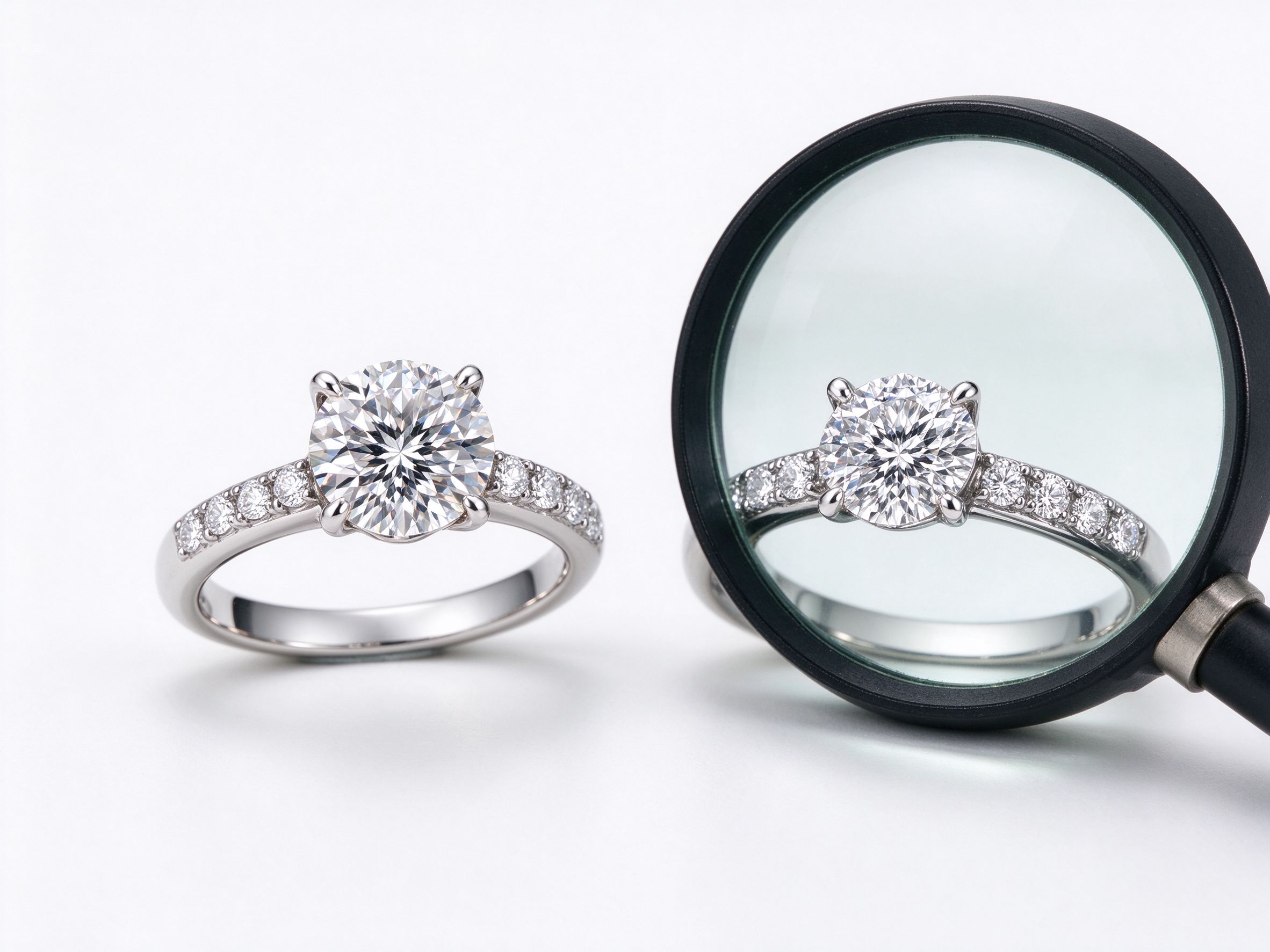
Does Moissanite Have Resale Value - HOLYCOME
If you are considering a moissanite ring, one of the questions we hear most often from wholesale buyers and brand customers is this: what happens to it when I am done with it? Will I get money back when I resell it, or is it a write-off? As a factory that cuts and sets moissanite for brands around the world, we have a clear and honest answer, and it is not the marketing answer you will see on every retail page. Moissanite holds its value in a specific way, and it does not behave like a diamond, like gold, or like an investment. This guide explains what the used market for moissanite actually looks like, why resale prices are low, what drives the price that does exist, and how to think about resale value if you are buying, selling, or branding moissanite jewelry. We are not going to tell you moissanite appreciates, because it does not. We are going to tell you the truth, because that is how factories talk.
The short answer is this: a moissanite ring resells for a small fraction of its retail price, usually between ten and twenty percent of what you paid, because the stone itself is cheap to produce and the retail markup is what you are paying for. The value that does exist is in the precious metal of the band, in the brand, and in the condition of the setting. The moissanite stone, by itself, has almost no resale value, because we can manufacture a new one for a few dollars. This sounds harsh, but it is the honest economics, and it is exactly why moissanite is such a good buy in the first place: you are not paying for a speculative asset, you are paying for a beautiful ring at a fair price. Let us walk through why.
We cover the related question of value per wear elsewhere, which is the right way to think about a ring's worth, not resale. We also cover why moissanite is cheaper than diamond, which is the manufacturing reason resale is low. This article is specifically about the used market: what a second-hand moissanite ring actually sells for, who buys them, and how the factory economics shape that price.
Why Moissanite Resale Prices Are Low
The resale price of any stone is anchored to what a dealer can buy a new one for. A natural diamond resells for something near its wholesale price because a dealer can resell that specific diamond, with its GIA certificate, into the trade, and there is a limited supply. A moissanite stone, by contrast, is manufactured in a factory like ours, and the supply is effectively unlimited. If a dealer takes in a used one-carat moissanite, they cannot sell it to another customer for much, because the customer can buy a brand-new one-carat moissanite, cut this month, with a certificate, for the same price or less. There is no scarcity. So the used stone is worth only what a new one costs, which is a few dollars, and that anchors the whole resale price at the bottom.
This is the core of the resale problem, and it is unavoidable. Manufactured goods do not hold resale value the way natural goods do, because the factory can always make another one. A used phone resells for a fraction of new for the same reason: the new one is available, cheap, and under warranty. A used moissanite stone is the same. The metal band has a scrap value, the setting has a labor value, but the stone itself is a commodity, and commodity stones do not appreciate. We explain this manufacturing logic in our guide on why moissanite is cheaper than diamond, and resale is the mirror image: the same reason it is cheap to buy is the reason it is cheap to resell.
This is not a flaw in moissanite. It is the deal. You buy moissanite because it looks like a diamond for a tenth of the price, and that tenth-of-the-price reality means there is no speculative premium to lose. A diamond buyer who sells at a loss is upset because they expected to recoup thousands. A moissanite buyer who sells at a loss is only out hundreds, because they never paid thousands in the first place. The low resale value is the flip side of the low entry price, and it is a fair trade for most people. The problem only comes when a buyer is told moissanite holds value like a diamond, which it does not, and then feels cheated when they try to sell. We are upfront about this, because we would rather tell the truth than sell a ring on a false promise.
What Actually Drives the Resale Price
If the stone is worth almost nothing, what is a used moissanite ring worth? The answer is the metal, the brand, and the setting. A ring with a 14k gold band has the scrap value of the gold, which is real and tracks gold prices. A ring from a known brand, in good condition, has a small premium because a buyer knows the brand's quality. A well-made setting, with solid prongs and a clean finish, has labor value that a cheap setting does not. These three things—metal, brand, setting—are what a used buyer is paying for. The moissanite stone is effectively a bonus, included in the price, because it would cost the buyer almost nothing to add a new one.
This is why a used moissanite ring in platinum resells for more than the same ring in silver: the platinum has intrinsic scrap value that the silver does not. It is why a used ring from a recognized brand resells for more than the identical ring from an unknown seller: the brand carries trust. It is why a used ring in perfect condition resells for more than one with a scratched band and a loose stone: condition is everything. The stone, in every case, is the smallest part of the resale equation. If you are buying a moissanite ring and thinking about resale, buy the metal and the brand, not the stone, because that is what you will get back.
We see this in the trade all the time. When a dealer takes in a used moissanite ring, they do not look at the stone first; they weigh the metal and check the brand. The stone is removed, or left in place, depending on whether it sells better with or without it. A new moissanite is so cheap that a dealer will often swap the used stone out for a fresh one if the used one shows wear, because the fresh one costs almost nothing. This is how little the stone matters in the used market: it is a disposable component, not the asset. The asset is the ring itself—the metal, the setting, the brand—and the stone is just the pretty thing in the middle.

A finished ring. In the resale market, the gold or platinum band and the setting carry the value; the moissanite stone is a low-cost manufactured component.
The Difference Between Resale and Per-Wear Value
We spend a lot of time explaining to customers that resale value is the wrong way to think about a ring. The right way is value per wear, which we cover in our guide on calculating cost per wear. A ring that costs eight hundred dollars and is worn every day for ten years costs about twenty-two cents a day. That is the value you actually receive: ten years of wearing a beautiful ring, every day, for pocket change. The resale price of fifty dollars in year ten is irrelevant next to that. You did not buy the ring as an investment; you bought it to wear, and the wearing is the value.
This is how we think about it as a factory. We produce rings that are meant to be worn, not stored. A moissanite ring that sits in a safe waiting to appreciate is a waste, because it will not appreciate. A moissanite ring that is on a hand every day, being enjoyed, is a fantastic purchase, because the per-wear cost is tiny. We would rather sell a ring that gets worn for ten years than one that gets bought as an investment and then resold at a loss. The value is in the wearing, and that is what we build for. Resale is a secondary concern, and for most buyers, it should be.
This is also why we do not market moissanite as an investment. We see some retailers claim that moissanite holds its value, or that it is a smart financial purchase, and we disagree. Moissanite is a smart aesthetic purchase, not a financial one. It looks stunning, it is hard, it lasts, and it costs a fraction of a diamond. Those are real benefits. But it will not pay you back, and saying it will is misleading. We are upfront about this because we want our wholesale partners to be upfront with their customers, and we want the used market to stay honest. Honesty builds repeat customers; false promises build returns.
How a Factory Views the Used Market
From the factory floor, the used market is not something we think about much, because we make new stones. But we see its effects. When a brand sells a lot of moissanite, some of those rings come back onto the used market, and they compete, at low prices, with new rings. This is fine for us, because the used rings are usually worn out, damaged, or from old stock, and a buyer who compares a used ring at fifty dollars with a new ring from us at two hundred will usually buy the new one, because the new one has a certificate, a warranty, and a fresh cut. The used market is not our competitor; it is a reminder that our product is affordable enough that even a used one sells cheap.
We also see the other side: customers who come back to us, years after buying a ring, to resize it, re-tip it, or upgrade the stone. We cover this in our guide on what to do when a stone goes loose, and the point is that a moissanite ring, properly cared for, can come back to the factory for service and keep going for decades. The resale price is low, but the working life is long. A ring that is resized, re-tipped, and re-polished over twenty years is a ring that earned its keep, even if it never appreciated. This is the value model: long service life, not capital gain.
For wholesale brands, the used market shapes pricing. A brand that prices its moissanite rings too high will find that customers compare them to used rings and walk away, because the used market sets a low ceiling on what anyone will pay for a second-hand moissanite. A brand that prices fairly, at two to three times factory cost, sells new rings on the merits: fresh cut, warranty, brand trust, and current design. We help our partners price to this reality, because pricing a moissanite ring like a diamond is the fastest way to lose customers. The stone is cheap; the brand and the service are what you charge for.
Comparing Moissanite to Other Stones on Resale
It helps to put moissanite resale in context. A natural diamond resells for twenty to forty percent of retail, depending on the stone, because there is a trade market for certified diamonds. A lab-grown diamond resells for almost nothing, because it is manufactured and the supply is unlimited, just like moissanite. We cover this in our guide on lab-grown diamond versus moissanite value retention, and the honest answer is that both hold very little resale value, for the same manufacturing reason. A cubic zirconia resells for nothing, because it is a ten-dollar stone. Moissanite sits between CZ and lab diamond: it is a manufactured stone, so it has no scarcity premium, but it is durable and pretty, so the ring itself has some secondary value.
Gold and platinum are the exceptions, because they are commodities with melt value. A gold band, regardless of the stone, is worth the weight of the gold. This is why a used moissanite ring in 14k gold always has some resale floor: the gold. A used moissanite ring in silver, by contrast, has almost no floor, because silver is cheap. This is a key point for buyers: if resale matters to you at all, buy the ring in gold, because the metal will hold its value even when the stone does not. We produce moissanite rings in both silver and gold, and we tell customers this plainly: silver is for wearing, gold is for holding some residual value.
The comparison to vintage jewelry is also useful. A vintage ring from a known designer, fifty years old, resells for a lot, because it is old, rare, and desirable. A moissanite ring today will not become a vintage collectible in ten years, because there are millions of them. The only moissanite rings that might hold value are limited-edition pieces from iconic brands, in gold, in decades to come, when they become retro. But that is a speculative bet, not a plan, and we would not advise buying one for that reason. Buy it to wear, and if it becomes a collectible later, that is a bonus, not the expectation.
What a Used Moissanite Ring Actually Sells For
Putting numbers on it: a moissanite engagement ring that retails for eight hundred dollars, in 14k gold, will typically resell for eighty to one hundred and sixty dollars on the second-hand market. That is ten to twenty percent of retail. The gold content accounts for maybe sixty of that, the setting and condition for another forty, and the moissanite stone for ten dollars at most. A silver version of the same ring, retailing for two hundred dollars, resells for twenty to forty dollars, because the silver is worth almost nothing. These are the real numbers, and we are not sugarcoating them, because we would rather a customer know before buying than feel cheated after.
A moissanite wedding band, plain, in gold, resells closer to scrap value, because there is no stone and no design premium. A moissanite ring with a designer setting, from a known brand, in excellent condition, might resell at the higher end of that range, because the setting and the brand carry value. A worn, scratched, unbranded ring from a random seller resells at the low end. The range is wide, but the ceiling is low, because the stone is cheap to replace. This is the used market, and it is consistent across platforms, across sellers, and across years.
For wholesale brands, this means the used market is not a threat; it is a baseline. A new ring from us, at two hundred dollars, competes not with a used ring at a hundred, but with a used ring at a hundred that is worn and unbranded. The new ring sells because it is new, certified, and under warranty. Brands that understand this price gap—new versus used—price accordingly and sell well. Brands that try to price a moissanite ring like a diamond, at two thousand dollars, find that the used market exposes them, because a buyer can find the same stone used for a tenth of that. We help our partners stay on the right side of that line.
Should You Buy Moissanite for Investment?
No. This is the clear answer, and we give it to every customer who asks. Moissanite is not an investment; it is a consumption good. You buy it to wear, to enjoy, and to look at, and it will serve that purpose beautifully for decades. It will not go up in value, and if you sell it, you will take a loss. If you want an investment, buy gold bullion, index funds, or a certified natural diamond that you can resell into the trade. If you want a beautiful ring at a fair price, buy moissanite, wear it every day, and enjoy the per-wear value. These are two different purchases, and they should not be confused.
We say this even though it costs us sales. A customer who expects moissanite to appreciate will be disappointed, and they will blame us. A customer who buys it knowing it is a beautiful, durable, affordable ring—with no resale illusion—will be delighted, and they will come back for more. Honesty in resale expectations is part of how we build long-term wholesale relationships. We would rather lose a sale than sell a ring on a false promise, because the false promise costs more in returns and reputational damage than the sale is worth. This is the factory approach: tell the truth, build the product, and let the customer decide.
If you are a brand reading this, this is how we want you to talk to your customers too. Do not market moissanite as a value-holding investment. Market it as what it is: a brilliant, durable, ethical, affordable stone that looks like a diamond and costs a tenth. That is a strong enough selling point on its own, without inventing a resale story that the market will disprove the first time a customer tries to sell. We provide the product, the certificates, and the warranty; you provide the honest framing; and everyone wins.
Frequently Asked Questions
How much can I sell my used moissanite ring for?
Typically ten to twenty percent of its retail price. A ring that cost eight hundred dollars usually resells for eighty to one hundred and sixty dollars. Most of that is the scrap value of the gold band and the condition of the setting; the moissanite stone itself is worth very little on the used market.
Does moissanite hold its value like a diamond?
No. A natural diamond has a trade market and limited supply, so it retains some wholesale value. Moissanite is manufactured in a factory, with effectively unlimited supply, so the stone itself has almost no resale value. The ring's resale price is carried by the metal and the brand, not the stone.
Should I buy gold or silver for better resale?
Buy gold if resale matters to you. Gold has intrinsic melt value that sets a floor under the resale price, even if the stone is worth nothing. Silver is cheap and has almost no scrap value, so a silver moissanite ring resells for very little. Silver is for wearing; gold is for holding residual value.
Is moissanite a good investment?
No. Buy moissanite to wear and enjoy, not to invest. Its value is in the wearing, not in appreciation. If you want a financial investment, buy gold or index funds. If you want a beautiful ring at a fair price, moissanite is an excellent choice, but it will not pay you back when you sell.
Buy Moissanite Built to Wear, Not to Flip
We produce moissanite rings that are built to be worn for decades, not to be resold for a profit. We cut the stones, set them in solid gold or sterling bands, and stand behind every ring with certificates and service. Whether you are a wholesale brand buying for your store or a customer buying for your hand, we will tell you honestly what the ring is worth today and what it will be worth when you are done with it. Contact us at service@holycome.com to talk through your order, and we will help you choose the ring that fits your budget and your wearing plans. We build moissanite for the hand, not the vault, and we think that is the right way to do it.