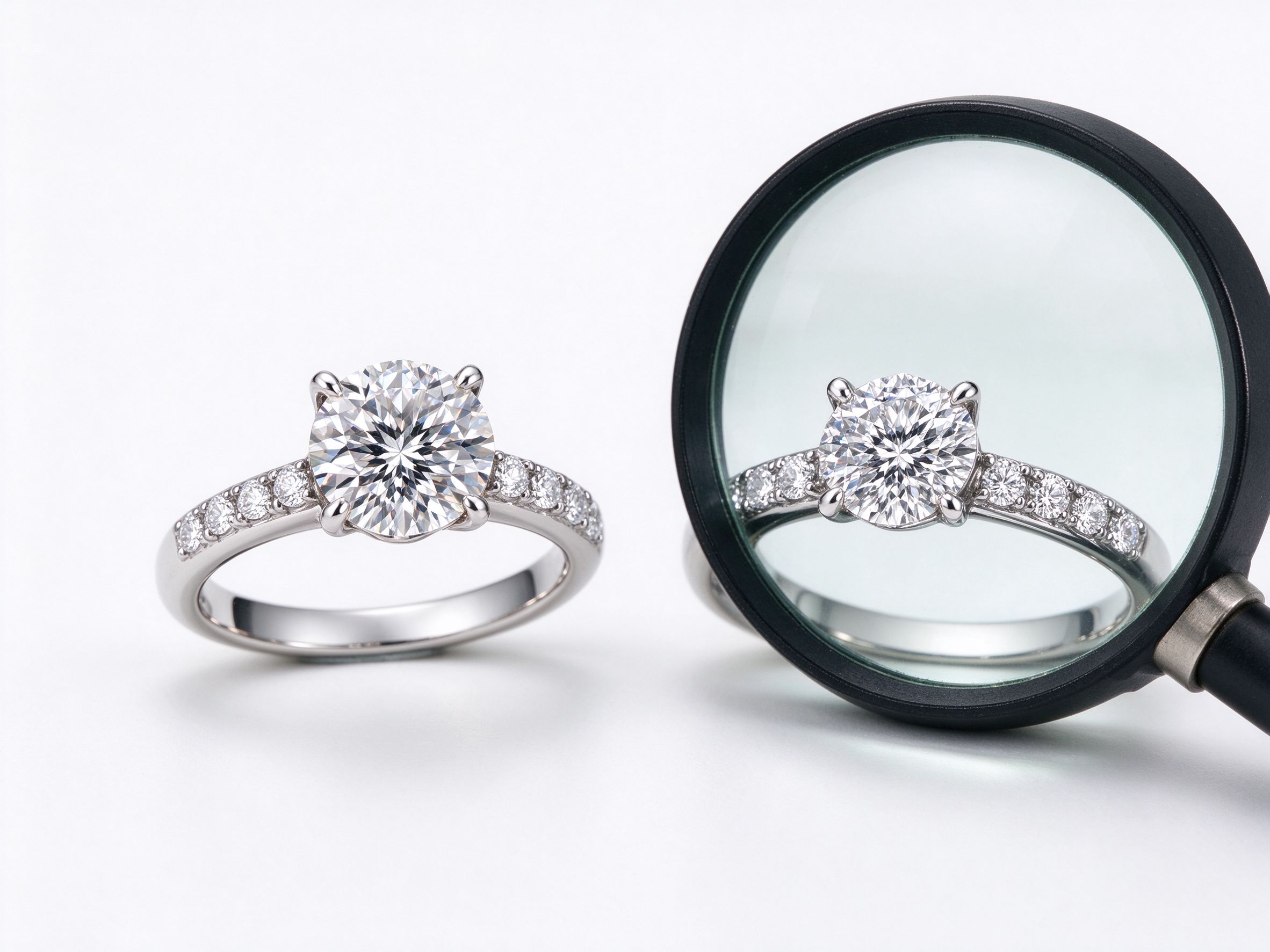
My Moissanite Stone Feels Loose: What to Do Right Now
You are washing your hands, you feel a tiny shift under the center stone, and your stomach drops. A moissanite that moves in its setting is the one jewelry problem that deserves an immediate response, because every hour you keep wearing it is an hour closer to losing it. The good news is that a loose stone almost never falls out without warning. It wiggles for weeks first, and if you catch that wiggle early, the repair is quick, cheap, and painless. The bad news is that most people do not check, and by the time they notice the stone is gone, it is somewhere in a drain, a gym bag, or a hotel carpet.
As a factory that sets and resets stones every day, we want you to know exactly what a loose stone feels like, how to check for one at home, what to do in the minutes after you suspect movement, and how a jeweler or a factory actually fixes it. This guide walks through the whole process from the first nudge under your fingertip to the moment the ring comes back from service. If you suspect a stone is loose right now, stop reading, take the ring off, and put it in a pouch. Then come back and read the rest.
What a Loose Stone Actually Feels Like
A loose stone does not usually rattle. On most well-made settings, the stone is held by four to six prongs, and if one or two bend slightly, the stone still sits firmly enough that you cannot see movement with your eyes. The tell is a faint give when you press against the stone with a fingertip. Gently push the edge of the moissanite from side to side. A perfectly set stone will not move at all. A stone on its way out will shift by a fraction of a millimeter, a subtle softness that you learn to recognize after a few checks.
Some stones announce themselves more loudly. A pavé ring with many small stones can let you hear a tiny tick if you tap the band against a table, though this takes a quiet room. A solitaire that has worked itself half out will sit at a slight tilt, visible if you look straight down at it. Most often, though, the problem is silent and small, and that is exactly why monthly checks matter. A stone that moves a fraction today will fall out in a few months if ignored.
The reason stones loosen is almost always prong fatigue, not a setting that was badly done. Prongs bend from knocks, from catching on fabric, from years of the stone shifting under pressure. Even a stone set perfectly at the factory needs its prongs re-tightened eventually, because metal flexes and wears. Think of it as a tire rotation: not a sign of bad workmanship, just normal maintenance.
How to Check Your Stone at Home in Thirty Seconds
You do not need tools. Hold the ring firmly in one hand and use the pad of a clean, dry fingertip to gently push the stone from several sides. Do not use a fingernail, because it can scratch the metal and it gives you less feedback. Press softly left, right, toward you, and away. A secure stone will feel completely solid. A loose stone will give in one direction or rock on a diagonal axis.
Then look. Under a bright lamp, inspect each prong. A bent prong often shows as a visible gap between the metal tip and the stone, or as a prong that looks shorter or straighter than its neighbors. Run a fingernail lightly across the prong tips. A tip that catches on your nail is likely bent outward. This is the same inspection we do under magnification in the factory, and doing it monthly is the single best insurance you can buy.
Check every stone, not just the center. Pavé and halo rings have a dozen or more small stones, and the small ones loosen more often than the center because their prongs are tinier. Run your finger around the whole setting. A small stone that sits even slightly lower than its neighbors has probably dropped a prong. We describe our own approach to pavé security in detail in our article on factory prong-tightening standards.

When to Check, and How Often
Make the check part of a habit rather than a chore. The easiest cue is a weekly clean: when you wash the ring in warm soapy water, give the stone a nudge before you dry it. That takes three extra seconds and it means you are checking every seven days rather than once a year when something already feels wrong. For pavé and halo rings, check twice as often, because the small stones fail faster. For a plain solitaire you wear only on weekends, a monthly check is plenty.
If you have just knocked the ring hard on something, check immediately, even if nothing feels wrong. A hard bump is the moment a prong bends, and the stone may not start moving for weeks. Catching that bent prong early means a quick tightening before it ever loosens. This is the same reason we inspect rings after shipping: a bump in transit can bend a prong, and we catch it before the customer does.
The Immediate Steps If You Find Movement
The moment you detect any movement, the ring comes off your finger. Do not keep wearing it to see if it holds. A stone that moves once will keep moving, and the next knock may be the last. Put the ring in a soft pouch, a pill case, or any container that closes, and keep it separate from other jewelry so a loose stone cannot fall out and get lost among other pieces.
Next, stop cleaning it aggressively. Skip the ultrasonic bath, skip the steam, and skip the vigorous brushing. Water and vibration will not remove a stone on their own, but there is no reason to add stress to a setting that is already weakened. A gentle wipe is fine; a deep clean is not necessary until the stone is reseated.
Then arrange service. A loose prong is a same-week repair, not a same-year one. Do not put it on a to-do list that you will get to next spring. Take the ring to a jeweler, or send it back to us, and say plainly that the stone moves. The repair is fast and inexpensive, and it is far cheaper than replacing a center stone that falls out while you are out somewhere. If the stone has already fallen out but you still have it, bring both the ring and the stone, because resetting an existing stone is much cheaper than cutting a new one.
What Not to Do: The Home Repairs That Make It Worse
When a stone feels loose, the instinct is to fix it yourself, and that instinct causes more jewelry damage than normal wear. The two mistakes we see repeatedly are pushing the prongs back with household pliers and applying glue to hold the stone.
Household pliers are the bigger danger. Prongs are bent to very precise tolerances, and a pair of pliers in untrained hands usually snaps the prong clean off, flattens it, or chips the edge of the stone. A broken prong needs to be rebuilt, which is a bigger job than a quick tightening. Even if you succeed in moving the prong, you almost always scratch the gold or silver and leave a mark that needs polishing.
Glue is the other trap. Superglue or nail polish on a loose prong creates a hard, brittle bond that looks secure for a week and then fails, usually at the worst moment. Worse, glue seeps onto the stone and the prongs and is genuinely difficult to remove without damaging the finish. We have had to clean glue off stones before resetting them, and it is never a quick job. If you want a temporary holding measure before you can get to a jeweler, the best option is simply to stop wearing the ring. There is no glue that beats not wearing a potentially loose ring.
The same logic applies to a bent prong that has not yet loosened the stone. Do not try to bend it back yourself. Bring it in, and we will retipping it in twenty minutes while you wait.
How a Factory Reseats and Retips a Stone
When a ring reaches our workshop with a loose stone, the repair follows a predictable sequence. The jeweler first inspects the setting under magnification to see which prongs have moved and whether the seat, the little groove the stone sits in, is still intact. If the stone is simply loose, the jeweler uses a small prong pusher to gently close each tip back against the stone, working opposite prongs in pairs so the pressure is even.
If a prong has worn thin or broken, the jeweler builds it back up, a process called retipping. A tiny bead of solder is fused to the tip, filed and shaped to match the other prongs, and then pressed down onto the stone. After that, the stone is checked again for movement, the prongs are polished, and the whole ring goes through a quick clean. The entire job usually takes fifteen to thirty minutes, and on a well-made ring it is a routine part of ownership, not a sign of something gone wrong.
We resets stones that came off our own production line regularly, and the process is so standard that we offer it as a fast turnaround service for wholesale partners. The cost is trivial compared with the value of the stone. We describe the broader context of how we set stones in the first place in our article on pre-shipment care at the factory, which helps explain why a well-set stone stays put for years before it needs its first retip.
Why Stones Loosen on a Normal Schedule
It helps to remember that a loose prong is not an emergency caused by bad luck; it is a scheduled event. Prongs hold stones by friction, and friction wears. On a ring you wear every day, expect the first retip within one to three years, especially if the ring lives on your dominant hand. Rings worn occasionally can go five years or more without needing attention. The schedule depends on how hard the ring's life is, not on how well it was made.
Smaller pavé stones loosen sooner than a center stone, because their prongs are thinner and catch on hairbrushes, sweaters, and bed linens more often. A halo ring with a full circle of small stones is the setting type that needs the most frequent checks, and we tell retail customers this up front. A solitaire with a few thick prongs is the lowest-maintenance setting, which is one reason it remains the most popular engagement ring design.
If you own a ring that has already needed one retip, check it a little more often. A setting that has shown it can loosen once will tend to loosen again on the same cycle, and a quarterly check is cheap insurance. We keep records of the repairs we do, so wholesale customers can schedule retips across a returned batch rather than handling them one panicked customer at a time.
If the Stone Has Already Fallen Out
Sometimes the wiggle you missed has already turned into a lost stone. Do not despair if you still have the stone. A moissanite that has dropped out of its setting is almost always reusable, because the stone itself is undamaged. The repair is simply a reset: we inspect the stone, check the prongs, rebuild or retipping anything that wore, and seat the same stone back in its original setting. That costs a fraction of cutting a new stone. This is why finding the stone is worth a genuine search.
If the stone fell out in a place you can search, do it methodically. Close the drain, lie flat, and look from a low angle, because a faceted stone catches light and glints when viewed near floor level. Check the seams between floor tiles, the underside of furniture, and the pocket lining of the clothes you were wearing. Moissanite is dense and it sinks, so if it fell near water, it is probably gone. If it fell on a carpet, it may have bounced a surprising distance.
If you cannot find the stone, the next step is a replacement. We cut matching moissanite in the exact size and shape your setting needs, and we can match color grade and cut to the rest of your piece. A replacement is more expensive than a reset, but it is still far cheaper than a comparable diamond. Bring the ring to a jeweler or send it to us, and we will measure the seat and cut a stone to fit precisely. Never try to set a loose stone into a setting that is not holding it properly, because the seat itself may have worn.
Warranty, Insurance, and a Loose Stone
Most fine jewelry warranties cover manufacturing defects, but prong wear from years of normal use is usually considered maintenance, not a defect. Read your warranty carefully, because some warranties require annual professional inspections to stay valid, and skipping them can void coverage just when you need it. A loose stone that has been ignored for a year may not be covered, while one you brought in at the first wiggle usually is.
If the ring is valuable, jewelry insurance is worth the small annual cost, and a loose stone that becomes a lost stone is exactly what it covers. Policies vary, but most cover loss, theft, and mysterious disappearance, which means a stone that vanishes from a setting you were wearing is typically reimbursed. Keep your receipt, certificate, and photographs of the ring. We help wholesale customers provide the documentation their insured end customers need, because it makes a claim go smoothly.
One practical note: do not delay a repair because you are waiting for an insurance decision. A loose stone in a drawer is a safe stone, but a loose stone on your finger is a liability. Get the repair approved, get it done, and keep the ring off in the meantime. The few weeks without the ring are worth the certainty.
Frequently Asked Questions
Can I still wear a ring with a slightly loose stone? No. Remove it the moment you detect movement. A stone that moves one day will continue to loosen, and the next knock could be the one that sends it out. The cost of a week without the ring is nothing compared with the cost of a lost center stone.
How much does retipping a prong cost? It is one of the least expensive repairs in jewelry, often a small fixed fee per prong, and a full check and clean often costs less than a takeout meal. Compare that with replacing a cut moissanite, and the choice is obvious.
Will I notice if a stone falls out at night? Often not. Stones that fall out while sleeping vanish into bedding, and by morning they are gone. This is exactly why you should remove rings if you tend to fidget or roll, and why a monthly check catches problems before bedtime does.
Does moissanite itself wear or crack when the prong loosens? No. The stone is inert and hard. A loose stone is a metal problem, not a gem problem. Once the prongs are reseated, the same moissanite can continue for years.
Can a ring survive a retip without looking different? Yes. A skilled retipping rebuilds the prong to match the others, and a light polish blends the repaired area into the setting. Done well, you cannot tell a prong has been serviced, and the stone sits exactly as it did when new.
The habits are simple and they are free. Check once a month, or weekly if you wear pavé. Remove on the first sign of movement, never on a maybe. Resist the pliers and the glue, because home fixes turn a five-minute job into an expensive one. And remember that the repair itself is routine: a retip is to a jeweler what an oil change is to a mechanic, expected, affordable, and worth scheduling before something breaks. The moissanite is the permanent part of your ring. The prongs are the consumable, and replacing them keeps the permanent part where it belongs.
We see these rings come through the workshop in every condition, from a stone that has not moved in ten years to one held by a single surviving prong. The ones that end well are always the ones brought in early, while the prong is merely bent rather than broken. The small gap between a bent prong and a broken one is the difference between a ten-minute repair and a rebuild, and it is a gap you control simply by paying attention. Treat the monthly check as the cheapest insurance you will ever buy, and your moissanite will stay where it belongs.
A Wiggle Is a Signal, Not a Crisis
Few jewelry problems are as straightforward as a loose stone. It wiggles, you notice, you take it off, you bring it in, and it comes back secure. The whole thing is routine, and it ends well when you act on the first sign. The failures we hear about are never the ones where someone checked and brought the ring in; they are the ones where someone felt a wiggle and ignored it, or tried to fix it at home. Check once a month, remove on suspicion, and never reach for the pliers or the glue. That habit is worth more than any warranty.
If your moissanite ring has a loose stone or a bent prong, send it to us. We are a moissanite manufacturer in Wuzhou, China, and we retip, reset, and inspect the pieces that leave our workshop as part of standing service for our wholesale and direct customers. Reach our team at service@holycome.com for a repair estimate or to arrange a return. For daily upkeep, see our home cleaning guide, and for how we secure pavé stones at the factory, read our prong standards article.