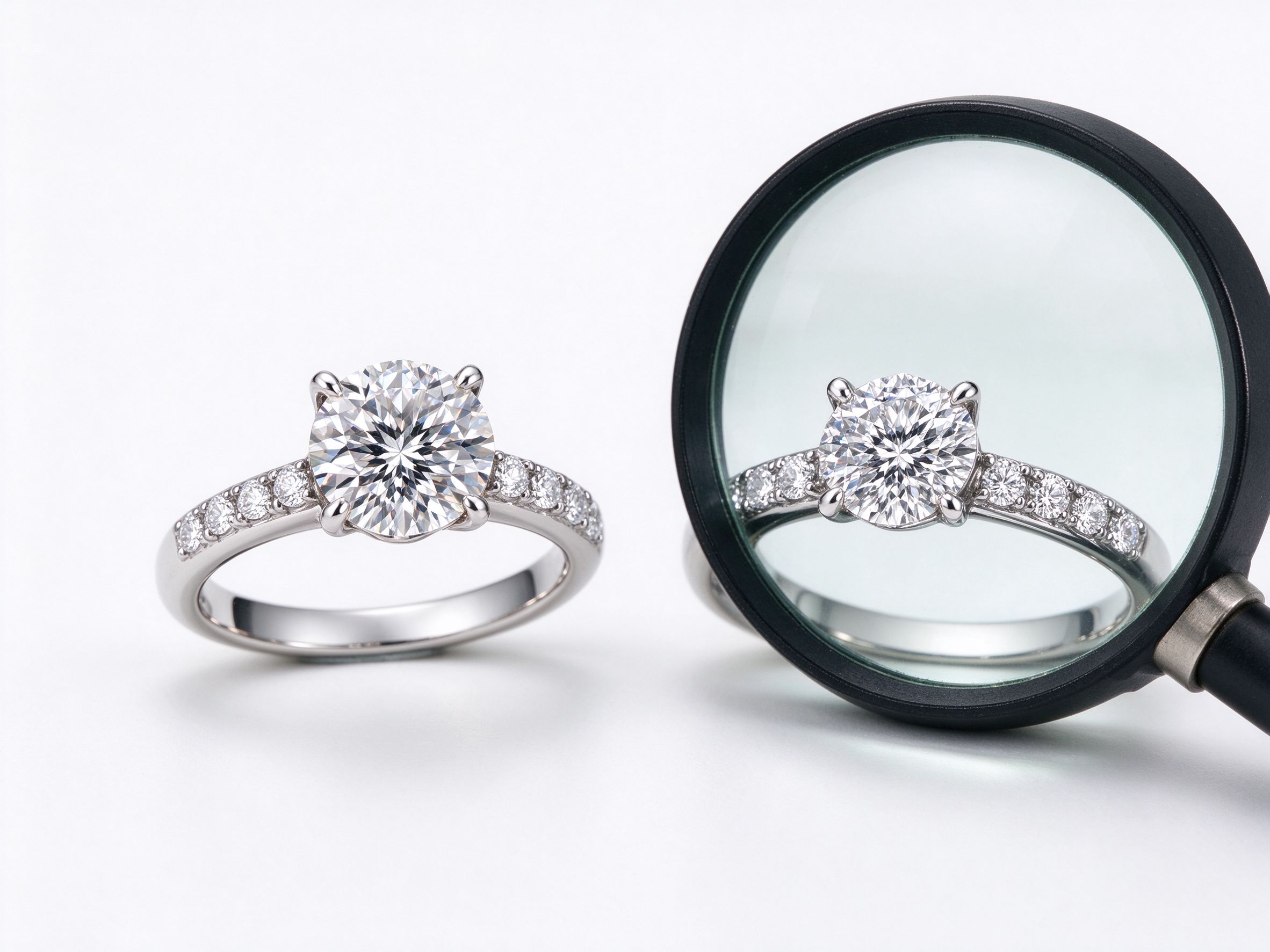
Moissanite Cost Per Wear Value - HOLYCOME
The question of whether a ring is worth its price is almost always asked the wrong way. People compare the sticker price to the resale value, and conclude that a ring is a bad buy because it depreciates. But that is not how you value something you wear. The right metric is cost per wear: what you paid, divided by the number of times you actually wear it. By that measure, a moissanite ring is one of the best values in jewelry, because it is cheap up front and lasts for decades. As a factory that produces these rings, we want every buyer to think in cost per wear, because it reframes the whole purchase and removes the anxiety about resale. This guide explains how to calculate it, why moissanite wins on it, and how to use it to decide what to spend. We will do the math, and the result is likely to surprise you.
The short answer is this: a two-hundred-dollar moissanite ring worn every day for ten years costs about five and a half cents per wear. A two-thousand-dollar natural diamond ring worn for the same ten years costs about fifty-five cents per wear. The moissanite ring, by this measure, is ten times cheaper per wear, even though it looks nearly identical and lasts just as long. That is the cost-per-wear argument, and it is why we think moissanite is a brilliant value. Stop asking what the ring will be worth when you sell it, and start asking what it costs to enjoy every day. That is the right question, and moissanite answers it beautifully.
We cover the resale side in our guide on what a used moissanite ring sells for, which is the wrong question but the one people ask. We also cover the manufacturing price in why moissanite is cheaper than diamond. This article is about the cost-per-wear math, which is the lens that actually matters. Read on, and you will never think about ring pricing the same way again.
What Is Cost Per Wear, and Why Does It Matter?
Cost per wear is a simple idea. Take the total price of an item, and divide it by the number of times you expect to use it. A forty-dollar pair of shoes worn once to a wedding costs forty dollars per wear. A forty-dollar pair of sneakers worn every day for a year costs about eleven cents per wear. The shoes and the sneakers cost the same, but the sneakers are a far better value, because they are used more. This is how smart shoppers think about clothes, bags, and shoes, and it is how you should think about jewelry too. A ring that sits in a drawer is expensive no matter how cheap it was. A ring you wear every day is cheap no matter how expensive it was.
This matters for jewelry because rings are worn constantly. An engagement ring or wedding band goes on in the morning and comes off at night, every day, for years. That is thousands of wears, which drives the cost per wear down to pennies. A fashion ring you wear to parties, by contrast, gets maybe twenty wears a year, which keeps the cost per wear high. So the cost-per-wear method rewards the rings you actually wear every day, and it exposes the rings you buy and forget. This is a useful way to budget: spend more on the ring you wear daily, and spend less on the ones you wear occasionally. We see this all the time, and it is the logic behind our product range.
The reason this matters for moissanite is that moissanite is bought for daily wear, not for occasional show. A moissanite engagement ring is on the hand every day, for decades, which means the cost per wear drops to almost nothing. A diamond engagement ring, worn the same amount, has a much higher cost per wear, because the sticker price is ten times higher. The wearing experience is similar, but the cost per wear is very different. This is the value story, and it is why we build moissanite for daily wearers. The math is on our side, and it is on your side too, if you wear the ring.
The Math: Putting Numbers on It
Let us do the math carefully. Suppose you buy a moissanite engagement ring from us for three hundred dollars, in sterling silver with a one-carat stone. You wear it every day for ten years, which is about 3,650 days. Three hundred dollars divided by 3,650 wears is about eight cents per wear. If you wear it for twenty years, it is about four cents per wear. Compare that to a natural diamond ring that costs three thousand dollars, worn for the same ten years: that is about eighty-two cents per wear. The moissanite ring costs a tenth as much per wear, and it looks nearly identical on your hand. That is the gap, and it is enormous.
Now factor in the durability. Moissanite is 9.25 on the Mohs scale, so it does not scratch, and it does not cloud. We cover the durability in our guide on whether moissanite can handle daily wear, and the answer is yes. So the ring you buy today will look the same in twenty years, which means the twenty-year wear count is real, not hypothetical. A cubic zirconia ring, by contrast, clouds within a year, so its effective wear life is short, which pushes the cost per wear back up. Moissanite's durability is what makes the long wear count possible, and it is what drives the cost per wear down to pennies.
You can do this math for any ring. Take the price, divide by the expected wears, and you get the number. A five-thousand-dollar diamond worn every day for thirty years is about forty-six cents per wear. A three-hundred-dollar moissanite worn for thirty years is about three cents per wear. The wearing experience is the same: a beautiful ring on your hand, every day. The cost per wear is fifteen times lower with moissanite. This is the value case, and it is the one we make to every customer. Stop looking at the sticker price and start looking at the per-wear cost, and the decision becomes obvious.
A daily-wear moissanite ring. Worn every day for years, the cost per wear drops to pennies, which is the real value metric.
Why Resale Is the Wrong Metric
The reason people fixate on resale is that they have been taught to think of jewelry as an investment. But as we explain in our guide on whether moissanite is an investment, it is not, and neither is almost any retail-bought jewelry. The resale value of a ring is a fraction of the sticker price, whether it is diamond or moissanite, because the retail markup is large. So comparing the sticker price to the resale price always shows a big loss, which makes every ring look like a bad buy. That comparison is misleading, because it ignores the wearing value you received.
The right comparison is not what you get back, but what you got. If you wore the ring every day for ten years, you got ten years of joy, beauty, and daily pleasure. That is real value, and it is the value you paid for. The fact that you cannot resell it for what you paid is irrelevant, because you did not buy it to resell; you bought it to wear. A restaurant meal has zero resale value, but you do not call it a bad purchase, because you got the meal. A ring is the same: you get the wearing, and that is the product. Resale is a separate concern, and for most people, it should not drive the buying decision at all.
This is the mindset shift we want every customer to make. Buy the ring because you will wear it and love it, not because you think it will hold value. If you love wearing it, the cost per wear is low, and the purchase is a success. If you buy a ring you never wear, the cost per wear is infinite, and the purchase is a failure, regardless of the resale value. Moissanite, priced low, makes it easy to buy a ring you actually love and wear every day, because the barrier to entry is low. You are not gambling on resale; you are buying a daily-wear object that pays you back in compliments and joy. That is the right way to think about it.
How to Choose What to Spend
Cost per wear also tells you how much to spend. If you are buying an engagement ring you will wear every day for decades, you can afford to spend a bit more, because the wear count is huge. If you are buying a fashion ring you will wear a few times a year, you should spend less, because the wear count is small. For a daily-wear ring, the moissanite option at two or three hundred dollars gives you the beauty of a diamond ring at a cost per wear of pennies, which is an unbeatable value. If you want a bigger stone or a nicer setting, you can spend a bit more, but the cost per wear stays low, because the wear count is so high.
This is the budget logic we use when we talk to customers. We do not push the most expensive ring, because the cost-per-wear math says a cheaper ring is the better value for daily wear. We do push the ring you will actually wear, because a ring you love is the one you will wear every day, which is what drives the cost per wear down. A two-hundred-dollar ring you wear every day is a better buy than a two-thousand-dollar ring you are afraid to wear. So choose the ring that fits your life, your style, and your budget, and wear it. The cost per wear will take care of itself.
For wholesale brands, this is the message you should send to your customers. Market the ring as a daily-wear value, not as an investment. Tell them the cost per wear, because it reframes the price and makes the purchase feel responsible. A customer who understands that a two-hundred-dollar ring costs eight cents a day is a customer who buys confidently, without resale anxiety. This is the honest, value-focused marketing that builds long-term customers, and it is the message we support with our product. We make affordable, durable rings that are built to be worn, and that is the value story.
The Hidden Cost of Cheap Rings
Cost per wear also exposes the trap of the cheapest rings. A twenty-dollar cubic zirconia ring sounds cheap, but if it clouds and scratches within a year and you have to replace it every year, the cost over ten years is two hundred dollars, and the ring looked tired most of the time. We cover this in our guide on moissanite versus cubic zirconia, and the point is that CZ is a disposable good. A two-hundred-dollar moissanite ring, worn for ten years, costs twenty dollars a year and looks great the whole time. The moissanite is the cheaper option over the decade, even though it cost ten times more up front. This is the hidden cost of cheap rings: the upfront saving is eaten by repeated replacement.
This is the same logic as the cost-per-wear argument. A cheap ring that wears out fast has a high cost per wear, because the wear life is short. An expensive ring that lasts a long time has a low cost per wear, because the wear life is long. Moissanite sits in the sweet spot: it is not the cheapest stone, but it is durable and bright, so its wear life is long, and its price is low enough that the per-wear cost is tiny. CZ is cheaper up front but wears out fast, so the per-wear cost is higher. A diamond is expensive up front and lasts, but the per-wear cost is still high because the sticker price is so large. Moissanite is the value sweet spot, and the math proves it.
We see this in the returns data. Customers who buy a cheap CZ ring come back within a year to complain that it looks cloudy. Customers who buy a moissanite ring do not come back, because the ring still looks new. This is the durability dividend, and it is why moissanite is the smarter long-term buy. The cheap ring saves you money today, but it costs you in replacements and disappointment. The moissanite costs a bit more today, but it lasts for years and pays you back in wear. When you look at the full cost over time, moissanite is the cheaper option, even though the sticker price is higher. That is the value case, and it is the one we stand behind.
Wear Is the Point
There is one more thing to say about cost per wear, and it is the most important. The point of a ring is to be worn. A ring that sits in a safe, kept for resale or investment, has cost per wear of zero, because it is never used. A ring on your hand, every day, has cost per wear of pennies, because it is used constantly. So the best thing you can do with a ring is wear it, which is exactly what moissanite is designed for. It is hard, it is durable, and it is affordable enough that you do not have to baby it. You can wear it to work, to the gym, to the beach, without worrying about losing a five-thousand-dollar stone. That freedom is part of the value, and it is something a diamond ring does not give you.
We cover the care side in our guide on daily wear durability, and the point is that moissanite is built for a full life. You can wear it, clean it, and enjoy it, and it will not let you down. This means the wear count is high, because you are not afraid to wear it. A diamond ring, especially an expensive one, is often worn less, because the owner worries about losing or damaging it. The moissanite ring gets worn every day, which drives the cost per wear even lower. The affordability and the durability combine to create a ring that lives on your hand, not in a box. That is the ultimate value, and it is why we build what we build.
The Customer Who Gets It
We see two kinds of customers walk into this. The first buys the cheapest ring they can find, because they have been told jewelry is a waste of money, and they treat the ring as disposable. They are never happy, because the cheap ring clouds within months, and they end up replacing it. The second customer buys a moissanite ring from us at a fair price, wears it every day for years, and tells us a decade later that it still looks new. The second customer is the one who understands cost per wear. They spent a bit more up front, but they spent it once, and they got ten years of wearing a beautiful ring. That is the value model, and it is the one we build for. If you want to be the second customer, buy the moissanite, wear it every day, and stop worrying about what it will be worth when you are done. The worth is in the wearing, and the wearing is already happening.
Frequently Asked Questions
How do I calculate cost per wear for a ring?
Take the total price, and divide by the number of times you expect to wear it. A three-hundred-dollar ring worn every day for ten years, about 3,650 wears, costs about eight cents per wear. If you wear it for twenty years, it is about four cents. This is the right way to value a ring, not by resale.
Is moissanite cheaper per wear than a diamond?
Yes, by a wide margin. A three-hundred-dollar moissanite worn for ten years costs about eight cents per wear. A three-thousand-dollar diamond worn the same way costs about eighty-two cents per wear. The moissanite is ten times cheaper per wear, and it looks nearly identical on the hand.
Does a cheap cubic zirconia ring have a lower cost per wear?
No. CZ clouds and scratches within a year, so you have to replace it, which adds up over time. A twenty-dollar CZ replaced every year for ten years costs two hundred dollars, and it looked tired most of the time. A two-hundred-dollar moissanite worn for ten years looks great the whole time, so it is the cheaper option per wear.
Should I spend more or less on a daily-wear ring?
Spend on the ring you will actually wear every day, because the wear count is high and the cost per wear is low. A two-hundred-dollar moissanite ring you wear daily is a better value than a two-thousand-dollar ring you are afraid to wear. Choose the ring that fits your budget and your life, and wear it.
Wear Your Ring, Not Your Savings
We build moissanite rings to be worn, not stored, because wearing is where the value lives. Our factory prices keep the cost low, and our durability keeps the ring looking new for decades, which means your cost per wear drops to pennies. Whether you are buying an engagement ring, a wedding band, or a daily stack, we will help you choose a ring that fits your budget and your wearing life. Contact us at service@holycome.com with your design, and we will quote you a factory price that makes the cost per wear make sense. Buy the ring you will love every day, wear it without worry, and let the cost per wear take care of the rest. That is how jewelry should work.