Color-Treated Moissanite Grades and Value - HOLYCOME
When you shop for moissanite, you see color grades like D, E, F, or near-colorless, and you wonder how much the color actually matters. As a factory that grades and sorts moissanite stones by color, we can tell you exactly what the grades mean, how the color is treated, and what you should actually pay for. The honest answer is that moissanite naturally has a slight yellow or gray tint, and the near-colorless grades are either selected from the clearest rough or treated to reduce that tint. This affects the price, but it also affects how the stone looks on your hand, and it matters more for some settings than others. This guide walks through the color grading system, how color treatment works, and which color grade is the right value for your ring. We will not tell you to buy the most expensive grade, because for most people it is not worth the premium.
The short answer is this: moissanite comes in a range of natural tints, and the highest color grades are the stones that happen to be clearest, or that have been treated to reduce their tint. Near-colorless moissanite looks whiter, but it costs more. Slightly tinted moissanite looks a little warmer, but it costs less and is often indistinguishable on the hand, especially in yellow gold. For most buyers, a near-colorless or even a slightly tinted stone is the smart value, because the eye cannot tell the difference in real light. Buy the grade that fits your setting and your budget, not the top grade just because it exists. This is the factory view, and it will save you money.
We cover the related manufacturing in our guide on why moissanite is cheaper than diamond, and the shape pricing in fancy shapes and cutting yield. This article is specifically about color grades and treatment, which is where a lot of the per-stone price difference comes from. Read on, and the color grading will stop being confusing.
How Moissanite Color Actually Works
Unlike a diamond, which comes in a range of colors based on its natural formation, moissanite is a lab-grown crystal, and its color depends on how it was grown and treated. As-grown moissanite often has a slight yellow, green, or gray tint, because trace elements in the crystal create a warm or cool cast. The highest-grade, near-colorless moissanite is either selected from growth runs that happened to come out clear, or it is treated after growth to reduce the tint. This treatment is permanent, and it is part of the modern moissanite production process. So when you see a "colorless" moissanite, it is not that the crystal grew perfectly clear; it is that the tint was removed or selected out.
This is important to understand, because it changes how you think about the color grade. A diamond color grade describes a natural property of the stone. A moissanite color grade describes how much the tint was reduced, or how rare the clear rough was. Since the treatment is permanent and reliable, the color grade is a real measure of how white the stone looks, but it is not a measure of rarity in the same way a diamond grade is. The factory can produce near-colorless moissanite by treating the tinted rough, which is why the price gap between color grades is smaller than it is for diamonds. We explain the manufacturing side in our guide on the Wuzhou cluster, and color treatment is part of that process.
For the buyer, the practical question is not how the color was achieved, but how white the stone looks on your hand. A near-colorless stone looks white and brilliant, and a slightly tinted stone looks warm. Both are beautiful, and the choice depends on your setting and your taste. The color grade is just the label that tells you how white the stone is, so you can compare stones across sellers. As long as the grade is honest and the stone is treated correctly, the grade is a useful guide, not a mystery. We grade every stone we produce, so the customer knows exactly what they are getting, and there are no surprises.
The Color Grades: What Each One Means
Moissanite color grades are usually described in terms borrowed from diamonds, but they are not equivalent. The top grade, often called colorless or D-equivalent, is a stone with almost no visible tint, the whitest possible. The next tier, near-colorless or E-F equivalent, has a very slight tint that is hard to see in a mounted ring. The next tier, light tinted, has a visible warm or gray cast when viewed loose, but it often disappears in a setting. The lower grades, with obvious yellow or gray, are cheaper and are usually used in fashion jewelry, not engagement rings. Each step down the grade ladder drops the price, because the tint is more visible.
We sort our stones into these grades on the bench, under controlled lighting, and each stone is tagged with its grade before it is sold. The top grades are rarer, because most as-grown moissanite has some tint, and only the best growth runs or the best treatment produce a truly colorless stone. The near-colorless grades are the workhorse, because they are white enough for most buyers and cost less. The tinted grades are the budget option, for customers who want moissanite at the lowest price and are comfortable with a warm look. This grading is how we price the stones, and it is transparent: you pay for the whiteness you want, and no more.
For wholesale buyers, this means the color grade is a product line decision. A premium engagement ring line should use near-colorless or colorless stones, because customers expect a white look. A value line can use the lower tinted grades, which look warm and are cheaper, and many customers love the warm vintage look. We help brands choose the right grade for their line, based on the price point and the customer expectation. There is no one right grade; there is the grade that fits the product. This is how we work: match the stone to the line, and price honestly.

Moissanite stones sorted by color grade. Each grade carries a different price, and the right one depends on the setting and budget.
Does the Color Grade Actually Matter on the Hand?
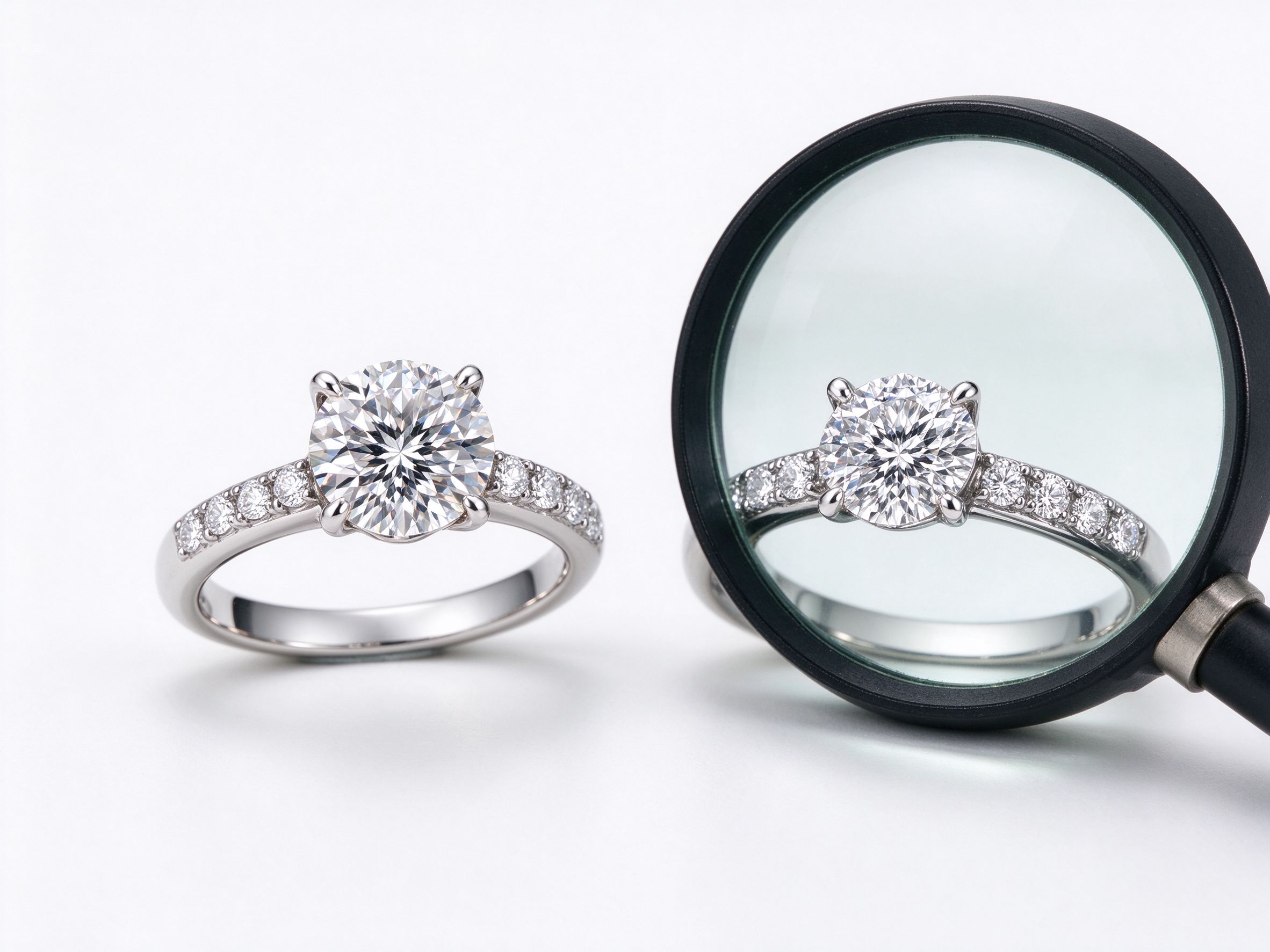
This is the question that saves customers money. In a mounted ring, on your hand, the eye cannot see the color grade differences as well as you think. A near-colorless stone and a slightly tinted stone, both in a white gold or platinum setting, look almost identical to the naked eye in normal light. The tint only shows up when you compare two stones side by side, loose, under a bright light. On a finger, surrounded by skin and metal, the lower grade often looks just as white as the top grade. This is why we tell most buyers not to overspend on the top color grade: the difference is not visible in real wear.
The setting changes this. A stone in a yellow gold setting looks warmer anyway, so a slightly tinted moissanite in yellow gold is invisible, because the setting already casts a warm tone. A stone in a white gold or platinum setting shows the tint more, because the setting is bright white and any yellow in the stone stands out. So for white settings, you want a higher color grade, because the contrast shows the tint. For yellow or rose gold settings, a lower grade works fine, because the setting warms the look anyway. This is a practical tip that saves customers money: buy the grade that matches the setting, not the top grade by default.
The shape also affects the apparent color. A round brilliant, with its many facets, scatters light and hides tint, so a lower grade looks white in a round. An emerald cut, with its large open facets, shows the tint more, because you can see straight into the stone. So for an emerald cut, you want a higher color grade, because the shape displays the tint. For a round or a cushion, a lower grade is fine. We cover the shape side in our guide on fancy shapes and cutting yield, and color is another reason the shape affects the price. Match the grade to the shape and the setting, and you get the white look you want at a lower price.
Color Treatment: Permanent and Reliable
Because moissanite color treatment is part of the production process, it is permanent, not a coating. The tint is reduced through a heat treatment that changes the crystal, and the result is stable for the life of the stone. It will not wear off, it will not cloud, and it will not change color over time. This is different from a surface coating, which can scratch off. Our treated moissanite is stable, and the color grade holds for decades. We cover the durability in our guide on whether moissanite can handle daily wear, and color stability is part of that. The stone looks the same in year twenty as it did in year one, because the treatment is permanent.
This is why we are comfortable selling treated moissanite as a value product. The treatment is not a trick; it is a standard part of making the stone look the way customers want. A diamond buyer pays for natural color, which is a rarity. A moissanite buyer pays for a treated stone that looks white, at a fraction of the price. The treatment is honest, it is permanent, and it is disclosed. We do not hide the treatment, because it is part of how the stone is made. This transparency is part of our factory approach: we tell you what the stone is, how it was made, and what it costs, and you decide.
For wholesale brands, this means the color grade is a reliable product attribute. When we sell a near-colorless stone, it is near-colorless, every time, because the treatment is consistent. Brands can build a line around a specific grade, knowing the stones will match. This consistency is why brands work with a factory rather than a middleman: the grade is what we say it is, and the QC backs it up. We inspect every stone before it ships, so the color grade on the tag matches the stone in the box. This is how a brand builds trust with its customers, and it starts with honest grading at the factory.
Which Grade Should You Buy?
Putting it all together, here is the buying rule. If you are setting the stone in white gold or platinum, and the shape is an emerald or other open-facet cut, buy a near-colorless grade, because the tint would show. If you are setting it in yellow or rose gold, or the shape is a round or cushion, a lower, slightly tinted grade is fine, because the setting and the shape hide the tint. If you are on a budget, the lower grade in a yellow gold setting is the best value, because you get a moissanite ring at the lowest price, and the tint is invisible on the hand. The top color grade is for customers who want the whitest possible stone, in a white setting, and who can afford the premium. For everyone else, the near-colorless or lower grade is the smart buy.
We see this in our wholesale orders. Brands selling to a budget market buy the lower grades, set them in yellow gold, and sell beautiful rings at low prices. Brands selling to a premium market buy the near-colorless grades, set them in white gold, and charge more. Both are valid, and both make customers happy, because the grade matches the product. The mistake is buying a top grade stone for a yellow gold setting, where the tint would have been invisible anyway. That overspend buys you nothing visible, because the warm setting hides the tint. Match the grade to the setting, and you get the look at the right price.
For a direct customer, the same rule applies. Look at the setting you are buying, and choose the grade that matches. If you want a solitaire in white gold, step up to near-colorless. If you want a vintage-style ring in rose gold, the lower grade is perfect. We will show you the stones in person, on the setting you have chosen, so you can see the actual look, not just the grade label. This is the right way to buy: see the stone on the setting, trust your eye, and buy the grade that looks white to you. The grade is a guide, not a commandment, and your eye on the actual ring is the final test.
The Resale and Value Angle
We have to mention the resale angle, because color grade is often discussed in terms of value retention. As we explain in our guide on the used moissanite market, the color grade does not affect resale much, because the stone itself is worth very little when resold. A near-colorless stone and a tinted stone resell for about the same, because the stone is a commodity. So buying a top color grade to resell later is a waste, because the resale price is the same regardless. Buy the grade for how it looks on your hand, not for resale, because resale will not reward the premium.
This is consistent with the broader point we make in our guide on whether moissanite is an investment: it is not. The color grade is a visible attribute, not a store of value. A near-colorless stone looks whiter, which is worth something to the person wearing it, but it is not worth a premium on the used market. So buy the grade you like to look at, and do not pay extra for a grade you think will hold value. It will not, and the money is better spent on a nicer setting or a bigger stone. This is the honest value advice, and it is the one we give every customer who asks.
The Grading Process on Our Bench
We sort our stones under a grading light that mimics daylight, on a white tray, next to master stones of known grade. The grader compares each moissanite to the master stones, decides which grade it matches, and tags it. This is done by eye, by experienced graders, because there is no machine that reads moissanite color the way a spectroscope reads a diamond. We train our graders over months, so the grading is consistent from one stone to the next. A stone that grades near-colorless today will grade near-colorless next week, because the grader is consistent and the lighting is controlled. This consistency is what makes the grade trustworthy: when we say a stone is near-colorless, it is near-colorless, by the same standard every time.
We also re-check the stones after they are set, because the setting can change the apparent color. A stone that looked slightly tinted loose can look white in a white gold setting, or more tinted in a yellow gold setting. So the final check is on the mounted ring, under the store lighting that the customer will actually see. This is why we tell customers to see the stone on the setting, not just loose. The loose grade is a guide, but the mounted look is the truth, and we want the customer to be happy with the mounted result. This is part of our QC: we do not ship a ring that looks different from what the customer expects, and the grading process is built around that.
Frequently Asked Questions
Is moissanite color-treated?
Yes. As-grown moissanite often has a slight yellow, gray, or green tint, and the near-colorless grades are produced either by selecting the clearest rough or by a permanent heat treatment that reduces the tint. The treatment is stable for the life of the stone and will not wear off.
Does a higher color grade look much better?
Not on the hand, for most people. The difference between a near-colorless and a slightly tinted stone is visible only when comparing loose stones side by side in bright light. On a finger, in a setting, the difference is hard to see, especially in yellow gold. Buy the grade that matches your setting and shape, not the top grade by default.
Which color grade is the best value?
For a yellow or rose gold setting, a slightly tinted grade offers the best value, because the warm setting hides the tint. For a white gold or platinum setting, step up to near-colorless. For an emerald cut, choose near-colorless, because the open facets show the tint. For a round, a lower grade is fine.
Does the color grade affect resale value?
No, not much. Moissanite resells for a small fraction of retail regardless of grade, because the stone is a commodity. Buy the grade for how it looks on your hand, not for resale, because the resale price will not reward the color-grade premium.
Choose the Right Color Grade at Factory Price
We grade and sort every moissanite stone we produce, so you know exactly what you are getting. Whether you are a wholesale brand choosing a color grade for a line, or a customer choosing a grade for a ring, we will show you the stones on the setting, explain the difference, and price each grade honestly. Contact us at service@holycome.com with your setting and shape, and we will recommend the grade that gives you the white look you want at the right price. We are a factory, so the color grades are transparent, the treatment is permanent, and you will not overpay for a difference your eye cannot see. Choose the grade that looks right on your hand, and wear it with complete and total confidence for very many years.