Why 925 Silver Holds Resale Value Better Than Plated Fashion Jewelry
Most people buy jewelry to wear it, not to sell it. But the question of what a piece is worth if it ever needs to be sold is one that brand owners think about constantly, because it shapes how customers perceive the product. A sterling silver ring that can be exchanged for some fraction of its purchase price feels like a real object, while a plated brass ring that resells for nothing feels like a disposable accessory. That perception difference is worth real money in a retail environment, and it is one of the quiet reasons 925 silver continues to outsell plated fashion jewelry even when the plated version looks identical in a display case.
This article explains, from the factory side, why sterling silver holds a floor value that plated and costume jewelry does not. We will look at the melt value of the silver itself, how pawn shops and secondhand dealers actually price a piece, why plated pieces have almost no resale floor, and how that floor changes the way your customers think about the price they pay. If you are a brand choosing between a plated fashion line and a solid 925 silver line, the resale math is one of the most under-discussed reasons to pick silver.
The Floor Value: What Sterling Silver Is Actually Worth
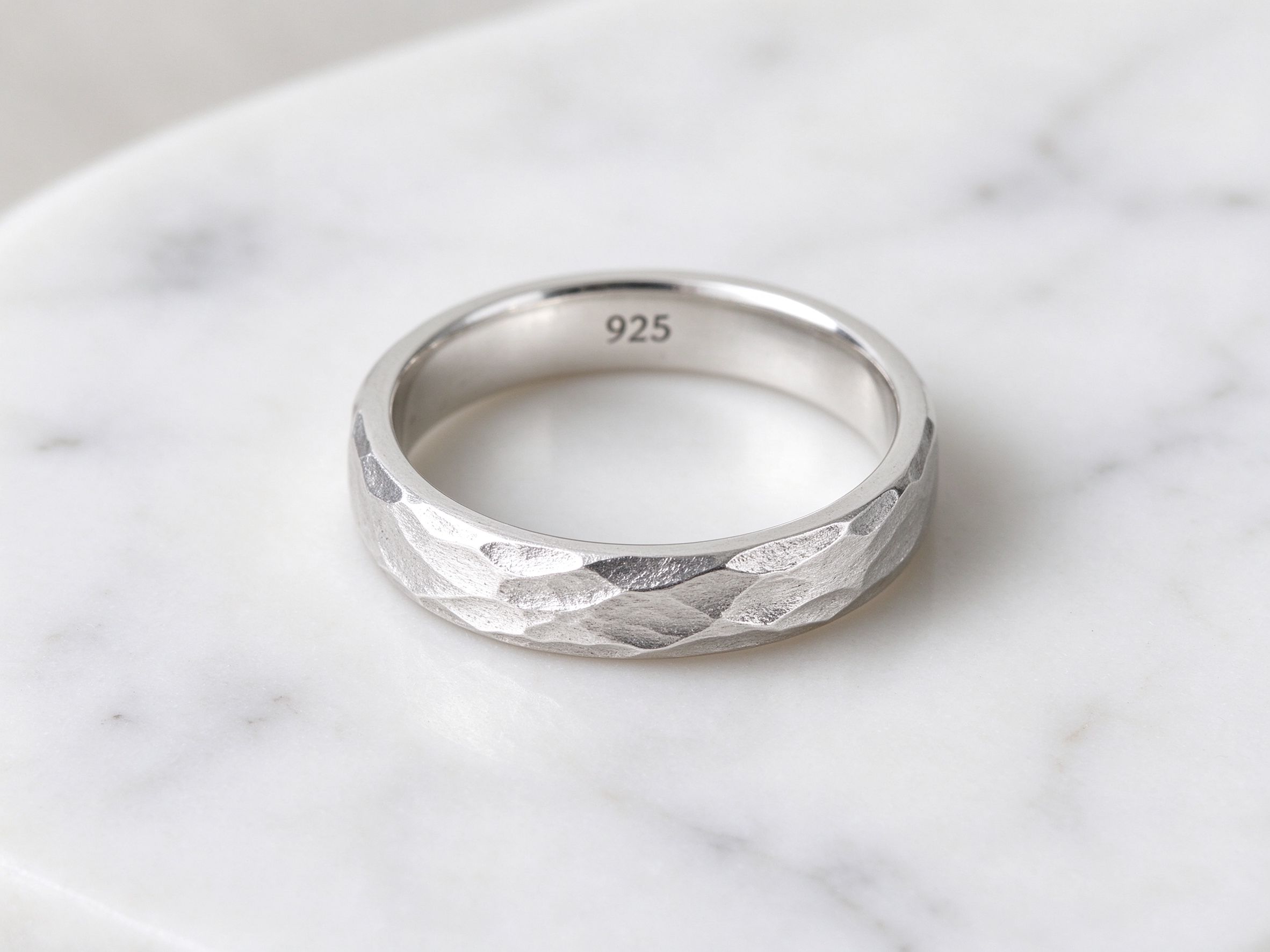
The reason sterling silver has a resale floor is simple: it is a commodity metal with a publicly traded spot price. Any piece of 925 silver jewelry contains about 92.5 percent pure silver by weight, and that silver can be melted down and sold at any time. The melt value of a piece is the weight of the silver in it multiplied by the spot price of silver, minus a small refining fee. For a 5-gram ring, that floor is around four or five US dollars at normal silver prices, regardless of what the piece looks like, how old it is, or whether anyone still wants to wear it.
That floor is not the same as the retail price. A 5-gram silver ring that retails for eighty dollars still only has a melt value of a few dollars. But the floor matters because it sets a bottom. No matter what happens to fashion tastes, no matter whether the style goes out of date, no matter whether the piece is scratched or damaged, the silver in it is still worth that floor. There is a reason the piece will not go to zero, and that reason is the commodity market.
Plated and costume jewelry does not have that floor. A brass or zinc alloy piece plated with a thin layer of silver or gold has a metal value of almost nothing, because the base metal is cheap and the plating is microns thick. When a pawn shop or a scrap dealer looks at a plated piece, they see a small object worth the price of melting it down, which is often less than the cost of doing the work. There is no floor, because there is no commodity value underneath the fashion.
How Pawn Shops and Secondhand Dealers Actually Price a Piece
When a customer brings a piece of jewelry into a pawn shop or a secondhand dealer, the appraisal process is brutally simple. The dealer weighs the piece, tests the metal to confirm it is sterling silver, and calculates the melt value. Then they offer somewhere between fifty and eighty percent of that melt value, because they need to be able to resell the scrap at a profit. The brand name, the design, the box, and the original receipt rarely matter, because the dealer is not in the business of reselling fashion to end customers; they are in the business of recycling metal.
This means a customer who bought a sterling silver necklace for two hundred dollars might walk out of a pawn shop with twenty or thirty dollars, which feels like a terrible deal. But the alternative, with a plated necklace, is zero dollars, because the dealer will not even take the piece. The difference between twenty dollars and zero is the difference between a piece that is recognized as real metal and a piece that is recognized as costume. Even a low percentage of melt value is something, and for many customers that something is the difference between throwing the piece away and keeping it.
Dealers who do resell fashion, rather than scrap, will sometimes offer more for a branded sterling silver piece, because they know there is a market for used silver jewelry among customers who want real metal at a discount. A well-known brand, a classic design, and a piece in good condition can resell for thirty to fifty percent of its original retail price, which is far above the melt floor. That secondary market does not exist for plated pieces, because there is no reason a secondhand buyer would want a used plated item when they can buy a new one for the same price.
Why Plated Jewelry Has Almost No Resale Floor
The plating on a fashion piece is typically a few microns of silver or gold over a base of brass, zinc, or steel. That layer wears off quickly, especially on pieces that touch skin, and once it wears, the piece looks old and discolored. There is no way to re-plate a cheap fashion piece economically, because the labor of re-plating costs more than the piece is worth. So a plated piece that has been worn for a year looks shabby, and there is no market for shabby costume jewelry, because new costume jewelry is cheap enough that no one buys it used.
Even a brand-new plated piece has no resale value beyond its retail price, because it is not made of anything that can be recycled. The base metal in a typical fashion ring might be worth ten or twenty cents, and the labor to melt and refine it is more than that. A scrap dealer would rather throw it away than process it. This is why costume jewelry ends up in landfill, while sterling silver pieces get melted and come back as new jewelry. The waste difference is significant, and it is one of the reasons customers increasingly prefer silver.
For brand owners, this means a plated fashion line and a 925 silver line are not competing on the same value axis. The plated line can be priced lower and sold on trend, but it has no long-term perceived value. The silver line can be priced higher, but it carries the implicit promise that the piece is real metal, that it will not simply turn a customer's finger green, and that if the customer ever needs to, they can get something back for it. That promise is worth a premium in the customer's mind, and it is one of the reasons silver brands survive recessions better than fashion brands.
How Customers Perceive the Difference Without Knowing It
Most customers do not walk into a store thinking about melt value. But they do notice that a silver piece feels heavier, that it does not turn their finger green, that it polishes back to brightness after years of wear, and that it does not have to be thrown away when the plating wears off. Those perceptions add up to a feeling that the piece is real, and that feeling translates into willingness to pay more and to come back for more. A customer who owns a sterling silver ring will often buy a second one, then a pair of earrings, then a necklace, because they have learned that the brand sells pieces that last. A customer who bought a plated ring that tarnished in six months will not come back.
This is the flywheel of the silver business. The resale floor is the invisible guarantee that makes the piece feel like an object rather than a disposable item, and that feeling builds a repeat customer. We see it in the data on our own brands: lines that are 925 silver have a repeat purchase rate roughly twice as high as lines that are plated, even when the designs are similar. The product itself is doing the marketing, because the customer learns through wearing it that the piece is worth keeping.
The environmental angle reinforces this. Customers increasingly know that sterling silver is recyclable, and they know that costume jewelry ends up in the trash. A brand that sells 925 silver can tell that story honestly, because the silver in the piece really can be recycled, and the scrap loop we described in our other article is real. A brand selling plated jewelry cannot tell that story, because the piece is not recyclable. The sustainability marketing write itself for silver brands, and it is one of the reasons the category keeps growing even in a tough economy.
How Wear and Age Affect the Resale Floor
One of the reasons sterling silver keeps its floor is that it ages gracefully. A silver ring that has been worn for ten years will have scratches, a worn polish, and possibly a slightly thin band, but the silver itself is still there and still 92.5 percent pure. It can be polished, replated, and made to look new again, or it can be melted and reborn as a different piece. Scratches do not destroy the metal; they just change its surface. This is why old sterling silver pieces from the 1950s and 1960s are still bought and sold today, while costume jewelry from the same era is almost entirely gone.
Plated jewelry ages in the opposite direction. The plating wears off in patches, the base metal oxidizes, and the piece looks cheap rather than vintage. There is no graceful aging, because the surface finish is not the metal itself. Once the plating is gone, the piece is not really a silver piece anymore, and no amount of polishing will bring it back. It can only be replated, which costs more than the piece is worth, so it gets thrown away. This is the reason landfill sites around the world are full of old fashion jewelry, while old silver pieces circulate in antique shops and secondhand markets.
For a brand, the aging story is part of the value proposition. A customer who buys a silver piece from you today will still have a real piece of metal in twenty years, even if the style is out of fashion. A customer who buys a plated piece will throw it away in two years. That difference is the reason silver customers keep coming back, and it is the reason silver brands have a lifespan measured in decades while fashion brands have a lifespan measured in seasons.
How Insurance and Warranty Treat Silver vs Plated
Another underdiscussed difference is how sterling silver is treated by insurance companies and extended-warranty programs. A silver piece that is stolen or lost can be replaced at its scrap or appraised value, because the metal itself has a known worth. A plated piece that is lost has almost no insurable value, because there is nothing to replace except the fashion design. This matters for high-volume retail brands that offer warranties on their jewelry, because a silver warranty is a finite, predictable cost, while a plated warranty is essentially a marketing line with no real backing.
Some brands offer a lifetime warranty on their silver pieces, promising to repair or replace the piece if it tarnishes, breaks, or wears out. We can honor that warranty because we know the metal is durable and the repairs are cheap. A brand offering the same warranty on plated jewelry is taking on a liability it cannot really cover, because the piece cannot be repaired economically. We have seen brands go under after offering lifetime warranties on plated lines, because they could not afford the replacement cost when customers started taking them up on it. Silver warranties are real; plated warranties are often a marketing promise that does not survive contact with reality.
If you are a brand building a warranty program, the silver line is the one you can afford to stand behind. The cost of repairing a silver ring is small, the cost of polishing it is small, and the cost of replacing it as scrap is small. That lets you offer a strong warranty without the risk sinking your business. It is one more reason silver is the backbone of serious jewelry brands, rather than a passing fashion trend.
What This Means for Your Brand's Pricing Strategy
If you are choosing between a plated line and a silver line, the resale floor is a reason to price the silver line with confidence. You do not have to match the price of a plated piece, because the customer is buying a different category of product. They are buying real metal that will not tarnish through, that can be polished, that can be resold, and that carries a recognized hallmark. The price difference between a plated ring and a silver ring is not just the metal cost; it is the difference between a disposable item and a lasting one, and the customer understands that difference even if they cannot articulate it.
You can also use the resale story in your marketing, honestly. Tell customers that the piece is solid 925 sterling silver, that it is stamped S925, that it can be polished for life, and that the silver itself has a value that does not disappear when fashion changes. You do not need to promise investment returns, because sterling silver is not an investment. But you can promise that the piece is not a disposable item, and that promise is more valuable than most brands realize.
For wholesale buyers, the practical takeaway is that a silver line will have a lower return rate and a higher repeat rate than a plated line, and that those two numbers more than make up for the higher unit cost. We can show you the data on similar lines we have produced for other brands, and we can help you price the silver line to hit your target margin while still feeling accessible to the end customer.
Common Questions About Silver Resale Value
How much will a sterling silver ring resell for? If you sell it as scrap, expect fifty to eighty percent of the melt value, which is a few dollars for a typical ring. If you sell it through a secondhand dealer or online marketplace as a worn piece, you might get twenty to forty percent of its original retail price, depending on the brand and condition.
Does brand name matter for resale? Yes, but less than for gold or diamonds. A well-known silver brand might get a small premium, while an unbranded piece will usually sell at melt value. The hallmark and the metal content matter more than the logo.
Why does a plated ring have no resale value at all? Because the base metal in a plated piece is worth almost nothing, and the plating is too thin to recover. A scrap dealer cannot make money processing it, and a secondhand buyer would rather buy a new plated piece than a used one.
Is sterling silver a good investment? No. The silver in a typical piece is worth a small fraction of the retail price, and the retail markup does not come back when you sell. Sterling silver is worth buying for the enjoyment and the durability, not as an investment.
The Customer's Long-Term Perception
The resale floor is not just about money. It is about how the customer feels about the piece years later. A sterling silver ring that a customer bought for a gift, an anniversary, or a personal milestone can be polished, replated, and worn again in a decade, and it still feels like the same piece. A plated piece from the same era will have turned green, faded, and been thrown away, and the customer will have no tangible reminder of the occasion. That emotional difference is the reason customers keep silver pieces in jewelry boxes for generations, while costume jewelry accumulates in landfill.
For a brand, this emotional durability is marketing that you do not have to pay for. A customer who still has your piece ten years from now is a walking advertisement for the quality of your line. They will show it to friends, they will buy another piece for a new occasion, and they will tell the story of how long it has lasted. A customer who threw your plated piece away six months after buying it will never think about you again, and they will not recommend you to anyone. The resale floor is also a repeat-purchase engine, even when no one ever actually resells the piece.
The Bottom Line
Sterling silver has a floor that plated jewelry does not, because the metal in it is a traded commodity. That floor is not large, and it is not an investment return, but it is the difference between a piece that can be sold, recycled, or passed down and a piece that gets thrown away when it tarnishes. For a brand, that difference translates into repeat customers, lower return rates, and a product that customers perceive as real. It is one of the quiet reasons 925 silver continues to be the backbone of the affordable jewelry market, and it is a reason to build your line on silver rather than on plating.
If you are planning a silver collection and want to see how the metal cost stacks up against the retail price you want to charge, send us your target designs and we will cost them out. Most brands we work with are surprised to find that a well-designed silver line can hit a healthy margin at a retail price that still feels accessible, because the customer is willing to pay a little more for a piece that will not tarnish through.
Reach our wholesale team at service@holycome.com, and for more on how 925 silver compares to other base metals, read our guide to 925 silver versus brass versus stainless steel value and our breakdown of silver plating versus solid sterling silver.