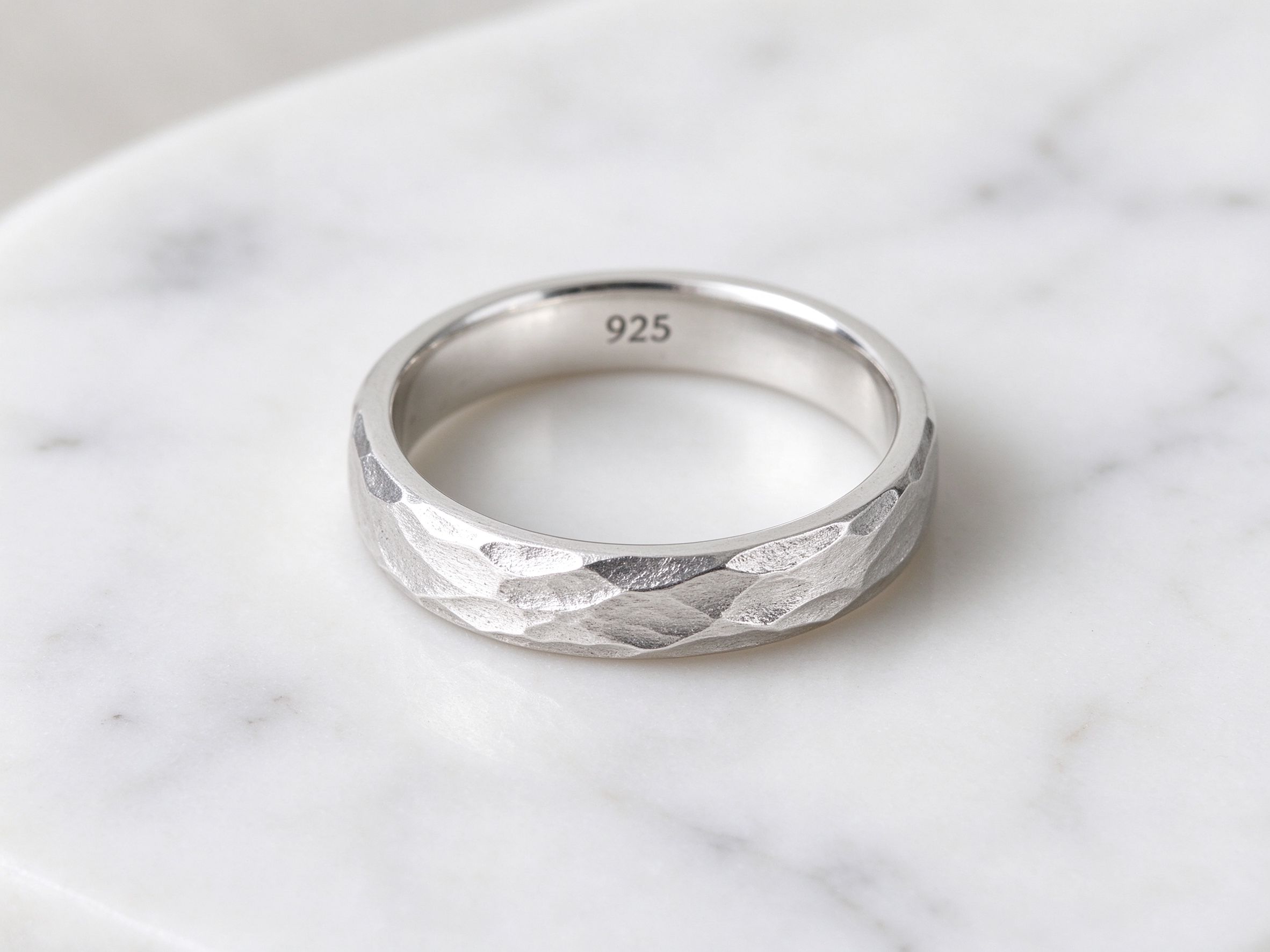
Bare sterling silver tarnishes and can look dull. Plating is the thin metallic finish that gives silver jewelry its bright white, warm gold or blush pink appearance. For buyers and retailers, choosing the right plating is as important as choosing the metal underneath. Here is how the main options compare.
Rhodium plating
Rhodium is a platinum-family metal plated over silver to produce a brilliant white surface. It is the default for moissanite and diamond-style silver jewelry because it makes the stone look brighter and protects silver from tarnish. It is hypoallergenic and highly reflective. The downside is that it wears off over one to three years of daily wear, revealing cool silver beneath.
Yellow gold plating
Yellow gold plating over silver gives a warm, affordable gold look. It is popular for fashion pieces and pieces sold at lower price points. Plating thickness matters: a thin wash wears quickly, while a heavier layer lasts much longer. Always ask the factory about plating thickness in microns.
Rose gold plating
Rose gold plating mixes copper into the gold alloy, producing a blush or pink tone. It is trendy and pairs well with moissanite. The copper content can make rose gold slightly more reactive to skin chemistry, but on silver it is generally stable.

Plating thickness matters
- Flashed plating (under 0.1 micron): cheap, wears in weeks.
- Standard plating (0.5-1 micron): normal retail life of 1-2 years.
- Heavy plating (2+ microns): premium, lasts longer, costs more.
Cost and margin
Rhodium plating is inexpensive to apply. Gold plating costs a little more based on the gold price. Heavy plating adds cost but reduces returns from customers who complain that the color "wears off quickly." For a brand positioning itself as premium, heavy plating is worth the extra cost.
FAQ
Does plating count as solid gold?
No. Plated silver is still silver with a thin gold surface. It must be described honestly.
Can plating be redone?
Yes. A jeweler can strip and re-plate a piece after cleaning.
Which plating lasts longest?
Heavier rhodium or gold plating, applied over a properly cleaned silver base, lasts longest.
Finishing choices affect value. See 925 Silver Value and the knowledge library.
How long plating actually lasts
Plating life depends on how the piece is worn. A ring worn daily in a high-sweat job may show wear in under a year. A necklace worn occasionally can look plated for three years. Contact with perfume, lotion and cleaning products accelerates wear, as does friction against desks and gloves. The honest way to set customer expectations is to say that plating is a finish, not a permanent surface, and that it will eventually need renewal. This turns a future complaint into an expected service.
You can extend plating life dramatically by a few habits: remove jewelry before showering and cleaning, apply lotions and perfumes before putting jewelry on, and store pieces dry and separately. A customer who follows these habits gets years of brightness; a customer who sprays perfume over their ring gets months. Explain this in the care card you ship with the order.
When re-plating is worth it
A well-made silver piece outlives several plating cycles. Re-plating costs a fraction of a new piece, so it is almost always worth doing for a ring or necklace the customer loves. Offer re-plating as an after-sales service. It builds loyalty and gives customers a reason to return. For retailers, stocking a simple re-plating offer turns a one-time sale into a relationship. The metal under the plating is permanent; only the finish renews.
Bottom line
Rhodium gives a bright white finish, gold plating gives warmth, and rose plating gives a trendy blush. Plating thickness matters more than the color choice: heavy plating lasts years, flashed plating wears in weeks. Ask factories for micron thickness, and remind customers that plating is a renewable finish. A small upgrade in plating thickness cuts complaints and protects your brand.
A worked example: a ring that turned yellow
A customer bought a rhodium-plated silver ring and loved its bright white look. After a year, she noticed yellow showing through on the band. She thought the ring was faulty. In fact, the rhodium had worn off in the high-friction spots, revealing the slightly cooler silver beneath. The fix was a cheap re-plating. This is the normal life cycle of plated silver. Customers who understand this see re-plating as routine maintenance, not a sign they bought poorly. Setting that expectation up front prevents the complaint.
Choosing plating for your product line
For a premium line, specify heavier plating, two microns or more, and tell customers it will last longer. For a value line, standard plating is fine but explain that it will renew over time. Ask the factory for the plating thickness in writing, because "bright silver" means nothing without a measurement. Consistent plating thickness also means your whole product line ages at the same rate, which protects your brand's look over time.
Quick reference checklist
- Ask for plating thickness in microns, not just a color name.
- Heavier plating lasts years; flashed plating wears in weeks.
- Re-plating is cheap and renews the finish.
- Remove jewelry before perfume, lotion and cleaning sprays.
- Rhodium gives white, gold gives warmth, rose gives blush.
Plating is a finish that renews, not a permanent layer. Choose the color your customers love, specify a realistic thickness, and explain that re-plating is normal maintenance. Treated this way, plated silver stays bright and your pieces keep their look for years.
The bottom line on plating is simple: it is the finish, not the metal. Choose the color your customers want, specify a realistic thickness, and explain that renewing it over years is normal. Done honestly, plated silver looks beautiful and lasts, and the few re-plating customers come back to you for the service.
When you order plated silver, photograph a fresh sample on arrival and keep it as a reference. That way, if a later batch looks different, you have proof of what you approved. Consistent plating protects your brand image and makes reorders predictable.