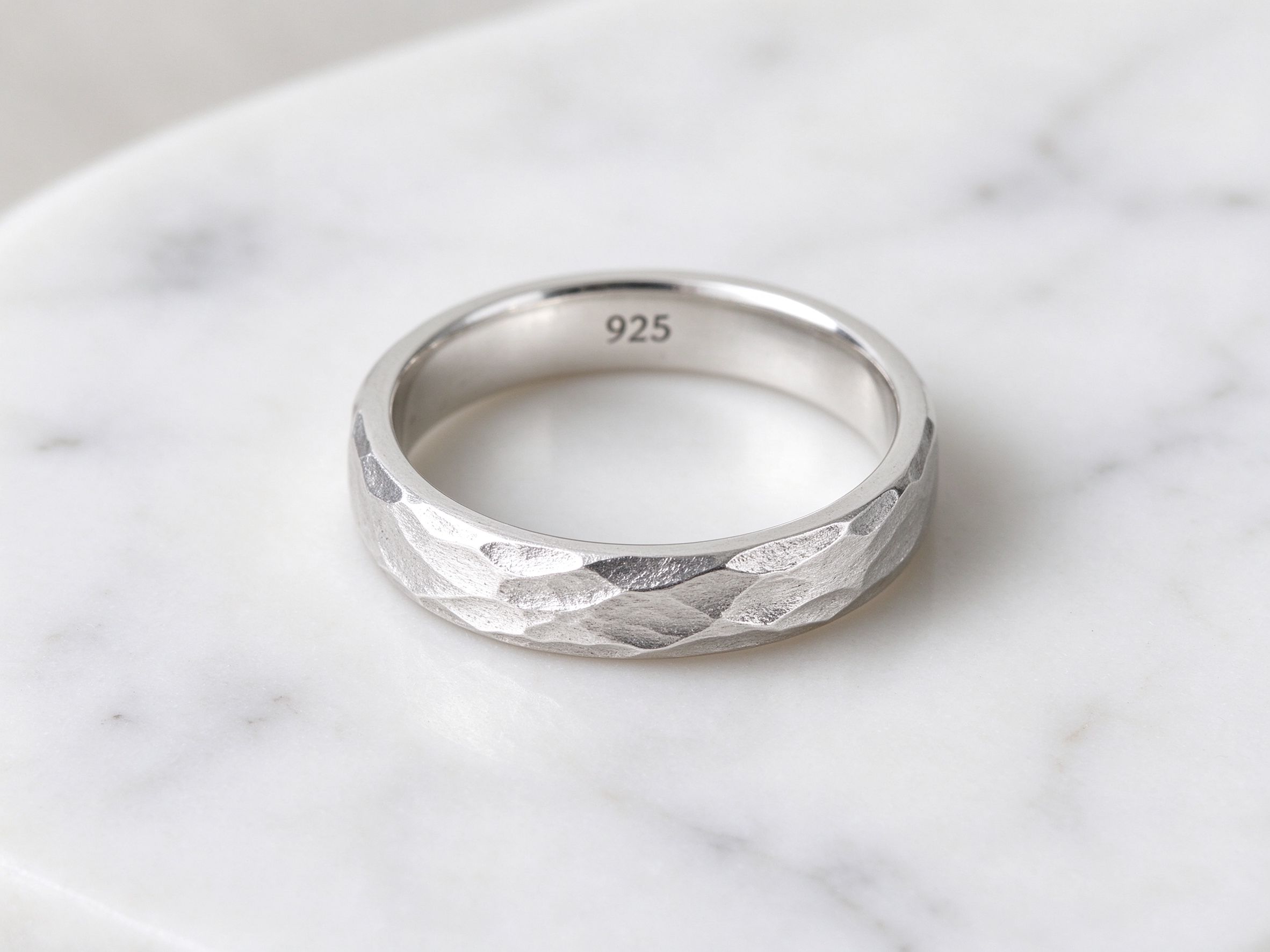
Rhodium Plating Thickness: The Standard Behind a Long-Lasting White Finish
Two silver rings can look identical on day one and age completely differently. The hidden variable is rhodium plating thickness. This guide explains how plating build is measured, why it determines how long the white finish lasts, and what thickness wholesale buyers should specify for moissanite settings.
Why Plating Thickness Determines Finish Life
Rhodium plating is a thin layer electro-deposited onto the silver. It provides the bright white finish and a barrier against tarnish. But plating wears off through friction - hand lotion, desk edges, clothing - and once it thins, the warmer silver underneath shows through. A thicker plate takes longer to wear through; a thin flash plate looks white on day one but dulls within weeks. The finish life is almost directly proportional to plating thickness. This is why two rings at the same silver weight can quote differently: the one with a heavier plate costs more rhodium but stays white far longer.
Tarnish resistance starts at the alloy, not just the plate. Well-finished, fully plated, anti-tarnish-packaged silver resists sulphur far longer than a rushed piece. Our finishing line controls the degrease, the plate and the packaging as one system, because a weak link anywhere in that chain shows up as yellowing within months.
Hallmarking and stamping are compliance steps. A legitimate 925 piece carries a stamp of purity and often a maker mark, and for export markets we match the local hallmarking requirements. These marks are inexpensive to apply but they are what let a retailer sell the piece with confidence that it is genuinely sterling.
Electroplating layers are built in sequence. Copper or nickel underlays may improve adhesion, then the silver layer, then the final rhodium top. Each layer adds cost and time, and the number and thickness of layers is why two silver rings at the same weight can quote at noticeably different prices.
Silver spot prices move, and honest quotes reflect it. We lock pricing for a defined validity window and adjust material surcharges transparently when the metal market swings, rather than hiding the change in a fudged stone price. Buyers who understand this rhythm can time larger orders to favourable windows.
Recycled sterling silver is now standard at scale. Responsible factories source refined recycled silver, which lowers environmental impact without changing the 925 specification. For brands marketing sustainability, recycled alloy is a selling point that costs little extra and is documented in the material certificates we supply.
Weight is a feature, not just a cost. A heftier setting feels premium, holds prongs better and resists bending, but it consumes more silver and more polishing time. Buyers choose the weight tier to match their price point: light for fashion turns, solid for engagement and wedding lines that must last years.
How We Measure Plating in Microns
Plating thickness is measured in microns, and we verify it with X-ray fluorescence, a gauge that reads the layer thickness non-destructively. We measure multiple points on each piece - shank, shoulder, prong - because plating can be uneven, thinner on recessed areas. A visual inspection cannot tell a one-micron plate from a three-micron one, which is why the measurement matters. We record plating thickness per batch, so if a finish issue arises months later, we can trace exactly what build was applied. Buyers who ask for the micron spec are asking the right question; a factory that cannot quote a number is plating by eye.
We test alloy samples for hardness and finish response before production, because the same 925 stamp can hide slightly different blends. A consistent alloy means consistent plating and setting behaviour. Buyers who work with us over time learn to trust that each batch matches the last, which is the whole point of verified sterling.
Silver pricing is transparent on our quotes, with the metal component broken out so buyers can follow the market. When silver moves, the adjustment is visible rather than buried. This honesty lets professional buyers plan purchases around favourable windows and avoid the surprise cost spikes that come from opaque pricing.
The finish on a silver ring is only as good as the prep beneath it. We degrease and electro-clean every piece before plating, because a clean surface is what lets rhodium bond. This invisible work is why our plated silver stays bright long after a rushed piece has yellowed, and it is a key reason buyers return.
Hallmarking and stamp placement are treated as finishing details, not afterthoughts. A clear, well-placed 925 and maker mark signals quality to the customer. We position stamps discreetly and legibly, so the mark reinforces trust rather than disrupting the design. Buyers notice this attention on the pieces they receive.
Recycled content is documented, not claimed. We can provide material certificates for buyers marketing sustainability, so environmental claims are backed by paperwork. This turns a responsible sourcing choice into a credible selling point that customers can verify rather than just hope for.
925 sterling silver is 92.5 percent silver alloyed usually with copper, a balance chosen because pure fine silver is too soft to hold prongs and survive daily wear. The copper adds hardness and spring, which is exactly what a stone setting needs. Buyers should treat the 925 stamp as a mechanical spec as much as a purity claim.
What Thickness to Specify for Different Products
Not every piece needs the same plate. Light fashion jewellery can carry a moderate flash, acceptable for occasional wear. Engagement and wedding rings, worn daily, need a heavier build to survive years of friction. We recommend a heavier plate on daily-wear pieces because the cost of rhodium is trivial next to the warranty cost of a fast-wearing finish. For OEM lines, buyers can choose a plating tier: a lighter plate for fashion SKUs, a heavier plate for bridal. Matching the thickness to how the piece is worn optimises cost and longevity. A uniform thin plate across the whole range under-serves daily-wear rings; a uniform thick plate over-spends on fashion pieces.
Casting and stamping are two cost paths. Casting pours molten silver into moulds and suits detailed, three-dimensional designs; stamping presses sheet metal and suits simple, high-volume bands. Each leaves a different weight and price, and a factory chooses the method to match the design rather than forcing every ring into one process.
Silver loss is a real cost line. Filings, sprues, casting gates and polishing dust are recovered and refined, but recovery is never 100 percent. That small loss is baked into the quote, which is why a heavier, more labour-intensive ring carries a material premium beyond the raw silver weight alone.
Rhodium plating thickness on silver is a spec, not a mood. We measure it by X-ray fluorescence and quote the micron build, because a flash plate and a heavy plate look identical on day one but age very differently. Buyers selling daily-wear engagement and wedding rings should specify the heavier build to protect their return rate.
Tarnish resistance starts at the alloy, not just the plate. Well-finished, fully plated, anti-tarnish-packaged silver resists sulphur far longer than a rushed piece. Our finishing line controls the degrease, the plate and the packaging as one system, because a weak link anywhere in that chain shows up as yellowing within months.
Hallmarking and stamping are compliance steps. A legitimate 925 piece carries a stamp of purity and often a maker mark, and for export markets we match the local hallmarking requirements. These marks are inexpensive to apply but they are what let a retailer sell the piece with confidence that it is genuinely sterling.
Electroplating layers are built in sequence. Copper or nickel underlays may improve adhesion, then the silver layer, then the final rhodium top. Each layer adds cost and time, and the number and thickness of layers is why two silver rings at the same weight can quote at noticeably different prices.
Why Plating Adhesion Matters as Much as Thickness
Thickness alone is not enough; the plate must adhere. Poor adhesion causes flaking and peeling, even on a thick layer. Adhesion depends on the pre-plating preparation: thorough degreasing, electro-cleaning and a flawless surface. If the silver has residue or oxidation, the rhodium sits on top rather than bonding, and it lifts later. Our plating process invests heavily in the prep stages, because a well-adhered thinner plate outlasts a poorly adhered thick one. Buyers should know that plating quality is a system - prep, deposition, measurement - not just a micron number. A factory with disciplined prep does not have flaking problems.
Silver spot prices move, and honest quotes reflect it. We lock pricing for a defined validity window and adjust material surcharges transparently when the metal market swings, rather than hiding the change in a fudged stone price. Buyers who understand this rhythm can time larger orders to favourable windows.
Recycled sterling silver is now standard at scale. Responsible factories source refined recycled silver, which lowers environmental impact without changing the 925 specification. For brands marketing sustainability, recycled alloy is a selling point that costs little extra and is documented in the material certificates we supply.
Weight is a feature, not just a cost. A heftier setting feels premium, holds prongs better and resists bending, but it consumes more silver and more polishing time. Buyers choose the weight tier to match their price point: light for fashion turns, solid for engagement and wedding lines that must last years.
We test alloy samples for hardness and finish response before production, because the same 925 stamp can hide slightly different blends. A consistent alloy means consistent plating and setting behaviour. Buyers who work with us over time learn to trust that each batch matches the last, which is the whole point of verified sterling.
Silver pricing is transparent on our quotes, with the metal component broken out so buyers can follow the market. When silver moves, the adjustment is visible rather than buried. This honesty lets professional buyers plan purchases around favourable windows and avoid the surprise cost spikes that come from opaque pricing.
The finish on a silver ring is only as good as the prep beneath it. We degrease and electro-clean every piece before plating, because a clean surface is what lets rhodium bond. This invisible work is why our plated silver stays bright long after a rushed piece has yellowed, and it is a key reason buyers return.
The Cost of Rhodium and Honest Pricing
Rhodium is one of the rarest and most expensive metals, so a heavier plate has a real material cost. This is why a quoted price difference between two similar rings often comes down to plating build. A supplier quoting suspiciously low prices may be skimping on rhodium, knowing the customer will not measure it until months later. We quote plating thickness transparently, so buyers understand why the price is what it is. For a brand that sells on long-term quality, the heavier plate is a sound investment; for a disposable fashion line, a lighter plate may be acceptable. Either way, the build should be stated, not hidden.
Hallmarking and stamp placement are treated as finishing details, not afterthoughts. A clear, well-placed 925 and maker mark signals quality to the customer. We position stamps discreetly and legibly, so the mark reinforces trust rather than disrupting the design. Buyers notice this attention on the pieces they receive.
Recycled content is documented, not claimed. We can provide material certificates for buyers marketing sustainability, so environmental claims are backed by paperwork. This turns a responsible sourcing choice into a credible selling point that customers can verify rather than just hope for.
925 sterling silver is 92.5 percent silver alloyed usually with copper, a balance chosen because pure fine silver is too soft to hold prongs and survive daily wear. The copper adds hardness and spring, which is exactly what a stone setting needs. Buyers should treat the 925 stamp as a mechanical spec as much as a purity claim.
Casting and stamping are two cost paths. Casting pours molten silver into moulds and suits detailed, three-dimensional designs; stamping presses sheet metal and suits simple, high-volume bands. Each leaves a different weight and price, and a factory chooses the method to match the design rather than forcing every ring into one process.
Silver loss is a real cost line. Filings, sprues, casting gates and polishing dust are recovered and refined, but recovery is never 100 percent. That small loss is baked into the quote, which is why a heavier, more labour-intensive ring carries a material premium beyond the raw silver weight alone.
Rhodium plating thickness on silver is a spec, not a mood. We measure it by X-ray fluorescence and quote the micron build, because a flash plate and a heavy plate look identical on day one but age very differently. Buyers selling daily-wear engagement and wedding rings should specify the heavier build to protect their return rate.
Re-Plating and the Long-Term Finish Strategy
Even a heavy plate eventually thins on a daily-wear ring. The realistic strategy is to plan for periodic re-plating rather than expect the finish to last forever. As a factory, we offer re-plating service to wholesale partners, so a worn ring can be restored to bright white. We also set customer expectations on the care card: the rhodium finish is a refinishable layer, not a permanent condition. This honesty reduces returns - a customer told the finish needs occasional renewal treats it as jewellery, while one expecting permanent whiteness feels cheated. Plating thickness buys time; re-plating restores the finish; honest expectations keep customers happy.
Tarnish resistance starts at the alloy, not just the plate. Well-finished, fully plated, anti-tarnish-packaged silver resists sulphur far longer than a rushed piece. Our finishing line controls the degrease, the plate and the packaging as one system, because a weak link anywhere in that chain shows up as yellowing within months.
Hallmarking and stamping are compliance steps. A legitimate 925 piece carries a stamp of purity and often a maker mark, and for export markets we match the local hallmarking requirements. These marks are inexpensive to apply but they are what let a retailer sell the piece with confidence that it is genuinely sterling.
Electroplating layers are built in sequence. Copper or nickel underlays may improve adhesion, then the silver layer, then the final rhodium top. Each layer adds cost and time, and the number and thickness of layers is why two silver rings at the same weight can quote at noticeably different prices.
Silver spot prices move, and honest quotes reflect it. We lock pricing for a defined validity window and adjust material surcharges transparently when the metal market swings, rather than hiding the change in a fudged stone price. Buyers who understand this rhythm can time larger orders to favourable windows.
Recycled sterling silver is now standard at scale. Responsible factories source refined recycled silver, which lowers environmental impact without changing the 925 specification. For brands marketing sustainability, recycled alloy is a selling point that costs little extra and is documented in the material certificates we supply.
Weight is a feature, not just a cost. A heftier setting feels premium, holds prongs better and resists bending, but it consumes more silver and more polishing time. Buyers choose the weight tier to match their price point: light for fashion turns, solid for engagement and wedding lines that must last years.
Frequently Asked Questions
How thick should rhodium plating be?
Daily-wear engagement and wedding rings need a heavier measured build; occasional fashion pieces can use a lighter plate. We measure microns with X-ray fluorescence on shank, shoulder and prong.
Why do two identical rings cost differently?
Often the difference is rhodium thickness and prep. A heavier, well-adhered plate costs more rhodium but stays white far longer than a thin flash.
Can I just ask for the same plate everywhere?
No. Match thickness to wear: heavier for daily wear, lighter for fashion. This optimises cost and longevity across the range.
Does plating ever peel?
It peels if adhesion is poor, usually from inadequate pre-plating cleaning. Our prep process ensures the rhodium bonds, so a measured plate does not flake.
What happens when the finish wears?
We offer re-plating service to restore the white finish. Set customer expectations that rhodium is refinishable, which reduces returns and builds trust.
Conclusion
Rhodium thickness is the quiet determinant of finish life. Measured in microns, matched to how a piece is worn, and applied over meticulous prep, it keeps silver bright for years. Buyers who specify the build and plan for re-plating sell moissanite settings that stay white, not just white on day one.