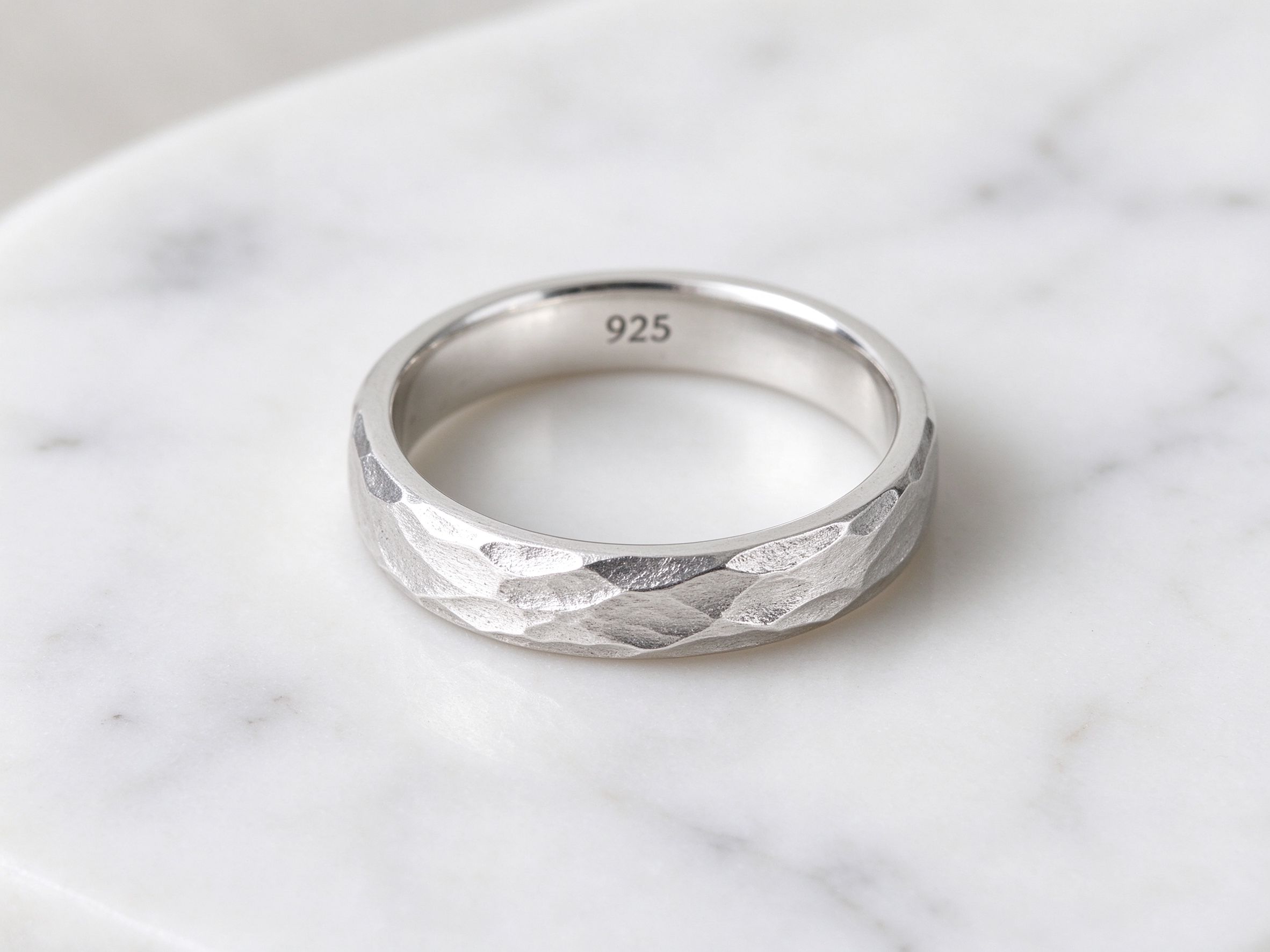
Why a Silver Band With Moissanite Holds Value Better Than a Gold-Plated Ring
The customer shopping for a ring under 200 dollars usually has two options in front of them: a gold-plated ring on a brass base, or a sterling silver ring with a moissanite stone. The gold-plated ring looks gold, which is what many customers want, but it is built on a base of cheap brass, and the gold plating will wear off. The silver ring looks white, not gold, but it is built on real 925 silver with a real moissanite stone, and it will last for years. This article explains why the silver and moissanite combination holds its value better than a gold-plated piece, even though the gold-plated piece looks more expensive when new, and why more customers are choosing silver and moissanite in 2026.
The short version is that a gold-plated ring is a temporary piece, while a silver and moissanite ring is a lasting piece. The plating on a gold-plated ring is only a few microns thick, and it wears off at the high spots, especially on the inside of the band where it touches the skin. Within a year, the gold plating has worn away, the brass underneath is visible, and the ring looks old. A silver ring with moissanite does not have a plating layer to wear away; the silver is the ring, and the moissanite is the stone. The ring will look the same in ten years as it did the day it was bought, except for a patina that can be polished off.
How Gold Vermeil Is the Middle Option
If the customer wants the gold look but wants a lasting piece, gold vermeil is the middle option. Vermeil is a thick layer of gold plating over a solid sterling silver base. The gold layer is thicker than standard gold plating, usually 2 to 5 microns, and the base is real 925 silver, not brass. This means the plating lasts longer, because the silver underneath does not tarnish through, and the piece still has the weight of real silver. Vermeil costs more than gold-plated brass, but it lasts much longer, and it is the compromise between the gold look and the lasting base.
We offer vermeil on many of our silver designs, because some customers want the gold color but do not want to buy solid gold. A vermeil ring looks gold, feels like silver, and lasts for years with proper care. The customer who buys vermeil knows it is not solid gold, but they know it is better than gold-plated brass. The price is between silver and solid gold, which makes it accessible. For a brand, vermeil is a good option to offer alongside silver, because it gives the customer the gold look without the price of solid gold.
The downside of vermeil is that the gold layer still wears off eventually, especially on the high spots. A vermeil ring will last longer than a gold-plated brass ring, but it will not last forever. The customer who wants a piece that never needs replating should choose solid silver or solid gold, not vermeil. But for the customer who wants the gold look at a reasonable price, vermeil is the best option, and it holds its value much better than gold-plated brass.
How the Resale Market Values the Two Pieces
The resale market tells the story most clearly. A gold-plated brass ring has no resale value, because the materials are cheap and the plating is worn. A sterling silver ring with a moissanite stone has some resale value, because the silver is real and the stone is durable. A used silver moissanite solitaire, in good condition, can sell for a fraction of its original price, because the piece still looks new. A used gold-plated ring cannot be sold, because it looks old and the materials are worth almost nothing.
This resale difference affects the customer's perception of value. A customer who knows they can resell a silver ring if they need to feels more confident buying it, because they know it is not a total loss. A customer who knows a gold-plated ring cannot be resold feels like they are throwing money away, even if they never intend to sell it. The resale value is a psychological factor, not just a financial one, and it makes the silver ring feel like a better purchase.
For a brand, the resale difference is part of the value story. You do not have to talk about resale directly, but you can talk about longevity, durability, and lasting quality. The customer who hears that the ring will last for years knows that they are buying something with lasting value, not something that will be thrown away. This is the message that sells silver moissanite rings, and it is the message that gold-plated brands cannot use, because their product does not last.
What Gold-Plated Actually Means
Gold-plated jewelry is a base metal, usually brass or copper, with a thin layer of gold electroplated on top. The gold layer is typically 0.5 to 2.5 microns thick, which is thinner than a human hair. It looks bright and gold when new, because the gold layer reflects light. But the gold layer is wearing away every time the ring touches skin, every time it rubs against clothing, and every time it is washed. The high spots, like the inside of the band and the edges of the setting, wear first, because they get the most contact. Within six months to a year, the brass underneath is visible, and the ring looks patchy.
The cost of a gold-plated ring is low, because the base metal is cheap. A brass ring with a thin gold plating might cost 2 to 3 dollars to produce, and it retails for 30 to 50 dollars. The margin is healthy, but the product is disposable. The customer buys it for the gold look, wears it for a year, and then throws it away when the plating wears off. This is the fast fashion model, and it works for a while, but it leaves the customer unsatisfied, because they know the ring will not last.
For a brand, selling gold-plated rings is a quick way to make money, but it is not a way to build a loyal customer base. The customer who buys a gold-plated ring knows it is temporary, and they will not come back to the same brand when they want a lasting piece. They will go to a brand that sells real metal. The brands that last are the ones that sell real silver and real stones, not plated base metal, because the customers who care about lasting pieces are the ones who become repeat buyers.
What Silver and Moissanite Actually Means
A sterling silver ring with a moissanite stone is a piece of real 925 silver, cast into a band, with a moissanite center stone set in prongs. The silver is the body of the ring, not a plating over a base. The moissanite is a lab-grown diamond simulant that is nearly as hard as a diamond, and it does not cloud, scratch, or fade. The combination of real silver and a real stone is a lasting piece, because both materials are durable and both age well.
The cost of a silver and moissanite ring is higher than a gold-plated ring, because the silver is real and the moissanite is a real stone. A simple silver solitaire with a 6-millimeter moissanite might cost 15 to 20 dollars to produce, and it retails for 80 to 150 dollars. The margin is healthy, but the product is lasting. The customer buys it knowing it will last for years, and they are willing to pay more for that longevity. The brand builds a loyal customer, because the customer knows they can come back for another lasting piece.
For a brand, the silver and moissanite ring is the product that builds the business. It is not the cheapest product, but it is the product that the customer values, and it is the product that gets recommended. A customer who bought a silver moissanite solitaire and wore it for three years will tell their friends about it, because it still looks new. A customer who bought a gold-plated ring and threw it away after a year will not recommend it to anyone. The silver and moissanite customer is the marketing asset, while the gold-plated customer is a one-time sale.
How the Two Pieces Age Differently
The clearest difference between the two pieces is how they age. A gold-plated ring, after one year, looks patchy. The gold has worn off the high spots, the brass underneath is visible, and the ring looks cheap. The customer is embarrassed to wear it, and they put it in a drawer. A silver moissanite ring, after one year, looks almost the same as when it was new. The silver has developed a slight patina, which can be polished off, and the moissanite is still bright. The customer is happy to wear it, and they will keep wearing it for years.
After five years, the difference is even larger. The gold-plated ring is unwearable, because the plating has worn off completely and the brass has tarnished. The silver moissanite ring still looks good, because the silver is real and the stone is durable. The customer has worn it every day, and it has lasted. This is the value difference: the silver and moissanite piece is an asset that lasts, while the gold-plated piece is a consumable that is thrown away.
For a brand, the aging difference is the story you tell to customers. The customer who is choosing between a gold-plated ring and a silver moissanite ring is often tempted by the gold look, but they can be shown the difference. A photo of a one-year-old gold-plated ring next to a one-year-old silver ring tells the story better than any sales pitch. The customer who sees the difference will choose the lasting piece, because they do not want to buy a disposable ring. This is why brands that show the aging difference sell more silver than gold-plated.
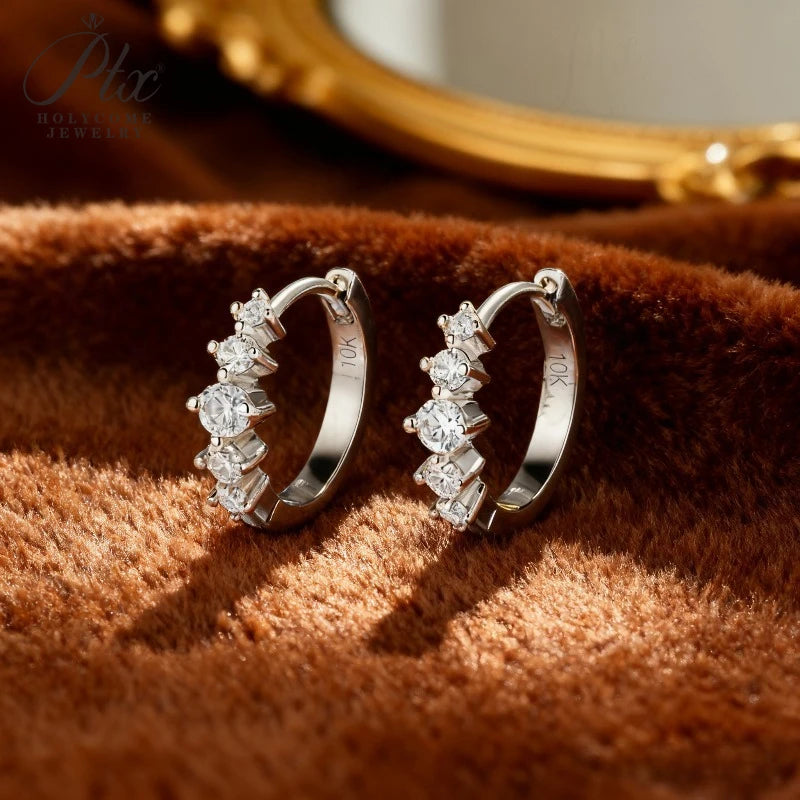
Why Moissanite Is a Better Stone Than CZ
When we compare silver and moissanite to gold-plated, we are also comparing the stone. A gold-plated ring usually has a cubic zirconia (CZ) stone, which is soft and porous. CZ scratches easily, clouds over time, and looks old within a year. Moissanite is much harder, closer to diamond, and it does not cloud or scratch. A moissanite stone on a silver band will look bright and new for years, while a CZ stone on a gold-plated band will look yellow and cloudy in a year.
The cost difference between moissanite and CZ is small. A 6-millimeter CZ stone might cost 0.50 dollars, while a 6-millimeter moissanite might cost 3 to 5 dollars. The extra 3 to 4 dollars per stone is paid back many times over, because the moissanite does not come back as a complaint. The customer who buys a CZ ring will complain that the stone clouded, while the customer who buys a moissanite ring will not. The moissanite is the cheap insurance against returns.
For a brand, using moissanite instead of CZ is one of the easiest ways to improve the quality of your line. The cost is small, the customer perceives the difference in brightness and durability, and the return rate drops. The brands that use moissanite are the ones that build a reputation for quality, while the brands that use CZ are the ones that get complaints about clouded stones. The stone choice is not a detail; it is a quality signal, and the customer can tell the difference.
How the Customer Perceives the Two Pieces
When a customer picks up a gold-plated ring, they feel the lightness of the brass base, and they know it is not a real piece of jewelry. When they pick up a silver moissanite ring, they feel the weight of the silver, and they know it is real. The perception difference is subconscious, but it is strong. The customer who feels the weight of the silver will pay more for it, because they know they are buying something real. The customer who feels the lightness of the brass will not pay much, because they know it is fake.
The customer also perceives the stamp. A silver ring has a clear S925 stamp on the inside, which tells the customer it is real 925 silver. A gold-plated ring might have a 18K GP stamp, which tells the customer it is gold-plated, not solid gold. The stamp is the evidence that the piece is what it claims to be, and the customer who looks for the stamp will choose the silver ring over the gold-plated one. The stamp is a small detail, but it is the detail that separates real jewelry from fashion.
For a brand, the perception difference is why the silver and moissanite line can be priced higher. The customer perceives the piece as real, and they are willing to pay for it. The gold-plated line is perceived as fashion, and the customer will only pay fashion prices. The brand that wants to build a real jewelry business should invest in silver and moissanite, because that is where the perception of quality lives.
How to Market the Difference to Customers
When you sell silver moissanite rings against gold-plated rings, the marketing is about telling the truth about how each piece ages. Most customers have had a gold-plated ring turn their finger green or wear off, and they know the frustration. You can acknowledge that experience directly: tell them that this piece is real silver, not plated, that the stone is moissanite, not CZ, and that it will not turn green or cloud. The customer who has had a bad experience with plated jewelry will respond to this message, because they are looking for a piece that lasts.
The visual marketing is also important. Photos of the piece when new are not enough; show the piece after a year of wear. A photo of a one-year-old silver ring next to a one-year-old gold-plated ring tells the story more powerfully than any words. The customer who sees the difference will choose the silver piece, because they do not want the patchy look of a worn plated ring. We can provide you with sample photos of aged pieces, and you can use them to show the quality difference.
For a brand, the marketing message is simple: real metal, real stone, lasting quality. You do not need to be aggressive about it; you just need to be clear. The customer who is tired of disposable jewelry will find you, because they are actively looking for something that lasts. The brands that win this market are the ones that tell the honest story about their materials, because the customer has already learned the hard way what happens with cheap plated pieces.
Common Questions About Silver Moissanite vs Gold-Plated
Is a silver moissanite ring a good engagement ring alternative? Yes. It looks like a diamond engagement ring, it lasts for years, and it costs a fraction of a diamond ring. For customers who cannot afford a diamond ring, the silver moissanite solitaire is the best alternative.
Will the silver ring turn my finger green? No. Real 925 silver does not turn the finger green. The green color comes from brass, which is the base metal in gold-plated rings. A silver ring is hypoallergenic for most customers, especially if it is nickel-free.
How long does gold plating last? With daily wear, the plating on a ring usually wears off in six to twelve months, especially on the inside of the band. After that, the brass underneath is visible, and the ring looks patchy.
Can I plate a silver ring in gold? Yes. We can gold-plate a silver ring, which gives the gold look on a real silver base. This is called gold vermeil, and it lasts longer than gold plating on brass, because the silver base does not tarnish through. It is a middle option between silver and gold-plated.
How Hypoallergenic Properties Play Into the Choice
Another reason customers choose silver over gold-plated brass is hypoallergenicity. Brass contains nickel and copper, which are common allergens. A customer with sensitive skin who wears a brass ring will often develop a green mark or a rash on their finger, because the brass reacts with their skin. A sterling silver ring, especially one that is nickel-free, is much less likely to cause a reaction, because the alloy is 92.5 percent silver with a small amount of copper. The customer with sensitive skin who has had bad experiences with brass will choose silver, because they know it will not irritate their skin.
For a brand, the hypoallergenic angle is a selling point that gold-plated brands cannot match. You can advertise the ring as nickel-free and hypoallergenic, and the customer with sensitive skin will seek you out. This is a segment of customers who are often overlooked, but they are loyal, because they have few options that do not irritate their skin. A silver brand that serves this segment builds a loyal following, because the customer knows they can wear your rings without a reaction.
The Bottom Line
A silver ring with a moissanite stone holds its value better than a gold-plated ring, because the silver is real, the stone is durable, and the piece lasts for years. A gold-plated ring is a temporary piece that wears out in a year, while a silver moissanite ring is a lasting piece that the customer will wear for years. For a brand, the silver and moissanite line is the line that builds a loyal customer base, because the customer knows they are buying something real. The gold-plated line is a quick sale, but it does not build the brand. The choice is clear, and more customers are making it in 2026.
If you are deciding between a silver moissanite line and a gold-plated line, send us your target market and we will show you the data. Reach our team at service@holycome.com, and for more on how we set moissanite stones, read our guide to prong, bezel, and pavé setting cost comparison and our breakdown of is moissanite worth it, a Wuzhou factory explains.