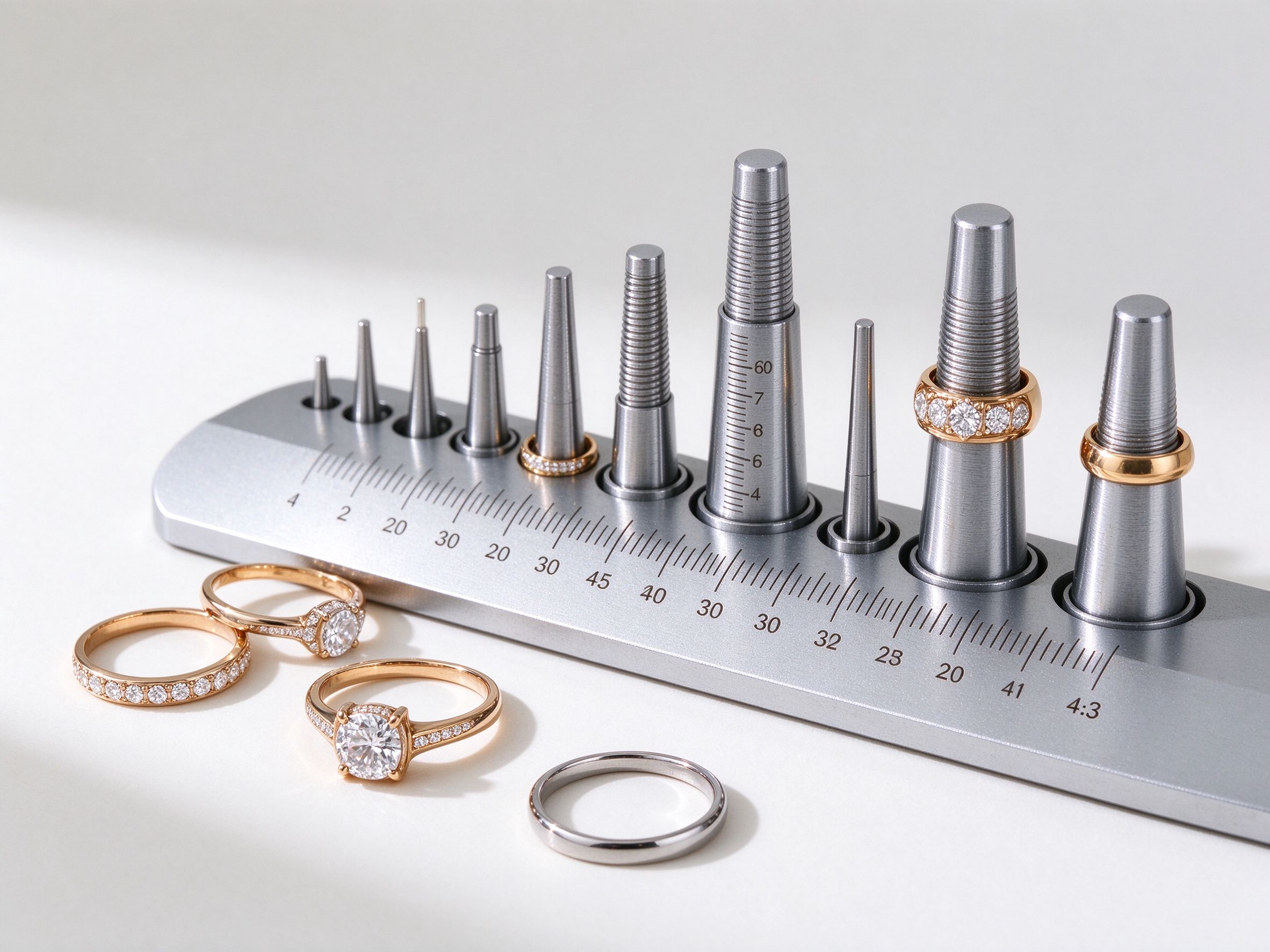
Ring Resizing: Why Factory-Made Rings Resize Better Than Cheap Ones
A ring is not a permanent size. Customers lose weight, gain weight, inherit a ring that does not fit, or buy a vintage piece that needs adjustment. Resizing is a normal part of owning a ring, and how a ring resizes says a lot about how it was made. A cheap, thin, or plated ring resizes badly: the solder leaves a visible mark, the band cracks, the plating comes off, or the piece falls apart. A well-made factory ring, cast from real 925 silver on a solid band, resizes cleanly and invisibly, because the metal is thick enough to take the cut and the solder. This article explains why factory-made rings resize better than cheap ones, what happens during a resize, and why a brand should care about resizing when designing a line.
The resizing process is a jeweler's test of quality. A ring that was poorly made will fail when it is resized, because the band is too thin, the metal is wrong, or the plating is too thick. A ring that was well made will resize cleanly, because the jeweler can cut the band, add or remove a small section, solder it back together, and polish the joint. The customer who buys a ring that resizes well will keep it for years, resizing it as their finger changes. The customer who buys a ring that cannot be resized will have to replace it, and they will remember the brand that sold them a ring that could not be adjusted.
What Happens During a Ring Resize
Resizing a ring is a simple process. The jeweler cuts the band with a saw, removes a small section if the ring is too large, or adds a small section of the same metal if the ring is too small. They solder the cut ends together, smooth the joint, and polish the band so the solder line is invisible. The whole process takes about ten minutes for a simple band, and the ring looks the same as before, except it is a different size. The key is that the band has to be thick enough to take the cut and the solder, because a thin band will crack or warp during the process.
The solder used is a silver alloy that matches the band, and it is applied with a small torch. The heat from the torch melts the solder, which flows into the joint and bonds the two ends together. After the solder cools, the jeweler files down the excess solder, polishes the band, and the joint disappears. A clean resize leaves no visible mark, because the polish blends the solder into the band. A bad resize leaves a visible line, because the jeweler did not polish it well, or because the band was too thin to take the solder without warping.
For a brand, the resizing process is something you should design for. A ring that is too thin will not resize well, and the customer will have a bad experience when they try to adjust it. A ring that is solid and properly thick will resize cleanly, and the customer will be happy. The brand that designs rings that resize well builds a reputation for quality, because the customer's jeweler will tell them that the ring was well made. The brand that designs rings that cannot be resized will get complaints, because the customer's jeweler will refuse to resize them.
Why Cheap Rings Resize Badly
Cheap rings resize badly for a few reasons. The first is that the band is too thin. A thin band, under 1 millimeter thick, will crack when it is cut, because the metal is not thick enough to take the stress of the cut and the solder. The jeweler will tell the customer that the ring cannot be resized, because it is too thin, and the customer will be disappointed. The second reason is that the band is hollow. A hollow band will crumple during resizing, because the thin shell cannot be cut and soldered without collapsing. The third reason is that the ring is plated. A plated ring will lose its plating during the resize, because the heat from the torch burns off the plating, and the band will have a bare spot where the resize happened.
A cheap brass ring resizes even worse, because brass is harder to solder than silver, and the solder joint is more visible. A brass ring that is resized will have a dark line where the solder is, because the solder does not match the brass. The customer will be unhappy with the visible mark, and they will blame the brand that sold them the ring. A silver ring resizes cleanly, because the solder matches the silver, and the polish makes the joint invisible. This is one of the quiet benefits of selling real silver rings: they resize well, and the customer's jeweler will say good things about them.
For a brand, the resizing problem with cheap rings is a reputation risk. A customer who buys a cheap ring, tries to resize it, and has a bad experience will remember the brand. They will tell their friends that the brand sells rings that cannot be resized, and they will not buy from the brand again. A brand that sells solid silver rings that resize well will get the opposite: the customer will tell their friends that the brand sells good quality rings, because the jeweler could resize them easily. The resizing experience is part of the brand's reputation, and it is worth designing for.
How Plating Affects the Resize
If a ring is rhodium-plated, the resizing process will remove the plating in the area where the cut and solder happen. The heat from the torch burns off the plating, and the polished area will show the silver underneath. This means the customer has to get the ring re-plated after a resize, which adds cost and time. A natural silver ring, with no plating, resizes cleanly, because there is no plating to burn off. The customer who buys a plated ring should know that a resize will require re-plating, and the brand should mention this in the product description.
For a brand, the plating question is part of the resizing story. A natural silver ring is easier to resize, because the customer does not have to worry about re-plating. A rhodium-plated ring looks brighter when new, but it requires re-plating after a resize. Most brands offer both options, and the customer chooses based on their preference. The brands that sell natural silver rings have an easier resizing story, because the customer does not have to think about re-plating. The brands that sell rhodium-plated rings have to explain the re-plating step, which is a small detail but one that the customer should know.
We can re-plate rings after a resize, if the brand sends them back to us. The process is simple: we polish the resize area, re-plate the ring, and send it back. The cost is small, and the ring looks new again. For a brand that offers a resize service, the re-plating step is part of the service, and the customer pays a small fee for it. The brands that offer a full resize service, including re-plating, have happier customers, because the customer does not have to find a local jeweler.
How Resizing Works for Engagement Rings
Engagement rings are the type of ring that gets resized the most, because the customer buys the ring before the wedding, and the finger size might change between the proposal and the big day. An engagement ring has to be easy to resize, because the jeweler will have to adjust it quickly, often on short notice. A solitaire engagement ring, with a solid band and no pavé, is the easiest to resize, because the jeweler can cut the band without hitting any stones. A pavé engagement ring, with stones along the band, is harder to resize, because the jeweler has to avoid the stones.
For a brand that sells engagement rings, the resize-friendly design is especially important. The customer who buys an engagement ring expects to be able to resize it, and they will be unhappy if the jeweler says it cannot be done. The brands that sell easy-to-resize engagement rings get recommended by jewelers, because the jeweler knows the ring will resize cleanly. The brands that sell hard-to-resize engagement rings get complaints, because the jeweler has to turn the customer away. The resize-friendly design is a competitive advantage in the engagement ring market, because it is what the customer and the jeweler both want.
We design our engagement rings to be easy to resize, with solid bands and simple settings. We also put the hallmark on the part of the band that does not get cut, so the stamp survives the resize. These small design choices make the ring easy for the jeweler to work with, and the jeweler will tell the customer that the ring was well made. The brand gets the credit for the good experience, and the customer becomes a loyal buyer.
Which Rings Can Be Resized and Which Cannot
Not every ring can be resized. A plain band, whether ladies or men's, is the easiest to resize, because there are no stones or details in the way. A solitaire ring can be resized, as long as the band is solid and the stone is not in the way. A pavé ring, where stones run along the band, is harder to resize, because the resize cut has to avoid the stones, and the stones might shift during the process. A ring with a stone set right next to the resize point might have to be unset before the resize, then reset after, which adds cost.
A hollow band cannot be resized, because the shell will crumple. A plated ring can be resized, but the plating will need to be reapplied after the resize, which adds cost. A ring made of a mixed metal, like silver with gold accents, can be resized, but the jeweler has to be careful with the solder, because the different metals react differently to heat. The general rule is that simple, solid rings resize easily, while complex, thin, or plated rings are harder to resize.
For a brand, the resizing difficulty is a design consideration. If you are selling rings that customers will want to resize, like wedding bands and engagement rings, you should design them to be easy to resize. This means solid bands, simple designs, and stones that are not in the resize path. If you are selling fashion rings that customers will not resize, like thin stackable bands, the resizing difficulty is less important, because the customer will not try to adjust them. The brands that sell wedding rings and engagement rings should pay special attention to resizing, because their customers will expect to resize the ring over the years.

How We Design Rings to Be Resize-Friendly
When we produce rings for a brand, we design them to be resize-friendly, unless the brand tells us otherwise. This means we cast the band at a proper thickness, usually at least 1.2 millimeters, so it can take the cut and the solder. We also avoid putting stones or details in the resize path, so the jeweler can cut the band without hitting anything. We stamp the hallmark on the part of the band that does not get cut, so the stamp survives the resize. These small design choices make the ring easy to resize, and the customer will appreciate it when they need to adjust the size.
We also recommend that brands tell their customers that the ring can be resized. This is a selling point, because it tells the customer the ring is well made. A customer who knows they can resize the ring over the years will feel more confident buying it, because they know it is a lasting piece, not a disposable one. The brand that advertises resize-friendly rings differentiates itself from competitors who sell thin, cheap rings that cannot be adjusted. The resize-friendly feature is a quality signal, and it costs the brand nothing to advertise.
For a brand, the resize-friendly design is part of the quality promise. A ring that can be resized is a ring that will last for years, because the customer can adjust it as their finger changes. A ring that cannot be resized is a ring that will be replaced when the size changes, and the customer will not feel loyal to the brand. The brands that sell resize-friendly rings build loyal customers, because the ring lasts, and the customer keeps coming back for more pieces from the same brand.
How Resizing Affects the Long-Term Value of the Ring
A ring that can be resized has a longer useful life, because the customer can adjust it as their finger changes. A ring that cannot be resized has a shorter useful life, because the customer has to replace it when the size changes. This means the resize-friendly ring holds its value longer, because it can be worn for years, while the non-resizeable ring ends up in a drawer when the size changes. The customer who can resize their ring will keep it for decades, and they will pass it on or sell it, while the customer who cannot resize will discard it.
For a brand, the long-term value of the ring is part of the brand's reputation. A ring that lasts for decades, resized and worn, is a ring that the customer will remember. A ring that is discarded after a year is a ring that the customer will forget. The brands that sell rings that last are the ones that build a reputation for quality, and that reputation brings in new customers. The brands that sell disposable rings are the ones that fade away, because no one remembers them.
The resizing feature is one of the things that separates a fine jewelry brand from a fashion brand. A fine jewelry brand sells rings that last for decades, resized and worn. A fashion brand sells rings that are replaced every season. The customer who buys a fine jewelry ring is a loyal customer, while the customer who buys a fashion ring is a one-time customer. The brands that want to build a fine jewelry business should design resize-friendly rings, because that is what the customer expects from fine jewelry.
How to Tell Customers About Resizing
Telling customers about resizing is a way to build trust, not just a technical detail. You can mention on the product page that the ring is solid sterling silver and can be resized by a local jeweler. This reassures the customer that the ring is well made, and it tells them that they are buying a lasting piece, not a disposable fashion item. The customer who knows they can resize the ring will feel more confident buying it, because they know it is not a one-time purchase.
You can also offer a resize service yourself, where the customer sends the ring back to you and you resize it for a fee. This is more convenient for the customer than finding a local jeweler, and it gives you an extra revenue stream. We can handle the resize for you, using the same process we use to produce the ring, and we can send it back to the customer. The brands that offer a resize service have happier customers, because the customer does not have to figure out how to get the ring adjusted.
For a brand, the resize story is part of the quality message. You do not have to go into technical detail; you just have to say that the ring is solid silver and can be resized. The customer will understand that this means the ring is well made, and they will respond to that message. The brands that tell this story build a reputation for quality, and the customer comes back for more pieces.
Common Questions About Ring Resizing
Can all rings be resized? Most solid silver rings can be resized. Hollow bands, very thin bands, and some pavé designs are harder to resize. We will tell you which of our designs are easy to resize and which are not.
Does resizing leave a mark? A clean resize on a silver ring leaves no visible mark, because the solder matches the silver and the polish blends it. A bad resize, on a cheap ring, can leave a visible line.
How much does resizing cost? A basic resize at a local jeweler usually costs 20 to 50 dollars, depending on the ring. The customer expects to pay this, and it is part of owning a ring.
Should I tell customers the ring can be resized? Yes. It is a selling point, because it tells the customer the ring is well made. The customer who knows they can resize the ring will feel more confident buying it.
The Bottom Line
Ring resizing is a quiet test of quality. A well-made factory ring, cast from real 925 silver on a solid band, resizes cleanly and invisibly. A cheap, thin, or plated ring resizes badly, leaving marks or cracking. For a brand, designing resize-friendly rings is part of building a quality reputation, because the customer's jeweler will tell them that the ring was well made. The brands that sell resize-friendly rings build loyal customers, because the ring lasts for decades, while the brands that sell non-resizeable rings sell disposable pieces. The resize feature is a small design choice, but it has a big impact on the brand's reputation and the customer's long-term loyalty.
If you are designing a ring line and want to know which designs resize best, send us your product range and we will advise. Reach our team at service@holycome.com, and for more on how we design rings, read our guide to ring band width and thickness cost and our breakdown of why solitaire moissanite rings hold resale value.