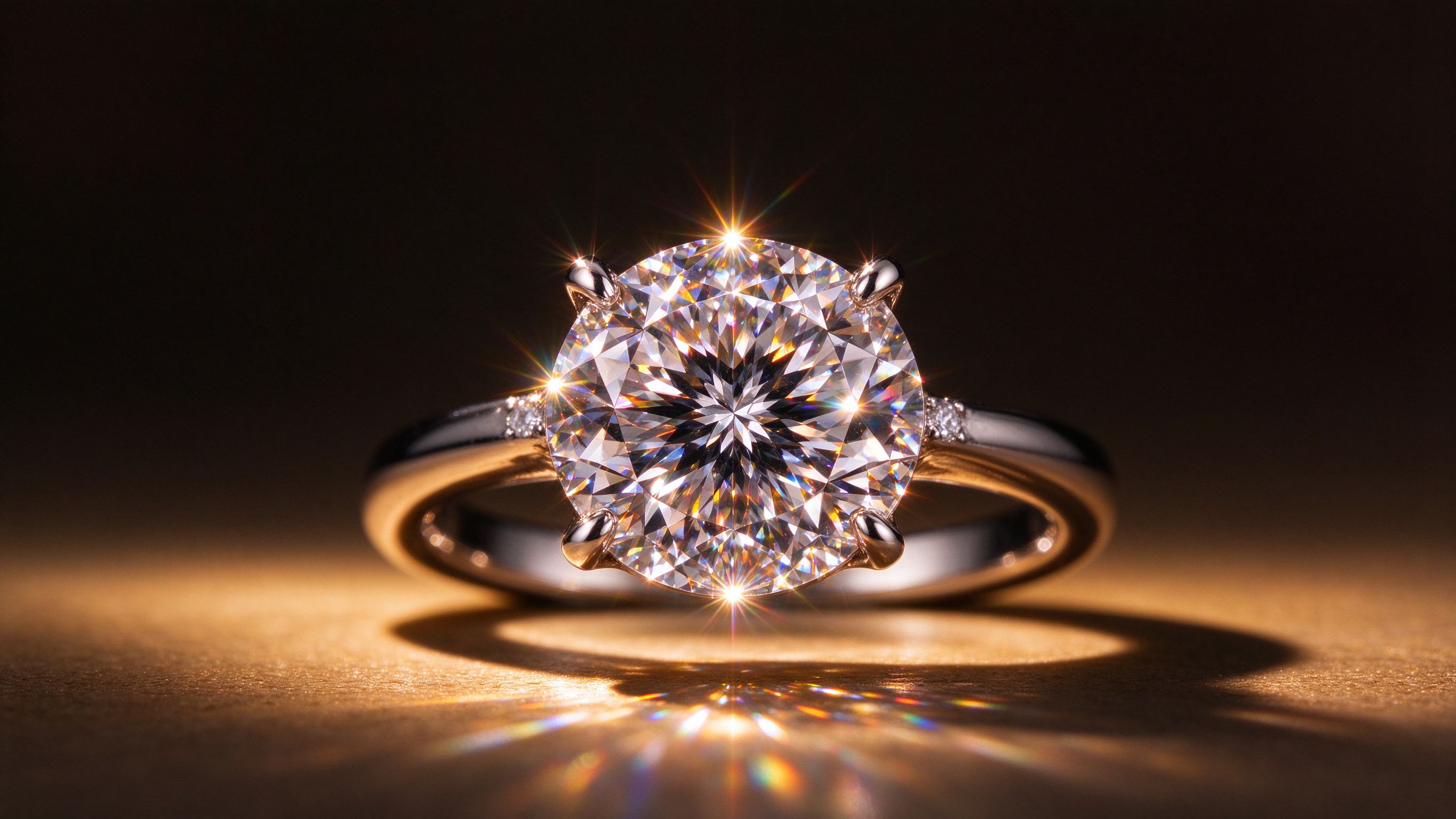
How Ring Band Width and Thickness Drive Material Cost
If you have ever compared two silver ring quotes and noticed that a wider band costs noticeably more than a thin one, even when the design looks similar, you have seen the most basic driver of ring cost: the amount of silver in the band. A ring is, at its core, a circle of metal with a stone on top, and the price of that circle is mostly a function of how wide it is, how thick it is, and what shape it has. The setting, the stone, and the finish matter, but they sit on top of the band, and the band itself is the largest single component of most ring designs. Understanding how width and thickness drive cost is the first step to designing a ring that hits your target retail price without wasting silver.
This article walks through the geometry of ring bands from the factory side: how width changes weight, how thickness changes durability, what comfort fit and flat shank actually mean, and how a small change in dimensions can move the unit price by a few dollars. If you are a brand designing a silver ring line and trying to keep the price accessible without making the piece feel flimsy, this is the math you need.
The Geometry of a Ring Band
A ring band is a torus, a donut shape, and the weight of a torus depends on three numbers: the diameter of the ring (which sets the size), the width of the band (how much of the finger it covers), and the thickness of the band (how much metal is in the cross-section). The diameter is fixed by the ring size, and the customer is going to buy the size that fits their finger, so the only two numbers a designer can control are width and thickness. Together, width and thickness determine how many grams of silver are in the band, and the grams determine the material cost.
A typical thin band, like a stacking ring, might be 1.5 millimeters wide and 1 millimeter thick. A typical engagement band might be 2 millimeters wide and 1.2 millimeters thick. A wide statement band might be 6 millimeters wide and 1.5 millimeters thick. The weight difference between the thin band and the wide band, in the same ring size, can be a factor of four or more. That is why a 6-millimeter men's band costs more than a 2-millimeter ladies band, even though the design complexity is similar.
The cross-section shape also matters. A flat shank, where the inside of the band is flat against the finger, uses less metal than a comfort fit, where the inside of the band is rounded for a smoother feel. A comfort fit band has extra metal on the inside, which makes the ring slide on more easily but adds weight. A flat shank is lighter, cheaper, and can feel tighter on the finger because it has sharper edges. Most engagement rings use comfort fit because the customer expects easy wearing, while most stacking rings use flat shank because the cost matters more than the comfort on a thin band.
How Width Changes the Silver Weight
The width of a band is the dimension across the top of the ring, measured from the front edge to the back edge when the ring is lying flat. A 1.5-millimeter band covers a sliver of the finger. A 6-millimeter band covers a substantial portion. As the width increases, the volume of the torus increases proportionally, which means the silver weight increases proportionally. Double the width, and you roughly double the silver weight, all else being equal.
This is why wide bands have a higher per-piece cost, even when they are simple. A 6-millimeter plain silver band might weigh 5 to 6 grams, while a 2-millimeter plain band of the same size weighs 1.5 to 2 grams. The labor to polish both is similar, because the polishing process is the same, but the silver component is three times higher. At current silver prices, that is a difference of three to four dollars in material cost alone, before any labor or margin. This is why a wide band cannot be priced like a thin band, no matter how simple the design.
For a brand, the design implication is that width is a choice with a direct price consequence. If you want a ring that retails for 40 dollars, a 6-millimeter band with a stone on top is unlikely to hit that price, because the silver weight alone pushes the cost too high. If you want a 40-dollar ring, a 2-millimeter band with a small stone is more realistic. We can show you the weight calculation for any width you specify, so you can design the band to hit your price point rather than guessing.
How Thickness Changes Durability and Cost
The thickness of a band is the dimension from the outside of the band to the inside, measured at the cross-section. A thick band, say 1.5 millimeters, is rigid, holds its shape, and does not bend under normal wear. A thin band, say 0.8 millimeters, is flexible, can bend if knocked, and will wear through faster over years of use. The thickness is what determines whether the ring feels solid or flimsy in the customer's hand.
The cost difference between a thick and a thin band is less dramatic than the width difference, because thickness changes the cross-section area, not the circumference. A band that is 50 percent thicker uses about 50 percent more silver, all else being equal. But the durability difference is large, because a thin band that bends is a returned ring, while a thick band that holds its shape is a happy customer. We usually recommend a minimum thickness of 1.1 millimeters for a ring that will be worn daily, and 1.3 millimeters for a ring that will hold a stone, because the prongs and the setting need a solid band to anchor to.
The mistake we see most often is brands specifying a band that is too thin to keep the price down, only to have the rings bend in the customer's hand and come back as returns. The small saving on silver is erased by the return cost, the negative reviews, and the lost customer. A slightly thicker band costs a little more up front, but it pays for itself in reduced returns. We will always tell you if your design is specifying a band that we think is too thin, because we would rather warn you before production than deal with returns after.
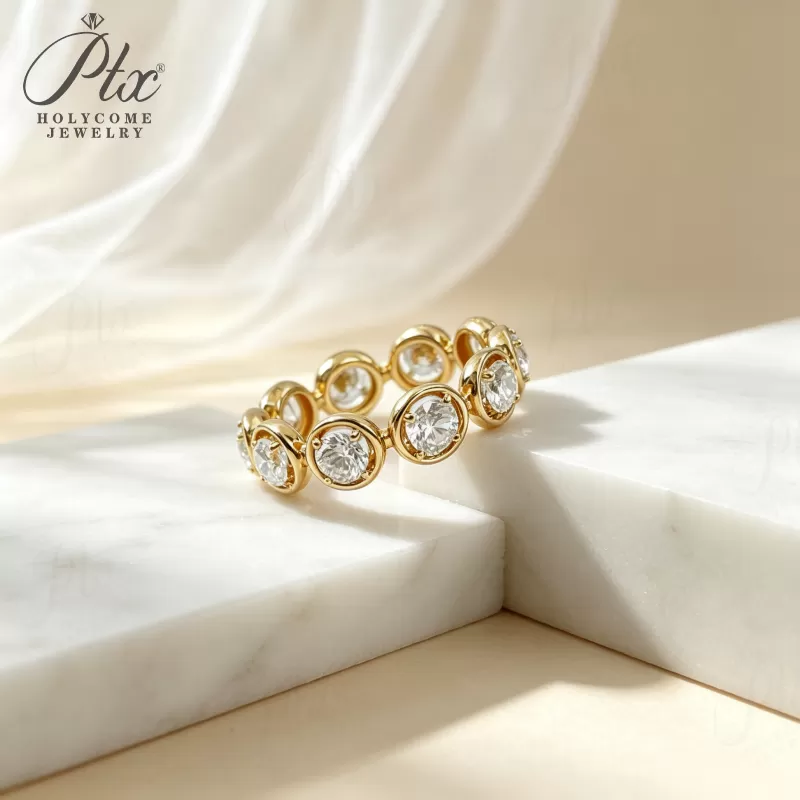
Comfort Fit vs Flat Shank: What It Actually Costs
Comfort fit is the term for a band where the inside surface is rounded, like the outside. The rounded inside lets the ring slide over the knuckle more easily, and it feels smoother on the finger during wear. The cost of comfort fit is extra metal on the inside of the band, because the rounded cross-section uses more silver than a flat cross-section. A comfort fit band might weigh 10 to 15 percent more than a flat shank of the same width, because the rounded inside adds volume.
Flat shank is the traditional inside, where the band is flat against the finger. It is lighter, cheaper, and can feel tighter on the finger because the edges are sharp. Flat shank is fine for thin stacking rings, where the customer is used to a light feel, but it is less comfortable for a wide band or a daily wear ring. Most customers who try a comfort fit ring prefer it, and we recommend comfort fit for any ring that will be worn every day, because the small extra cost is worth the feel.
We can produce either fit on any band, and we will specify the fit on the spec sheet. If you are designing a line, decide whether your customer expects the comfort feel or the price sensitivity, and we will set the tooling accordingly. Most engagement rings and men's bands use comfort fit. Most stacking rings and thin fashion bands use flat shank. The choice is part of the brand positioning, not just a technical detail.
How Ring Size Changes the Weight
Within a fixed width and thickness, the ring size still changes the weight, because the diameter of the torus changes. A size 6 ring is smaller around than a size 9 ring, and it uses less silver. The weight difference between a size 6 and a size 9 on the same band is about ten to fifteen percent, because the circumference is longer on the larger size. This is why we quote a target weight for a middle size, usually size 7, and then adjust slightly for sizes outside the middle range.
For a brand, this means that a size 4 and a size 10 of the same design do not weigh exactly the same. The size 10 uses more silver, and the size 4 uses less. We can either charge the same price for all sizes, which means the large sizes are slightly subsidized by the small sizes, or we can charge a small size upcharge for sizes outside the middle range. Most brands choose to keep the price the same across sizes, because the customer expects a single price, and the weight difference is small enough that it does not matter much. But if you are selling a heavy men's band, the size upcharge can add up, and we can discuss it.
The size distribution of your order also matters for cost. Most brands order a range of sizes, usually from US 6 to US 9 for ladies and US 8 to US 12 for men. If you order only the middle sizes, the weight average is predictable. If you order a skew toward very large or very small sizes, the weight average shifts, and the cost shifts with it. We will advise you on the size distribution that sells best, based on our other brands, because ordering the wrong sizes is one of the most common inventory mistakes.
How Hollow vs Solid Bands Change the Equation
For wide bands, especially men's bands, some factories offer hollow construction, where the band is made as a thin shell rather than a solid torus. A hollow wide band looks wide and heavy, but it uses a fraction of the silver of a solid band. This makes it cheaper, and it also makes it lighter on the finger. The trade-off is that a hollow band can dent if hit hard, and it cannot be resized as easily as a solid band, because the shell will crumple during the resizing process.
We offer both solid and hollow bands, and we will tell you which one we recommend for your design. Solid bands are better for rings that will be resized, worn every day, or sold as fine jewelry. Hollow bands are better for fashion pieces where the look of width matters more than the feel of weight, and where the price point has to stay low. We will never push a solid band on you when a hollow band fits your market, because the right choice depends on your customer.
The weight difference between solid and hollow is dramatic. A 6-millimeter solid silver band might weigh 6 grams, while a hollow 6-millimeter band might weigh 2.5 grams. The silver cost difference is more than half, which is why hollow bands can be sold at a much lower retail price. The customer gets the look of a wide band without the weight or the cost, and the brand gets a wider margin. The downside is durability, and we will tell your customer that the hollow band should be treated as a fashion piece rather than an heirloom.
How Stone Setting Changes the Band Requirement
A ring with a stone on top needs a band that is thick enough to anchor the setting. A solitaire setting with a 6-millimeter moissanite needs a band that is at least 1.2 millimeters thick, because the prongs and the basket attach to the band, and a thin band will flex under the stone's weight. A pavé setting with small stones along the band needs a band that is wide enough to hold the stones, usually at least 2 millimeters, because the pavé stones sit on the band itself.
This is why a stone ring is usually more expensive than a plain band of the same width. The band has to be thicker to hold the setting, and the setting itself adds labor and material. A plain 4-millimeter band might weigh 4 grams, while a 4-millimeter band with a 1-carat moissanite setting might weigh 5 grams and take three times as much labor. The width is the same, but the requirement for a stronger band and a setting adds cost.
For a brand, the design implication is that the stone size and the band width have to be balanced. A 1-carat stone on a 2-millimeter band will look unbalanced and will flex, because the band is too thin to hold the stone securely. A 1-carat stone on a 4-millimeter band looks proportionate and feels solid. We will advise you on the right band width for the stone size you specify, because a band that is too thin for the stone is a quality problem waiting to happen.
How to Design a Band That Hits Your Price Point
Putting it all together, designing a ring band that hits a target retail price is a process of choosing the width, thickness, and construction that give the right look at the right weight. If your target is a 40-dollar retail price, you are probably looking at a 2-millimeter flat shank band, 1.1 millimeters thick, with a small stone. If your target is a 120-dollar retail price, you are looking at a 4-millimeter comfort fit band, 1.4 millimeters thick, with a larger stone. The numbers are not arbitrary; they are the result of balancing silver weight, durability, and the customer's expectation of feel.
We will help you hit the target. Send us the retail price you want to achieve, the stone size, and the look you are going for, and we will recommend the band dimensions that get you there. We will also flag if a dimension we are considering is too thin for durability, or too wide for the price point. The goal is not to sell you the heaviest band; it is to sell you the right band for your market. A ring that feels flimsy will be returned, and a ring that is over-built will be overpriced, and both are failures.
How Plating and Finish Interact With Band Dimensions
The width and thickness of a band also affect how much plating it carries, and how the plating wears. A wide band has more surface area to plate, which means more rhodium is used per piece, and more time in the plating bath. A thick band has more mass, which means it holds the plating better and wears more slowly. A thin band, by contrast, uses less plating but wears faster, because the thin silver underneath is more exposed. This is why a thick band with plating will look new for longer than a thin band with the same plating thickness.
For a brand, the implication is that a heavier band is not just more expensive to buy; it also lasts longer in the customer's hands, which means fewer warranty claims and fewer returns. The customer who buys a thick band will wear it for years and still be happy with the look, while the customer who buys a thin band will see the plating wear off in a year and may ask for a refund. The long-term cost difference is in your favor when you spec a solid, properly thick band, even if the up-front price is higher.
Common Questions About Band Width and Cost
How wide should a ladies ring band be? Most ladies fashion rings use 2 to 3 millimeter bands. Engagement rings often use 2 millimeters, because the stone is the focus. Statement rings can go up to 5 millimeters. The choice depends on the look you want and the price point.
How wide should a men's ring band be? Most men's bands use 5 to 8 millimeters, because men's fingers are larger and a narrower band looks lost on them. A 6-millimeter band is the most common men's width, because it is visible without being bulky.
Can I make a band thinner to save money? You can, but we do not recommend going below 1.1 millimeters on a daily wear ring. A thinner band will bend, wear through, and come back as returns. The silver saving is small, and the return cost is large.
Does comfort fit cost more? Yes, because it uses about 10 to 15 percent more silver than a flat shank. The extra cost is worth it for daily wear rings, but it is not necessary on thin stacking bands.
Can I get the look of a wide band without the cost? Yes, with a hollow construction. A hollow wide band uses a fraction of the silver of a solid band, and it looks the same on the outside. The trade-off is durability and resizing flexibility, which we will explain before you commit.
What happens if I order a band that is too thin? It will bend in normal wear, especially if it holds a stone, and customers will return it. We will flag this in the quote process, because we would rather warn you than deal with returns. The small silver saving is not worth the negative reviews.
The Bottom Line
The band is the foundation of ring cost. Width changes the silver weight directly, thickness changes the durability, and the choice between comfort fit and flat shank changes both the price and the feel. A well-designed band hits the right width and thickness for the price point, without being so thin that it bends or so wide that it wastes silver. When you are designing your ring line, decide the band dimensions based on where you want the price to land, and we will cost it out against that target. The band is where the cost is controlled, and getting it right is the difference between a ring that sells and one that returns.
If you are designing a ring line and want to see how different band widths change the unit price, send us your target retail price and we will recommend the dimensions. Reach our team at service@holycome.com, and for more on how ring cost breaks down, read our guide to ring weight and material cost balance and our breakdown of prong, bezel, and pavé setting cost comparison.