Why a Solitaire Moissanite Ring Holds Its Resale Value Better Than a Fashion Ring
If you have ever sold jewelry in the secondary market, you have seen the pattern: a plain solitaire ring from ten years ago still sells for a respectable fraction of its original price, while a trendy fashion ring from the same year sells for almost nothing. The reason is not the brand, and it is not the metal alone. It is the design. A solitaire design, with a single stone on a clean band, is timeless, and timeless designs hold their value. A fashion design, with large stones, engraved details, or a specific silhouette, is tied to a moment, and when the moment passes, the value goes with it. This article explains why solitaire moissanite rings hold their resale value better than fashion rings, from the factory side, and what that means for a brand deciding which rings to stock.
The customer buying an engagement ring or a forever piece is not thinking about resale when they buy it, but they are quietly aware that the piece should last. The customer buying a fashion ring is buying the trend, and they expect to replace it when the trend changes. This difference in expectation is why solitaire rings sell for more on the secondary market, and why brands that build solitaire lines have more loyal customers. The solitaire customer comes back for another solitaire, while the fashion customer goes to whatever is new.
What Makes a Solitaire Design Timeless
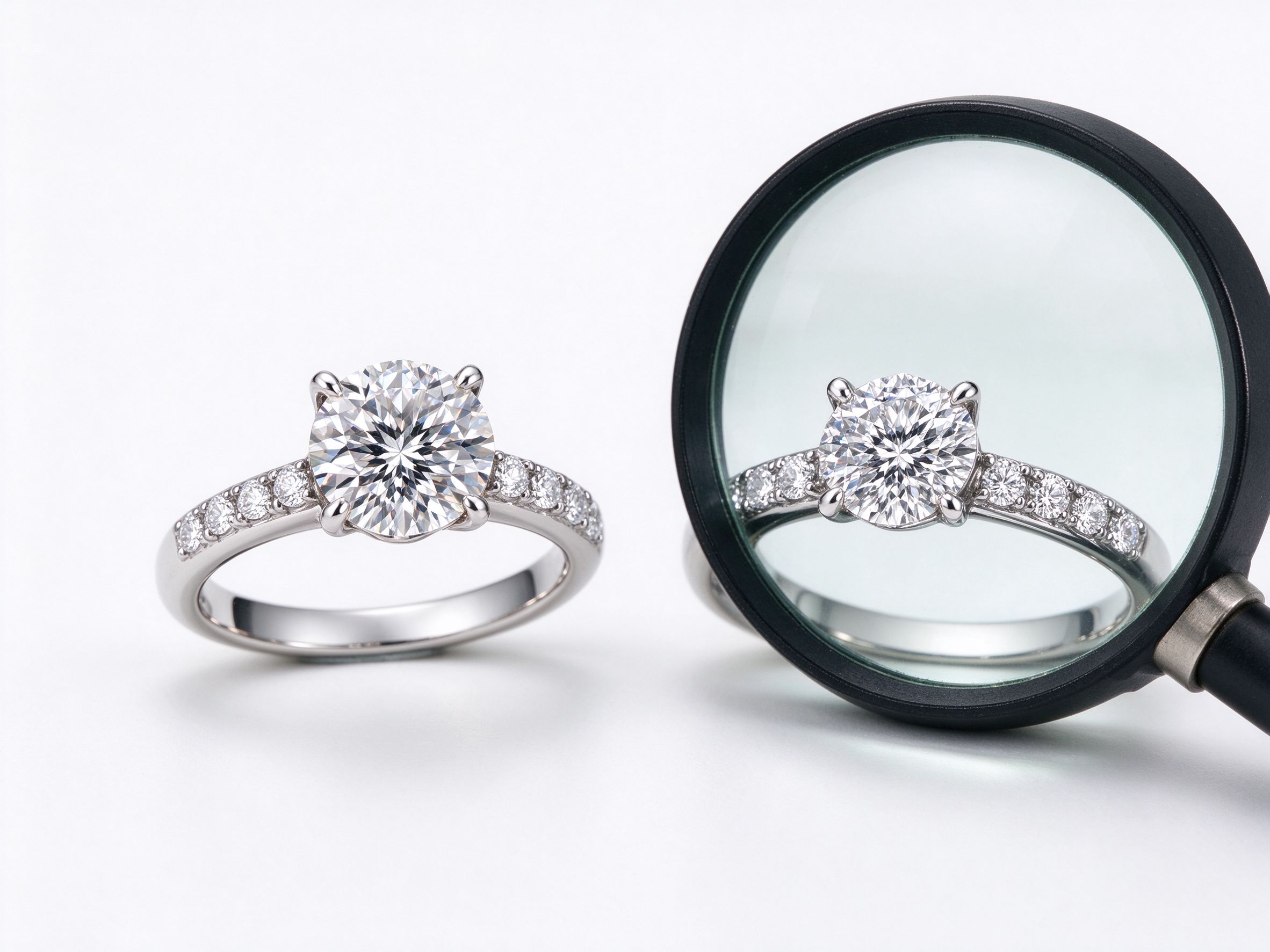
A solitaire design is a single stone, set on a clean band, with minimal decoration. The stone is the focus, and the band is quiet. This design has not changed in a hundred years, because it works. A round moissanite in a four-prong setting on a 2-millimeter band looks as good today as it did in 1920, and it will look as good in 2070. There is no trend to go out of style, because the design is not a trend; it is a classic.
The opposite is a fashion design. A fashion ring might have a wide band, engraved patterns, pavé stones along the band, a large halo, or a specific shape that is popular this season. These details make the ring look current and interesting, but they also tie it to the year it was made. A halo engagement ring was popular in 2015, a vintage-style engraved ring was popular in 2018, and a wide pavé band was popular in 2020. Each of these trends has a lifecycle, and when the lifecycle ends, the rings from that trend sit in jewelry cases unsold.
For a brand, the implication is that solitaire rings are a long-term investment in inventory, while fashion rings are a short-term bet. Solitaire rings will sell steadily for years, and the ones that do not sell this season will sell next season. Fashion rings have to sell in the season they arrive, because next season they will look dated. This is why brands that want to build a lasting business stock mostly solitaire designs, and use fashion designs as small seasonal additions.
How the Customer Thinks About Resale
Most customers do not think about resale when they buy a ring, but they think about it indirectly. They want a piece that will still look good in five years, that will not embarrass them, and that they could pass on or sell if they needed to. A solitaire ring satisfies this quiet expectation, because it is neutral and timeless. A fashion ring makes the customer worry that it will look dated in two years, and that worry reduces the price they are willing to pay. The solitaire customer pays more because they are buying a piece that will still be relevant, while the fashion customer pays less because they are buying something that is temporary.
This is why solitaire rings have a higher perceived value, even when the material cost is similar. A 2-millimeter band with a 6-millimeter moissanite costs about the same in silver and stone as a 4-millimeter band with a halo, but the solitaire can be priced higher because the customer perceives it as a timeless piece. The halo ring has to be priced lower, because the customer knows it is a trend. The design itself creates the pricing power, and the factory does not have to do extra work to earn it.
For a brand, this means that the solitaire is not just a product; it is a positioning tool. A brand that stocks mostly solitaires positions itself as a maker of lasting pieces, and customers respond to that positioning. A brand that stocks mostly fashion rings positions itself as a fast-fashion jewelry brand, and customers treat it accordingly. The positioning is in the inventory, and it is hard to change once the customer has formed an impression. Starting with solitaire designs is the easiest way to build a lasting brand.
How We Set Solitaire Stones in the Factory
Setting a solitaire moissanite is a precise job, because the stone is the focus and any flaw in the setting is obvious. We use four-prong or six-prong settings, depending on the stone size and the customer's preference. Four prongs let more light into the stone, which makes it look bigger and brighter. Six prongs hold the stone more securely, which is better for a ring that will be worn every day. We will recommend the prong count based on the stone size and the customer's lifestyle, because the wrong choice leads to a loose stone or a dimmed sparkle.
The prongs are tiny, and they have to be rounded and polished after setting, because a sharp prong catches on hair and clothing. We spend extra time on prong finishing, because it is the detail that separates a cheap solitaire from a quality one. A customer running their finger over a well-finished setting will feel smooth metal, not sharp edges, and that feel is what makes the piece feel expensive. The customer who runs their finger over a poorly finished setting will feel the prongs, and they will perceive the piece as cheap, even if the stone is good.
After setting, every solitaire goes through a pull test, where we tug the stone to make sure it is secure. We also check that the stone sits level, because a tilted stone looks off-center and cheap. A solitaire that is tilted, even slightly, is a defect that the customer will notice immediately. We catch these in QC, before the piece ships, because a tilted stone on a solitaire is the kind of problem that returns from customers. The stone setting on a solitaire has to be perfect, because there is nothing else on the ring to distract the eye.
Why Moissanite Holds Up in a Solitaire Setting
Moissanite is a great stone for a solitaire setting, because it is durable, brilliant, and consistent. A moissanite solitaire from 2015 still looks like new, because the stone does not cloud, scratch, or fade. A diamond solitaire from 2015 also looks like new, but it cost ten times as much. A cubic zirconia solitaire from 2015 looks yellow and scratched, because CZ is soft and porous. Moissanite sits in the sweet spot: it looks like a diamond, it lasts like a diamond, but it costs a fraction of a diamond.
This durability is why a moissanite solitaire holds its resale value. The customer who bought the ring in 2015 can sell it in 2026, and the stone still looks new. The buyer of the used ring gets a piece that looks almost identical to a new one, at a lower price. This is not true of a CZ ring, where the stone has visibly degraded. It is also not true of a fashion design, where the band details look dated. A solitaire moissanite ring is one of the few pieces of jewelry that actually improves in perceived value over time, because the stone does not age and the design does not date.
For a brand, selling moissanite solitaires is selling a piece that will not come back with complaints about clouded stones or worn details. The customer who buys a solitaire moissanite ring will wear it for years, and they will recommend it to friends. The customer who buys a fashion CZ ring will replace it in a year, and they will not remember the brand. The solitaire customer is the loyal customer, and the fashion customer is the one-time customer.
How the Band Design Affects Resale Value
The band design matters as much as the setting. A thin, plain band on a solitaire ring is timeless, because it does not compete with the stone. A wide band with engraved details is tied to a trend, because the width and the engraving are fashionable choices. The plain band ages better, because it is neutral, while the engraved band looks like it was made in a specific decade.
We see this in our own order data. Brands that stock plain-band solitaires reorder the same designs year after year, because they keep selling. Brands that stock engraved-band solitaires have to redesign the band every few years, because the old engraving looks dated. The plain band is a category, not a model, and it does not need updating. The engraved band is a model, and it has a lifecycle.
For a brand, the design implication is to keep the band simple if you want the ring to hold its value. A 2-millimeter plain band, comfort fit, with a solitaire on top, is the most timeless combination we produce. It is also the cheapest to produce, because there is no engraving or pavé to add labor. The plain band is both the most timeless and the most efficient design, which is why it is the backbone of every successful silver ring line.
Why Fashion Rings Lose Value Faster
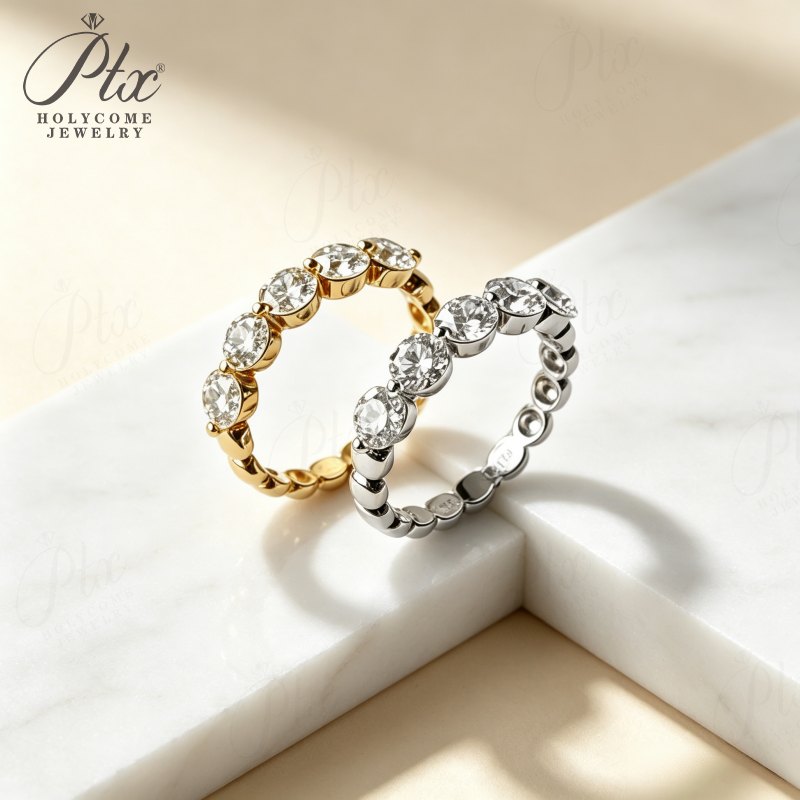
Fashion rings lose value because they are designed to be noticed, and noticed designs date quickly. A wide band with a large halo looks bold in 2024, but in 2028 it looks like a 2024 thing. The customer who bought it in 2024 will not wear it in 2028, because it feels like last year's style. The ring goes into a drawer, and when it comes out for resale, no one wants it, because it looks like a leftover from a past season.
This is not a criticism of fashion rings. They have a place, and they sell well in the season they are released. The customer who buys a fashion ring knows it is a trend piece, and they expect to replace it. The mistake is when a brand builds its whole line around fashion rings, because then the whole line has to be replaced every season, and the brand never builds a loyal customer base. The brands that last are the ones that use fashion rings as a small portion of the line, with the bulk being timeless solitaires.
From the factory side, we see which brands last. The brands that stock 70 percent solitaire and 30 percent fashion are the ones that have been ordering from us for ten years. The brands that stock 30 percent solitaire and 70 percent fashion are the ones that come and go, because they have to reinvent themselves every season, and they often burn out. The solitaire-heavy brands are building a business, while the fashion-heavy brands are running a campaign.
How to Price Solitaire Rings for Long-Term Value
A solitaire ring should be priced as a forever piece, not as a fashion piece. The customer buying a solitaire expects to wear it every day for years, and they are willing to pay more for that longevity. A solitaire moissanite ring that retails for 80 to 150 dollars is priced in the right range, because it is clearly more than a fashion piece, but less than a diamond engagement ring. A solitaire ring priced below 50 dollars feels like a fashion piece, and the customer does not treat it as a forever piece.
The key is to make the solitaire feel substantial. A solid band, a well-made setting, a clean stamp, and nice packaging all signal that the piece is a forever piece, not a disposable fashion item. The customer who feels they bought a forever piece will take care of it, wear it for years, and recommend the brand. The customer who feels they bought a fashion piece will treat it as disposable, and they will not come back.
For a brand, the pricing implication is to invest in the details that make the solitaire feel real: a solid band, a quality stone, a clean stamp, and a simple box. These details cost a little more up front, but they let you price the ring as a forever piece, and the margin on a forever piece is healthier than the margin on a fashion piece. The customer who buys a forever piece is less price-sensitive than the customer who buys a fashion piece, because they are buying a lasting object, not a season.
How Solitaire Rings Fit Into a Brand's Range
A successful ring brand usually has three tiers: the solitaire engagement tier, the everyday band tier, and the fashion statement tier. The solitaire engagement tier is the high-margin, high-loyalty tier, where the customer is buying a forever piece. The everyday band tier is the steady seller, where the customer stacks thin bands and reorders every season. The fashion statement tier is the seasonal bet, where the customer buys something bold for a specific look. The brands that last are the ones that keep the solitaire tier strong, because it is the tier that builds the brand's reputation as a maker of real jewelry.
The solitaire tier also brings in customers who do not usually buy silver. A customer who is looking for an engagement ring will consider a moissanite solitaire on a silver band, because the price is right and the stone looks like a diamond. This customer would not have bought a silver fashion ring, but they will buy a silver solitaire, because they are buying the look of an engagement ring. This is the highest-value customer a silver brand can attract, and it is only available if you stock solitaires.
For a new brand, we recommend starting with three solitaire designs: a round solitaire, an oval solitaire, and a cushion solitaire, each on a 2-millimeter plain band. These three shapes cover most of the market, and they are the designs that keep selling. Add fashion pieces later, once the solitaire line is established. The mistake we see most often is new brands starting with ten fashion designs and no solitaires, because they think fashion is what sells. It is not. The solitaire is what builds the brand, and the fashion is what adds excitement.
Common Questions About Solitaire Value
Do solitaire rings actually sell in the secondary market? Yes. A solitaire moissanite ring that is in good condition sells for a respectable fraction of its original price, because the design is timeless and the stone is durable. Fashion rings rarely sell in the secondary market, because they look dated.
Is a moissanite solitaire a good alternative to a diamond engagement ring? For most customers, yes. It looks like a diamond, it lasts like a diamond, and it costs a fraction of a diamond. The customer who cannot afford a diamond ring can have a solitaire that looks and feels like a diamond ring, and they will not have to compromise on the design.
Should I stock only solitaires, or mix in fashion rings? We recommend a mix, with solitaires as the bulk. Solitaires are the steady sellers that build loyalty, and fashion rings are the seasonal additions that keep the line feeling fresh. A 70/30 split is a good starting point.
What band width is best for a solitaire? A 2-millimeter plain band is the most timeless and the most versatile. It does not compete with the stone, and it fits most customers. Wider bands are more fashionable, but they date faster.
How to Talk About Solitaire Value to Customers
When you sell a solitaire ring, the customer does not need to hear about resale value directly. They need to hear about longevity: that the stone will not cloud, that the band will hold its shape, that the design will not go out of style. These are the reasons they will wear the ring for years, and they are the reasons the ring will hold its value if they ever choose to sell it. We give our brand partners product copy that explains the durability of moissanite, the solidity of the band, and the timelessness of the design, without talking down to the customer about money. The value message is implied in the quality, not stated as a sales pitch.
The customer who buys a solitaire from you will tell their friends about it, and the word of mouth is what builds the brand. A customer who has worn a solitaire moissanite ring for three years and still loves it will bring in five more customers. A customer who bought a fashion ring and replaced it after a year will not bring anyone. The solitaire is not just a product; it is a marketing asset, because it is the piece that gets recommended.
The Bottom Line
A solitaire moissanite ring holds its resale value because the design is timeless, the stone is durable, and the band is neutral. A fashion ring loses value because it is tied to a trend, and trends pass. For a brand, building a line around solitaire designs means building a line that sells year after year, that builds loyal customers, and that does not have to be reinvented every season. The fashion pieces are fun to add, but they are the garnish, not the meal. The solitaire is the meal, and it is what keeps the business alive.
If you are planning a solitaire line and want to see which designs are selling best, send us your target market and we will share the data. Reach our team at service@holycome.com, and for more on how we produce solitaire settings, read our guide to prong, bezel, and pavé setting cost comparison and our breakdown of ring weight and material cost balance.