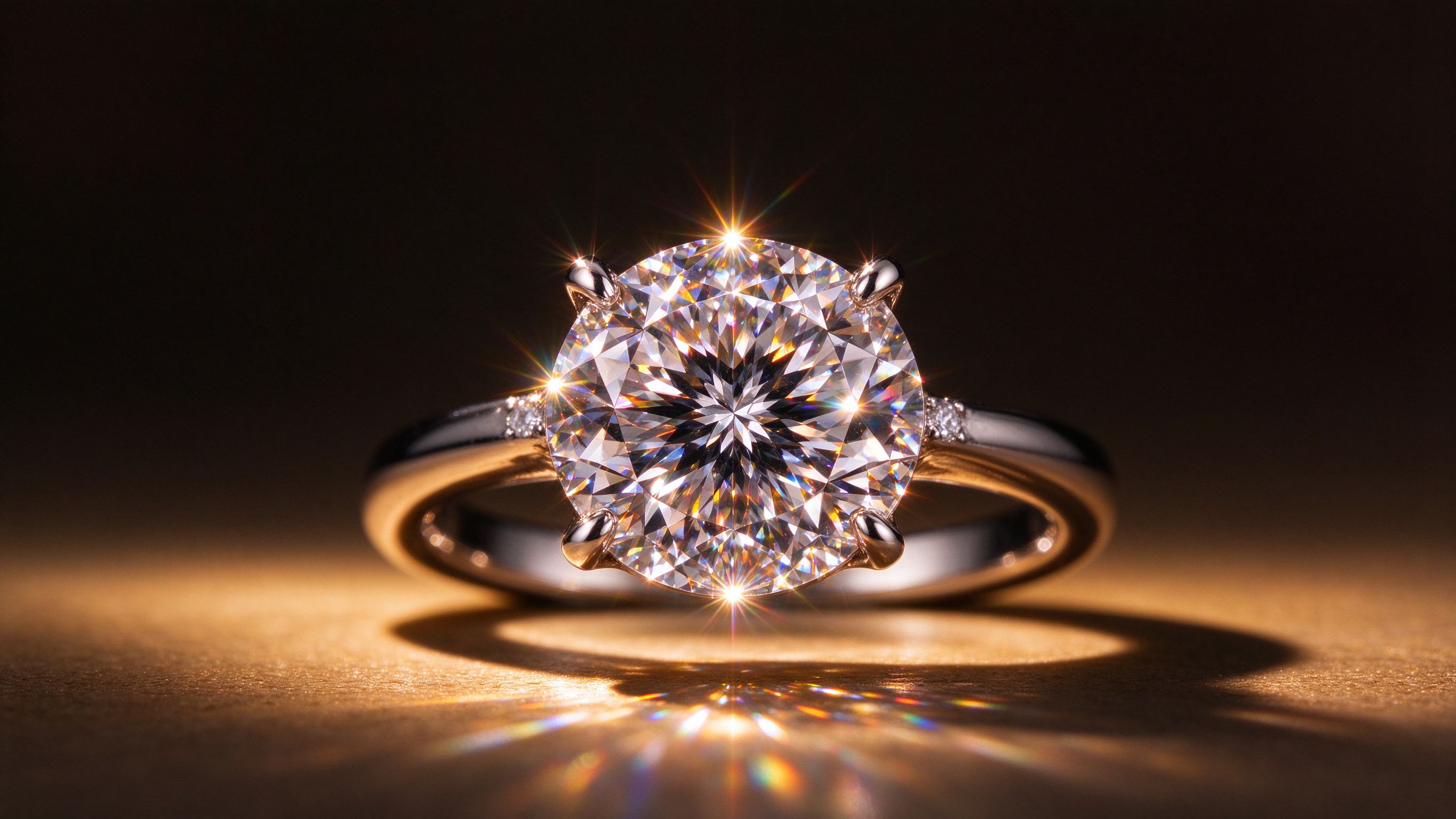
How to Explain Lab Grown Diamonds to Customers: A Sales Guide
A customer walks in, looks at a lab grown diamond ring, and asks the question every retailer hears: "is this real?" She has heard lab diamonds called fake, or simulated, or not the same as a mined diamond. The salesperson who fumbles this answer loses the sale. The salesperson who answers calmly, clearly, and in plain language wins the customer. How you explain a lab diamond determines whether the buyer trusts you. The good news is that the explanation is simple, and it gets easier with practice. We sell lab grown diamonds to retailers from Hengang, Longgang, Shenzhen, and we train our partners on how to explain them well. This guide gives you the words to use, the objections to expect, and the plain-language answers that turn a skeptical customer into a confident buyer.
The core truth to convey is this: a lab grown diamond is physically, chemically, and optically identical to a mined diamond. It is real diamond, made of the same crystal structure, with the same brilliance, hardness, and sparkle. The only difference is where it grew. A mined diamond grew in the earth over billions of years. A lab diamond grew in a factory over weeks. To the eye, even to a jeweler's eye, they cannot be told apart. We explain this in our article on lab vs mined, and that article is the foundation of the sales explanation.
The second truth is the value: because a lab diamond costs less to produce, it sells for far less than a mined diamond of the same look. The customer gets a bigger, better, real diamond for her budget. This is the value proposition that closes the sale. She is not getting a fake. She is getting a real diamond, at a price that lets her afford more. We discuss the value in our article on lab diamond pricing, and that value is the message.
The First Answer to "Is It Real?"
When a customer asks if the lab diamond is real, answer directly and confidently: "Yes, it is real diamond." Then explain: "It is made of the exact same material as a mined diamond. The difference is that it was grown in a controlled environment instead of mined from the earth. It has the same sparkle, the same hardness, and the same grading. Even a jeweler cannot tell it apart without special equipment." This direct, confident answer removes the doubt. Do not hedge. A confident "yes" is what the customer needs to hear. We discuss this in our article on telling them apart, and the answer is the foundation.
Show her the grading report. A lab diamond comes with a report from a lab like IGI, grading its color, clarity, and cut, exactly like a mined diamond. Hand her the report and say: "This is graded the same way a mined diamond is graded. The same standards apply." The independent report is proof. It is not just your word. It is a grading lab's assessment. This builds trust. We provide IGI reports with our stones, so the retailer can show the paper. You can read about the report in our article on lab diamond certification, where the paper is the proof.
Let her look at the diamond under the loupe or the microscope. When she sees the facets and the brilliance with her own eyes, she sees it looks like a diamond. The experience matters more than the explanation. A customer who looks through the loupe and sees a beautiful, brilliant stone believes it is real. We encourage our partners to let the customer examine the stone, because the visual experience convinces her. You can read about the loupe experience in our article on the visual sell, where the eye is convinced.
Answering the Common Objections
The first objection: "will it turn out to be fake later?" Answer: "No. It is real diamond from the day you buy it. It will not change, wear away, or turn into something else. It is forever, just like a mined diamond." This addresses the fear that the lab diamond is some kind of fake that will reveal itself. We discuss the durability in our article on lab diamond durability, and the answer reassures.
The second objection: "what about resale value?" Be honest. Say: "Like most jewelry, lab diamonds are bought for wearing, not for resale. They hold up as a beautiful piece, but they are not an investment. What you are getting is a real diamond at a much better price." Honesty here builds trust. Do not oversell resale. We discuss the resale reality in our article on resale value, and the honest answer wins the customer's trust.
The third objection: "why is it so much cheaper?" Answer: "Because it costs less to grow a diamond than to mine one. Mining is expensive, slow, and deep in the earth. Growing a diamond is a controlled industrial process. The savings are passed to you. You get the same real diamond, at a price that lets you buy a bigger one." This turns the price difference from a warning into a benefit. We discuss the cost in our article on lab diamond cost, and the explanation is the value.
| Customer Asks | Say This |
|---|---|
| "Is it real?" | "Yes, real diamond, same material as mined." |
| "Is it fake?" | "No. It is graded by IGI like any diamond." |
| "Why cheaper?" | "Growing costs less than mining. You save." |
| "What about resale?" | "It is for wearing, not investing, like most jewelry." |
| "Can anyone tell?" | "Not the eye. Only special equipment knows." |
Telling the Story Simply
A simple story helps. You can say: "Think of it like a real pearl versus a cultured pearl. The cultured pearl is a real pearl, made by the same process, just helped along by people. A lab diamond is a real diamond, made by the same crystal process, just grown in a factory instead of the earth. It is not an imitation. It is the real thing, grown by human hands." This analogy makes the idea click for many customers. We discuss simple analogies in our article on explaining the growth, where the analogy works.
Compare the size for the budget. This is the emotional close. Say: "For what you wanted to spend, a mined diamond would get you a half-carat. With a lab diamond, the same budget gets you a full one carat, in a better grade. That is the choice." This shows the customer the real benefit. She gets more diamond for her money. We discuss the value comparison in our article on size for budget, where the bigger stone wins.
Invite her to compare side by side. Put a lab diamond and a mined diamond on the tray, and let her look. She will not see the difference. When she cannot tell them apart, the doubt disappears. The side-by-side is the most convincing demonstration. We encourage our partners to keep both for comparison, because the eye is convinced by the look. You can read about the side-by-side in our article on comparison, where the customer sees no difference.
What Never to Say
Never call a lab diamond "fake." It is real diamond, and calling it fake plants the doubt. Never say it is "like a mined diamond" in a way that implies it is not a diamond. It is a diamond. Never oversell the resale value, because the customer will find out the truth and lose trust. Be honest about what it is: a real, beautiful diamond, bought for wearing, at a better price. We discuss the honest framing in our article on honest selling, where the words build trust.
Never rush the explanation. The customer who is skeptical needs time to understand. Answer her questions fully, show her the report, let her look through the loupe. A rushed answer feels evasive. A calm, patient explanation feels honest. The customer who takes her time and gets her questions answered is the one who buys. We train our partners to slow down, because the patient explanation is the sale. You can read about patience in our article on patient selling, where the time is the trust.
Explaining a lab diamond well is not about technical detail. It is about a few plain truths: it is real diamond, it is graded like a mined one, it looks identical, and it costs less so you get more. Answer the skepticism calmly, show the report, let her look through the loupe, and be honest about resale. Do that, and the skeptical customer becomes a confident buyer. The sale is won in the explanation, and a calm, honest explanation is the most powerful sales tool in the lab diamond case.
There is a generational difference in how you explain, and reading the customer changes the script. An older buyer may have grown up believing a diamond must come from a mine, and she needs the analogy and the grading report more, because the idea is new to her. A younger buyer may already know lab diamonds are real, because she has seen them on social media, and she needs less persuasion and more help choosing the shape and the grade. The skilled salesperson reads which customer she has in front of her and adjusts. For the skeptical older buyer, slow down, show the report, and walk through the science. For the informed younger buyer, skip the basics and focus on the value and the design. We discuss this in our article on engagement buyers, where the generation sets the explanation. The worst mistake is giving the long science lesson to the customer who already knows, or rushing the skeptical buyer who needs the patience. A short conversation up front, asking what she already knows about lab diamonds, tells you which direction to go. That one question saves time and makes the customer feel heard.
Follow-up is the other half of the sale, because many lab diamond buyers need time to think. A customer who leaves the case without buying is not lost. She may go home, discuss it with her partner, and come back. The salesperson who explains well, gives her the grading report to hold, and invites her back, leaves the door open. We encourage our partners to give the customer a simple one-page handout that repeats the key points, so she can review them at home. The handout answers the questions her partner will ask her, which is often where the decision happens. You can read about the follow-up in our article on the thinking buyer, where the handout carries the explanation home. A customer who goes home with a clear explanation, a grading report, and a handout is far more likely to return than one who left confused. The explanation does not end at the case. It continues on the customer's kitchen table, when she and her partner weigh the choice. The retailer who supports that moment, with clear paper and an open invitation, wins the sale that the rushed store next door loses. That is how the explanation becomes a relationship, not just a pitch.
It helps to rehearse the three questions that almost every customer asks, because they come up in nearly every conversation. The first is whether the diamond is real. The second is why it is cheaper. The third is how it is made. If you have short, confident, honest answers ready for all three, the conversation flows, and the customer feels in capable hands. The answer to real is yes, same crystal. The answer to cheaper is that growing costs less than mining, so she gets more. The answer to made is a short sentence about a controlled chamber or press, without getting into CVD and HPHT unless she asks further. Practicing these three answers out loud is the difference between a salesperson who sounds sure and one who sounds like she is making it up as she goes. We give our partners a small card with these three answers, because confidence is contagious. A customer who sees the salesperson is at ease with the basics relaxes, and a relaxed customer buys.
Finally, watch the customer's body language for the moment the doubt lifts. It usually happens when she looks through the loupe, or when you place the lab diamond and a mined diamond side by side and she cannot tell which is which. That is the moment to stop explaining and let the silence work. Do not rush to fill it. Let her hold the comparison, turn the ring, and decide for herself. The sale is made in that quiet moment when her eyes confirm what her ears were told. Over-talking at that point can undo it. We train our partners to recognize that moment and simply ask, what do you think? When she says it looks the same, the decision is essentially made, and you can move on to the setting and the size. The best lab diamond salespeople are not the ones who talk the most. They are the ones who set up the comparison, hand over the loupe, and let the diamond convince the customer on its own.
It helps to prepare for the customer who has heard a lot of conflicting information online. Some forums and videos still claim lab diamonds are worthless, fake, or destined to collapse in price, and a customer may walk in repeating these things. The calm response is to acknowledge that prices have come down, which is true, and that lab diamonds are bought for wearing rather than investment, which is also true. Then redirect to what she actually gets: a real, graded, beautiful diamond at a price that lets her afford more. Do not argue with her. Do not dismiss what she read. Simply separate the true parts from the false parts, and point her back to the value that matters to her. A customer who feels her concerns were heard, rather than brushed off, trusts you more than one who was told she was wrong. We give our partners a gentle script for this, because the online-informed customer is common, and handling her well turns a skeptic into a loyal buyer.
The most effective close in a lab diamond conversation is almost always the side-by-side. When you place a lab diamond and a comparable mined diamond on the tray and invite the customer to look for differences, she cannot find any. That silent, visual proof does more than a hundred words. You can let her hold both, compare them in the light, and then simply say, they are the same material, and this one costs a fraction. At that point the sale is almost made, because her own eyes have done the convincing. We encourage every retailer to keep a mined comparison stone on hand exactly for this moment, even if they never intend to sell mined. It is the single most persuasive tool in the lab diamond case, and it costs almost nothing to keep. Once a customer has held the two and failed to tell them apart, the whole conversation shifts from doubt to choice, and you are simply helping her pick the ring she loves.
It also helps to remember that silence and patience are sales tools. Once you have answered the three core questions and shown the comparison, stop talking. Let the customer think, hold the ring, and discuss it with whoever she is with. Many sales are lost because the nervous salesperson keeps filling the air, talking the customer out of the decision. The customer needs space to feel the choice. When you are confident in the stone and the price, you do not need to fill that space with more words. You can simply say, take your time, and be there when she is ready. That calm confidence is itself persuasive, because it tells her you believe in what you are selling. The best lab diamond conversations are not monologues. They are short, honest explanations followed by a respectful quiet, and the quiet is where the customer decides yes.
Once the customer has held the side-by-side and seen no difference, the sale is no longer about whether lab diamond is real. It is about which ring she loves. That is the moment to stop explaining and start helping her choose.
Keep the answers short, honest, and confident, and the skeptical customer will relax. Once she has held the comparison and seen no difference, she stops asking whether it is real and starts asking which ring is hers. That is the conversation you want to be in.
Frequently Asked Questions
How do I answer "is it real?" Say yes, confidently. It is real diamond, the same material as a mined diamond, just grown in a factory.
What if the customer thinks it is fake? Show the IGI grading report and let her look through the loupe. Independent grading and the visual evidence convince her.
What about resale value? Be honest. It is for wearing, not investing, like most jewelry. Do not oversell it.
Why is it cheaper? Growing a diamond costs less than mining, so the savings pass to the customer. She gets more diamond for her budget.
What words should I avoid? Never call it fake. It is real diamond. Never oversell resale. Be plain and honest.
Explain a lab diamond as real diamond, graded like a mined one, visually identical, and more affordable for the budget. Answer skepticism calmly, show the grading report, let the customer look through the loupe, and be honest about resale. The plain, confident explanation turns doubt into trust.
We are a lab grown diamond supplier in Hengang, Longgang, Shenzhen, providing IGI-graded stones and sales training materials to our retail partners. If you want our sales guide or wholesale pricing, email service@holycome.com and we will send details. You can also read our guide to lab vs mined and our notes on certification.