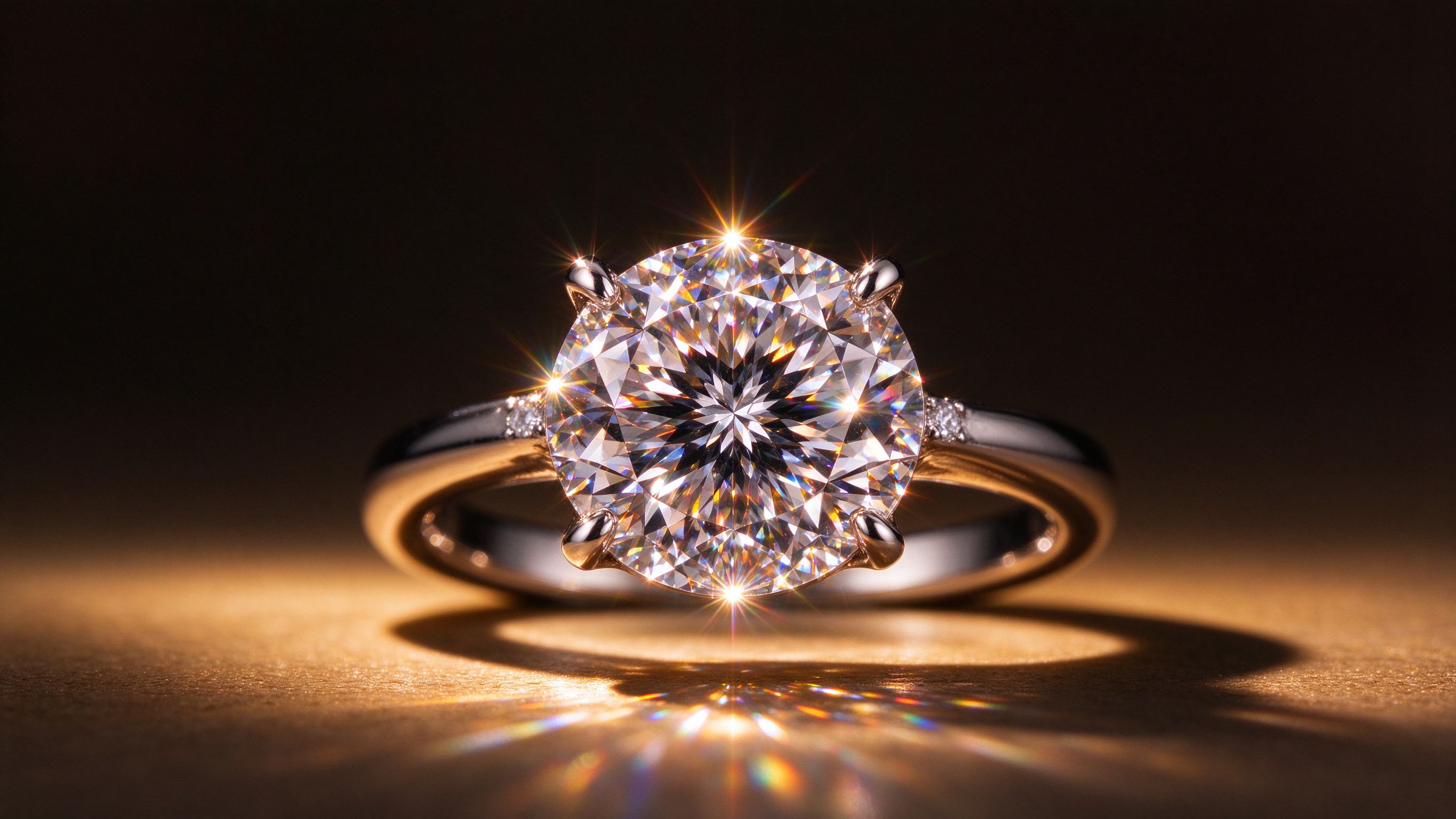
Lab Grown Diamond Resale Value Explained - HOLYCOME
If you sell jewelry, you have heard the question: will this lab grown diamond hold its value? The honest answer is not the one customers hope for, but it is one you can answer clearly and still close the sale. Lab grown diamonds do have resale value, but the secondary market is thinner, faster-moving and more price-deflating than the natural diamond market, and most of the old "diamonds are forever" resale logic does not apply. This guide walks through how resale actually works today, what protects a stone's resale, and how retailers should talk about it without overpromising and without losing the deal.
Why the resale market for lab grown diamonds is thin
The core reason is simple: supply keeps falling. Global production of lab grown diamonds has expanded every year since 2020, and the wholesale price per carat for near-colorless white goods has dropped sharply in the same period. A secondary buyer who wants to re-sell a used stone is not competing with other used stones; they are competing with a brand-new stone from a factory floor that is even cheaper than it was two years ago. When the replacement price is falling, the used price cannot hold. This is the opposite of natural diamonds, where mine supply is constrained and the secondary market trades against a stable upstream cost.
The second reason is infrastructure. Natural diamonds have a hundred-year-old pipeline of dealers, cutters, auction houses and pawn shops that will buy a stone back. Lab grown diamonds are barely a decade old as a consumer product, and most pawn shops, auction houses and second-hand dealers do not yet have a repeatable process for grading, pricing and reselling them. The few online resale platforms that exist usually offer a narrow range of prices and take a large spread. Until that infrastructure matures, resale options for most consumers remain limited to trade-in programs run by the original retailer.
There is also a demand-side problem. The customer buying a used lab grown diamond today can almost always choose between a used stone and a brand-new one at a similar price, and most customers who understand the category prefer new: new stones come with a fresh certificate, a fresh warranty, and a setting they picked themselves. That preference keeps used prices under pressure. The category where used stones do sell well is estate jewelry with strong brand provenance, but that is a small slice of the market and depends on the design rather than the diamond itself.
What actually happens when a customer tries to resell
Most customers who try to resell a lab grown diamond run into one of three outcomes. The first is a trade-in at the original jeweler: the store offers a credit toward a new purchase, often worth 20 to 40 percent of the original retail price, and the stone goes back into the store's inventory or to a wholesale channel. The second is a direct sale to an online reseller, where the offer usually lands in the 15 to 30 percent range of what the customer paid retail. The third outcome is no offer at all: the dealer looks at the certificate, checks today's wholesale price for a new stone of the same size and grade, and decides the used stone is not worth handling.
None of this is scandalous. Retail markup on a finished ring includes design, setting, labor, sales service and store overhead, and resale markets historically do not repay retail markup -- they repay wholesale value. A customer who paid $4,000 retail for a ring whose diamond wholesale component was $1,200 should not expect $4,000 back from any secondary buyer. The realistic resale benchmark is the current wholesale price for a new stone of the same specs, minus a dealer margin, not the original retail ticket.
The price deflation problem
The most painful part of resale math is that wholesale prices for lab grown diamonds have been moving down faster than natural prices. A stone bought new in 2021 often has a current replacement cost well below what the buyer paid, even if the stone itself is physically perfect. Secondary buyers price a used stone off today's wholesale list, not off the 2021 list, so the gap between what the customer paid and what the market will offer widens every year. This is a production-economics story, not a quality story: the same stone that cost $3,000 wholesale in 2021 might cost $1,400 today, not because it was a bad stone but because growth and cutting efficiency improved.
Retailers who sold heavily in 2021 and 2022 now face customers asking why their ring is worth less than half of what they paid. The right answer is not to argue; it is to explain that lab grown diamonds should be bought for the wearing experience, design and immediate value per carat, not as a financial asset. Trying to pretend otherwise leads to complaints, bad reviews and refund requests down the road.
What protects a stone's resale
Not all lab grown diamonds are equally hard to resell. Several factors move a stone toward the better end of the resale range:
- Independent grading certificate. A stone graded by a recognized lab such as IGI, GIA or GCAL, with a laser inscription matching the certificate, is dramatically easier to re-sell than an uncertified stone. Buyers will not take the risk of self-grading.
- Popular color and clarity bands. D to F, VVS to VS clarity stones are the most liquid; off-color or heavily included stones sit in inventory longer.
- Current cut quality. Excellent or ideal cut grades hold resale better than fair or good cuts, even at the same carat weight.
- Solitaire settings and simple designs. A classic solitaire is easier to re-set and re-sell than a heavily one-of-a-kind design that only appeals to its original owner.
- Original paperwork. The certificate, receipt and warranty card make a trade-in conversation smoother.
Stones that lack these features are not worthless, but they belong in the "wear it, do not expect to sell it" bucket. Stones that have them can usually be moved, at wholesale, through the retailer's own supplier network.
How retailers should talk about resale
The worst retailer move is to imply that lab grown diamonds hold value like natural diamonds. Customers who hear that and later see the reality feel misled, and the complaint lands on you rather than on the production market. The better move is to reframe the sale: position the stone as an affordable way to own a large, clean, white diamond, and be upfront that resale is not the reason to buy it. Most customers will still buy -- they were never really planning to resell the ring anyway -- and they will trust you more for being honest.
A useful script is: "Lab grown diamonds are real diamonds, and this one is graded and certified like a natural stone. What you should know is that the market for reselling them is still young, and prices for new stones have come down, so we do not recommend buying this as an investment. What you get is a 2-carat look for what a 0.5-carat natural would cost, with the same wearability and warranty." That sentence handles the question, sets the expectation and closes on the real value proposition.
Trade-in programs: the retailer-friendly solution
Because the open secondary market is thin, the most practical resale path for your customers is your own trade-in program. A trade-in program lets you give customers real value without pretending the open market will: you offer a defined credit toward a future purchase, and you absorb the stone back into inventory at a known wholesale value. Done well, trade-in programs turn a resale complaint into a customer-retention tool. Customers who know they can trade up in three years are more likely to buy from you again, and the returned stone can be re-set into a new design or sold wholesale at a predictable price.
Set the trade-in terms clearly in writing: credit percentages by year, condition requirements, certificate requirement, and whether credit applies only to future purchases. Avoid vague promises like "lifetime buyback" that you cannot honor when wholesale prices move. A documented program protects both you and the customer, and it is the single best answer to the resale question on a sales floor.
Many retailers start with a simple structure: 30 percent trade-in credit within two years for certified stones in good condition, applied only to a future purchase of equal or higher value. That number is easy to explain, easy to finance, and easy for customers to understand. Adjust it based on your own wholesale cost and the speed of price deflation in the sizes you stock; the exact percentage matters less than being consistent and written down.
Lab grown vs natural resale: honest comparison
The table below compares how the two categories behave on the secondary market. These are typical ranges, not guarantees, and real outcomes depend on the stone, the region and the dealer.
| Factor | Natural diamond | Lab grown diamond |
|---|---|---|
| Typical resale as share of retail paid | 20-40% | 15-30% |
| Trend over recent years | Stable to soft | Deflating as supply grows |
| Dealer willingness to buy back | Established network | Thin; mostly trade-in |
| Liquidity of uncertified stones | Moderate | Very low |
| Best resale channel | Trade-in or auction | Original retailer trade-in |
The comparison is not designed to scare customers away from lab grown diamonds. It is designed to set expectations correctly. A customer who wants a 2-carat clean white stone for under $2,000 is making a great buying decision -- they just should not be told that the ring will be worth $3,000 in five years.
How wholesale buyers should think about resale
If you are a jeweler or brand buying wholesale, resale value matters in a different way: it affects how much inventory risk you carry. Stones bought at today's wholesale price may be worth less when you want to liquidate inventory next year, which means your buying strategy should emphasize fast-moving popular sizes, certified stones, and designs that re-sell quickly. It also means you should be cautious about stocking deep on off-spec stones that you would be stuck with if trends shift. The wholesale pricing market page explains how today's price lists are built, and the guide to marketing and positioning lab grown diamonds covers how to frame the sale without overpromising.
For private label brands, the resale conversation is part of your warranty and returns policy. If you sell online and offer returns, you will eventually receive stones back, and you need a plan for grading, re-certifying and re-selling them at current wholesale. Build that plan before you scale, not after. The IGI, GIA and GCAL certification guide explains which certificates make re-sale easiest, and the 2026 cost per carat guide shows how the upstream price moves that set your resale benchmark.
The math of resale: a worked example
Suppose a customer buys a 1.5-carat lab grown solitaire ring for $3,200 retail. The diamond's wholesale cost to the jeweler was about $800, the setting cost $250, and the rest of the ticket covers labor, store overhead, and margin. Two years later the customer wants to resell. A dealer looks up today's wholesale price for a new 1.5-carat stone of the same grade and sees it is now $620. The dealer offers 20 percent margin below wholesale, or about $500, for the stone alone. The setting, which the customer might still think has value, is usually offered as scrap gold minus handling, unless it is a branded piece in active demand. The customer walks away with roughly $600 to $800 on a $3,200 purchase.
That sounds harsh, but it is the same math natural diamonds have always run on: secondary markets pay replacement wholesale, not retail. The difference is that for lab grown stones the replacement wholesale number is moving down every year, so the resale offer shrinks even faster. Showing customers this math -- on paper, before they buy -- is the single most honest thing a sales associate can do. It also prevents the very common complaint of "you told me this was a good investment" six months later.
Why "appraised value" misleads customers
Many customers confuse insurance appraisal with resale value. A retail jeweler will write an appraisal at or near the retail replacement price, because that is what insurance needs in order to cover a ring at retail. That appraisal number is not a market value; it is a coverage document. Customers who later try to sell based on the appraisal are surprised to learn that no dealer will pay the appraised figure. When you explain this distinction up front -- "this appraisal is for insurance, not for selling" -- you save yourself an uncomfortable conversation later.
The same logic applies to certificates. An IGI or GIA certificate confirms the stone's 4Cs, which protects its liquidity, but it does not state a resale price. Certificates for lab grown stones also carry a "lab grown" disclosure that secondary dealers read before making an offer, and that disclosure is one reason offers are lower than natural. Honest retailers explain both documents clearly instead of letting customers assume they are evidence of value.
Fancy colors, treated stones and melee
Resale behavior varies by category. Fancy colored lab grown stones -- vivid yellows, greens, pinks -- hold value better than near-colorless white goods, because production of consistent fancy colors is smaller and treated colors are a smaller share of that output. Customers who buy a fancy colored stone are less exposed to the white-goods price deflation. Melee, the small stones used in pavé and accents, has almost no individual resale market at all; it is re-sold by weight in wholesale lots. Retailers should tell customers buying melee-heavy designs that the small stones are not recoverable value on their own.
Treated stones need special handling. Irradiated or annealed stones that were off-color when grown can be excellent value, but their resale is limited because some secondary buyers avoid treated material entirely. If your inventory includes treated stones, keep them in clearly labeled SKUs and disclose treatment on the certificate. The premium for untreated stones is real, and customers who pay it should get what they paid for.
How retailers liquidate inventory
The resale conversation is not only about end customers. As a wholesale buyer, you also need a plan for liquidating slow-moving inventory. The most practical channel is selling the stone back to your supplier or through a wholesale diamond exchange, where stones are priced off current wholesale lists rather than off retail markup. Build relationships with one or two suppliers who will take back certified stones at a transparent discount, and avoid stockpiling off-spec stones hoping they will eventually sell. Inventory that sits for 18 months is quietly losing value every quarter as wholesale prices drift down.
For retailers, the practical rule is to buy fast-moving popular sizes (1.0 to 2.0 carats, D to G, VS to SI1) in reasonable depth, and to buy unusual sizes or fancy shapes to order. That way most of your inventory turns within months, and the resale deflation never really touches you. This is the same principle used by natural diamond wholesalers, but the deflation curve makes it more urgent for lab grown buyers.
How HOLYCOME supports trade-in programs
We work with retailers running trade-in programs in two practical ways. First, we accept certified stones back from program partners at a transparent discount off current wholesale, so retailers have a predictable channel for the stones they receive from customers. Second, we supply the documentation and certificate matching service that makes trade-in conversations clean: each stone ships with a certificate that matches the laser inscription, and we can re-confirm specs on returned stones before they go back into inventory. This lets a smaller retailer offer a credible trade-in policy without building its own grading room.
If you are a brand or jeweler considering a trade-in program, reach out to service@holycome.com with your typical size bands and target customer profile. We can help you set realistic trade-in percentages and explain what stones are easiest for us to take back. More on how to position the category without overpromising is in the marketing and positioning guide, and the economics of the upstream price that sets your resale benchmark are in the 2026 cost per carat guide.
Common customer objections and how to answer them
Sales teams hear the same three objections every week. The first is "if prices are going down, why should I buy now?" The honest answer is that prices for new stones have been falling as efficiency improves, but they are not in free fall, and a customer who waits another year is not likely to save enough to justify wearing the ring later. The value of the purchase is the years of wear, not the price trend. The second objection is "will my diamond look fake?" The answer is no: lab grown diamonds are optically and chemically identical to natural, and even a trained gemologist needs a lab microscope to identify them. The third is "can I get a natural diamond for the same money?" Usually not -- for the same budget a lab grown stone is two to four times larger, cleaner and whiter than what natural can offer.
Customers who push hardest on resale are often not ready to buy anyway, and forcing the sale with a rosy resale story creates a future complaint. The reps who do best are the ones who answer the question plainly, move to the value-per-carat argument, and let the customer decide. Over time, that honesty builds a reputation that brings referrals; the occasional lost sale is worth it.
The bottom line
Lab grown diamonds have resale value, but it is a modest, trade-in-style resale value, not an investment-grade one. The market is young, wholesale prices are deflating, and the infrastructure for buying back used stones is still maturing. The retailers who thrive in this category are the ones who tell customers that plainly, then close the sale on the real strength of the product: large, clean, certified white diamonds at a fraction of natural prices, backed by a sensible trade-in program. Pretending otherwise costs trust and creates complaints; being honest builds repeat customers.
For wholesale buyers, the practical implication is to build your assortment around stones that will turn quickly, keep certificate and paperwork in order, and design your returns and trade-in policies on day one rather than after the first returned ring lands on your desk. Done that way, lab grown diamonds are a high-margin, fast-moving category; done with inflated resale promises, they become a source of disputes. Talk to our Shenzhen team at service@holycome.com if you want to test how a certified lot from our facility fits into a trade-in program before committing to a larger order.