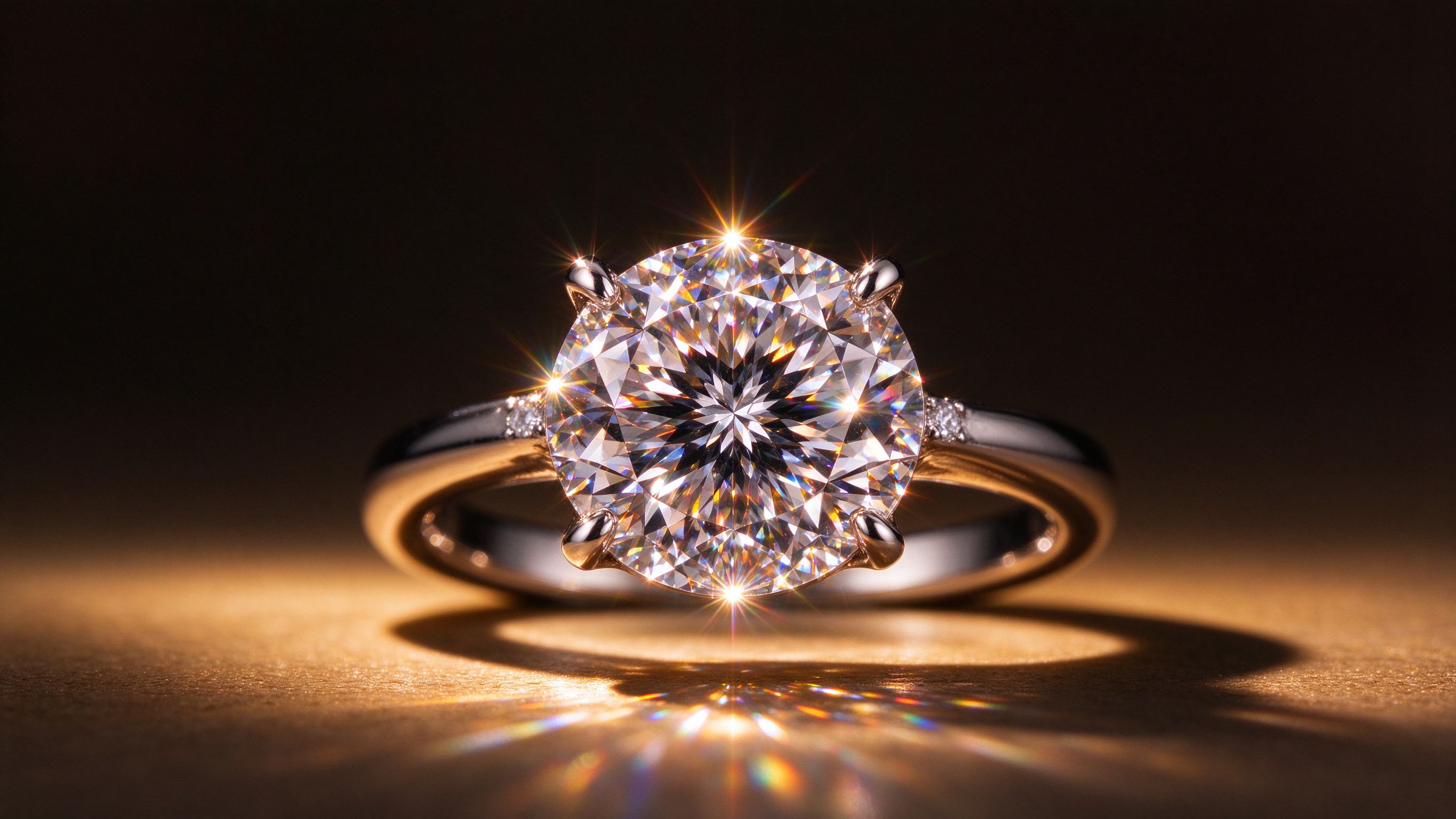
Lab Grown Diamond Cost Per Carat 2026 - HOLYCOME
If you are buying lab grown diamonds wholesale in 2026, the question on your quote sheet is not just "what is the price" but "what does it cost to make one of these, and where is that cost headed?" The per-carat number a factory quotes is the output of a stack of inputs: reactor energy, rough yield, cutting labor, grading fees, and overhead. Understanding that stack lets you read a 2026 quote honestly, negotiate on the right variables, and predict what reorders will cost. This guide breaks the cost per carat down the way a factory builds it, compares 2026 to where the market was, and tells you what to expect over the coming year. It is written from our Shenzhen production floor, not from a market report.
The headline trend continues to be downward. Lab grown diamond cost per carat has fallen steadily as reactor capacity has grown, equipment has improved, and the supply chain has matured. In 2026 that decline is slower than it was a few years ago, because the easy efficiency gains have already been taken. The remaining cost savings now come from incremental yield improvements, better batch scheduling, and tighter QC rather than from a step-change in technology. Buyers should expect gradual deflation, not the dramatic drops of the early 2020s.
What cost per carat actually includes
The factory cost per carat is not a single line. It is the sum of growth, processing, cutting, grading, and overhead, divided by the saleable polished carats that leave the door. Growth covers the reactor time, energy, seed, and gas or metal medium. Processing covers any post-growth treatment to improve color or clarity. Cutting covers sawing, bruting, faceting, and polishing labor and consumables. Grading covers the certificate fee. Overhead covers the building, equipment depreciation, management, and quality control. Each of these moves at a different rate, which is why the total per-carat cost does not fall in a straight line even when energy prices do.
It is important to separate cost from price. The factory cost is what it costs to make the stone. The wholesale price is what the factory charges you, which includes a margin on top of cost. In 2026, intense competition has compressed factory margins, which is part of why wholesale prices track close to production cost. As a buyer, this means the leverage you have is on efficiency and volume, not on squeezing a margin that is already thin. Factories competing on price are already running close to cost, and a quote that looks too low is usually a sign of a corner cut somewhere, not a bargain.
Growth cost in 2026
Growth remains the largest single component. CVD and HPHT each carry an energy bill, and energy prices in the producing regions directly affect the per-carat cost. Newer reactors grow larger crystals faster and with fewer defects, which spreads the fixed cost of a run across more polished carats. The industry has consolidated toward efficient, modern reactors, and older, inefficient equipment has been retired, which has lowered the average growth cost per carat. In 2026, the gap between a factory running the latest equipment and one running older lines is visible in the price they can offer.
Yield from growth has also improved. Modern runs produce a higher share of usable rough per cycle, with fewer crystals lost to fracture or off-color growth. That improvement is now incremental rather than dramatic. The remaining upside comes from better process control: tuning temperature, gas flow, and cooling to reduce the defect rate. Factories that invest in process data keep nudging their yield up, and that shows up as a small but real per-carat advantage. For a breakdown of how growth method affects the stone, see our guide to CVD vs HPHT quality.
Cutting and processing cost
Cutting cost per carat has fallen as semi-automatic faceting machines have become standard. A machine that holds angles precisely lets one operator manage more stones, which lowers the labor component. Batch production has also cut cost: when a factory runs many stones of the same shape and size in one batch, setup time is amortized and cycle times drop. The factories that win on cutting cost are the ones with strong batch scheduling and low rework rates, as we cover in our guide to batch production cutting efficiency.
Processing cost varies by stone. Stones that come out of the reactor clean, "as-grown," need no post-processing and cost less. Stones that need color or clarity treatment add a step. In 2026, the share of stones needing treatment has fallen as growth control has improved, which lowers the average processing cost. Buyers should still ask whether a stone is as-grown or treated, because the answer affects both the price and the disclosure at retail.
Grading and certification cost
The grading lab fee is a fixed per-stone cost, and it matters more for small stones than large ones. A certificate fee that is negligible on a two-carat stone is a large percentage of a 0.30 carat stone. This is why melee is commonly sold uncertified on a grade-stated basis: adding a certificate would price the stone out of its market. In 2026, certification fees remain relatively stable, and the main decision for buyers is which sizes justify an individual lab report and which are fine on a factory grade.
Reputable factories also run their own internal QC before a stone ever reaches the lab, because sending a low-grade stone for a certificate wastes the fee. That internal QC cost is part of overhead, but it saves money downstream. A factory that sends every rough to the lab and hopes for a good grade pays for failed certificates; a factory that grades internally first and only certifies the likely passers keeps the grading cost low. You can read more about the grading workflow in our overview of IGI, GIA, and GCAL certification.
Overhead, logistics, and the rest
Overhead covers the facility, equipment depreciation, management, insurance, and quality control. In 2026, overhead per carat has fallen as production volumes have risen, because the fixed cost of running a factory is spread across more polished carats. Factories that run at high utilization carry lower overhead per stone than factories running half-empty. This is another reason volume buyers get better pricing: they keep the factory at utilization, which lowers the fixed cost recovered from each stone.
Logistics and import cost are separate from factory cost but land in your landed price. Freight, insurance, duty, and payment terms each add a percentage. A factory that quotes FOB Shenzhen looks cheaper on paper; a DDP quote looks higher but removes surprise. In 2026, freight rates have normalized from the spikes of earlier years, which helps landed costs, but duty and import rules in each buyer's market still vary. Always compare the landed total to your door, not the factory quote.
Size and grade breakdown in 2026
The per-carat cost curve still climbs steeply with size. Producing a polished stone over one carat requires rough large enough to survive the cut, and that rough is rarer. The magic weights around 0.50, 1.00, 1.50, and 2.00 carats still carry step-ups in price. In 2026, the absolute cost at every size has fallen, but the shape of the curve is the same: small melee is cheap per carat, large hero stones are expensive per carat, and the jump at a magic weight is still real. Buyers who choose just-under-magic weights save money without the customer noticing.
| Segment | 2026 cost trend | Buyer note |
|---|---|---|
| Melee under 0.18 ct | Low, stable per carat | Grade-stated, usually uncertified |
| 0.30 to 0.90 ct | Moderate, drifting down | Good everyday-stud range |
| 1.00 to 1.49 ct | Premium, step at 1.00 | Bridal hero zone |
| 1.50 ct and up | Highest, steep curve | Smaller market, higher margin |
Grade also moves cost. DEF white and eye-clean VS-SI remain the volume workhorses, and their cost has fallen as growth control has improved. Lower-color or included stones cost less, and eye-clean SI remains the best value for everyday jewelry. The relative cost between grades has stayed stable, even as the absolute cost across all grades has dropped. This means the buying logic has not changed: choose the grade your customer actually needs, rather than automatically buying the top bucket.
How 2026 compares to previous years
Compared to a few years ago, a certified one-carat lab grown diamond costs a fraction of what it did. That decline has opened the bridal market to buyers who could never have afforded a one-carat diamond before. But the rate of decline has slowed. The big drops came when reactor capacity expanded rapidly and competition was new. In 2026, the industry has consolidated, the weakest factories have exited, and the remaining producers are competing on efficiency and consistency rather than on price alone. Expect modest, gradual cost relief through the year, not another step-change down.
This matters for inventory planning. If you are used to prices falling fast, you may be tempted to wait for lower prices before buying. But because the decline is now gradual, waiting costs you sales more than it saves you on cost. The smarter approach in 2026 is to buy to a rolling schedule, match your purchases to your sell-through, and avoid stockpiling large amounts of inventory on the assumption that next year will be dramatically cheaper. The deflation is real but slow enough that carrying too much stock costs more than it saves.
Energy prices and regional production cost
Because growth is energy-intensive, the region where a stone is grown affects its cost per carat. Factories in regions with low, stable power costs hold a structural advantage: their reactors run cheaper, and that saving flows into the finished per-carat price. Regions with expensive or unreliable power see higher cost, and those factories have to either charge more or offset it with higher yield. When you compare quotes across suppliers, the underlying energy economics explain some of the price spread that is not about quality. A supplier quoting well below the market may be running on cheap power, or they may be cutting corners on quality; the difference shows up in the parcel, not the quote.
Energy price shocks are the main external risk to the 2026 cost outlook. If power costs in a major producing region rise sharply, growth cost per carat can move up even while everything else stays flat. Buyers should watch this variable rather than assume the downward trend is guaranteed. In practice, a modern, well-run factory hedges this by running at high utilization and investing in yield, so a small energy bump does not immediately become a price increase. But a large, sustained energy shift would move the whole market.
The cost of buying cheap: stones that look cheap for a reason
In a market where every supplier quotes a similar per-carat number, the one quote that is much lower deserves a second look. Cheap stones usually hide one of several problems. The rough may be low quality, requiring more treatment to pass grade. The cut may be poor, so the stone looks dark or glassy despite a good certificate. The QC may be loose, so a share of the parcel falls below its stated bucket. Or the factory may be overstocked and dumping at a loss, which means the stones are the ones nobody else wanted. In each case, the "cheap" per-carat price becomes expensive once you factor in rejections, returns, and discounts.
The way to avoid this is to buy a sample before a large order. A sample parcel exposes the real cut quality, color consistency, and eye-clean rate, and costs far less than a bad bulk order. Compare the sample to a known-good stone from your current supplier. If the cheap sample looks comparable at your own lamp, the lower price may be genuine efficiency. If it looks off, you have saved yourself a bad buy. The factories that offer samples readily are the ones confident in their quality; the ones that push you to order bulk first are the ones you should be cautious about.
Negotiating in a thin-margin market
Because factory margins are already thin in 2026, haggling on the headline per-carat number has limited returns. The leverage that actually moves price is volume, consistency, and payment terms. A buyer who consolidates orders into larger batches, forecasts ahead, and pays promptly earns the factory's best price because they make the factory's operation predictable. A buyer who places small, scattered orders and asks for open terms will always pay more, regardless of how hard they negotiate. The most effective "negotiation" is becoming the kind of customer a factory wants to keep.
It also helps to negotiate on the right line items. Ask whether certificates are included, whether the price is FOB or landed, whether matching is included, and whether reorders from the same lot are guaranteed. These details often move the total cost more than a fraction off the per-carat rate. A supplier who includes matching and certificates at the same headline price is offering a better deal than one who quotes a slightly lower rate and charges for everything else. Read the whole parcel, not one number.
What this means for wholesale buyers
For buyers, the 2026 cost environment rewards a few specific habits. Consolidate your orders into standard shapes and grades so the factory can run efficient batches, which is where the real per-carat savings are. Choose sizes just below magic weights where your design allows. Buy eye-clean SI where the customer cannot see the difference. Compare landed cost, not headline price. And build the relationship with a factory that can quote transparently, because in a thin-margin market the factory that hides costs is the one that will surprise you at delivery.
It also rewards honesty with your customer. Lab grown diamonds are affordable because the production cost has fallen, not because the stone is "fake." Explaining that the price is the result of engineering and scale, rather than of a quality compromise, builds trust. The buyers who communicate this well in 2026 are the ones who convert the lower cost into their own margin rather than into a price war.
Lot consistency and the hidden cost of re-matching
The quoted cost per carat does not include the cost of inconsistency. If a parcel arrives and the stones do not match across the group, your setter or your customer has to deal with the mismatch, and that hidden cost shows up as labor and returns. A factory that cuts in controlled batches and ties stones to a lot ships parcels that look uniform, which saves you the cost of re-sorting and re-matching on your end. A factory that ships whatever loose stones it has on the shelf looks cheaper per carat but costs you more once you factor in the mismatch.
When you compare cost, add a line for the expected sorting and matching work you will have to do yourself. A parcel that arrives pre-sorted to your millimeter and grade spec is worth a small premium over a loose graded parcel, because you are not paying your own staff to sort it. This is why our own quotes always state whether a parcel is matched to a tolerance. You can read more about that process in our guide to sorting and matching lot control. Over a year of production, the labor saved by buying matched parcels often exceeds the premium you paid for them.
How to read your landed cost sheet
A serious wholesale buyer should build a landed cost sheet for each supplier. Start with the per-carat price, multiply by the carat weight, add certificates, add freight and insurance, add duty and import handling, and add any payment financing cost. The resulting number is what the stone actually costs you on your shelf. When you compare suppliers, compare this landed number, not the quote. Two suppliers who quote the same per-carat rate can land at very different costs once certificates and freight are adjusted.
Build the sheet once and update it as costs move. In 2026, because prices drift slowly, a quarterly update is enough. The sheet also tells you where your own leverage is. If certificates are a large part of the landed cost on melee, you can decide to buy melee grade-stated instead. If freight is a large part, you can consolidate orders to ship less often. The factories that provide clear, itemized quotes make this easy; the ones that bundle everything into one number hide which line you could negotiate. Ask for an itemized quote, and build the sheet from it.
Outlook for the year ahead
Looking forward, expect the per-carat cost to drift lower as the most efficient factories keep improving yield and utilization. The big cost shocks to watch are energy prices in the producing regions and any change in grading lab fees, because those are the two inputs that can move against the trend. Barring those, the wholesale buyer in 2026 and into 2027 is operating in a stable, slowly deflating market, which is exactly the environment to build a repeatable branded supply on. You can read more about how this cost translates into the price you pay in our overview of price per carat factory economics.
The practical takeaway for 2026 buying is to stop chasing the lowest quote and start optimizing the whole landed cost. Consolidate SKUs, buy to demand rather than stockpile, verify samples before bulk orders, and build a few trusted factory relationships rather than constantly switching for a marginal saving. The factories that win in this market are the consistent, transparent ones, and the buyers who align with them capture the margin that deflation makes possible. Treat the year as an efficiency year: trim the waste in your own buying process, and the per-carat savings will show up without you having to squeeze your supplier on a number that is already thin.
Finally, remember that cost per carat is a means, not the end. The goal is not to buy the cheapest stones on the market; it is to buy stones that sell through at full price and make your customer happy. A slightly higher per-carat cost on a stone that photographs well, sets cleanly, and earns five-star reviews beats the cheapest stone that generates returns. Measure your buying decisions against your own sell-through and your own reviews, not against a spreadsheet of per-carat rates. When those two goals align, as they do when you buy matched, well-cut parcels from an efficient factory, the margin takes care of itself.
At HOLYCOME, our Shenzhen production runs at high utilization with modern reactors and semi-automatic cutting, which lets us quote 2026 cost per carat that reflects the actual efficiency of the line. If you send us your spec and volume, we will price the parcel the way it runs on our floor, with no hidden cost layers. Reach us at service@holycome.com for a current parcel quote.