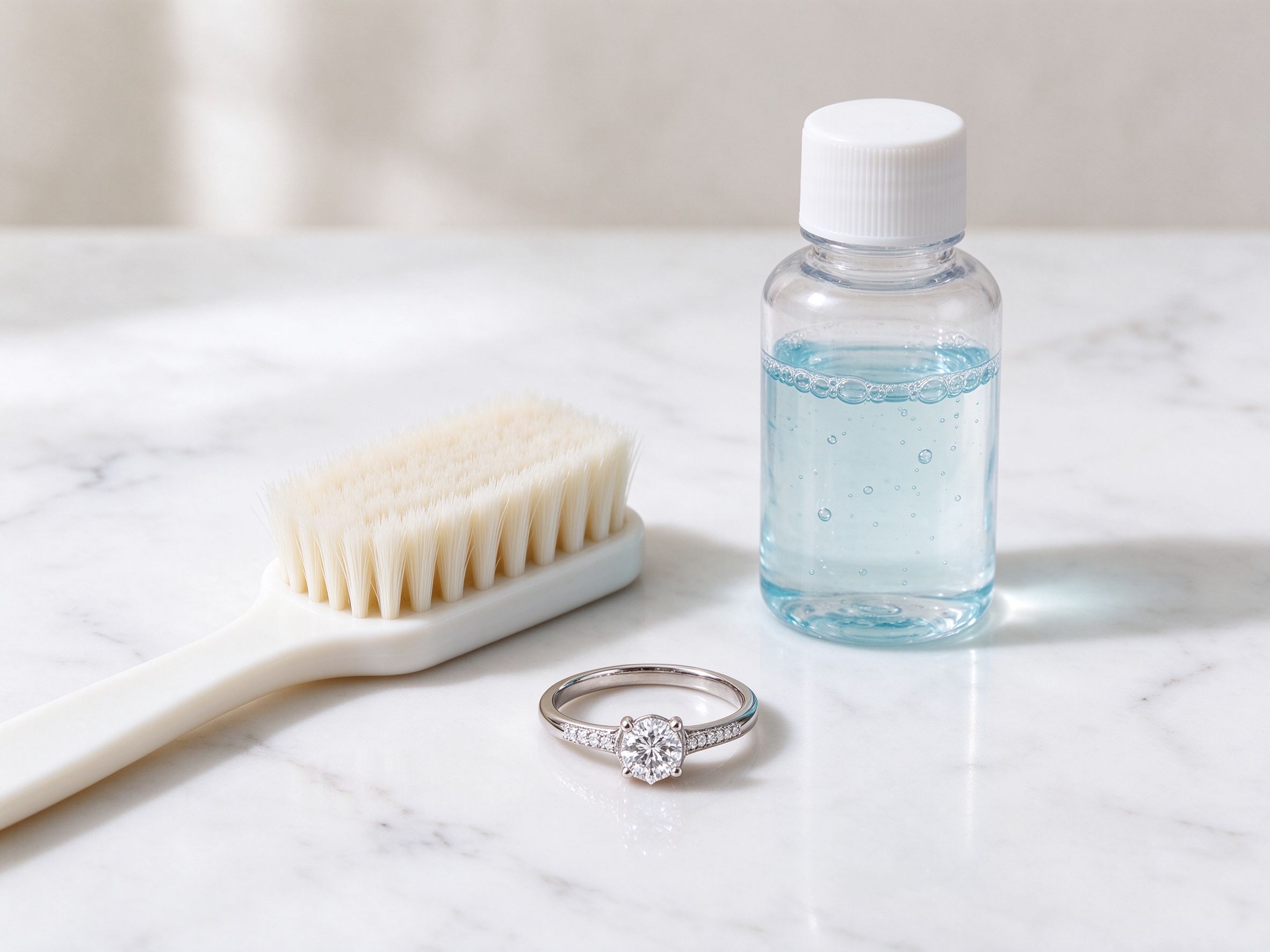
Storing Bulk Moissanite Jewelry: Retail Display and Inventory Care From the Factory Floor
A wholesale order that arrives brilliant can look tired within a month if it is stored badly. Sterling silver reacts to humidity, sulphur and friction, and even moissanite - virtually inert - sits in a setting that is not. This guide shares the storage and display practices our own quality team recommends to retail buyers, based on how we pack, ship and hold finished inventory in our own warehouse before it ever reaches your shop.
Why Storage Starts at the Factory Warehouse
Before a carton is even on a boat, our finished-goods warehouse runs a storage protocol of its own. Completed units sit in closed cabinets with silica gel and anti-tarnish paper, not on open shelves under lights. The temperature and humidity are logged, because silver in a damp warehouse tarnishes faster than silver in a dry shop. We rotate stock first-in, first-out, so the oldest inventory ships first. Why does this matter to a retailer? Because the condition a piece is in when it leaves us reflects the weeks it waited on our shelf. When a buyer receives pieces that look factory-fresh, it is partly because we treated them that way while they waited. The same discipline - dry, dark, separated, rotated - is what every retail storeroom should copy.
We test new packaging materials the same way we test new plating: on accelerated samples. Before a new pouch or box goes into production, samples sit in controlled humidity and heat to confirm they protect the finish. Retailers never see a packaging trial, because the trials happen on our bench. This is why our shipping materials keep working as intended, season after season.
The goal of all this care is simple: a customer who keeps the ring for ten years and still recommends the shop. Every wiping cloth, every anti-tarnish strip and every inspection station exists to support that long relationship. A factory cares about your customers because your repeat orders are built on their satisfaction. Care is not overhead; it is the machinery of loyalty.
When a retailer reports a finish problem, we treat it as data, not an annoyance. We trace the batch, review the photos, and adjust the process so the same issue does not recur. This closed loop means our care guidance gets more accurate over time, and our partners benefit from lessons learned on other accounts. A problem solved once improves every future shipment.
A production line never cleans jewellery once and walks away. Every workstation hands a semi-finished piece to the next with a clean cloth and a final wipe, because oil from one stage would be baked into the next by heat, plating or inspection lighting. This handoff discipline is invisible to buyers but it is why our pieces leave the floor free of the invisible smudges that appear under a magnifying glass two weeks later.
We also log every treatment lot. When a customer reports a finish issue months after delivery, we can trace which plating bath, which ultrasonic cycle and which packaging batch the unit ran through, rather than guessing. That traceability is what turns a one-off complaint into a permanent process improvement and keeps our defect rate falling quarter over quarter.
Bulk handling changes the risk equation. A single ring on a velvet pad gets individual attention; a thousand rings moving through trays and tumblers can scuff each other. Our trays are divided and lined, and we stage pieces so that sharp moissanite girdles never ride directly against a polished shank of the next unit. Small packaging choices remove most transit damage before it ever reaches a shipping carton.
Humidity, Sulphur and the Real Enemies of Silver
Tarnish is a chemical reaction. Silver reacts with sulphur compounds in the air to form silver sulphide, the dull grey film everyone has seen. Humidity speeds the reaction, and sulphur is everywhere: cardboard, newsprint, wool, rubber, some paints and even certain city atmospheres. That is why storing silver jewelry in a plain cardboard box with a newspaper divider is a slow tarnishing setup. The countermeasures are straightforward: sealed or breathable anti-tarnish bags, silica gel to absorb moisture, activated-charcoal or anti-tarnish strips to neutralize sulphur, and a stable indoor environment below about 50 percent relative humidity. Display cases should include a small desiccant, and storerooms should avoid damp basements or hot attics. None of this is exotic; it is controlled by consistent, low-cost materials.
Moissanite hardness is a gift and a hazard. At roughly 9.25 on the Mohs scale it resists scratches from daily wear, but that same hardness means its girdle will scratch the softer silver next to it in a shared tray. Our packing and display guidance always treats the stone as a sharp edge, not as a delicate gem, and this single principle prevents most cosmetic damage we see returns for.
The retail counter is where factory care either holds or collapses. Skin acid, hand cream and perfume transfer within seconds of a try-on, and if staff return a ring straight to the pad without wiping it, that film sits under spotlight for weeks. A thirty-second wipe after every try-on is the cheapest longevity program a shop can run, and we train partner staff in exactly this habit.
We test finishes with accelerated ageing on every new plating recipe. Before we approve a bath for production, samples sit in a controlled humidity cabinet under UV to simulate months of display, and we measure when dulling first appears. Only a finish that passes this accelerated test goes into a customer order, which is why our plating outlasts samples chosen purely for a day-one photo.
Warranty data drives our care guidance. Every returned piece is examined to find whether the cause was manufacturing, transit or customer handling, and the findings feed the care cards we print for the next batch. Over time this loop means our instructions address the exact failures retailers actually see, rather than generic jewellery advice copied from the internet.
For humid or coastal markets we upgrade the entire finishing stack, not just the bag. Plating is built slightly heavier, desiccant is doubled, and the outer carton gets an additional vapour inhibitor. A supplier that quotes one finish for every destination is optimising for cost, not for the reality of the voyage your inventory will actually make.
Cleaning chemistry is matched to the metal, not to the gem. Moissanite tolerates almost anything, but rhodium over sterling silver is finicky, so every detergent we use on the line is neutral and residue-free. We never use household bleach, ammonia or abrasive powders, even in aggressive pre-plating strips, because residues are impossible to fully rinse from pav gaps.
Display Lighting: Showcasing Fire Without Aging Metal
Moissanite needs good light to show its fire, but display lighting ages silver in two ways. Heat accelerates tarnish, and ultraviolet can subtly fade packaging and dull polished surfaces. We recommend cool-temperature LED spotlights - around 5000K - positioned to graze the stone rather than bake the shank. Halogen is warm and bright but runs hot; replace it when refurbishing a case. Light should be bright on the stone but not constant on the metal. Indirect, diffuse overhead light plus a small focused spotlight on hero pieces gives brilliance without cooking the silver. Also consider a rotating display schedule: pieces that sit under the brightest lights 24 hours a day age faster, so cycle hero items in and out. Your moissanite will look livelier, and your plating will last longer.
Presentation is part of the product in wholesale. A piece that arrives in a crushed pouch with a tarnished spot does not get the price it deserves, no matter how good the stone is. Our finishing and packing team is measured partly on the condition pieces reach the retailer, which keeps the same care ethos alive from casting bench to carton seal.
We train the people who pack cartons the same way we train the people who set stones, because a packing error is just as costly as a setting error in the customer's eyes. Each piece is wrapped, checked against the packing list, and placed so it cannot move. The last person to touch a ring before it ships is as much a quality gate as the first. That discipline shows up in cartons that arrive complete, bright and undamaged, order after order.
Retail staff turnover means care habits drift, which is why we provide printed, posted guidance rather than relying on verbal handover. A laminated care poster behind the counter, refreshed with each order, keeps the wiping and storage habits consistent even when staff change. Good systems outlive individual people, and that is the principle behind every care procedure we hand to our partners.
We test new packaging materials the same way we test new plating: on accelerated samples. Before a new pouch or box goes into production, samples sit in controlled humidity and heat to confirm they protect the finish. Retailers never see a packaging trial, because the trials happen on our bench. This is why our shipping materials keep working as intended, season after season.
The goal of all this care is simple: a customer who keeps the ring for ten years and still recommends the shop. Every wiping cloth, every anti-tarnish strip and every inspection station exists to support that long relationship. A factory cares about your customers because your repeat orders are built on their satisfaction. Care is not overhead; it is the machinery of loyalty.
When a retailer reports a finish problem, we treat it as data, not an annoyance. We trace the batch, review the photos, and adjust the process so the same issue does not recur. This closed loop means our care guidance gets more accurate over time, and our partners benefit from lessons learned on other accounts. A problem solved once improves every future shipment.
Separating Pieces to Prevent Scratches
Moissanite is harder than silver, so a moissanite ring tossed loose into a tray can scratch the band of the next ring. Even when stones do not touch, polished shanks rub against each other and develop micro-scratches that cloud the mirror finish. The fix is individual slots, padded inserts, or individual pouches. We ship bulk orders in divided trays specifically to reduce this friction in transit, and we recommend retailers continue the system on the shop floor. Customers should try pieces on over a velvet pad, never directly on a hard counter, and staff should return each piece to its own slot rather than stacking. The cost of divided trays is trivial compared with the cost of re-polishing scratched inventory. Display beauty is directly a function of separation.
A production line never cleans jewellery once and walks away. Every workstation hands a semi-finished piece to the next with a clean cloth and a final wipe, because oil from one stage would be baked into the next by heat, plating or inspection lighting. This handoff discipline is invisible to buyers but it is why our pieces leave the floor free of the invisible smudges that appear under a magnifying glass two weeks later.
We also log every treatment lot. When a customer reports a finish issue months after delivery, we can trace which plating bath, which ultrasonic cycle and which packaging batch the unit ran through, rather than guessing. That traceability is what turns a one-off complaint into a permanent process improvement and keeps our defect rate falling quarter over quarter.
Bulk handling changes the risk equation. A single ring on a velvet pad gets individual attention; a thousand rings moving through trays and tumblers can scuff each other. Our trays are divided and lined, and we stage pieces so that sharp moissanite girdles never ride directly against a polished shank of the next unit. Small packaging choices remove most transit damage before it ever reaches a shipping carton.
Moissanite hardness is a gift and a hazard. At roughly 9.25 on the Mohs scale it resists scratches from daily wear, but that same hardness means its girdle will scratch the softer silver next to it in a shared tray. Our packing and display guidance always treats the stone as a sharp edge, not as a delicate gem, and this single principle prevents most cosmetic damage we see returns for.
The retail counter is where factory care either holds or collapses. Skin acid, hand cream and perfume transfer within seconds of a try-on, and if staff return a ring straight to the pad without wiping it, that film sits under spotlight for weeks. A thirty-second wipe after every try-on is the cheapest longevity program a shop can run, and we train partner staff in exactly this habit.
We test finishes with accelerated ageing on every new plating recipe. Before we approve a bath for production, samples sit in a controlled humidity cabinet under UV to simulate months of display, and we measure when dulling first appears. Only a finish that passes this accelerated test goes into a customer order, which is why our plating outlasts samples chosen purely for a day-one photo.
Stock Rotation: First In, First Out, on the Shop Floor
Factories run on first-in, first-out for a reason: inventory that sits too long degrades. Retailers should apply the same rule. The rings in your front case have been sitting longer than the boxes in your storeroom; rotate them so the oldest stock sells first and the newest goes into storage. This keeps display inventory looking consistently fresh and prevents you from discovering a tarnished piece six months after delivery. We recommend a monthly rotation walkthrough: pull every piece, wipe it, inspect prongs, check plating, and return it to the case. That one routine catches loose stones early, keeps finishes bright, and gives staff a chance to re-merchandise. A small investment of time, and a bulk order stays saleable for its full merchandising life.
Warranty data drives our care guidance. Every returned piece is examined to find whether the cause was manufacturing, transit or customer handling, and the findings feed the care cards we print for the next batch. Over time this loop means our instructions address the exact failures retailers actually see, rather than generic jewellery advice copied from the internet.
For humid or coastal markets we upgrade the entire finishing stack, not just the bag. Plating is built slightly heavier, desiccant is doubled, and the outer carton gets an additional vapour inhibitor. A supplier that quotes one finish for every destination is optimising for cost, not for the reality of the voyage your inventory will actually make.
Cleaning chemistry is matched to the metal, not to the gem. Moissanite tolerates almost anything, but rhodium over sterling silver is finicky, so every detergent we use on the line is neutral and residue-free. We never use household bleach, ammonia or abrasive powders, even in aggressive pre-plating strips, because residues are impossible to fully rinse from pav gaps.
Presentation is part of the product in wholesale. A piece that arrives in a crushed pouch with a tarnished spot does not get the price it deserves, no matter how good the stone is. Our finishing and packing team is measured partly on the condition pieces reach the retailer, which keeps the same care ethos alive from casting bench to carton seal.
We train the people who pack cartons the same way we train the people who set stones, because a packing error is just as costly as a setting error in the customer's eyes. Each piece is wrapped, checked against the packing list, and placed so it cannot move. The last person to touch a ring before it ships is as much a quality gate as the first. That discipline shows up in cartons that arrive complete, bright and undamaged, order after order.
Retail staff turnover means care habits drift, which is why we provide printed, posted guidance rather than relying on verbal handover. A laminated care poster behind the counter, refreshed with each order, keeps the wiping and storage habits consistent even when staff change. Good systems outlive individual people, and that is the principle behind every care procedure we hand to our partners.
Building a Receiving-and-Storage Checklist Your Team Owns
The most reliable storage system is a written one. When our wholesale partners ask us what to hand their shop staff, we give a one-page checklist: on arrival, open in a dry room, let pieces acclimate, inspect under daylight, wipe with microfiber, place in divided trays with desiccant, log the batch, and rotate monthly. Staff who own a checklist behave consistently; staff who improvise vary by mood. We can print this checklist as part of your OEM onboarding pack. Storage is not glamorous, but it is the silent reason some retailers' stock sells at full margin while others' is discounted within weeks. Treat inventory handling as part of the product, and the product stays premium.
We test new packaging materials the same way we test new plating: on accelerated samples. Before a new pouch or box goes into production, samples sit in controlled humidity and heat to confirm they protect the finish. Retailers never see a packaging trial, because the trials happen on our bench. This is why our shipping materials keep working as intended, season after season.
The goal of all this care is simple: a customer who keeps the ring for ten years and still recommends the shop. Every wiping cloth, every anti-tarnish strip and every inspection station exists to support that long relationship. A factory cares about your customers because your repeat orders are built on their satisfaction. Care is not overhead; it is the machinery of loyalty.
When a retailer reports a finish problem, we treat it as data, not an annoyance. We trace the batch, review the photos, and adjust the process so the same issue does not recur. This closed loop means our care guidance gets more accurate over time, and our partners benefit from lessons learned on other accounts. A problem solved once improves every future shipment.
A production line never cleans jewellery once and walks away. Every workstation hands a semi-finished piece to the next with a clean cloth and a final wipe, because oil from one stage would be baked into the next by heat, plating or inspection lighting. This handoff discipline is invisible to buyers but it is why our pieces leave the floor free of the invisible smudges that appear under a magnifying glass two weeks later.
We also log every treatment lot. When a customer reports a finish issue months after delivery, we can trace which plating bath, which ultrasonic cycle and which packaging batch the unit ran through, rather than guessing. That traceability is what turns a one-off complaint into a permanent process improvement and keeps our defect rate falling quarter over quarter.
Bulk handling changes the risk equation. A single ring on a velvet pad gets individual attention; a thousand rings moving through trays and tumblers can scuff each other. Our trays are divided and lined, and we stage pieces so that sharp moissanite girdles never ride directly against a polished shank of the next unit. Small packaging choices remove most transit damage before it ever reaches a shipping carton.
Frequently Asked Questions
How should I store bulk moissanite silver jewelry in a storeroom?
Keep pieces dry, dark and separated: anti-tarnish pouches or divided trays, silica gel, below ~50% humidity, first-in first-out rotation. Avoid cardboard, newsprint and rubber, which release sulphur.
What lighting is best for displaying moissanite?
Cool 5000K LEDs that graze the stone are ideal. Hot halogens heat the case and age the silver. Focus light on the stone rather than baking the shank, and rotate hero pieces.
Why are my display rings tarnishing after a month?
Likely humidity, sulphur from packaging, or skin acid left after try-ons. Add desiccant and anti-tarnish strips, wipe after each try-on, and avoid rubber or cardboard dividers.
Should pieces touch each other in a tray?
No. Hard moissanite girdles and polished shanks scratch neighbouring pieces. Use divided slots or individual pouches. Try-ons happen over a velvet pad.
How often should I rotate display stock?
A monthly pull-through is ideal: wipe, inspect prongs and plating, and return oldest stock to the front. This keeps the case bright and catches loose stones early.
Conclusion
Great factory quality is wasted on bad storage. Dry air, separated pieces, cool light, desiccant and disciplined rotation are not complicated - they are the same habits our own warehouse uses. Applied consistently, they keep a bulk moissanite order looking factory-new from the first day of display through the last piece sold.