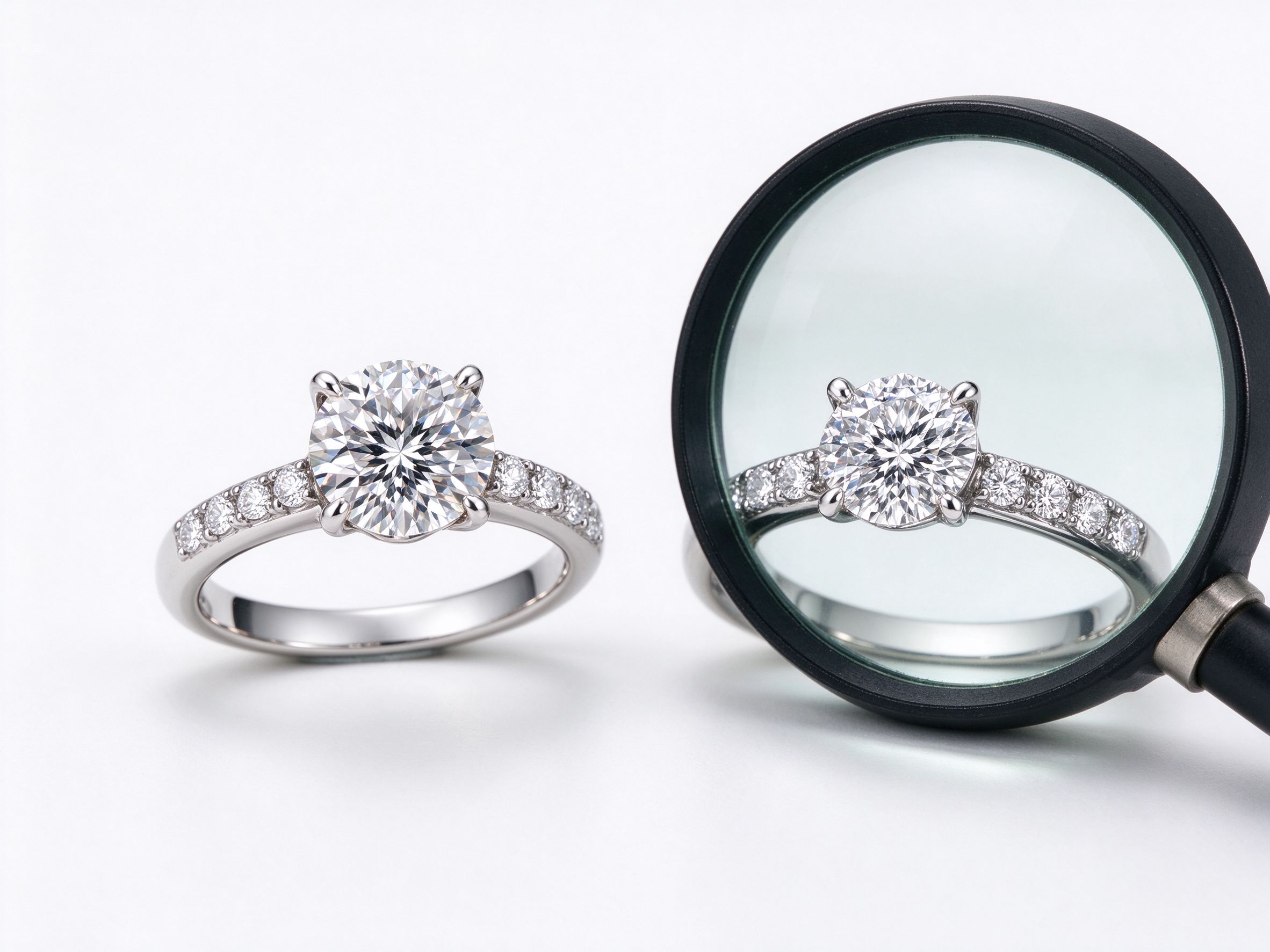
Hand Sanitizer and Perfume: What They Do to Moissanite Plating
The rise of alcohol hand sanitizer changed jewelry care almost overnight. A generation of people who used to wash their hands with gentle soap now pump their fingers full of alcohol gel several times a day, often with a ring still on. The moissanite in that ring does not care; alcohol has no effect on the stone. But the thin rhodium plating on the silver or gold band is another story, and we have seen a noticeable jump in dulled, patchy finishes on rings that spend their days under sanitizer. This guide explains what alcohol, perfume, and hairspray actually do to a plated ring, why the stone survives untouched while the finish suffers, and the simple habits that keep a bright white ring looking new through years of sanitizing.
If you only take one thing from this article, take the habit: take the ring off before you sanitize, or wipe it after. That single second removes almost all the damage. The rest of this guide is the reasoning, written from the factory bench where we apply the plating you are trying to protect. The moissanite itself is never the issue; it is the few microns of plating that the alcohol is slowly dissolving.
Why the Stone Survives but the Plating Suffer
Moissanite is silicon carbide, one of the most stable materials used in jewelry. Alcohol, perfume, and household solvents do not etch it, cloud it, or change its color. You can douse a moissanite ring in hand sanitizer for years and the stone will look exactly as it did on day one. This is why we never worry about the gem when customers ask whether sanitizer is safe. The stone is the part of the ring least affected by anything it touches.
Rhodium plating is the opposite. It is a thin layer, measured in microns, electroplated over the base silver or gold to give the ring its brilliant white finish. Alcohol is a solvent, and it slowly breaks down the oils and residues on the surface, but more importantly, repeated alcohol exposure dries and stresses the plating layer. The plating itself is not dissolved by hand sanitizer in one use, but the surfactants, fragrances, and moisturizers in commercial sanitizer gels leave a film that, combined with frequent alcohol contact, wears the bright surface down faster than normal hand washing. The result is a ring that looks patchy or grey within months instead of a year.
The base metal underneath is also affected indirectly. Alcohol strips the protective skin oils that normally sit on the band, which can slightly accelerate silver tarnish on exposed areas. Again, the moissanite is fine. The silver and the rhodium are the parts of the ring that feel the daily sanitizing, and that is where the care belongs.
What Perfume and Hairspray Actually Do
Perfume and hairspray are more damaging than sanitizer, because they are oily and sticky. A spritz of perfume drifts onto a ring worn on the same hand, and the alcohol in the perfume evaporates quickly but the fragrant oils and fixatives remain. Those oils bond to the plating and collect dust, forming a film that dulls the sparkle and, over time, can subtly discolor the finish. We cover this film in our article on chemical exposure and your jewelry, but the practical advice is simple: apply perfume before you put the ring on, not after.
Hairspray is worse, because it is sprayed near the head and lands on earrings, necklaces, and any rings on raised hands. The spray dries into a hard lacquer that is surprisingly stubborn on metal. Earrings that are never removed during styling often look dull within weeks, and the cause is almost always hairspray buildup. The fix is to style your hair first, let the spray settle, and then put on earrings and necklaces. This is a tiny change with a big payoff.
Sunscreen and hand cream belong in the same category. They are not solvents, but they leave oily residues that film the surface. The moissanite rewards a clean surface with maximum sparkle, and any oil layer cuts that sparkle. The rule across all of these products is the same: put the jewelry on last, after your skin and hair products have dried. That single order of operations prevents most of the buildup.

How Often Is Sanitizer Too Often?
If you sanitize once or twice a day at an office job, the effect on plating is modest. The ring will dull slightly faster than before, but a biannual re-plating easily keeps up. If you sanitize every hour, as healthcare workers, food-service staff, or frequent gym-goers might, the plating wears through in months rather than years. In those cases, the ring was never going to stay factory-bright, and the expectation should be adjusted. A healthcare worker who sanitizes constantly should expect to re-plate more often, or choose a plain band that does not rely on plating for its look.
The good news is that re-plating is cheap and fast. We re-plate rings in-house, and the service is one of the least expensive in our workshop. A daily-sanitizing ring that comes in every six months for a refresh looks bright year-round for a modest annual cost. Compare that to replacing a ring, and the re-plating schedule is obvious. We explain plating lifespans in our guide to rhodium plating care.
For wholesale brands selling to medical or hospitality staff, this is an important expectation to set. A bright white plated ring marketed as daily wear to someone who sanitizes hourly will come back dull within months, and the customer may blame the product. Set expectations, offer re-plating as a standing service, and consider recommending plain or yellow-gold bands for hands that sanitize constantly.
The Two Habits That Protect the Finish
You do not need to stop sanitizing. You need to route around the ring. The first habit is to remove the ring before you sanitize if you can, the way you would before washing dishes. If removing it every time is impractical, the second habit is to wipe the ring with a soft cloth after sanitizing, which removes the gel film before it dries. Either habit protects the plating dramatically.
- Put jewelry on after perfume, lotion, hairspray, and sunscreen have dried, not before.
- Remove rings before frequent hand sanitizing, or wipe the band clean afterward.
- Wash the ring monthly in warm soapy water to remove film left by products.
- Re-plate on schedule rather than waiting for the plating to wear through visibly.
- Never use alcohol wipes directly on the ring, because they accelerate film buildup.
Wiping takes two seconds. Keep a small microfiber cloth near the sanitizer dispenser, in your bag, or at your desk. After you sanitize, give the ring a quick wipe. This removes the gel residue before it bonds to the plating, and it is the single most effective habit for daily-sanitizing hands. We supply these cloths with wholesale orders for exactly this reason.
What Not to Do to Fix a Dull Plated Ring
When a plated ring goes patchy, the temptation is to scrub it. Resist. Abrasive creams, silver dips, and polishing cloths used aggressively all remove more of the already-thin rhodium, which makes the patchiness worse. A dull plated ring needs a re-plate, not a deeper scrub. Scrubbing at the plating is like trying to polish paint back onto a wall: the surface is fine, the finish layer is gone, and only reapplication restores it.
Do not coat the ring in clear nail polish to protect the plating. This trick works briefly but chips, yellows, and is hard to remove, and it traps product film against the metal. The correct protection is the wipe-after habit and a scheduled re-plate, not a DIY clear coat.
If the stone itself looks dull rather than the metal, that is a different problem, and it is usually film. A monthly soapy wash restores the sparkle. We walk through the method in our guide to cleaning moissanite at home. The key is to distinguish a dirty stone, which washing fixes, from worn plating, which needs a re-plate. They look similar but the fix is different.
How We Plate, and Why Thickness Matters
Rhodium plating is not one uniform thing. It is applied by electroplating, and the thickness varies enormously between makers, from a thin flash that wears through in months to a thicker layer designed for daily wear. As a factory, we control plating thickness on every order, and we can apply a heavier layer to pieces destined for hands that sanitize often. A heavier plated ring costs slightly more to produce but lasts dramatically longer under alcohol exposure, which is why we recommend it for active and medical customers.
The plating process itself is precise. The silver or gold is cleaned, polished to a mirror, then electroplated in a rhodium bath under controlled current and time. The longer the bath, the thicker the plating. A standard consumer ring uses a light plating, because the cost is low and the expectation is occasional wear. A daily-wear ring, especially one sold to a customer who sanitizes, should use a thicker plating. We tune the bath time for exactly this reason, and wholesale customers often ask for a heavier finish on their best-selling everyday bands.
Thicker plating does not change the color or the look. It simply means the bright white finish lasts longer before the silver underneath starts to show. When you re-plate a ring later, the jeweler can apply the same thicker layer. The point is that plating thickness is a choice, not a fixed property of the ring, and choosing the right thickness for your lifestyle solves most sanitizer-related dullness before it starts.
Signs Your Plating Is Wearing Through
The first sign is visual. Look at the bottom of the band, the part that rests against the palm, and at the edges that contact desks. On a rhodium-plated white ring, these high-contact areas start to show a faint grey or yellow tint as the thin plating thins. That is not tarnish; it is the silver base showing through. The fix is a re-plate, and it is best done before the tint spreads to the front of the ring.
The second sign is a slight change in how the ring feels. Plating is smooth and slippery; exposed silver is slightly more textured. A ring that suddenly feels grippy on the finger may have worn through its plating on the inside. This is subtle, and most people notice the color change first. Either sign means the ring is ready for its refresh.
The third sign is patchiness. If the ring looks bright on top but dull on the bottom, the plating has worn unevenly, which is normal and expected. A re-plate makes the whole ring uniform again. Do not try to touch up the patch at home; the whole ring needs a fresh layer, because spot repairs never match. Bring it in, let us strip and re-plate, and the ring comes back as one even bright white.
What Wholesale Brands Should Tell Customers
For the brands and retailers who buy our rings, the sanitizer question is a support ticket waiting to happen. Set the expectation at sale time, not when the ring comes back dull. A short card that says, this ring is rhodium plated, frequent hand sanitizer will dull the finish faster, and a cheap re-plate restores it, prevents most confusion. Customers who understand that plating is a consumable do not panic when it thins; they book the refresh.
We recommend pairing plated everyday rings with a standing re-plating offer. A small annual or six-monthly service, priced modestly, turns a complaint into a repeat visit. The customer keeps their ring bright, and the brand builds a service relationship that outlasts the original sale. This is how durable jewelry brands retain customers, and it works especially well for moissanite, where the stone outlives the plating by decades.
For customers with hands that sanitize constantly, we suggest offering a choice: a plated white ring with a re-plating plan, or a plain yellow-gold or unplated silver band that ages without needing refresh. The right choice depends on the customer, but offering both means the buyer who sanitizes hourly is not stuck with a ring that dulls in months. We produce both finishes in the same styles, so the choice is cosmetic, not structural.
The moissanite itself needs no caveat. It is safe under sanitizer, perfume, and almost everything except the hardest physical knocks. The only caveat worth stating is about the plating, and once that is explained, the customer buys with confidence. We provide the care cards and service guidance that make this easy, and we tune plating thickness for the wear pattern the customer describes.
Frequently Asked Questions
Does hand sanitizer ruin moissanite? No. The moissanite is completely unaffected by alcohol. What sanitizer dulls is the rhodium plating on the band, which can be refreshed cheaply at any time.
Can I wear my ring while applying perfume? Apply perfume first, let it dry, then put the jewelry on. Perfume oils film the plating and dull the sparkle, and the order of operations prevents it with no extra effort.
How often should I re-plate if I sanitize often? Daily heavy sanitizing may need a re-plate every six to twelve months. Light use, once or twice a day, extends that to one to two years. The visual trigger is when the band shows yellow or grey through the white.
Will alcohol turn my silver green? Alcohol itself does not, but it strips skin oils and can slightly accelerate tarnish. Keep the ring clean and dry, and the effect is minor. Re-plating and regular polishing handle the rest.
The moissanite in your ring does not care about sanitizer, perfume, or hairspray. It will sit brilliant in its prongs through every hand wash, every spritz, and every styling session. What those products wear away is the thin bright plating, and that is a consumable you refresh cheaply rather than fear. Take the ring off when you can, wipe it when you cannot, wash it monthly, and re-plate when the white starts to show grey. Follow that rhythm and the ring stays bright, regardless of how often you reach for the sanitizer. The stone was never the problem, and it never will be.
If you are unsure whether your ring is dull from film or worn plating, give it a warm soapy wash first. If the sparkle returns, it was film. If the band still looks grey or yellow after a thorough clean, the plating has worn through and it is time for a re-plate. That simple test tells you everything you need to know, and it takes five minutes.
That simple test tells you everything you need to know, and it takes five minutes. Most dullness people panic about is just film, which a wash fixes. The rest is plating, which a re-plate fixes. Neither is a lost stone or a damaged ring, because the moissanite in the middle is unaffected. Once you internalize that, the whole sanitizer question relaxes: wash the ring, wipe the band, refresh the plating when it thins, and move on.
For earrings and necklaces, the logic is the same but the exposures differ. Earrings catch hairspray and perfume because they sit near the head; necklaces catch perfume and lotion because they rest on the neck. The fix is to style and scent first, then put the jewelry on. We see fewer plated earrings returned dull when this habit is followed, because the lacquer never has a chance to build up. Rings are different only in that they meet sanitizer directly, which is why the wipe-after habit targets them specifically.
None of these habits are complicated. They are a matter of order: skin and hair products first, jewelry second. And one wipe: after sanitizing, clear the gel from the band. Build those two into a week and they become automatic, and the ring stays bright for years without another thought. The moissanite does its part for free; the plating just needs these small courtesies in return. Give them, and the ring stays bright for the long run.
If you have read this far, you have the whole picture. The moissanite is immune; the plating is fragile; the habits are small. There is no secret product to buy, no special treatment required. Put the jewelry on after you are ready for the day, wipe the band when sanitizer touches it, wash the ring monthly, and send it in for a re-plate when the white turns grey. Done consistently, that routine keeps a moissanite ring brilliant and bright for decades, even on hands that sanitize many times a day. The stone will still be sparkling long after the original plating has been refreshed, and that is the point.
Protect the Finish, Not the Stone
The moissanite in your ring is the part that never needs protecting from sanitizer, perfume, or hairspray. It is the bright thin plating around it that does, and the protection is simple: put jewelry on last, wipe it after sanitizing, wash it monthly, and re-plate on schedule. None of these habits change how often you clean your hands or how you wear perfume. They just route those daily routines around the few microns of metal that the routines would otherwise wear away. Treat the plating like the consumable it is, refresh it when it thins, and the moissanite will keep its fire for decades, regardless of how often you reach for the sanitizer bottle.
If you are ordering plated moissanite jewelry for customers who work in healthcare, hospitality, or any hands-on role, talk to us about heavier plating and plain-band options that stand up to frequent sanitizing. We are a moissanite manufacturer in Wuzhou, China, and we tune plating thickness and finish for the realities of daily wear. Reach our team at service@holycome.com for plating samples, re-plating service, or care guidance. For chemical avoidance, start with our chemical exposure article, and for plating upkeep, read the rhodium care guide.