The Economics of Stackable Ring Sets: Why Selling Sets Beats Selling Singles
Stackable thin rings are one of the most quietly profitable categories in silver jewelry, and most brands underestimate how much revenue they generate. A single thin band ring sells for 20 to 40 dollars. A set of three stackable rings sells for 60 to 100 dollars, and the customer who buys the set will come back next season to buy more bands to add to the stack. The margin on a set is healthier than on a single ring, the repeat purchase rate is higher, and the inventory risk is lower, because thin bands are timeless and do not go out of style. This article explains the economics of stackable ring sets from the factory side, and why a brand that is not selling stacks is leaving money on the table.
The stackable ring market is built on a simple behavior: customers like to wear multiple thin bands on one finger, mixing metals, stones, and textures. They start with one or two bands, then they add a few more each season, and eventually they have a stack of five or ten rings on one finger. Each new band they buy is a small purchase, but it is a purchase they make every few months, and over a year the customer who stacks rings spends more than the customer who bought one solitaire. The stackable customer is the highest-frequency customer in silver jewelry, and they are loyal to the brand that sells the bands they want.
How Stackable Rings Fit Into a Seasonal Collection
One of the reasons stackable rings work so well for brands is that they can be refreshed every season without retooling. The basic torus is the same, but the finish, the stone, or the texture changes. A spring collection might feature pastel enamel bands, a summer collection might feature thin stone bands, a fall collection might feature hammered gold-filled bands, and a winter collection might be pavé bands. The customer comes back each season to see what the new bands are, and they add one or two to their existing stack. This is the repeat purchase loop that makes stackable rings so profitable.
For a brand, this means that stackable rings are the category that lets you have seasonal drops without a huge product development budget. You do not need to design a whole new ring; you just need to choose a new finish or a new stone size, and we produce it on the same line. The customer perceives it as a new product, and you get to tell a new story each season. The brands that do this well have a loyal following of customers who wait for the seasonal drop, because they know there will be a new band to add to the stack.
The risk with seasonal drops is that you can overproduce the seasonal bands and be left with inventory that does not sell. We recommend ordering the seasonal bands in smaller quantities, because they are tied to a trend, and keeping the basic bands in larger quantities, because they sell year-round. The basic polished, matte, and hammered bands are the steady sellers that fund the business, and the seasonal bands are the exciting additions that bring in new customers. The mix should be about 70 percent basic and 30 percent seasonal, which is the ratio that works for most brands we work with.
How We Help Brands Curate Stackable Combinations
Most brands that are new to stackable rings do not know which bands go together, and we help them figure it out. We have seen thousands of stack combinations over the years, and we know which combinations look good together. We can suggest a set that mixes a polished band, a matte band, and a thin stone band, or a set that mixes a hammered band with a beaded band, depending on the look the brand wants. The goal is to give the customer a set that looks intentional, not just three random bands.
We also help brands with the size mix. Most stackable customers wear sizes 5 to 8, and the size distribution is fairly even across that range. We will recommend a size mix that matches the average customer, and we will adjust it based on the brand's market. A brand selling in the US will skew slightly larger than a brand selling in Asia, for example. We can also help with the half-size question: most stackable customers accept whole sizes, because thin bands are forgiving, but some brands offer half sizes for customers who want a precise fit. We can do either, and we will recommend the option that fits your market.
For a brand, the curation step is where we add value beyond just producing the bands. We are not a factory that just casts whatever you send us; we are a partner who has seen what sells and what does not. We will tell you if a combination looks off, if a finish is dated, or if a size mix is skewed wrong. This saves you from ordering inventory that will not sell, and it lets you focus on marketing the bands rather than guessing which ones to produce.
Why Thin Bands Are the Easiest Inventory to Manage
A thin stackable band is usually 1.2 to 2 millimeters wide, 1 millimeter thick, and weighs 1 to 2 grams. It is a simple torus with no setting, no engraving, and no decoration. The tooling is cheap, the casting is fast, and the polishing is straightforward. We can produce thousands of thin bands per day on a line that is dedicated to them, because the process is repetitive and efficient. This efficiency is why the per-piece cost of a thin band is low, and why the margin on a set of three is healthy.
The inventory risk on thin bands is also low, because they come in a small number of sizes. Most stackable customers wear sizes 5 to 8, and the bands are simple enough that a size 6 fits almost as well as a size 6.5. This means you do not have to stock a wide range of half-sizes, and the inventory does not get stuck in odd sizes. A brand that stocks thin bands in whole sizes 5 through 8 can cover 90 percent of customers, and the bands that do not sell this season will sell next season, because the design is timeless.
For a brand, this means that thin bands are the easiest product to start selling. You do not need a complicated design, you do not need a lot of sizes, and you do not have to worry about the design going out of style. A simple thin silver band is a product that will sell for as long as you are in business, because it is a basic component of the stackable look. The brands that build stackable lines usually start with three or four basic bands, and then they add new textures and stones as the customer base grows.
How Sets Increase the Average Order Value
The real profit in stackable rings is not in selling a single band; it is in selling a set of two to five bands at once. A customer who buys one band for 25 dollars might never come back. A customer who buys a set of three bands for 65 dollars is invested in the stack, and they will come back to add more. The set changes the customer from a one-time buyer into a repeat buyer, because they have started a collection that they want to complete.
The margin on a set is also healthier. Three thin bands cost us about the same to produce as one medium band with a stone, but the retail price of the set is higher, because the customer is paying for the curated combination. We can help you put together sets that work well together, mixing a plain band, a beaded band, and a thin CZ or moissanite band, so the set has visual variety without being expensive. The customer gets a stack that looks intentional, and you get a higher average order value.
For a brand, the implication is to sell the stack as a set, not as individual bands. The set is the product, and the individual bands are the components. We can produce the bands in any combination, and we can package them as a set in a small box or a drawstring pouch. The set feels like a curated product, while individual bands feel like commodity inventory. The set command a higher price, and it creates the repeat purchase loop that makes the category profitable.
Why Stackable Customers Buy Repeatedly
The stackable customer is the highest-frequency buyer in silver jewelry, because they are building a collection. They start with a basic set of three bands, then they add a gold-filled band, then they add a thin moissanite band, then they add a textured band, and so on. Each purchase is small, but the purchases happen every few months, because the customer is always looking for the next band to add to the stack. Over a year, a stackable customer might buy five or six bands, which adds up to more than the average engagement ring sale.
This repeat purchase behavior is why stackable rings are the backbone of many successful silver brands. The brands that sell stacks have a predictable revenue stream, because the customer base keeps coming back. The brands that sell only engagement rings have to find a new customer every time, because an engagement ring is a once-in-a-lifetime purchase. The stackable brand can sell to the same customer for years, which is a much more efficient business model.
For a brand, the stackable customer is also the easiest to market to. They follow jewelry trends on social media, they see new stackable combinations on influencers, and they buy the bands they see. A brand that posts photos of stack combinations on Instagram or TikTok will get customers clicking through to buy the bands in the photo. The stackable look is visual, and it is easy to market, which is why the category has grown so fast in the last few years.
How We Produce Stackable Bands Efficiently
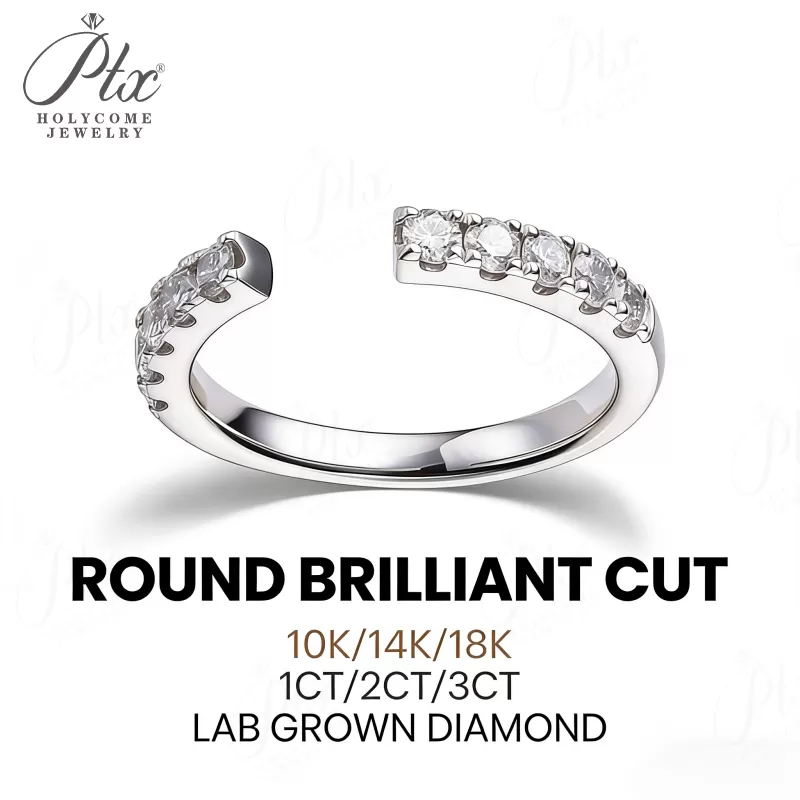
Producing stackable bands efficiently is about standardization. We make the same basic torus in widths from 1.2 to 2 millimeters, in the same alloy, on the same line. The variations come from the finish: a polished band, a matte band, a hammered band, a beaded band, or a band with a tiny stone. We can run a hundred of each finish in a day, because the casting is the same and only the finishing changes. This efficiency is why we can offer stackable bands at a low per-piece cost, even in small quantities.
When we produce a set for a brand, we cast the bands together, finish them together, and check them together. We make sure the bands are the same size, the same finish level, and that they slide against each other smoothly. A stack that catches or sticks is a bad experience, because the customer wants the bands to move freely on the finger. We spend extra time making sure the inner surface of each band is smooth, because that is what makes the stack feel comfortable to wear.
For a brand, this means that ordering stackable bands from us is straightforward. You tell us the widths, the finishes, and the number of bands per set, and we produce them. We can also help you design new finishes if you want a unique look that your competitors do not have. The tooling for a new finish is usually small, because the torus itself is the same and only the texture changes. This is why brands can add new stackable designs every season without a large tooling investment.
How to Price Stackable Sets
A stackable set of three thin bands should retail for 60 to 100 dollars, depending on the finishes and whether one of the bands has a stone. A set with three plain polished bands can retail at 60 dollars, while a set with one moissanite band can retail at 100 dollars. The price is high enough that the customer perceives the set as a curated product, but low enough that they will buy it without thinking too hard. The sweet spot is 70 to 80 dollars for a three-band set, which is the price point where most customers feel comfortable buying a stack.
The wholesale price for a three-band set is usually 25 to 35 dollars, which gives the brand a healthy margin. The bands themselves cost us about 5 to 8 dollars each to produce, depending on the finish, and the packaging adds a dollar or two. The brand marks up the wholesale price to retail, and the margin is comparable to selling a single medium ring, but the repeat purchase rate is much higher. The stackable set is a high-volume, steady-margin product, not a high-margin one-off.
For a brand, the pricing implication is to keep the set price accessible, because the customer is buying multiple bands and they will be price-sensitive. A set priced above 120 dollars starts to feel expensive for thin bands, and the customer will wait for a sale. A set priced below 40 dollars feels cheap, and the customer will assume the bands are thin and flimsy. The 60 to 100 dollar range is where the set feels like a good value, and that is where most sales happen.
Common Questions About Stackable Rings
How many bands should I include in a set? Three is the most common and the most versatile. A set of three gives the customer enough variety to look intentional, and it leaves room for them to add more bands later. Two is too few, and five is too many for a first purchase.
What finishes sell best? Polished silver is the baseline, and matte and hammered finishes are the most popular variations. A thin moissanite band adds sparkle and justifies a higher price. Beaded bands are also popular because they have texture.
Do stackable rings work for men? Less commonly, because men tend to wear one wider band rather than stacking thin ones. Some men do stack, but the market is primarily women. The men's market is better served by solid wider bands.
How do I prevent the bands from scratching each other? They will scratch slightly over time, which is normal for silver. The customer can rotate the stack to even out the wear. We do not recommend plating the bands heavily, because the plating will wear off where the bands rub against each other.
Can I mix silver and gold bands in a stack? Yes. Many customers mix silver and gold-filled bands in the same stack, because the two metals complement each other. We can produce silver bands, gold-filled bands, or two-tone bands, and the customer can mix them as they like. The mixed-metal stack is one of the most popular looks.
What is the minimum order for a stackable set? We can start with 50 sets per design, because the tooling is minimal and the line is efficient. For a new brand, 50 sets of three bands is 150 bands, which is enough to test the market without overcommitting. We will recommend a higher quantity once the set sells through.
How Stackable Rings Reduce Inventory Risk
One of the quiet benefits of stackable rings is that they reduce the risk of dead inventory. A solitaire engagement ring is a specific product, and if the customer does not want that stone shape or that band width, the ring sits on the shelf. A stackable band is a component, and it works with any other band the customer already owns. If a particular finish does not sell this season, it will sell next season, because the customer can add it to an existing stack. The bands are interchangeable, which means the inventory is flexible, and flexible inventory is less risky than specific products.
For a brand, this means that you can carry more designs without worrying about each one selling through immediately. You might stock ten finishes, and six of them sell well while four sell slowly. The four slow ones will eventually sell, because the customer who comes back for a new band might pick one of the slow ones. The stackable line is a portfolio, and the slow performers are offset by the fast performers. This is very different from a line of engagement rings, where each design has to sell on its own, and a slow design is just dead inventory.
We see this in our own order patterns. Brands that stock stackable bands reorder the fast sellers and keep the slow sellers in stock, because they know the slow ones will eventually move. Brands that stock engagement rings have to discount the slow designs to clear them, because they cannot sit on them forever. The stackable model is more forgiving, and that forgiveness is worth a lot when you are managing inventory.
The Bottom Line
Stackable ring sets are one of the easiest and most profitable categories for a silver brand to add. The bands are cheap to produce, the inventory risk is low, the design is timeless, and the customer comes back repeatedly to add more bands. The set format increases the average order value, creates a curated product feel, and turns a one-time buyer into a repeat buyer. For a brand that wants to build a steady revenue stream, the stackable line is the place to start, because it is the category that keeps selling year after year.
If you are planning a stackable line and want to see which finishes and set combinations are selling best, send us your target market and we will share the data. Reach our team at service@holycome.com, and for more on how we produce thin bands, read our guide to ring band width and thickness cost and our breakdown of wholesale ring MOQ and minimum order quantities.