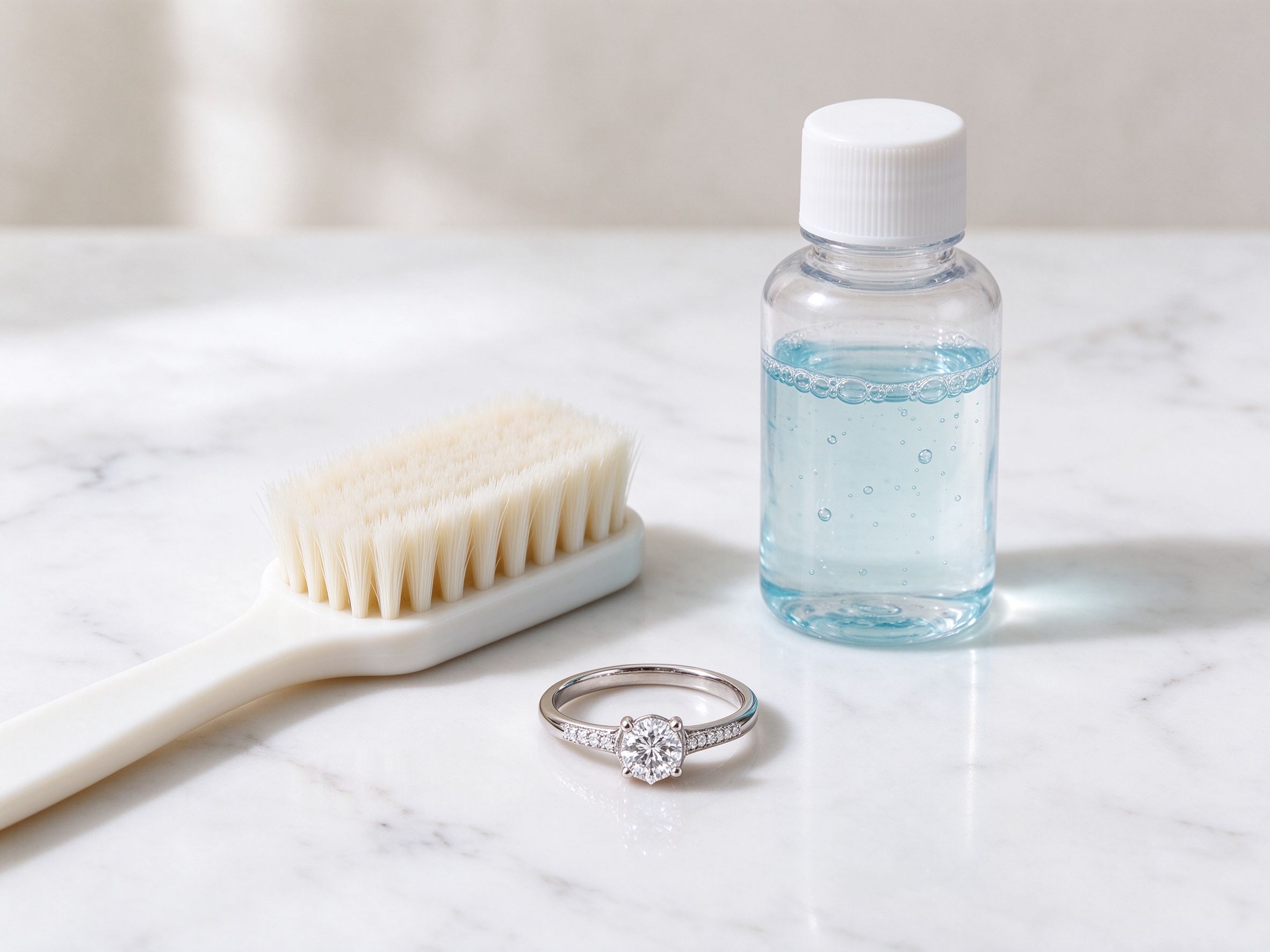
Rhodium Plating Care: Preserving the 925 Silver Finish From Factory to Store
The bright, white, mirror-like surface that makes wholesale 925 silver moissanite jewelry look like platinum is rhodium plating. It is also the most vulnerable layer on the piece. A few microns thick, it wears down with friction, reacts to cosmetics, and is the first thing customers notice when it dulls. In this article we explain how a factory controls plating thickness, what causes plating to fail early, and exactly what retailers can do to keep the finish showroom-bright for months rather than weeks.
What Rhodium Plating Actually Is and Why We Use It
Rhodium is a rare platinum-group metal that is electro-deposited onto the sterling silver surface in a thin, even layer. It does two jobs at once: it gives the cool, bright white finish that makes moissanite fire read clearly, and it acts as a barrier between the silver underneath and the sulphur that causes tarnish. Pure sterling silver is a touch warmer and softer-looking, so without plating, moissanite set in 925 would appear less contrasty. The plating process happens in a plating line where the piece is made cathodic in a rhodium bath; the metal migrates onto the surface under controlled current. The result is a layer typically measured in microns. Our factory targets a defined thickness rather than a visual guess, because thickness is what determines how long the finish survives real-world wear. A thinner plate might look identical on day one but wear through in weeks; a proper plate looks the same on day one and still looks right on day one hundred.
When a retailer reports a finish problem, we treat it as data, not an annoyance. We trace the batch, review the photos, and adjust the process so the same issue does not recur. This closed loop means our care guidance gets more accurate over time, and our partners benefit from lessons learned on other accounts. A problem solved once improves every future shipment.
A production line never cleans jewellery once and walks away. Every workstation hands a semi-finished piece to the next with a clean cloth and a final wipe, because oil from one stage would be baked into the next by heat, plating or inspection lighting. This handoff discipline is invisible to buyers but it is why our pieces leave the floor free of the invisible smudges that appear under a magnifying glass two weeks later.
We also log every treatment lot. When a customer reports a finish issue months after delivery, we can trace which plating bath, which ultrasonic cycle and which packaging batch the unit ran through, rather than guessing. That traceability is what turns a one-off complaint into a permanent process improvement and keeps our defect rate falling quarter over quarter.
Bulk handling changes the risk equation. A single ring on a velvet pad gets individual attention; a thousand rings moving through trays and tumblers can scuff each other. Our trays are divided and lined, and we stage pieces so that sharp moissanite girdles never ride directly against a polished shank of the next unit. Small packaging choices remove most transit damage before it ever reaches a shipping carton.
Moissanite hardness is a gift and a hazard. At roughly 9.25 on the Mohs scale it resists scratches from daily wear, but that same hardness means its girdle will scratch the softer silver next to it in a shared tray. Our packing and display guidance always treats the stone as a sharp edge, not as a delicate gem, and this single principle prevents most cosmetic damage we see returns for.
The retail counter is where factory care either holds or collapses. Skin acid, hand cream and perfume transfer within seconds of a try-on, and if staff return a ring straight to the pad without wiping it, that film sits under spotlight for weeks. A thirty-second wipe after every try-on is the cheapest longevity program a shop can run, and we train partner staff in exactly this habit.
Plating Thickness Standards: Why Microns Matter
Two rings can look identical under a showroom spotlight and perform completely differently in a customer's hand. The difference is often plating thickness. We measure our rhodium layers with X-ray fluorescence, a non-destructive gauge that reads the actual micron thickness across shank, shoulder and prong. For everyday fashion jewelry, a light flash plate may be acceptable, but for moissanite engagement and wedding pieces that customers wear daily, we specify a heavier build. Thicker plating costs more per unit - rhodium is expensive - but it dramatically extends the finish life and reduces returns. When a retailer asks why our price sits above the cheapest supplier, plating thickness is frequently the answer. We recommend wholesale buyers ask any supplier for the plated micron spec, not just a photo. A factory that cannot quote a number is plating by eye, and that is a finish problem waiting to happen.
We test finishes with accelerated ageing on every new plating recipe. Before we approve a bath for production, samples sit in a controlled humidity cabinet under UV to simulate months of display, and we measure when dulling first appears. Only a finish that passes this accelerated test goes into a customer order, which is why our plating outlasts samples chosen purely for a day-one photo.
Warranty data drives our care guidance. Every returned piece is examined to find whether the cause was manufacturing, transit or customer handling, and the findings feed the care cards we print for the next batch. Over time this loop means our instructions address the exact failures retailers actually see, rather than generic jewellery advice copied from the internet.
For humid or coastal markets we upgrade the entire finishing stack, not just the bag. Plating is built slightly heavier, desiccant is doubled, and the outer carton gets an additional vapour inhibitor. A supplier that quotes one finish for every destination is optimising for cost, not for the reality of the voyage your inventory will actually make.
Cleaning chemistry is matched to the metal, not to the gem. Moissanite tolerates almost anything, but rhodium over sterling silver is finicky, so every detergent we use on the line is neutral and residue-free. We never use household bleach, ammonia or abrasive powders, even in aggressive pre-plating strips, because residues are impossible to fully rinse from pav gaps.
Presentation is part of the product in wholesale. A piece that arrives in a crushed pouch with a tarnished spot does not get the price it deserves, no matter how good the stone is. Our finishing and packing team is measured partly on the condition pieces reach the retailer, which keeps the same care ethos alive from casting bench to carton seal.
We train the people who pack cartons the same way we train the people who set stones, because a packing error is just as costly as a setting error in the customer's eyes. Each piece is wrapped, checked against the packing list, and placed so it cannot move. The last person to touch a ring before it ships is as much a quality gate as the first. That discipline shows up in cartons that arrive complete, bright and undamaged, order after order.
What Wears Plating Down Faster Than Anything Else
Plating fails from friction and chemistry. Friction comes from hand lotion, soap residues, gym equipment, desk edges and the way a ring rubs against a wedding band. Chemistry comes from perfume, hairspray, chlorine in pools, hot-tub bromine, and the sulphur in some cosmetics. The single fastest way to strip a plate is spraying perfume while wearing the ring; the alcohol and fragrance solvents attack the rhodium faster than six months of normal wear. The second fastest is dishwashing with rubber gloves, because the sulphur in vulcanized rubber attacks silver and plate on contact. Humid coastal environments also accelerate wear, which is why our export cartons to tropical markets get extra anti-tarnish protection. None of this means the jewelry is fragile; it means the finish responds to the same rules a customer already follows with fine jewelry - put it on last, take it off first.
Retail staff turnover means care habits drift, which is why we provide printed, posted guidance rather than relying on verbal handover. A laminated care poster behind the counter, refreshed with each order, keeps the wiping and storage habits consistent even when staff change. Good systems outlive individual people, and that is the principle behind every care procedure we hand to our partners.
We test new packaging materials the same way we test new plating: on accelerated samples. Before a new pouch or box goes into production, samples sit in controlled humidity and heat to confirm they protect the finish. Retailers never see a packaging trial, because the trials happen on our bench. This is why our shipping materials keep working as intended, season after season.
The goal of all this care is simple: a customer who keeps the ring for ten years and still recommends the shop. Every wiping cloth, every anti-tarnish strip and every inspection station exists to support that long relationship. A factory cares about your customers because your repeat orders are built on their satisfaction. Care is not overhead; it is the machinery of loyalty.
When a retailer reports a finish problem, we treat it as data, not an annoyance. We trace the batch, review the photos, and adjust the process so the same issue does not recur. This closed loop means our care guidance gets more accurate over time, and our partners benefit from lessons learned on other accounts. A problem solved once improves every future shipment.
A production line never cleans jewellery once and walks away. Every workstation hands a semi-finished piece to the next with a clean cloth and a final wipe, because oil from one stage would be baked into the next by heat, plating or inspection lighting. This handoff discipline is invisible to buyers but it is why our pieces leave the floor free of the invisible smudges that appear under a magnifying glass two weeks later.
We also log every treatment lot. When a customer reports a finish issue months after delivery, we can trace which plating bath, which ultrasonic cycle and which packaging batch the unit ran through, rather than guessing. That traceability is what turns a one-off complaint into a permanent process improvement and keeps our defect rate falling quarter over quarter.
How Retail Display Shortens - or Extends - Plate Life
Display conditions quietly age plating before a piece is even sold. Direct sun through a shop window heats the counter and dries out protective oils; halogen spotlights can reach fifty degrees on a velvet pad and speed tarnish; pieces jostling in an open tray scratch each other. Our recommended retail display setup is simple: individual slots or pouches, indirect cool lighting, a dry case with a silica sachet, and a weekly wipe. Rotate stock so that the same rings are not sitting in the brightest light for months. When a customer tries a piece on, wipe it immediately before returning it to the pad, because skin acid is one of the most aggressive tarnish accelerants. These habits cost nothing but they are the difference between inventory that looks fresh at ninety days and inventory that looks shopworn at thirty.
Bulk handling changes the risk equation. A single ring on a velvet pad gets individual attention; a thousand rings moving through trays and tumblers can scuff each other. Our trays are divided and lined, and we stage pieces so that sharp moissanite girdles never ride directly against a polished shank of the next unit. Small packaging choices remove most transit damage before it ever reaches a shipping carton.
Moissanite hardness is a gift and a hazard. At roughly 9.25 on the Mohs scale it resists scratches from daily wear, but that same hardness means its girdle will scratch the softer silver next to it in a shared tray. Our packing and display guidance always treats the stone as a sharp edge, not as a delicate gem, and this single principle prevents most cosmetic damage we see returns for.
The retail counter is where factory care either holds or collapses. Skin acid, hand cream and perfume transfer within seconds of a try-on, and if staff return a ring straight to the pad without wiping it, that film sits under spotlight for weeks. A thirty-second wipe after every try-on is the cheapest longevity program a shop can run, and we train partner staff in exactly this habit.
We test finishes with accelerated ageing on every new plating recipe. Before we approve a bath for production, samples sit in a controlled humidity cabinet under UV to simulate months of display, and we measure when dulling first appears. Only a finish that passes this accelerated test goes into a customer order, which is why our plating outlasts samples chosen purely for a day-one photo.
Warranty data drives our care guidance. Every returned piece is examined to find whether the cause was manufacturing, transit or customer handling, and the findings feed the care cards we print for the next batch. Over time this loop means our instructions address the exact failures retailers actually see, rather than generic jewellery advice copied from the internet.
For humid or coastal markets we upgrade the entire finishing stack, not just the bag. Plating is built slightly heavier, desiccant is doubled, and the outer carton gets an additional vapour inhibitor. A supplier that quotes one finish for every destination is optimising for cost, not for the reality of the voyage your inventory will actually make.
When and How to Re-Plate: The Retailer's After-Sales Option
Eventually, even a well-cared-for plate will thin, especially on a wedding band that is worn daily. The honest way to sell plated silver is to set expectations: rhodium is a finish, not a lifetime condition. A customer who wears a band every day can reasonably expect one re-plating in a year or two, depending on lifestyle. As a factory, we offer re-plating as a service to wholesale partners, and we recommend retailers build a simple aftercare offer - a complimentary re-plate within the first year turns a warranty moment into a loyalty moment. Re-plating is fast and inexpensive when done properly: strip, clean, electro-prep, plate, rinse, inspect. What retailers should never do is buff the ring with polish and call it restored; that removes more plate and exposes the silver. Treat re-plating as a refinishing service, not a cleaning task.
Cleaning chemistry is matched to the metal, not to the gem. Moissanite tolerates almost anything, but rhodium over sterling silver is finicky, so every detergent we use on the line is neutral and residue-free. We never use household bleach, ammonia or abrasive powders, even in aggressive pre-plating strips, because residues are impossible to fully rinse from pav gaps.
Presentation is part of the product in wholesale. A piece that arrives in a crushed pouch with a tarnished spot does not get the price it deserves, no matter how good the stone is. Our finishing and packing team is measured partly on the condition pieces reach the retailer, which keeps the same care ethos alive from casting bench to carton seal.
We train the people who pack cartons the same way we train the people who set stones, because a packing error is just as costly as a setting error in the customer's eyes. Each piece is wrapped, checked against the packing list, and placed so it cannot move. The last person to touch a ring before it ships is as much a quality gate as the first. That discipline shows up in cartons that arrive complete, bright and undamaged, order after order.
Retail staff turnover means care habits drift, which is why we provide printed, posted guidance rather than relying on verbal handover. A laminated care poster behind the counter, refreshed with each order, keeps the wiping and storage habits consistent even when staff change. Good systems outlive individual people, and that is the principle behind every care procedure we hand to our partners.
We test new packaging materials the same way we test new plating: on accelerated samples. Before a new pouch or box goes into production, samples sit in controlled humidity and heat to confirm they protect the finish. Retailers never see a packaging trial, because the trials happen on our bench. This is why our shipping materials keep working as intended, season after season.
The goal of all this care is simple: a customer who keeps the ring for ten years and still recommends the shop. Every wiping cloth, every anti-tarnish strip and every inspection station exists to support that long relationship. A factory cares about your customers because your repeat orders are built on their satisfaction. Care is not overhead; it is the machinery of loyalty.
Building Finish Expectations Into Your Product Copy
The best protection for plating is a customer who understands it. In your product copy and care cards, say plainly that the piece is rhodium-plated sterling silver, that normal wear will eventually require refinishing, and that perfume, chlorine and abrasives accelerate it. This sounds counter-intuitive - why volunteer a downside? - but it dramatically reduces returns. A customer who was told the finish needs occasional care treats the ring as jewelry; a customer who expected a permanent white finish feels cheated when it subtly warms. We provide care-card copy to OEM buyers that frames plating care as a premium ritual rather than a defect. Honest finish expectations build trust, and trust builds repeat purchases. That is a manufacturing philosophy, not just a cleaning tip.
When a retailer reports a finish problem, we treat it as data, not an annoyance. We trace the batch, review the photos, and adjust the process so the same issue does not recur. This closed loop means our care guidance gets more accurate over time, and our partners benefit from lessons learned on other accounts. A problem solved once improves every future shipment.
A production line never cleans jewellery once and walks away. Every workstation hands a semi-finished piece to the next with a clean cloth and a final wipe, because oil from one stage would be baked into the next by heat, plating or inspection lighting. This handoff discipline is invisible to buyers but it is why our pieces leave the floor free of the invisible smudges that appear under a magnifying glass two weeks later.
We also log every treatment lot. When a customer reports a finish issue months after delivery, we can trace which plating bath, which ultrasonic cycle and which packaging batch the unit ran through, rather than guessing. That traceability is what turns a one-off complaint into a permanent process improvement and keeps our defect rate falling quarter over quarter.
Bulk handling changes the risk equation. A single ring on a velvet pad gets individual attention; a thousand rings moving through trays and tumblers can scuff each other. Our trays are divided and lined, and we stage pieces so that sharp moissanite girdles never ride directly against a polished shank of the next unit. Small packaging choices remove most transit damage before it ever reaches a shipping carton.
Moissanite hardness is a gift and a hazard. At roughly 9.25 on the Mohs scale it resists scratches from daily wear, but that same hardness means its girdle will scratch the softer silver next to it in a shared tray. Our packing and display guidance always treats the stone as a sharp edge, not as a delicate gem, and this single principle prevents most cosmetic damage we see returns for.
The retail counter is where factory care either holds or collapses. Skin acid, hand cream and perfume transfer within seconds of a try-on, and if staff return a ring straight to the pad without wiping it, that film sits under spotlight for weeks. A thirty-second wipe after every try-on is the cheapest longevity program a shop can run, and we train partner staff in exactly this habit.
Frequently Asked Questions
How thick should rhodium plating be on wholesale silver jewelry?
Every factory quotes it differently, but engagement and wedding pieces should target a heavier measured build rather than a flash plate. Ask for the micron spec; reputable manufacturers measure with X-ray fluorescence rather than estimating by eye.
Why is my silver ring turning yellow after a few weeks?
That is the rhodium wearing thin, revealing the warmer sterling silver underneath. Perfume, soap, friction and chlorine accelerate it. A re-plating restores the white finish; silver polish will not.
Can I shower or wash dishes wearing rhodium-plated silver?
Ideally no. Soaps, lotions and especially rubber gloves and hot water accelerate plating wear. Put jewelry on after applying cosmetics and take it off before cleaning or bathing.
Does moissanite need special care because of plating?
No - the moissanite is unaffected. The care discussion is entirely about the 925 silver and rhodium layer beneath it. The stone will remain brilliant long after the finish needs refresh.
Do you offer re-plating for wholesale partners?
Yes. We offer strip, re-prep and re-plating as an after-sales service, and we supply care cards so your customers know when a refinish is normal rather than a defect.
Conclusion
Rhodium plating is a thin, luminous shield - beautiful, but finite. When a factory controls its thickness with measured standards and packages the piece for export with anti-tarnish protection, and when a retailer respects it on display and sets honest customer expectations, the finish outlasts the price tag. Preserve the plate, and the moissanite stays the star.