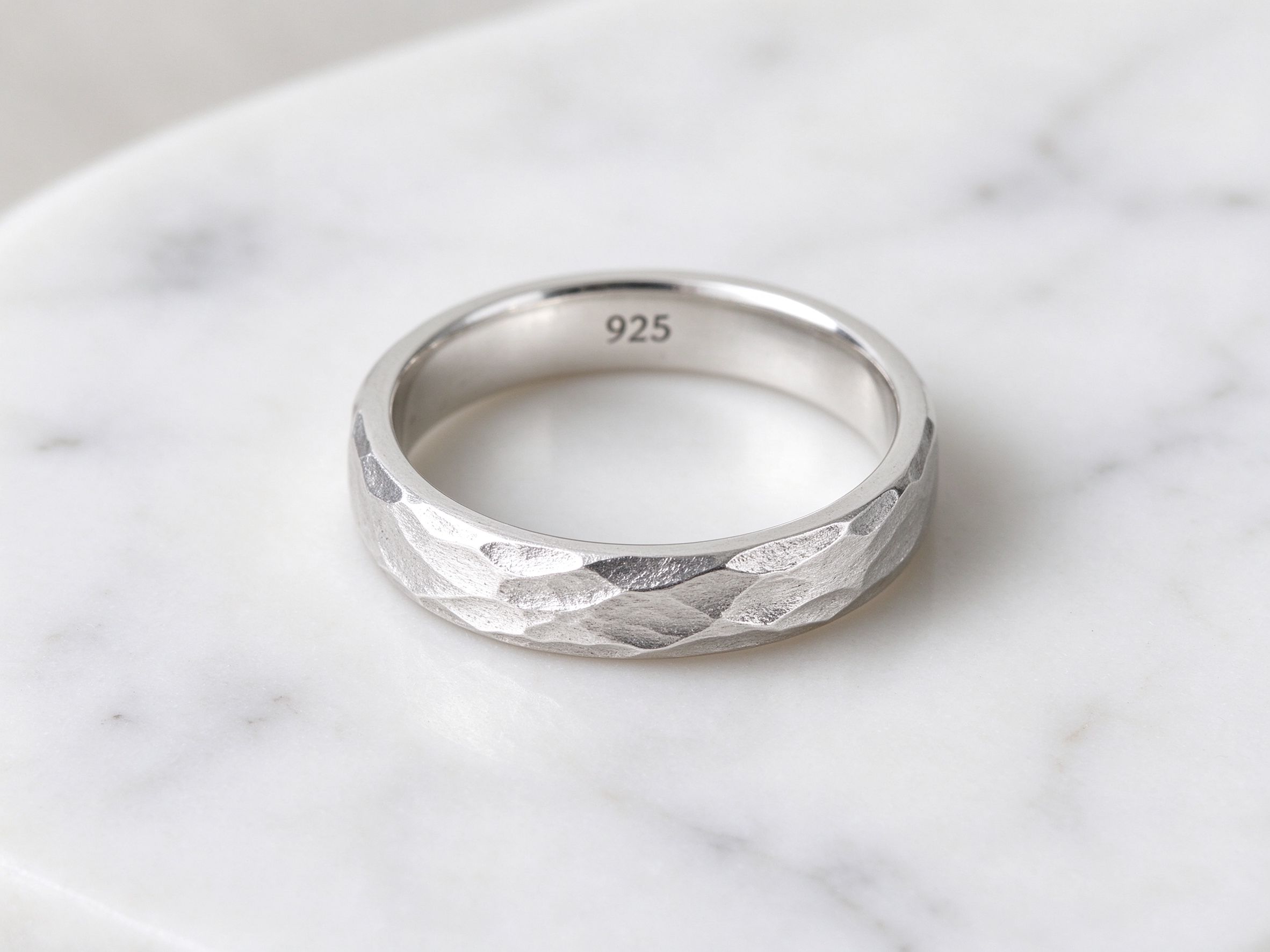
925 Silver vs 935, 900, and 800 Silver: When Purity Changes the Value
When most buyers talk about sterling silver, they mean 925, the standard that is stamped on the inside of nearly every silver ring, earring, and necklace sold in North America and East Asia. But sterling silver is not the only silver alloy in the global jewelry trade. European markets have their own standards, Russian and Scandinavian traditions use different purities, and some vintage and ethnic jewelry is made from 800 or 835 silver that is noticeably less pure than 925. If you are a brand sourcing silver for export, the purity number is not just a technical detail. It changes the color, the hardness, the price, the hallmark rules, and the customer expectation, and choosing the wrong purity for your target market is a fast way to confuse buyers or fail customs inspection.
This article walks through the common silver purity grades you will encounter as a wholesale buyer, what each one means, where it is used, and how it affects the value story you can tell your customer. We will look at fine silver, 999, the 925 standard that most of the world uses, the 935 grade that appears in some European and vintage pieces, the 900 coin silver that was common in the nineteenth century, and the 800 grade that is still used in parts of southern Europe and for antique-style jewelry. If you have ever seen a piece stamped 835 or 900 and wondered what it means, this guide is for you.
What the Purity Number Actually Means
A silver purity stamp is a parts-per-thousand measure of pure silver in the alloy. 925 means 925 parts of silver out of 1000, with the remaining 75 parts made up of copper, zinc, or other metals. 900 means 90 percent silver, 800 means 80 percent, and 999 means 99.9 percent, which is fine silver. The higher the number, the softer the metal and the closer it is to the bright white color of pure silver. The lower the number, the harder the metal and the more it takes on the color of the alloying metal, usually copper, which gives it a slightly warmer, greyer tone.
The purity number also sets the commodity value of the piece. A 925 piece that weighs 10 grams contains 9.25 grams of silver. A 900 piece of the same weight contains 9.0 grams, and an 800 piece contains 8.0 grams. The difference in melt value between 925 and 800 on a 10-gram piece is about 1.25 grams of silver, or roughly a dollar and a half at current prices. That difference sounds small, but it matters at wholesale volume, and it is the reason a factory can quote an 800 piece noticeably cheaper than a 925 piece of the same design.
The other thing the purity number changes is the hallmark requirement. In most countries, a piece below a certain purity cannot legally be stamped sterling or S925. Selling an 800 piece as sterling silver is fraud, and in the EU it can trigger a customs seizure. The stamp on your piece has to match the actual alloy, and the stamp has to match the market you are selling into. We will cover the regional standards in the next section.
The Regional Standards You Will Encounter
North America and most of East Asia use 925 as the default sterling standard. The S925 stamp is recognized by customers, customs, and retailers, and it is the purity we default to for export orders. If you are selling into the US, Canada, China, Japan, or Southeast Asia, 925 is the safe choice, and there is little reason to deviate from it.
European markets are more varied. The UK, Germany, and the Netherlands mostly use 925, but they also accept 935, which was a common standard in the early twentieth century and still appears in vintage and antique-style pieces. 935 is slightly purer than 925, a little softer, and has a brighter color. It is not cheaper than 925; if anything, it is slightly more expensive because it contains more silver. We can cast 935 on request, but most modern European brands use 925 because it is harder and wears better.
Southern Europe, particularly Italy, Spain, and Greece, has a tradition of 800 and 835 silver. These lower-purity alloys are harder, take a nicer antique patina, and are historically used for religious jewelry, filigree, and traditional regional pieces. An 835 crucifix made in Naples is not a cheaper version of a 925 crucifix; it is a different product with a different customer expectation. If you are selling into those markets, 800 or 835 can be a legitimate choice, but if you are selling into North America, an 800 piece will confuse customers who expect 925.
Russia and parts of Eastern Europe use 916 and 925 silver, with 916 being a traditional Soviet-era standard that is still recognized there. If your target market is Russia, you may need to cast to 916 to match local expectations, even though 925 is functionally very close. We can do that, but it is a niche requirement, and most export brands do not need to worry about it.
Why 925 Became the Global Standard
The 925 standard has a long history, dating back to medieval England, where the sterling pound was defined as a pound of 92.5 percent silver. The alloy was chosen because it was hard enough to make durable coins and cutlery, while still being mostly silver. Over centuries, the standard spread through the British Empire and became the default for silver tableware and jewelry in most of the world. By the twentieth century, 925 was the alloy customers recognized, and any deviation was seen as a cheaper product.
The 925 alloy hits a sweet spot. It is hard enough to hold a prong, durable enough for daily wear, and contains enough silver to have a recognizable silver color and a commodity floor. A purer alloy like 999 would be too soft for jewelry, bending under normal wear. A less pure alloy like 800 would be harder, but it would tarnish faster because the higher copper content oxidizes more, and it would have a noticeably duller color. 925 is the compromise that worked, and it is unlikely to change unless a new alloy is invented that is both harder and brighter.
For a brand, this means 925 is the default choice for a reason. It is the alloy customers expect, it is recognized by customs, and it has a known durability. Deviating from 925 to a lower purity is usually a cost-cutting move that customers will eventually notice, while moving to a higher purity like 935 or 999 is a premium move that only makes sense if your brand is positioned for it. Most of the brands we work with stay at 925, because it is the safest and most marketable choice.
How Purity Affects Color, Tarnish, and Durability
The color difference between 925 and 805 is subtle but real. 925 silver, especially when alloyed with copper, has a slightly warm grey color that most people recognize as sterling. An 800 piece has a darker, more grey tone, because the higher copper content oxidizes faster and gives the metal a brownish cast. A 935 piece is brighter and whiter, closer to fine silver. If you are selling a piece that will be rhodium plated, the color difference disappears under the plating, because the rhodium covers the silver entirely. If you are selling an unplated piece, the color difference is visible, and customers who know silver will notice.
Tarnish is the bigger difference. A higher copper content means faster tarnish. An 800 piece will darken in a humid climate faster than a 925 piece, because the copper in the alloy reacts with sulfur in the air. A 935 piece tarnishes more slowly than 925, because it has less copper. This is one reason unplated vintage European pieces that use 800 silver often have a dark, developed patina: the alloy tarnishes naturally, and the patina becomes part of the look. If you want a bright silver piece, 925 with rhodium plating is the standard answer.
Durability works in the opposite direction. Lower purity means harder metal. An 800 band will hold its shape better than a 925 band, because the higher copper content makes the alloy stiffer. A 999 fine silver band would bend easily in normal wear. For pieces that take a lot of punishment, like heavy men's rings or belt buckles, the harder alloy can be an advantage. For delicate pieces like thin engagement bands, the softer 925 is fine, because the customer is not going to bend it on purpose.
How Purity Affects Plating and Finishing
The choice of purity also changes how the piece responds to plating and finishing, and this is a practical point that most buyers never consider. A 925 piece takes rhodium plating reliably, because the copper in the alloy forms a clean surface under the plating bath. An 800 piece, with its higher copper content, can develop a slightly darker surface oxidation before plating, which has to be cleaned off more thoroughly. If the cleaning is skipped, the plating can look slightly greyer on an 800 piece than on a 925 piece, even though the rhodium layer is the same thickness. We have to adjust the pre-plating cleaning step when we run an 800 batch, which adds a small amount of labor.
Polishing behaves differently too. A 925 piece buffs to a high shine quickly on the wheel, because the copper alloy is soft enough to take a polish. An 800 piece is harder, so it takes a little more time on the buffing wheel to reach the same shine. A 935 piece is softer still, and it polishes faster than 925, but it scratches more easily after polishing. These differences are small, but they add up on a production run, and they are one reason a factory will quote a slightly different labor rate for different purities even when the design is identical.
For a brand that is used to 925, switching to 800 is not just a metal cost decision. It is a finishing process decision, because the piece has to be handled a little differently on the bench. We will tell you this up front when you ask for a non-standard purity, because we want the finished piece to look as good as the 925 version, even though the alloy is different.
How Customs and Hallmarking Rules Treat Different Purities
The legal rules for hallmarking vary by country, but the principle is consistent: the stamp on the piece must match the actual purity, and it must match the standard recognized in the destination market. In the US, there is no federal hallmarking law, but a piece stamped sterling must actually be 92.5 percent silver, and selling something stamped sterling that is not sterling is fraud under consumer protection laws. In the UK, there is an assay office system that requires silver pieces above a certain weight to be officially tested and hallmarked before they can be sold. In the EU, the nickel and hazardous substance rules apply regardless of purity, and the purity stamp has to be legible and accurate.
For export brands, the practical takeaway is that the stamp on your piece is a legal statement, not a decoration. If you are selling into markets that expect S925, every piece should be stamped S925 and actually be 925. If you are selling into a market that accepts 800, the piece should be stamped 800 and actually be 800. We stamp every piece by hand before it leaves the factory, and we log the stamp number against the melt number so we can trace it if there is ever a question. This traceability is part of the service, and it is what protects you if a customs broker or a customer asks for proof.
One common mistake we see is brands buying cheap 800 pieces and stamping them S925 to sell into the US market. This is short-term fraud with long-term consequences. A customer who takes the piece to a jeweler to be resized will have the metal tested, and the jeweler will tell them it is not sterling. The customer will complain, the brand will get negative reviews, and eventually a regulator or a customs broker will test a shipment and seize it. The savings on the metal are small compared to the risk, and we will not stamp a piece with a purity that does not match the alloy.
Can You Mix Purities in One Collection?
Some brands mix purities deliberately, using 925 for the main line and 800 for a vintage or antique-style sub-collection. This is legitimate, as long as every piece is stamped with its actual purity and the marketing does not mislead the customer. An 800 piece sold as part of an antique-style line can be a selling point, because the harder alloy holds filigree detail and develops a patina that customers associate with old silver. The same 800 piece sold as a modern sterling piece would be a problem, because customers expect 925.
For a factory, mixing purities means we have to keep the alloy streams separate, which adds cost and complexity. We cannot melt 800 scrap with 925 scrap, because the resulting alloy would be somewhere between the two, and we would not be able to stamp either purity honestly. If you want a mixed-purity collection, we will cast each alloy separately, sort the scrap separately, and track the hallmark for each. It is doable, but it adds a small setup cost, and it is only worth it if the sub-collection is a meaningful part of your line.
Common Questions About Silver Purity
Is 925 the same as sterling silver? Yes. Sterling silver is defined as 92.5 percent silver, and the S925 stamp is the hallmark for sterling. The two terms are interchangeable in most markets.
Is 800 silver cheaper than 925? Yes, because it contains less silver per gram. The price difference is roughly proportional to the silver content, so an 800 piece is about thirteen percent cheaper in metal cost than a 925 piece of the same weight. The labor cost is the same.
Can I sell an 800 piece as sterling silver? No. That is misrepresentation, and in most markets it is illegal. An 800 piece must be stamped 800 and sold as 800 silver, not as sterling. If you want to sell it as sterling, you have to cast it in 925.
Why is my old silver piece stamped 835? 835 was a common standard in parts of Europe, particularly Germany and the Netherlands, in the late nineteenth and early twentieth centuries. It is a legitimate vintage grade, and pieces stamped 835 are older silver, not fake. They are worth slightly less than 925 in melt value, but they have their own collector market.
Is fine silver, 999, good for jewelry? 999 is too soft for most jewelry, but it is used for beads, wire, and pieces that do not take stress. A 999 ring would bend in a month of normal wear. For jewelry, 925 is the practical floor.
Can I upgrade my 800 pieces to 925 without changing the design? Yes. The design, mold, and CAD are the same; only the alloy changes. We can cast the same piece in 800 or 925, and the finished piece will look almost identical, except for the color and the stamp. The price difference is the silver content, and the lead time is the same.
How do I know what purity my existing pieces are? Look for the stamp on the piece. It will usually say 925, 900, 800, or a similar number, often followed by a maker's mark. If the stamp is worn off, a jeweler can test the metal with a conductivity or XRF test in a few minutes.
How Purity Affects the Resale Story
The purity number also changes the resale value story you can tell your customer. A 925 piece has a recognizable melt value that any jeweler or pawn shop can calculate. An 800 piece has a lower melt value, and some dealers will not take it because they have to sort it separately from their standard sterling scrap. A 935 piece is worth slightly more than 925 in melt, because it contains more silver, but the difference is small enough that most customers will never notice. The resale story for a brand is strongest when the piece is stamped with a widely recognized grade, which is another reason 925 remains the default: customers know what it means, and they know they can sell it if they ever need to. This is also the reason we recommend against experimenting with exotic purities for a first collection, even if the metal cost looks attractive.
The Bottom Line
Silver purity is not a single number. It is a range of alloys, each with its own color, hardness, tarnish rate, and market tradition. 925 is the global default for good reason, and it is what we recommend for most export brands. 935 is a slightly purer European grade that works for premium or vintage-style pieces. 900 and 800 are harder alloys with a longer history in southern Europe, and they can be used deliberately for antique or ethnic lines, but they should never be sold as 925. The right purity for your collection depends on your target market, your brand position, and the customer expectation you are building, and we can help you choose it honestly.
If you are planning a silver line and want to discuss which purity fits your market, send us your target countries and your price point, and we will recommend the alloy and the stamp. Reach our team at service@holycome.com, and for more on how the silver composition affects your piece, read our guide to 925 sterling silver composition for buyers and our breakdown of 925 silver hallmarking and quality standards.