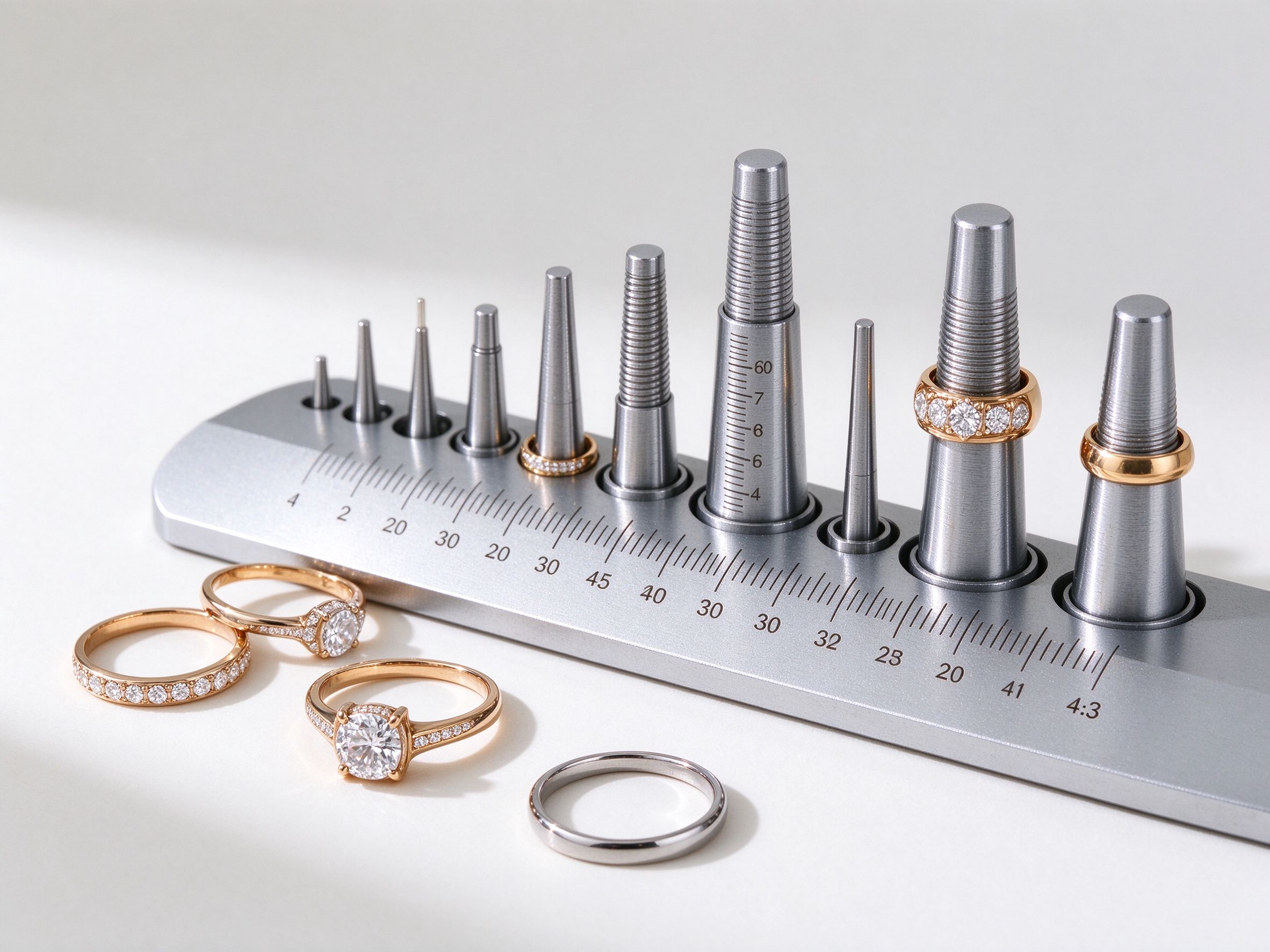
Ring resizing is routine, but it is not unlimited. A ring that fits a customer today may need to go up or down half a size, a full size, or more over years of wear. Knowing the limits helps buyers avoid designs that cannot be adjusted later.
Typical resizing range
A plain band can usually be resized up or down by about one to two sizes safely. Beyond that, the metal is stressed. Going up more than two sizes stretches the band thin and weakens it. Going down more than two sizes means cutting out a section and rejoining, which is doable but leaves a visible seam on some finishes.
Why smaller is safer
Making a ring smaller is generally easier and safer: the jeweler removes a small section of the band and solders it back together. Making it larger stretches or adds metal, which changes the band's proportions. If you expect a ring to need enlarging later, choose a design with a thicker band that has metal to spare.
Designs that cannot be resized
- Tungsten and ceramic rings. These are too hard to cut or stretch; they usually cannot be resized at all.
- Eternity bands with stones all around. Resizing disturbs the setting and risks loosening stones.
- Mixed-metal or inlay bands. Heating the ring can damage inlays and wood or resin.
- Flat comfort-fit bands that are very thin. They have little material to work with.
What happens during resizing
The jeweler cuts the band, adds or removes metal, solders the joint, then polishes and re-finishes the piece. Rhodium-plated rings often need re-plating afterward because the soldered area will show silver beneath. For moissanite rings, the stones are usually protected during heating, but very fragile settings may require removing the stone first.
Cost and timing
A basic resize costs modestly and takes a few days to a week. Designs that require re-plating or stone removal cost more. Ask whether the price includes the finishing step, because a resize that leaves a visible seam is not a good result.
FAQ
Can all silver rings be resized?
Most sterling silver bands can, unless they are eternity styles or contain inlays.
Does resizing weaken the ring?
Done once within the safe range, no. Repeated resizing weakens the band over time.
Should I buy slightly large to allow room?
No. A ring that spins is uncomfortable and risks falling off. Buy the closest size and adjust once.
Sizing choices affect long-term satisfaction. Read more in the Size Guide or start from the Knowledge library.
What resizing does to different metals
Not all metals resize equally. Sterling silver is soft and easy to work, so most silver bands resize smoothly. Gold resizes well, though white gold often needs re-rhodium plating after heating because the solder area shows. Platinum is more expensive to resize because it requires higher temperatures. Tungsten and carbon fiber cannot be resized at all and must be replaced. Before you buy a ring you may need to adjust, check whether the metal is resizable. A cheap tungsten band that cannot be resized is a poor choice if your size might change.
Eternity bands deserve special caution. Because stones run all the way around, resizing disturbs the setting and risks loosening stones. Many jewelers avoid resizing full eternity bands, or they can only go half a size. If you expect size changes, choose a half-eternity with a plain section at the bottom, which resizes cleanly.
Signs a ring needs resizing now
Do not wait until a ring falls off. A ring that spins freely on the finger is too large. A ring that leaves a deep indentation and feels numb after an hour is too small. If the band changes shape or the stone sits crooked, it may also need a round and prong check, not just a resize. Get it checked early; a small resize today prevents a lost stone tomorrow. Resizing is routine and inexpensive compared to replacing a lost center stone.
Bottom line
Most plain silver and gold bands resize safely by one to two sizes. Making a ring smaller is easier than making it larger. Tungsten, ceramic and full eternity bands cannot be resized. Buy within the safe range, order the closest size rather than guessing, and resize once rather than repeatedly. Done properly, a resize is cheap and quick; done beyond the limits, it weakens the band.
A worked example: a ring that no longer fits
A woman wore her silver band for years, then lost weight and found it spinning on her finger. She brought it to a jeweler, who removed a small section and resized it down by a full size. The cost was modest and the ring came back polished. Because the band was plain silver with no stones, the resize was simple and left no visible seam. The lesson is that resizing is normal maintenance, not a crisis. The mistake would have been continuing to wear a loose ring and risk losing it, or forcing a too-tight one and risking a bent band.
Planning ahead to avoid two resizes
If you expect your finger size to change, for example during pregnancy or a weight program, wait until your size stabilizes before resizing a favorite ring. In the meantime, use a temporary sizing bead or guard. Resizing a band twice within a year weakens it. Plan the resize for when your size has settled. Choose a resizable metal and a plain band for pieces you may adjust, and avoid non-resizable tungsten for fingers that are still changing.
Quick reference checklist
- Most silver and gold bands resize within one to two sizes.
- Sizing down is easier and safer than sizing up.
- Tungsten, ceramic and full eternity bands cannot be resized.
- Rhodium-plated rings usually need re-plating after a resize.
- Wait for your finger size to stabilize before resizing.
Resizing is routine, but it is not unlimited. Know the safe range before you buy, and choose a resizable metal if your size might change. Done once, within the limits, a resize is cheap and invisible. Done beyond the limits, it weakens the band. Plan ahead and you will avoid a second resize.