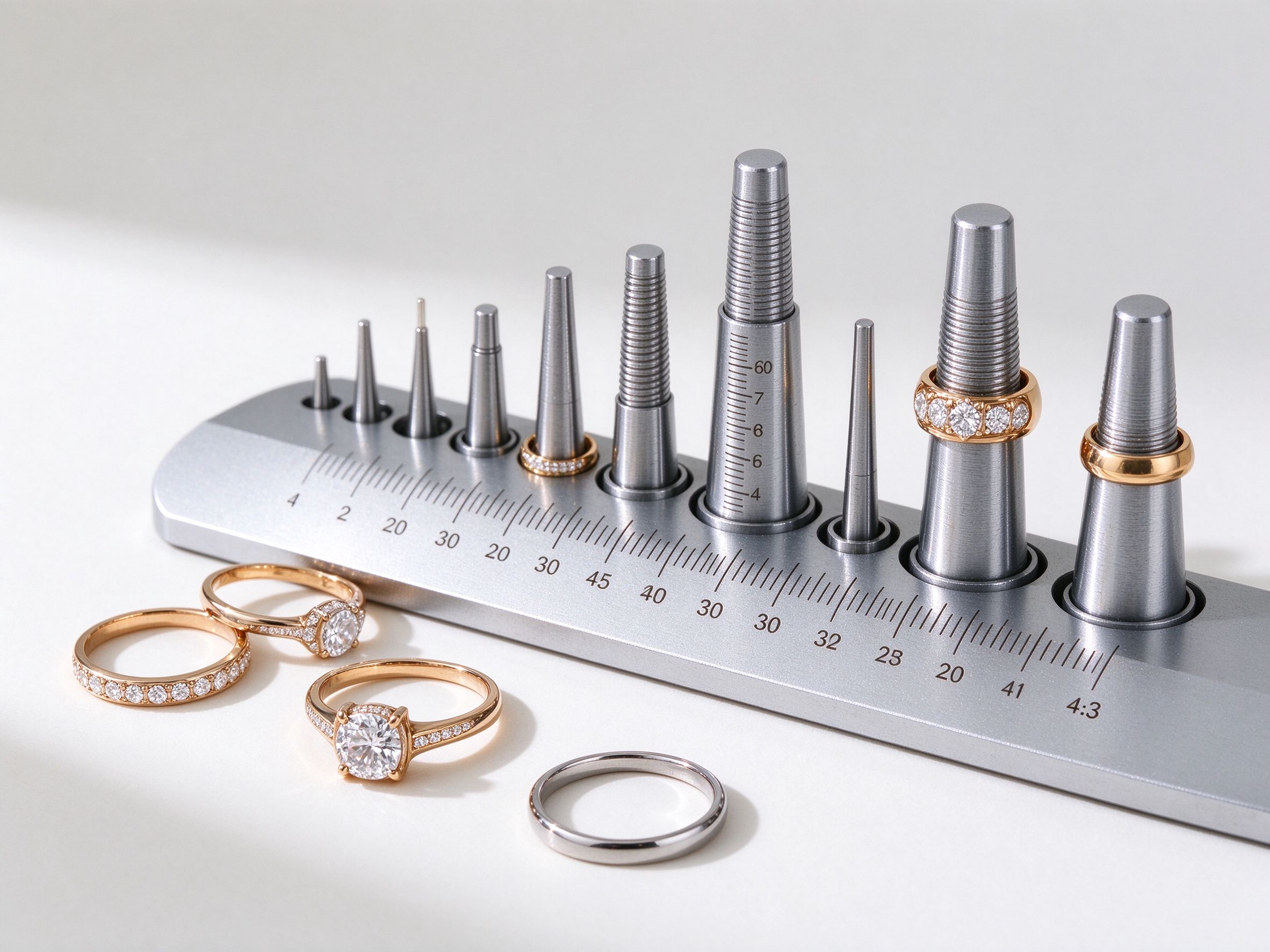
The easiest way to buy a ring without trying it on is to measure one that already fits. Most people have a ring that feels right, and using it as a reference is far more reliable than guessing from a finger measurement. This guide walks through doing it accurately at home.
What you need
- A ring that fits the intended finger and hand.
- A ruler with millimeters, or a printable ring size chart.
- A strip of paper or a flexible measuring tape as a backup.
- Good lighting to see the inner edge of the band.
The inside-diameter method
Take the well-fitting ring and measure the diameter of the inside, from inner edge to inner edge, across the center. Measure in millimeters. Compare that number to a ring size chart. For example, a 16.5 mm inner diameter is roughly a US size 6, while 17.3 mm is close to a size 7. The measurement must be across the opening, not around the outside.
Choose a ring worn on the same finger and the same hand, because the dominant hand is often half a size larger.

The paper-strip method
If you do not have a fitting ring, wrap a thin strip of paper around the base of the finger, mark where it overlaps, and measure the length in millimeters. That length is the circumference. Divide by pi (3.14) to get the diameter, then match it to a chart. This method is less accurate because fingers bulge and paper stretches.
Common mistakes
- Measuring the outside of the ring instead of the inside.
- Using a ring from the wrong hand or wrong finger.
- Measuring when the hands are cold, when fingers are at their smallest.
- Choosing a size too tight because you measured a swollen finger at the end of a hot day.
When to skip home measuring
If the ring has a wide band, the fit changes: wide bands feel tighter, so you may need a half size up. If you are between sizes, or if you have large knuckles, a jeweler's sizing set is worth the trip. For surprise proposals, borrow a ring from the jewelry box and accept that it may need a small resize.
FAQ
Can I measure my ring size with a string?
String stretches and bends, which makes it less accurate than paper or a flexible tape.
Do ring sizes differ between countries?
Yes. US, UK and EU sizing systems differ. Always confirm which system a seller uses.
Is it better to size up or down if I am between sizes?
For comfort rings, size up. For engagement rings that will sit flush with a wedding band, go with the snugger fit and let a jeweler adjust.
Getting the size right on the first try cuts down on resizing. See the Size Guide category or browse all guides.
Common measuring errors to avoid
Home measuring goes wrong in predictable ways. The most common error is measuring the outside diameter of the ring instead of the inside, which gives a result that is far too large. Measure the space inside the band, not the metal itself. The second error is using a ring from the wrong finger, because fingers differ in size. The third is measuring in a cold room, when fingers shrink, which leads to ordering a ring that feels tight by afternoon. Measure on a warm day, at the end of the afternoon, and use a ring from the exact finger you plan to wear.
Paper strips also stretch, so they overestimate size. If you rely on a strip, use a narrow piece of paper, not a stretchy ribbon, and mark it with a pen rather than wrapping it tight. For the most reliable home result, the inside-diameter method using a well-fitting ring beats the paper method every time.
When home measuring is not enough
There are moments when a jeweler is worth the visit. If you are between sizes and cannot decide, a sizing set settles it in minutes. If you have large knuckles, a jeweler can recommend sizing beads. If you are surprising someone and only have an old ring that may be from a different finger, accept that you may need a quick resize afterward. Ordering online with a slightly flexible return policy covers the rest. The goal is not a perfect number on paper; it is a ring that feels right when worn.
Bottom line
Measuring the inside diameter of a well-fitting ring is the most reliable home method. Measure across the inner edge on the correct finger and hand, in the afternoon when fingers are warm. If you are between sizes or have large knuckles, a quick trip to a jeweler is worth it. A ring bought with a careful measurement fits the first time and skips the hassle of resizing.
A worked example: ordering a surprise ring
A man wants to buy a ring for his partner but does not know her size. He borrows a ring from her jewelry box and measures its inner diameter at home. The measurement maps to a US size 6. He orders in that size, and the ring fits almost perfectly. The risk he took was that the borrowed ring might have been worn on a different finger, which would have been off by a size. To reduce that risk, he chose a ring with a flexible return policy. When it fit well, he kept it. The method worked because he measured the right reference ring and kept a safety net. If you try this, double-check which finger the ring usually sits on.
When to combine methods
For the most accurate result, combine two methods. Measure an existing ring, and also measure the finger with a paper strip on a warm afternoon. If both point to the same size, order confidently. If they disagree, trust the larger measurement slightly, because a ring that is a touch loose is more comfortable than one that is tight. When in doubt, choose a resizable silver or gold band, which lets a jeweler fine-tune the fit afterward.