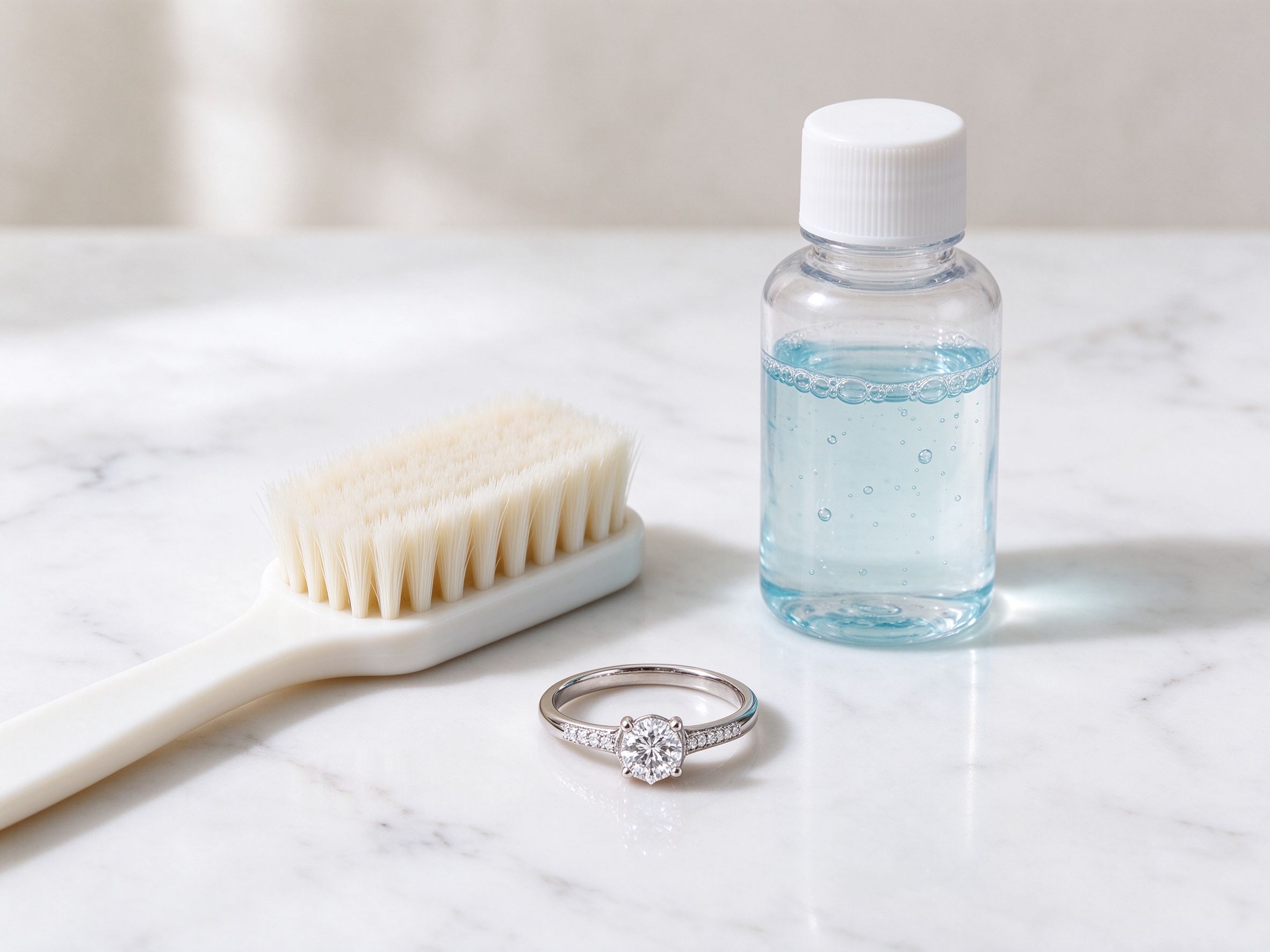
Moissanite Gym and Workout Care: How Exercise Stresses a Ring
Moissanite is one of the hardest gemstones you can set in a ring, which is exactly why so many people assume it is fine to leave it on at the gym. The stone itself will usually survive a workout completely untouched. The part of the ring that suffers during exercise is never the moissanite, it is the metal around it: the prongs, the shank, the solder joints, and the thin plating that gives the band its bright white finish. After more than a decade setting stones in our Wuzhou workshop, we have seen thousands of rings come back for repair, and a disproportionate share of the damage traces straight back to weight benches, kettlebells, and gym floors rather than to any accident at home.
This guide explains what actually happens to a moissanite ring during a workout, which sports are genuinely dangerous for a setting, how our factory stress-tests rings before they ship, and the simple routine that keeps a daily-wear ring secure through years of training. If you want the short version: leave the ring in a locker or a zipped pouch while you lift, push, pull, or grip anything heavy, wipe it down after sweaty sessions, and inspect the prongs once a month. Everything below is the reasoning behind those rules, written from the bench side of the factory wall.
Why the Gym Is the Harshest Room a Ring Enters
Most jewelry damage happens in tiny increments rather than in one dramatic fall. A ring worn while cooking, typing, or shopping meets soft surfaces, rounded edges, and low forces. A gym ring meets steel plates, rubber flooring, PVC piping, gym bag zippers, and other people's equipment, all handled by hands that are gripping, pulling, and pushing at maximum effort. The forces involved are not large enough to break the moissanite, but they are more than enough to bend a thin prong outward or to nick the soft silver and gold alloy of the shank.
Sweat adds a second problem. Perspiration is slightly salty and acidic, and it sits against the inside of the band for an hour or more during a long session. On its own, sweat will not harm moissanite, but it can accelerate tarnishing on sterling silver and it breaks down the thin layer of oils that normally protect plated metal. Combine sweat with chalk, magnesium carbonate, gym disinfectant sprays, and the occasional splash of water from a water bottle, and you have a cocktail that dulls a finish far faster than office wear ever would. Chalk deserves a special mention, because it is fine enough to settle under prongs and in pavé channels, where it dries into a gritty paste that scratches the metal if you slide a finger across it. Brushing it out is easy; leaving it for weeks is not.
The third factor is grip. When your hand closes around a barbell, dumbbell, kettlebell handle, or resistance band, the ring is pressed between your finger and the equipment. That pressure is concentrated on the top of the band and on any raised setting. Over hundreds of repetitions, the contact points wear down. A solitaire ring with a high setting is especially exposed, because the center stone sits proud of the finger and can catch on a knurled handle in a way that a flat band never would.
What Actually Fails During Exercise
When we receive a ring for repair after gym-related damage, the fault is almost always in one of three places. Knowing which part wears first helps you understand what to look for on your own ring.
Prong Micro-Bending
A prong does not usually snap. It bends a fraction of a millimeter outward, often from a single hard impact with a plate or a frame. That tiny bend is enough to let the stone rock in its seat. The owner does not feel it immediately, because the stone is still held by the other prongs, but over the next few weeks the rocking loosens the seat further until one day the stone turns or falls out during a shower. This is the single most common gym-related failure we see, and it is why we set stones with slightly heavier prongs on rings built for active lifestyles. You can read more about how we set and tension prongs on our factory prong-tightening standards article.
Band Dents and Plating Wear
The shank of a silver or gold band is soft compared with the equipment it meets. A single scrape against a loaded dumbbell handle leaves a visible dent or groove. These dents are not dangerous on their own, but they are sharp spots that catch on fabrics, and they break the polished finish. Rhodium plating wears through fastest on the high contact points, which during training are the outer edge of the band and the inside where it presses against the grip. A ring that gets daily gym use will need its plating refreshed sooner than an office ring, which is normal and cheap to fix.
The Stone Itself
Here the news is reassuring. Moissanite ranks at 9.25 on the Mohs hardness scale, well above almost everything you will encounter in a gym. It will not scratch from contact with metal plates, it will not dull from chalk, and it will not crack from the kinds of knocks a ring takes during a workout. A moissanite that looks dull after training is dirty, not damaged, and a quick wash restores it. We cover this in more detail when we compare moissanite durability against daily wear.
Sport by Sport: What the Ring Faces
Here is a quick reference for the risk level of common activities, based on the repairs we see across a year of production and service:
| Activity | Risk to setting | Advice |
|---|---|---|
| Weightlifting, deadlifts, rows | High | Remove before gripping bars |
| Boxing, martial arts, contact drills | High | Remove; impact injury risk |
| Swimming, chlorinated pools | Medium | Remove; chlorine and slipping |
| Tennis, squash, racket sports | Medium | Remove; hand impact |
| Running, cycling, rowing | Low | OK if comfortable; wipe after |
| Yoga, stretching, light pilates | Very low | Fine to wear |
Not every sport is equal. The risk comes from grip, impact, and abrasion, so the danger level tracks those three factors more than it tracks cardio intensity.
Weightlifting and Strength Training
This is the highest-risk category. Barbells, dumbbells, kettlebells, and cable handles all press the ring directly against hard metal. The knurling on bars is particularly harsh, because it can catch a prong or a pavé edge. The bench press, the overhead press, and deadlifts all put the ring under lateral pressure that it was never designed to resist. Our rule for strength work is simple: the ring comes off before the first set. Keep it in a small pouch in your gym bag, not loose in a pocket where it can scratch other things, and not on the bench where it can be knocked onto the floor.
Cardio, Running, and HIIT
Running, cycling, rowing, and high-intensity intervals are lower risk for the setting, because the hands are not gripping heavy loads. The main issues here are swelling and sweat. Fingers swell during a long run or a hot class, which can make a ring feel tight, and sweat builds a salty film that dulls the finish. A snug ring that you cannot remove easily during a workout is a minor safety risk on its own. If you prefer to train with your ring on during cardio, wipe it and your finger down afterward, and take it off the moment it feels tight.
Swimming and Water Sports
Swimming and water sports deserve a little more detail, because the danger is invisible. A wet finger shrinks slightly in cool water, which is why rings slip off so easily in pools and lakes. Combine that with chlorinated water weakening the alloy over months of exposure, and you have two reasons to leave the ring in the locker. Open-water swimmers and surfers should also remember that saltwater itself is not the enemy, but the grip of a wetsuit or a board leash can catch a pavé edge and tear stones out faster than any barbell. We treat pool and ocean work as jewelry-free zones.
For a broader look at which chemicals matter, see our guide to chemical exposure and your jewelry.
Racquet, Court, and Combat Sports
Tennis, squash, boxing, martial arts, and contact training all involve fast hand movements and the real chance of a direct impact to the hand. A stray ball, a punch to the glove, or a fall on an outstretched hand can bend a band or break a finger, and a ring on the hand in that moment turns a minor injury into a serious one. These sports are no-brainer remove-and-store activities. Most athletic trainers advise the same rule for safety, independent of jewelry care.
The Locker-Room Mistakes That Cost People Stones
The gym itself is only half the story. A surprising number of ring losses happen in the locker room, not on the floor. The classic sequence is familiar to every jeweler: a lifter removes the ring before training, sets it on the wooden bench or the edge of the sink, wraps it in a gym towel by mistake, and then dumps the towel into the laundry. Or the ring goes into a locker without a pouch, rattles against keys and change, and slides through a cracked vent in the bottom of the locker. We have handled insurance claims where a perfectly good ring was lost not because it broke, but because it had nowhere safe to sit.
The fix is cheaper than a new stone. Buy one small drawstring jewelry pouch, the kind that comes free with online orders, and keep it tucked in the pocket of your gym bag. The ring goes from finger to pouch to zipped pocket in one motion, and it never touches a bare surface. For retail buyers reading this, the same habit scales: including a free microfiber pouch with every activewear-style ring you sell is a small touch that prevents returns and builds trust. We supply these pouches in bulk with wholesale orders for exactly this reason.
A second locker-room mistake is forgetting the ring exists until you are halfway home. If you train with the ring off, build a single check: pouch zipped, bag closed, locker locked, in that order. It sounds paranoid, but it takes three seconds and it is the difference between a ring you keep and one you mourn. If you do leave a ring somewhere, tell the front desk immediately. Most gyms keep a lost-and-found box for thirty days or more, and a ring left on a bench is usually turned in within minutes.
How Our Factory Stress-Tests Rings Before They Ship
Because we manufacture moissanite jewelry rather than just reselling it, we build in a margin of safety before a ring leaves the workshop. Every ring that passes our production line goes through a sequence of checks that, in effect, simulate the early life of an active owner. We test prong tension by gently wiggling each stone with a wax stick under magnification, and we reject any stone that moves even slightly. We flex the shank slightly to make sure the solder joints are sound, and we run the finished piece through an ultrasonic and steam cycle that shakes loose any mounting dust or polishing compound. This is the same process we describe in our article on pre-shipment care at the factory.
That testing matters because it means a well-made moissanite ring starts its life with a secure setting, not a marginal one. A ring that has been properly tensioned in the workshop can tolerate far more incidental knocks before a prong gives way. But no amount of factory testing replaces good owner habits. We test to a safe baseline, not to a point where the ring survives being used as a bottle opener or a free weight.
We also grade the finish carefully. Rhodium plating is applied in a controlled bath, measured for thickness, and inspected under magnification so that the first few months of wear look even. If you buy a ring that arrives with a dull spot or a prong that already catches on fabric, that is a quality failure, and it should be returned. A properly finished ring should feel smooth, with no prong tips that snag on sweaters or towels.
The Gym-Day Care Routine
You do not need an elaborate system. The routine that protects a ring through a decade of training fits into the moment you arrive at the gym and the moment you leave it.
- Before strength or grip work, remove the ring and place it in a small fabric pouch inside your bag, never on a bench or on the floor.
- For cardio, leave it on only if it is comfortable and the session is short; wipe sweat off the band when you finish.
- After training, rinse the ring under warm water if it is covered in sweat and chalk, then dry it with a soft cloth. Sweat left to dry on silver speeds tarnish.
- Once a month, hold the ring and gently nudge the stone with a fingertip. It should not move at all. If it rocks, stop wearing it and have the prongs checked.
- Check the band for new dents or deep scratches once a quarter. Surface scuffs polish out; deep grooves in a thin band weaken it.
For the deeper clean that a sweaty band needs every few weeks, the warm soapy water method is enough, and you do not need special equipment. We walk through the home method in our guide to cleaning moissanite jewelry at home. The key is to brush under the prongs, because that is where chalk and sweat residue hide fastest during heavy training months.
What to Check After a Heavy Training Block
If you have just finished a competition training cycle, a hiking trip, or a season of a contact sport, give the ring a proper inspection before you settle back into daily wear. Look at each prong under a bright light. A bent prong often shows as a tiny gap where the metal no longer touches the stone. Run a fingernail across the prong tips. A sharp, catching tip means the prong has been pushed out of shape and needs to be retired back into place. Inspect the shank around the bottom for thinning, because repeated impact can wear a soft band thin over years.
If you find anything loose, the fix is fast and inexpensive. A jeweler can retip a bent prong in twenty minutes, and we offer the same service directly for pieces that came off our production line. The cost is trivial compared with losing a center stone. Never try to bend a prong back with pliers at home, because it is easy to snap the prong or chip the stone in the process. If the band has developed a deep groove, do not ignore it. A groove that cuts more than a quarter of the way through the shank is a fatigue crack waiting to happen, and it needs a jeweler to build the metal back up rather than a simple polish. For a ring you wear every day, especially through years of training, this kind of inspection once or twice a year is normal maintenance, not an extravagance.
It also helps to know what does not need action. Light surface scratches on the shank are expected on a well-loved ring, and they are part of the natural patina. A jeweler will gently repolish them out during a checkup, but repeated repolishing slowly thins the band, so we recommend polishing only when the scratches actually bother you, not on every visit.
Frequently Asked Questions
Can I wear my moissanite ring while lifting weights? We recommend taking it off for any exercise where you grip heavy equipment. The stone will survive, but the prongs and band take repeated pressure that gradually loosens the setting. A small pouch in your gym bag takes two seconds and prevents most damage.
Will sweat ruin my moissanite ring? No. Sweat does not harm the stone, but it can speed up silver tarnish and dull plating. A quick rinse and cloth dry after training keeps the finish bright between deeper cleans.
My ring feels tight during exercise. Is that a problem? Fingers naturally swell during cardio and in hot environments. If the ring feels tight, remove it. A ring that cannot slip off in an emergency is a circulation risk, and swollen skin makes sizing decisions unreliable.
Can moissanite chip if I drop a weight on my hand? Moissanite is tough, but no gemstone is unbreakable, and a direct crushing load from a heavy plate can damage either the stone or the setting. Treat the ring as removable safety equipment for heavy lifts rather than as a permanent fixture.
What kind of setting survives an active lifestyle best? A bezel or a low three- or four-prong setting with heavier shoulders catches less than a tall solitaire with a high basket. If you know you train, ask your maker for a low-profile setting and slightly thicker prongs. We build these routinely for active customers and for wholesale lines aimed at sporty demographics.
Build the Habit, Not the Anxiety
Caring for a moissanite ring during exercise does not mean wrapping your life in cotton. It means making one small decision at the start of a gym session: off, into the pouch, on again after the shower. That single habit removes the vast majority of the stress that training puts on a fine jewelry setting, and it takes less time than lacing your shoes. The moissanite itself will keep its fire for decades; your job is simply to protect the metal that holds it.
If you are ordering moissanite jewelry for yourself or for a retail line and you expect active, everyday wear, talk to us before you choose a setting. We build rings with heavier prongs, smoother shoulders, and more durable plating for clients who know their customers train, work with their hands, or live active lives. As a moissanite manufacturer based in Wuzhou, China, we set and inspect every stone ourselves, and we stand behind the pieces that leave our workshop. Reach our team at service@holycome.com for sizing, setting advice, or factory re-tipping and replating. For long-term storage between workouts, see our guide to keeping bulk and personal jewelry safe, and for everything else, browse the rest of our jewelry care articles.