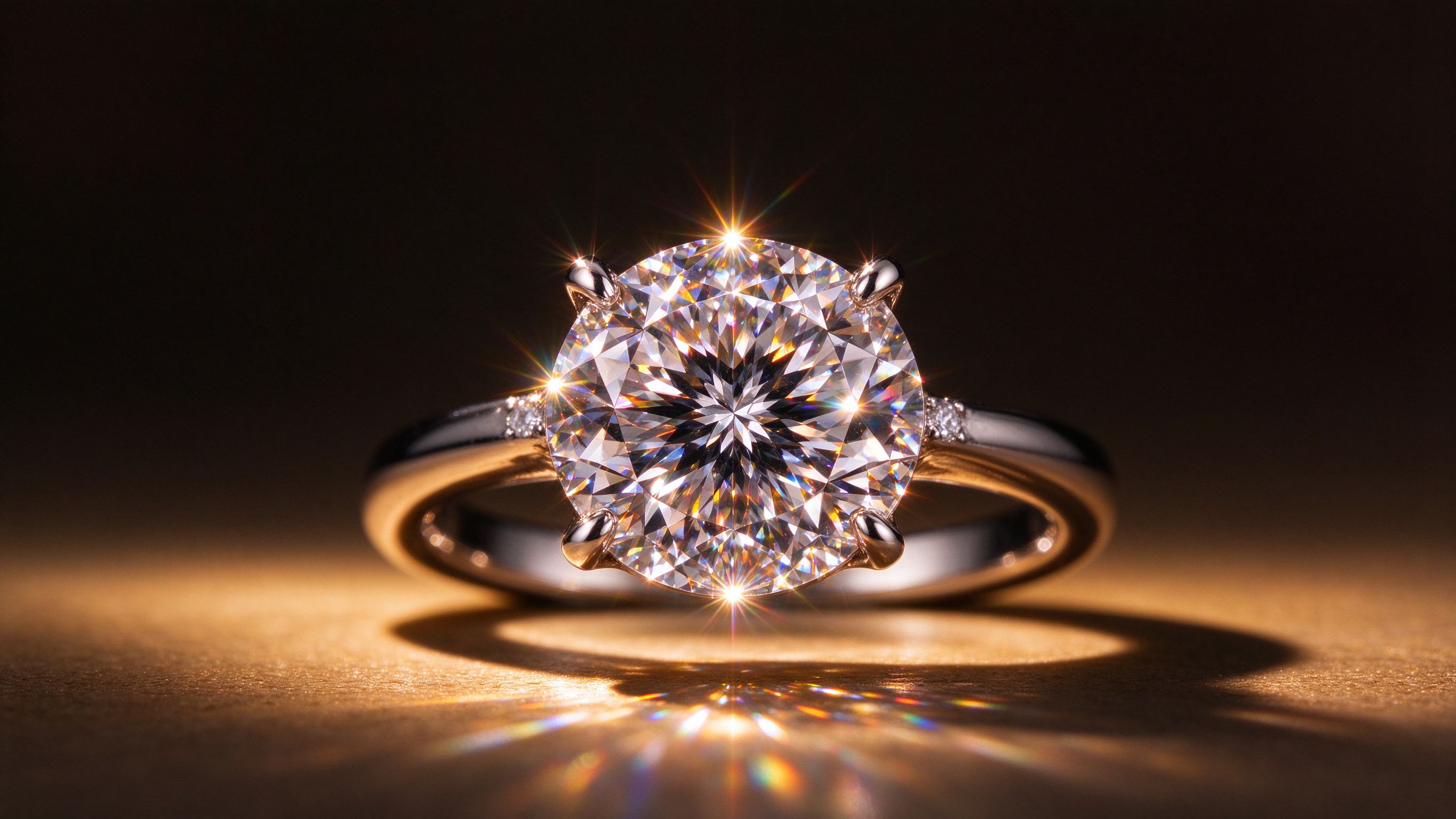
Lab grown diamonds have disrupted the diamond industry faster than anyone predicted. In 2024, lab grown diamonds accounted for 20% of all diamond engagement ring sales in the US, up from just 3% in 2018. For wholesale buyers, understanding this category is no longer optional — it's essential. In this guide, we'll explore how lab grown diamonds are made, how they compare to moissanite and natural diamonds, and how to position them for retail success.
How Lab Grown Diamonds Are Made
Lab grown diamonds are chemically, physically, and optically identical to mined diamonds — they ARE real diamonds, just created in a laboratory rather than extracted from the earth.
Two main production methods:
HPHT (High Pressure High Temperature): - Mimics the natural diamond formation process - Carbon is subjected to 1,300-1,600°C and 50,000+ atmospheres of pressure - Produces diamonds in 2-4 weeks - Can produce fancy colors (yellow, blue, pink) more easily - Lower equipment cost, higher energy consumption
CVD (Chemical Vapor Deposition): - Carbon-rich gas (methane + hydrogen) is ionized into plasma - Carbon atoms settle on a diamond seed, building up layer by layer - Lower temperature (~800-1,000°C), lower pressure - Produces diamonds in 4-8 weeks - Better for large, high-clarity stones - More common for jewelry-grade diamonds
Both methods produce genuine diamonds that test as diamond on electronic testers. The only way to distinguish lab grown from natural is through specialized gemological equipment that examines growth patterns and trace element inclusions.
Lab Grown Diamond vs Moissanite
This is the most common question from wholesale buyers. Both are lab-created, both are ethical, but they are different gemstones:
| Property | Lab Grown Diamond | Moissanite |
|---|---|---|
| Chemical composition | Carbon (C) | Silicon carbide (SiC) |
| Hardness | 10 Mohs | 9.25 Mohs |
| Refractive index | 2.42 | 2.65-2.69 |
| Dispersion (fire) | 0.044 | 0.104 |
| Diamond tester result | Tests as diamond | Tests as moissanite |
| Cost per carat (1ct) | $800-2,000 | $50-150 |
| Certification | IGI/GIA/GCAL | GRA |
| Brand perception | "Real diamond" | "Diamond alternative" |
Which to stock?
- Lab grown diamonds: For customers who want "real diamonds" at lower prices, engagement ring buyers, premium positioning
- Moissanite: For value-focused customers, fashion jewelry, higher volume, lower price points
- Both: Many successful retailers carry both, positioning lab grown as the premium option and moissanite as the value option
At Holycome, we primarily manufacture moissanite jewelry but can source lab grown diamonds for custom orders through our partner network.
Certification and Grading
Lab grown diamonds are certified by the same organizations that grade natural diamonds:
IGI (International Gemological Institute): The most common certifier for lab grown diamonds. Certificates include laser inscription, grade details, and origin statement ("Laboratory Grown").
GIA (Gemological Institute of America): Also certifies lab grown diamonds, with their standard 4Cs grading. GIA certificates carry premium brand recognition.
GCAL (Gem Certification & Assurance Lab): Offers certification with proprietary light performance analysis.
Key grading factors: - Color: D-Z scale, D-F = colorless (most desirable) - Clarity: Flawless to I3, VS-SI is eye-clean standard - Cut: Excellent to Poor, cut is the most important factor for brilliance - Carat: Weight, with price increasing exponentially per carat
Important: Lab grown diamond certificates must state "Laboratory Grown" or "Laboratory Created." It is illegal in many jurisdictions to sell lab grown diamonds without disclosure.
Pricing and Market Dynamics
Lab grown diamond pricing has dropped dramatically as production capacity increases:
| Year | Average 1ct lab grown (wholesale) |
|---|---|
| 2018 | $4,000 |
| 2020 | $2,000 |
| 2022 | $1,200 |
| 2024 | $800 |
| 2025 | $600-900 |
Price comparison (1ct, D color, VS clarity):
- Natural diamond: $5,000-8,000 wholesale
- Lab grown diamond: $600-900 wholesale
- Moissanite: $50-100 wholesale
Retail pricing strategy: Lab grown diamonds typically retail at 2-3x wholesale, offering strong margins while still being 50-70% cheaper than comparable natural diamonds.
Ethical and Environmental Advantages
The ethical case is the #1 reason customers choose lab grown diamonds:
Environmental: - No mining disruption (no open-pit mines, no habitat destruction) - 95% less water usage than mining - Lower carbon footprint (especially with renewable energy-powered labs) - No soil or water contamination from mining waste
Social: - No conflict diamond concerns - No child labor or unsafe mining conditions - Transparent supply chain - Fair labor practices in controlled laboratory environments
Marketing opportunity: 70% of millennials and Gen Z say ethical sourcing is important in their jewelry purchases. Lab grown diamonds allow you to market with confidence about origin and ethics.
Selling Lab Grown Diamonds
Positioning strategies:
1. Value proposition: "Same physical diamond, 60-80% less cost" 2. Ethical positioning: "Conflict-free, environmentally responsible" 3. Size for price: "Get a 2ct lab grown for the price of a 1ct natural" 4. Quality transparency: Include IGI/GIA certificates with every purchase
Common customer objections and responses: - "Is it a real diamond?" → Yes, chemically and physically identical. Only the origin differs. - "Will it hold value?" → Like most jewelry, lab grown is for enjoyment, not investment. The savings upfront outweigh resale considerations. - "Can people tell?" → No. Even jewelers need specialized equipment to distinguish lab grown from natural.
Display tips: - Label clearly as "Lab Created" or "Lab Grown" (required by FTC in US) - Display certificates alongside jewelry - Compare side-by-side with moissanite and natural diamond options - Educate staff on the science and benefits
FAQ
Do lab grown diamonds test as real diamonds?
Yes. Standard electronic diamond testers cannot distinguish lab grown from natural diamonds. Only specialized gemological labs can identify the origin.
How long do lab grown diamonds last?
Forever. They are physically identical to natural diamonds and will not degrade, cloud, or change over time.
Can lab grown diamonds be distinguished from natural?
Only by gemological laboratories using specialized equipment that examines growth patterns and trace impurities. To the naked eye, they are identical.
Should I disclose that a diamond is lab grown?
Yes. In the US, the FTC requires clear disclosure. In the EU, similar regulations apply. Ethical retailers always disclose origin.
Does Holycome sell lab grown diamond jewelry?
We primarily manufacture moissanite jewelry, but can source IGI-certified lab grown diamonds for custom OEM/ODM orders. Contact service@holycome.com for custom lab grown projects.
Conclusion
Lab grown diamonds represent a fundamental shift in the jewelry industry. For wholesale buyers, they offer an opportunity to serve a growing market of ethical, value-conscious consumers who want the beauty of diamonds without the environmental and social cost of mining. Whether you choose lab grown diamonds, moissanite, or both, Holycome Jewelry can help you build a compelling gemstone jewelry collection. Contact service@holycome.com to discuss your wholesale needs and custom design projects.