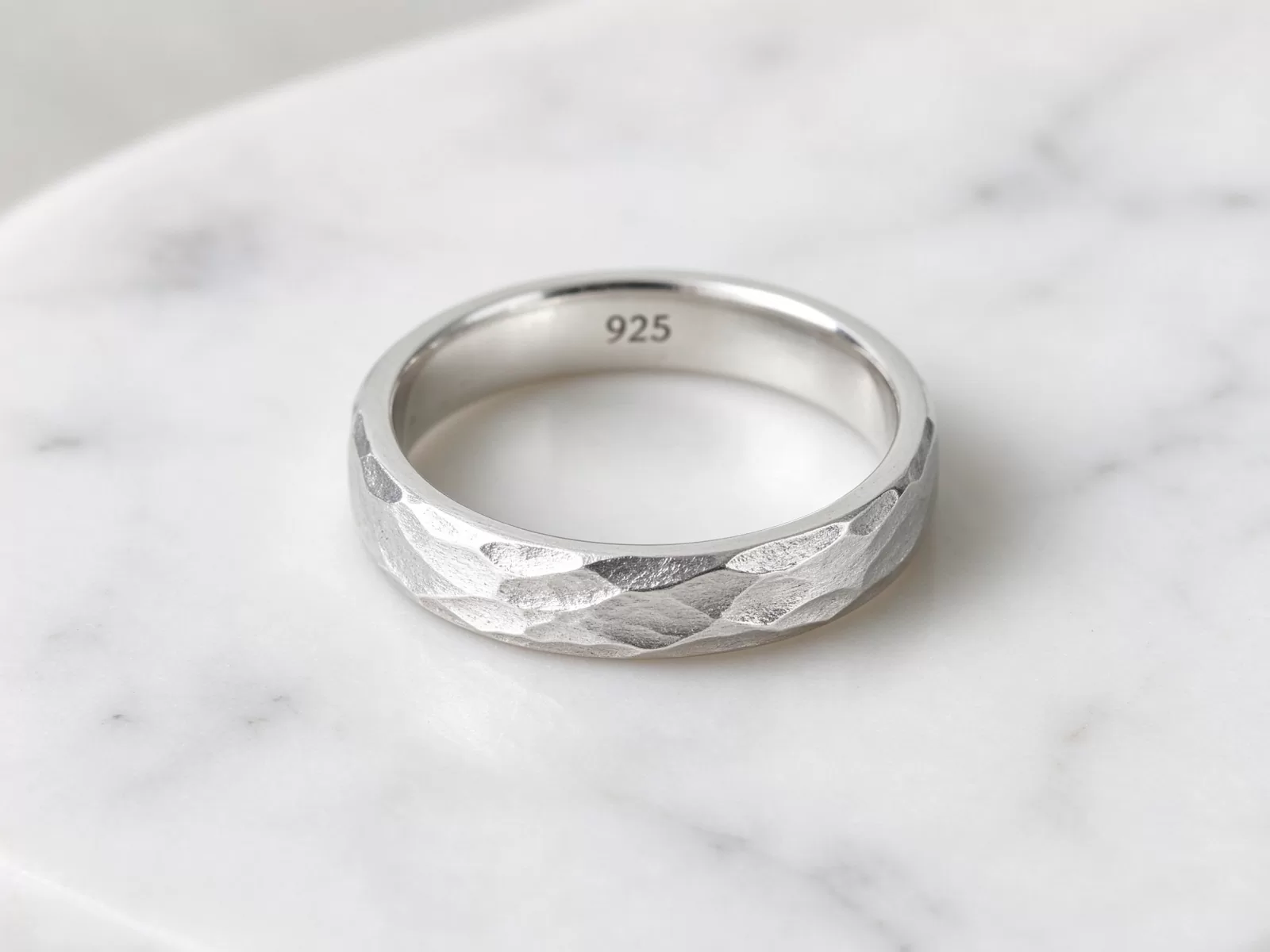
01Why I Judge Suppliers by Their Repair Bench, Not Their Catalog
Twelve years on the QC floor at a moissanite and silver factory means I have read more return forms than product brochures. Buyers ask me about silver purity, plating thickness, and stamp placement, and those matter. But the question that decides whether a wholesale program makes money is simpler: what comes back, and how soon?
This is the nineteenth piece in our series, so I am skipping the buying checklist. Instead I am pulling from our own return and repair logs across 925 sterling silver wholesale orders — rings, chains, earrings, pendants — and ranking failure points by how often they show up. If you are sourcing silver for the US or EU market, this is the order I would inspect in.
02Failure Point One: Spring Ring and Lobster Clasps
Clasps fail more than any other component we ship, and it is rarely the silver. The spring inside a cheap spring ring is steel or nickel brass, and it fatigues after a few hundred open-close cycles. A lobster clasp with a thin trigger wall deforms when a customer yanks a chain over their head.
In our logs, clasp failure clusters in the 60 to 120 day window after delivery — right when the buyer's return window is closing and the customer is annoyed. We switched stock chains to die-struck lobster clasps with a 0.9 mm trigger and a tested pull rating, and the repair rate on those SKUs dropped by roughly a third.
What to put in your PO
- Name the clasp type and wire gauge, not just "lobster clasp"
- Ask for a cycle test count (we run 500 open-close cycles on sampled lots)
- Require the clasp and jump rings to be the same silver alloy as the chain
- Specify solder grade — cadmium-free, matching alloy
Clasps fail more than any other component we ship, and it is rarely the silver. The spring inside a cheap spring ring is steel or nickel brass, and it fatigues after a few hundred open-close cycles. A lobster clasp with a thin trigger wall deforms when a customer yanks a chain over their head.
03Failure Point Two: Solder Joints and Jump Rings
The second most common repair ticket is a chain that separates at a jump ring or a pendant bail that snaps at the seam. Nine times out of ten the joint was starved of solder or the assembler used a lower-melting solder that sits as a visible grey line and cracks under flex.
This is where factory floor discipline shows. A trading company resells whatever the subcontractor sends; a factory that runs its own bench can control solder alloy, flux, and pickling time. Our in-process QC checks every joint on a 1-in-20 basis with a 3 kg static pull, and any lot with a visible seam goes back to the bench before it reaches pre-ship.
On our own lines, cost, speed and first-pass yield run about 20% better than typical trading companies — because the bench, the QC station and the shipping dock are in the same building, and a bad lot gets caught before it is boxed, not after it lands in your warehouse.
04Failure Point Three: Prongs and Stone Setting on Silver Pieces
When a 925 silver ring carries a moissanite or CZ, the stone usually outlives the setting. Thin prongs bend, a claw tips back, and the customer loses the stone. In our repair data, prong-related losses are the most expensive category because the replacement stone and the labor both land on someone's books.
We measure prong thickness at the tip and at the base separately. A 0.6 mm tip on a 4 mm stone is asking for trouble; 0.8 mm with a proper seat cut holds. On custom work we also check that the gallery is not so shallow that the pavilion touches the finger.
Prong and setting checks that prevent returns
- Minimum tip thickness specified in millimetres on the drawing
- Seat cut verified with a burr match, not hand-pushed
- Stone tightness tested with a brass probe before polishing
- Final setting inspection under 10x loupe at pre-ship AQL
05Failure Point Four: Tarnish and Plating Wear
Sterling tarnishes — that is chemistry, not a defect. What generates returns is uneven tarnish, black spotting inside a chain, or rhodium plating that wears through on the high points within weeks. Buyers who sell online get the complaint as "it turned my finger green," which is usually copper exposure after plating failure.
Three things drive it: insufficient tumbling and anti-tarnish passivation, plating thinner than 0.1 micron, and packaging that traps sulphur. We run a 72-hour humidity chamber test on sampled lots and ship with anti-tarnish strips. If a buyer specifies e-coating, we say plainly that it extends shelf life but changes the hand-feel.
06Failure Point Five: Sizing and Finish Defects
The least dramatic category, but the one that eats margin. Rings that size out of tolerance, earring posts that are not parallel, and polishing swirls on flat surfaces all come back as "not as described" rather than breakage. These are process defects, and they are the easiest to prevent with a proper AQL gate.
Our three-stage QC covers it: incoming stone check, in-process inspection at the bench, and a pre-ship AQL sample against your spec sheet. Anything outside tolerance is reworked before packing, which is why our DDP shipments usually clear without a claim.
07Repair Frequency by Component, From Our Own Logs
The table below is a rough share of repair and return tickets by component across silver orders in a recent twelve-month window. It is not a lab study — it is our bench, and it matches what most buyers report back to us.
| Component | Share of tickets | Typical trigger | Prevention |
|---|---|---|---|
| Clasps | About 30% | Spring fatigue, thin trigger | Die-struck clasps, cycle testing |
| Solder joints and jump rings | About 25% | Starved joint, wrong solder | Alloy-matched solder, pull test |
| Prongs and settings | About 20% | Thin tips, shallow seat | Specified tip thickness, burr match |
| Tarnish and plating | About 15% | Thin rhodium, sulphur packaging | Passivation, humidity test |
| Sizing and finish | About 10% | Tolerance drift, polish marks | Pre-ship AQL gate |
08How to Buy 925 Sterling Silver Wholesale So Fewer Pieces Come Back
Write the failure points into the purchase order. Clasp type and gauge, solder alloy, prong tip thickness, plating micron, and the AQL level you will accept — those five lines do more than any price negotiation. Ask your supplier which of these they test in-house; if the answer is vague, they are reselling.
On our side, stock items ship from 1 pc MOQ, custom runs start at 30 pcs, and production is 12 to 18 days. Payment is T/T with 30% deposit, or PayPal for samples. Every order ships with GRA and IGI certificates where stones are involved, and DDP delivery lands in 5 to 8 days to most US and EU addresses.
09Frequently Asked Questions
What is the minimum order for 925 sterling silver wholesale?
Stock designs start at 1 pc, so you can sample before committing. Custom designs, including your own clasp and prong spec, start at 30 pcs per style. Price is quoted per piece and depends on silver weight, stone grade, and plating, so a quote needs your target quantity and finish.
How long does production and delivery take?
Custom production runs 12 to 18 days after deposit and drawing approval. DDP delivery adds 5 to 8 days to most US and EU destinations. Stock orders usually leave the factory faster because they skip the tooling stage.
Who checks quality before shipping, and what certificates come with the order?
Our own QC team runs three gates: incoming stone check, in-process bench inspection, and a pre-ship AQL sample against your spec. Stones ship with GRA and IGI certificates. If you want to audit a lot yourself, we can hold shipment for a third-party inspection.
Send your spec sheet or a photo of the piece giving you trouble, and I will tell you which failure point it is likely to hit and what to change in the PO. Samples can go out this week — reach us at service@holycome.com or WhatsApp +86 133 7744 7107 for a quote.