01The Margin Argument Buyers Bring to the Table
Every few weeks a buyer sends me a retail screenshot and asks why our 925 sterling silver wholesale quote looks nothing like the shelf price. Usually the gap is three to four times, sometimes seven. They assume the factory is holding back.
It is not. The factory price and the retail price sit at opposite ends of a chain that includes freight, duty, a brand's photography budget, a returns allowance, and a storefront lease. Once you map that chain, the wholesale vs retail split stops being a mystery and starts being a negotiation tool.
This piece is about positioning and margin structure, not about how to spot a fake stamp. If you want hallmark basics, there are plenty of guides. What I want to hand you is the arithmetic of where your money actually sits.
02What the Stamp Does and Does Not Tell You About Price
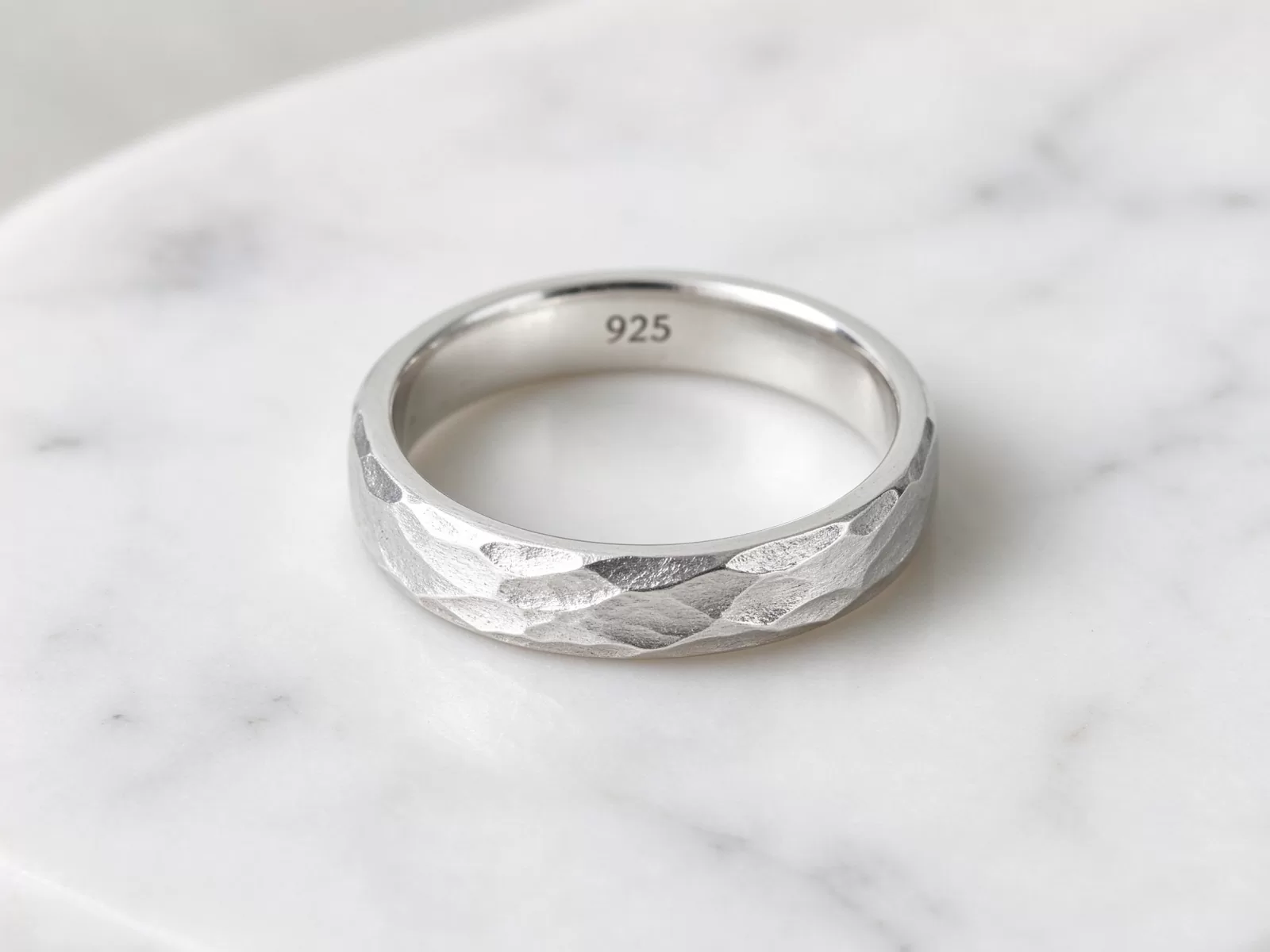
A 925 stamp means 92.5 percent silver by weight. That is it. It says nothing about the setting, the plating thickness, the stone grade, or the labor hours in the piece, and those four items move landed cost more than the silver itself on most lightweight jewelry.
Two rings both stamped 925 can differ by a factor of five at wholesale. One has a 0.8 micron rhodium layer and a machine-set cubic zirconia. The other has 2.5 micron plating, hand-set moissanite, and a reinforced prong seat that survives a drop test. The stamp is identical. The cost is not.
This is the first place retail buyers get misled. They benchmark on metal weight and assume everything above that is margin. In reality, most of the delta is process.
- Silver content: roughly 15 to 30 percent of a finished piece's factory cost at current spot levels
- Plating and finishing: 10 to 25 percent, and the biggest driver of return rates
- Stone cost: anywhere from 5 percent to 60 percent depending on grade
- Labor and QC: 15 to 25 percent on detailed settings
- Packaging and certificate: 3 to 8 percent
A 925 stamp means 92.5 percent silver by weight. That is it. It says nothing about the setting, the plating thickness, the stone grade, or the labor hours in the piece, and those four items move landed cost more than the silver itself on most lightweight jewelry.
03The Real Wholesale-to-Retail Margin Chain
Here is the structure I see most often with US and EU trade buyers who resell through their own storefront or marketplace listing. Numbers are illustrative, but the proportions hold across the category.
| Stage | Typical multiplier on factory cost | What it pays for |
|---|---|---|
| Factory FOB | 1.0x | Metal, stones, labor, QC, packaging |
| Landed cost | 1.15x to 1.35x | Freight, duty, insurance, FX spread |
| Wholesale / trade price | 1.8x to 2.4x | Buyer's overhead, marketing, returns reserve |
| Retail shelf price | 3.5x to 6x | Storefront, staff, brand, markdown cushion |
The step most buyers underestimate is landed cost. A 20 percent duty plus freight plus a weak currency swing can add a third to your unit cost before the product ever reaches a shelf. If you price retail off FOB instead of landed, you are already behind.
The second thing to notice is that the retail multiplier is not greed. A physical store carrying 60 percent of inventory in slow-moving sizes needs a 4x to 6x markup just to survive markdown season. An online-only seller with a tight SKU count can run 3x and still be healthy. Your positioning decision sets your multiplier, not the factory's quote.
04Why Position Determines Which Factory You Should Use
A brand selling at a 5x retail multiplier needs different things from a factory than a marketplace seller at 2.5x. The high-margin brand needs consistency, packaging, certificates, and low defect rates, because a return at that price point costs them a customer. The volume seller needs speed and a low unit price, and can absorb a slightly higher AQL.
We see both. Volume accounts usually start with our stock range, where MOQ is one piece per SKU and production runs 12 to 18 days on mixed orders. Custom programs start at 30 pieces per design and follow the same 12 to 18 day window once the sample is signed off.
Our cost, speed, and yield run roughly 20 percent better than typical trading companies on comparable specs. The reason is structural, not a discount gimmick: we cut and set in the same building that does the QC, so a plating failure gets caught at the in-process check instead of after a container lands in New Jersey. No third-party handoff, no re-inspection fee, no markup stacked on a markup.
05Where the Margin Actually Leaks
Margin does not usually disappear in the price negotiation. It leaks after the PO is signed, in four predictable places.
Plating failure and returns
A ring that tarnishes in three weeks costs you the refund, the shipping, and the review. On a 2.5x model, one return can wipe the profit on four units. Plating thickness is the single cheapest insurance you can buy, and it is the first thing cut-rate suppliers trim.
Stone grade drift
If your spec says D color VVS and the second shipment arrives one grade off, you cannot sell it at the same price. That is a silent 15 to 20 percent margin hit. Our three-stage QC covers an incoming stone check before setting, an in-process check after setting, and a pre-ship AQL sample, so grade drift gets caught before the carton closes.
Certificate gaps
Above a certain price point, buyers expect paperwork. We issue GRA certificates with the goods and can arrange IGI for higher-value moissanite and lab-grown diamond pieces. Missing paperwork forces a discount at resale, and that discount comes straight out of your margin.
Payment and cash flow
Standard terms are T/T with 30 percent deposit and balance before shipment. For samples, PayPal keeps it simple and fast. If your supplier wants 100 percent upfront, your cash conversion cycle suffers, and that is a real cost even though it never appears on an invoice.
Positioning is a cost decision before it is a marketing decision. Pick your retail multiplier first, then choose the factory spec, QC level, and payment terms that make that multiplier survivable.
06Delivery, Terms, and the Practical Details
DDP delivery to most US and EU addresses runs 5 to 8 days once goods ship. That matters for margin because fast replenishment lets you hold less inventory, and less inventory means less markdown risk. A buyer holding 40 percent less stock can often run a lower multiplier and still beat the store's net margin.
If you are comparing suppliers, ask each one for their AQL level, their plating thickness spec, and their stone certificate body. Those three answers separate a real factory from a reseller within about two emails.
You can send specs directly to service@holycome.com or message WhatsApp +86 133 7744 7107. Photos of a competitor's piece work fine as a starting brief.
07Frequently Asked Questions
What is the MOQ for 925 sterling silver wholesale orders?
Stock designs start at one piece per SKU, so you can test a range before committing. Custom designs begin at 30 pieces per style, which covers the tooling and plating setup cost.
How long does production take and how is price calculated?
Standard production is 12 to 18 days after sample approval, plus 5 to 8 days DDP transit. Pricing is quoted per piece based on metal weight, stone grade, plating thickness, and order quantity.
Do you provide certificates and what are the payment terms?
GRA certificates ship with moissanite goods, and IGI is available on request for higher-value pieces. Terms are 30 percent T/T deposit with balance before shipment, and PayPal is accepted for samples.
If you are working out a retail multiplier and want the factory side of the math, send us your target shelf price and the design reference. We will come back with a spec sheet, a per-piece quote at your volume, and a sample you can put in front of a buyer before you commit to a run.