01Why an audit beats a pretty catalog
Most buyers who get burned on 925 sterling silver wholesale orders do not get burned by a bad price. They get burned because nobody walked the floor. A catalog shows finished pieces under studio light. An audit shows you the scrap bin, the soldering bench, and the person who signs the assay paperwork.
I have spent twelve years on the QC side of a moissanite, lab-grown diamond and sterling silver factory. This is article 17 in our series, so instead of repeating general selection advice, I will walk you through the actual audit sequence: what to ask for, what to verify, and where suppliers usually stall.
Treat the audit as three layers. Paper first, because paper is cheap to fake and cheap to check. Then certificates, because those are issued by outside bodies. Then the facility, because a building tells you things a PDF never will.
02Layer one: the document pack to request before anything else
Ask for the full pack in one email. A serious supplier sends it within a day or two without excuses. A trader will send a business license and go quiet on the rest.
- Business license with the legal entity name matching the bank account and the invoice header
- Proof of metal sourcing: refiner invoices or alloy purchase records covering the last six months
- Nickel-release and lead-content test reports from a recognized lab, less than twelve months old
- Written alloy spec: which copper and zinc ratios go into the 925 mix, and whether any plating is applied
- Sample of the actual stamp used on the piece, with a photo of the stamp head
- Warranty and rework policy in writing, including who pays return freight
Check that the entity name on the license is the same one that appears on the proforma invoice. Mismatches are the single most common red flag I see from buyers forwarding me paperwork before they place a 925 sterling silver wholesale order.
Ask for the full pack in one email. A serious supplier sends it within a day or two without excuses. A trader will send a business license and go quiet on the rest.
03Layer two: reading a 925 stamp and assay certificate correctly
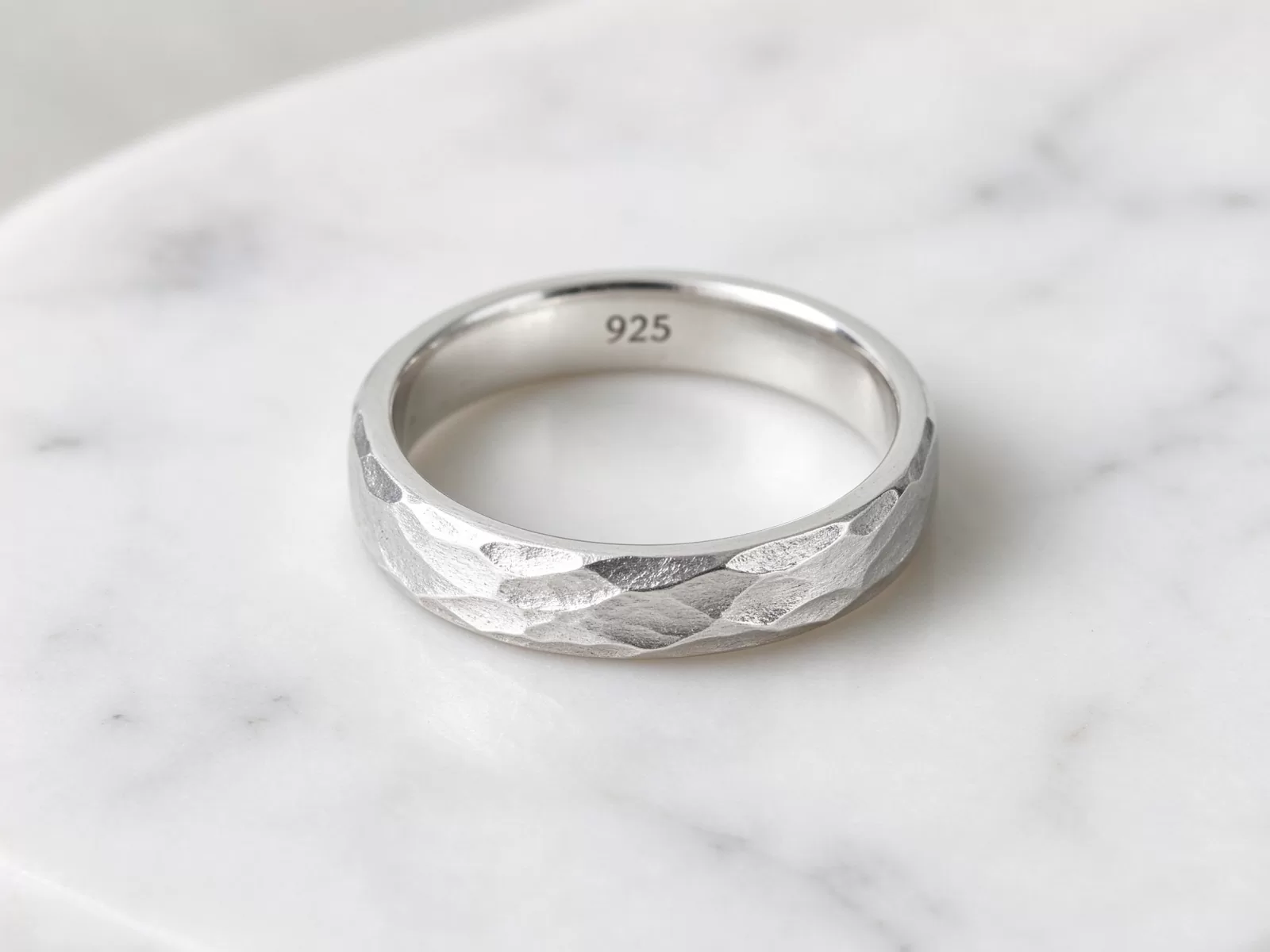
A 925 stamp is a claim, not a proof. The number means 92.5 percent fine silver by weight, with the balance usually copper. Anyone with a laser marker can put 925 on a brass ring.
What backs the stamp is an assay. For silver, look for a third-party assay report or an XRF reading taken on the finished, polished piece, not on raw shot. Ask for the XRF file with the reading date and the operator name. A tolerance band of roughly 92.0 to 93.5 percent is normal on cast sterling; anything drifting below 92.0 deserves a conversation.
Hallmark conventions by market
The US accepts a fineness mark plus a maker's mark. The EU and UK markets expect a fineness mark plus an assay office hallmark or an equivalent registered maker's mark, and some countries require an importer responsibility mark. If you sell into both regions, confirm the supplier can strike different marks per destination rather than one universal stamp.
If a supplier cannot show you the stamp head and the assay report side by side, the 925 mark on their goods is decoration.
04Layer three: the facility walk-through that actually reveals problems
On-site or by live video, ask to see five specific areas in sequence. Do not let the supplier pick the route. Random routing is where audits earn their money.
- Incoming metal and stone intake, with the weighing log open on the bench
- Wax or CAD output and the casting tree, so you can see fill quality and porosity
- Polishing and tumbling area, where thin plating and solder seams show up
- Final inspection table with the AQL chart and reject bin visible
- Packing and dispatch area, where finished goods wait for DDP pickup
Ask to open the reject bin. A factory with no rejects is not a clean factory, it is a factory hiding scrap or reworking quietly. Ask how rework is logged and whether rejected units are scrapped, refined, or resold. The answer tells you whether your order will absorb somebody else's seconds.
During the walk-through, count people at the benches. A supplier claiming 200 staff with 14 visible workers is a trading office with a photo studio.
05Certificates: what GRA and IGI cover, and what they do not
For the stone side of a mixed order, GRA cards accompany individual moissanite stones, and IGI reports cover lab-grown diamonds with grading detail. Neither document certifies the silver. Buyers regularly confuse the two and accept a stone certificate as proof of metal quality.
Keep them separate in your audit file. Stone certificate per parcel, metal assay per production lot, and a hallmark photo per SKU. When a dispute arises, the buyer who has all three layers documented wins the conversation in about ten minutes.
06Audit scoring sheet
Score each line 0 to 2, where 0 means missing, 1 means partial, and 2 means complete and verifiable. Below 14 out of 20, do not place a bulk order. Order samples only.
| Check | Evidence required | Weight | Pass mark |
|---|---|---|---|
| Legal entity match | License, invoice, bank name aligned | 4 | All three identical |
| Metal assay | XRF on finished goods, dated | 4 | 92.0 percent or above |
| Stone certificates | GRA or IGI per parcel | 3 | Matches goods received |
| Facility walk-through | Live video or visit, five zones | 5 | All zones shown |
| QC records | AQL chart, reject log | 4 | Logs current |
07How our own line runs, so you can compare
We run a three-stage QC: incoming stone check against the certificate weight and dimensions, in-process inspection after setting and before polishing, and a pre-ship AQL sample pull on the finished lot. Stock items ship from 1 pc minimum, custom designs from 30 pcs, with 12 to 18 days production.
Payment is T/T with 30 percent deposit, or PayPal for sample orders. Delivery is DDP, typically 5 to 8 days in transit. Our cost, speed and yield run roughly 20 percent better than typical trading companies for one structural reason: the casting, setting, polishing and QC all sit under one roof, so nothing waits in a queue at a subcontractor and nothing gets re-shipped twice.
You can reach the floor directly on WhatsApp at +86 133 7744 7107 or by email at service@holycome.com. Ask for the document pack and a live walk-through before you commit to a 925 sterling silver wholesale program.
08Frequently Asked Questions
What is the minimum order for a 925 sterling silver wholesale audit order?
Stock designs start at 1 pc, so you can audit with a small sample parcel before scaling. Custom designs carry a 30 pc minimum per style, and samples are typically paid by PayPal.
How long does production take after the audit clears?
Standard production runs 12 to 18 days from deposit confirmation, with DDP transit of about 5 to 8 days. Custom tooling adds time before the run starts, and we quote that separately.
How is price calculated on a 925 sterling silver wholesale order?
Price is built on silver weight at the day's metal rate plus stone grade plus labor, quoted per piece at the agreed quantity break. Certificates are included per parcel, and DDP freight is quoted as a separate line.
Send us your SKU list, target quantity and destination market, and we will return a quote with the full document pack, assay report and a walk-through slot on the same reply. If you want to test us first, request a sample parcel and put our three-stage QC against your own checklist.