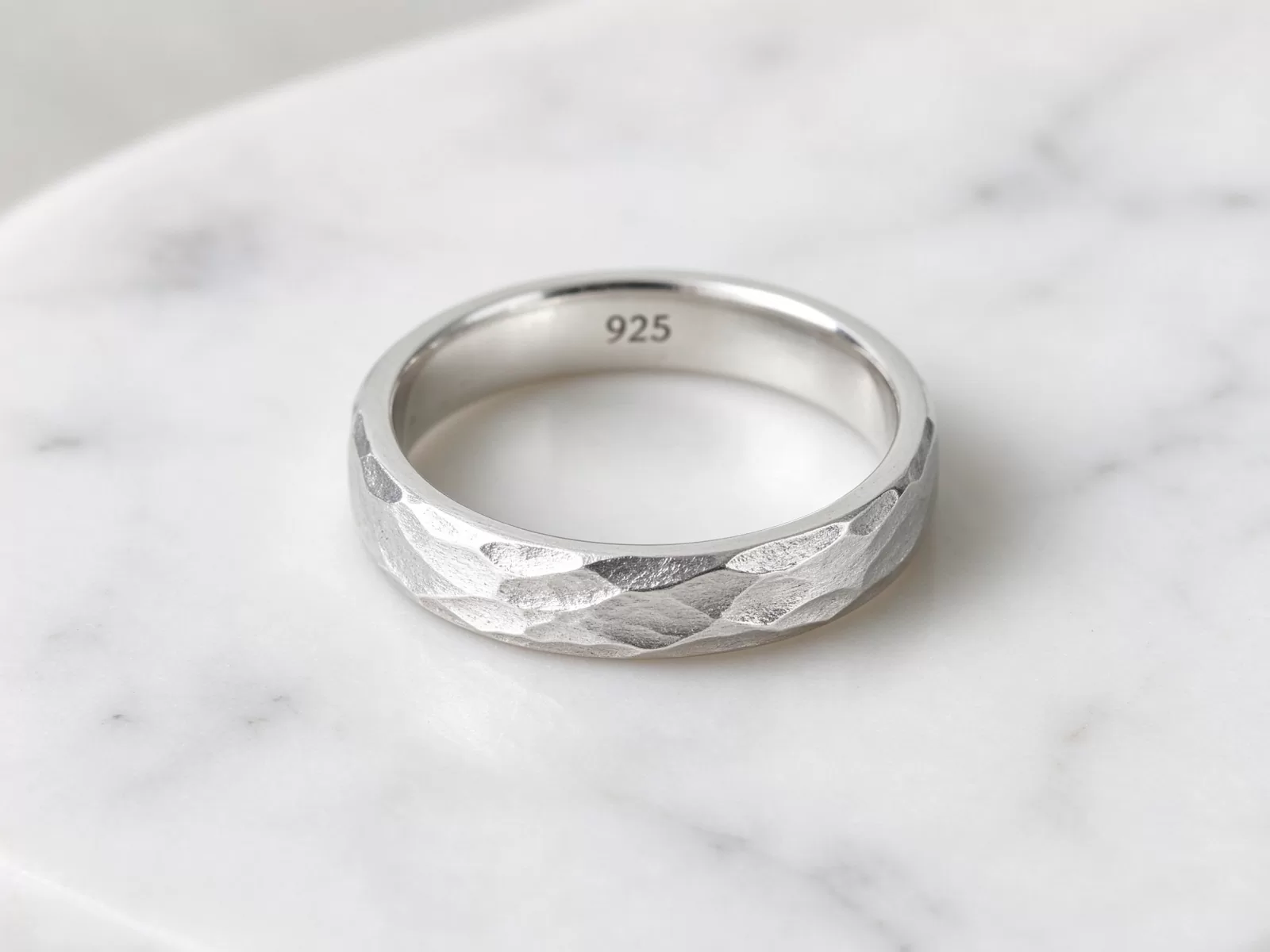
01Twenty articles in, here is the one nobody asks for
This is the last piece in this series, so I want to spend it on the question buyers only ask after a season of returns: what breaks first. Not what looks best in a catalog photo. Not which plating sounds premium. What physically fails on a 925 sterling silver wholesale program once real customers wear it for six months.
I have spent twelve years on the QC floor, and the repair bin is a better teacher than any trend report. Below is what comes back, in rough order of frequency, with the fix attached to each one.
02Failure one: the jump ring, not the chain
Chains get blamed for everything. In our return logs, the weak point is almost always the jump ring or the clasp spring, especially on pendants under 2 grams. A ring that is not soldered closed will open under a purse strap or a coat collar, and the pendant is gone.
The fix is cheap and boring: specify soldered jump rings on anything above a 1.5 mm wire diameter, and ask for a lobster clasp rated at twice the piece weight. If a supplier cannot tell you the clasp rating, they have not tested it.
Why this shows up in wholesale specifically
Retail brands usually buy one style in depth and learn its failure mode. Wholesale buyers spread across 40 to 80 SKUs, so a single weak clasp design contaminates the whole assortment. Ask for the same clasp family across a collection and the return rate drops across the board.
Chains get blamed for everything. In our return logs, the weak point is almost always the jump ring or the clasp spring, especially on pendants under 2 grams. A ring that is not soldered closed will open under a purse strap or a coat collar, and the pendant is gone.
03Failure two: plating wear at contact points
Rhodium and gold plating do not fail evenly. They fail first at the highest-friction points: the inner curve of a ring band, the top edge of a pendant bail, the ear wire where it meets the post. That is why a customer reports a piece "turning" after eight weeks while the flat face still looks new.
Two specs move the needle. First, plating thickness, and second, a palladium or nickel strike layer under the finish. Without a strike layer, the plating bonds to silver directly and lifts as a sheet rather than wearing thin.
04Failure three: prongs on small stones
Small melee settings fail more than center stones. A 1.5 mm stone set in four thin prongs can lose a prong to a sweater sleeve, and once one prong lifts, the stone is loose. Our incoming stone check catches bad lots, but it cannot catch a prong that was never thick enough.
For 925 sterling silver wholesale programs aimed at daily wear, we push for a minimum prong tip of 0.5 mm on stones under 2 mm, or a bead and channel setting instead of claws. It reads slightly heavier in the hand and lasts years longer.
| Failure point | Typical time to return | Usual cause | Spec fix | Cost impact |
|---|---|---|---|---|
| Jump ring or clasp | 4 to 12 weeks | Unsoldered ring, weak spring | Soldered ring, rated clasp | Low |
| Plating at contact points | 8 to 20 weeks | Thin plate, no strike layer | Strike layer plus thicker plate | Low to medium |
| Prongs under 2 mm stones | 6 to 16 weeks | Undersized prong tips | Thicker tips or bead setting | Medium |
| Ear post bend | 2 to 10 weeks | Soft temper wire | Hardened 925 wire | Low |
| Chain link stretch | 12 to 30 weeks | Hollow or thin cable links | Solid link, higher gauge | Medium |
05Failure four: ear posts that bend and snap
Earrings come back more than any other category, and the post is usually the reason. Soft sterling wire bends in a jewelry box, then work-hardens at the bend and snaps. The customer does not report a manufacturing fault; they report a broken earring.
We specify hardened 925 wire for posts and a butterfly with a proper friction fit rather than a loose one. It costs a few cents per pair and removes a whole return category.
Every repair ticket is a spec that was left open. The buyer who writes the clasp rating and prong tip into the purchase order gets fewer of them than the buyer who negotiates the unit price.
06Failure five: tarnish blamed on the metal
Most "tarnish" complaints are surface sulfur reaction, not a purity problem. Sterling silver at 92.5 percent will darken in a humid drawer or against wool and rubber. That is chemistry, not a bad alloy.
What a factory can control is the anti-tarnish finish and the packaging. We use an anti-tarnish dip plus a sulfur-absorbing pouch, and we ship with a care card that names the real culprits: perfume, chlorine, and rubber bands. Buyers who include the card see fewer complaints even when the tarnish is identical.
07Where our numbers land, and why
Because we run the stones, the casting, and the final QC under one roof, our cost, speed, and first-pass yield run roughly 20 percent better than a typical trading company quoting the same spec. The reason is not magic: no middle margin, no second factory reworking our order, and defects caught at the in-process stage instead of at the port.
Practical terms for a 925 sterling silver wholesale program: MOQ is 1 piece on stock styles and 30 pieces for custom. Production runs 12 to 18 days. QC is three stages, covering incoming stone check, in-process inspection, and pre-ship AQL sampling. Certificates come from GRA and IGI. Payment is T/T with 30 percent deposit, and PayPal works for samples. DDP delivery lands in 5 to 8 days.
What we ask you to send with an inquiry
- Target retail price band, so we can propose a viable metal weight
- Wear context, daily or occasional, which drives prong and clasp specs
- Plating color and expected thickness in microns
- Whether stones need GRA or IGI documentation
- Packaging and anti-tarnish requirements
08Frequently Asked Questions
What is the MOQ for a 925 sterling silver wholesale order?
Stock designs start at 1 piece, so you can sample before committing. Custom designs, including your own CAD and stone layout, start at 30 pieces per style. Lead time for custom runs is 12 to 18 days after deposit and CAD approval.
How is pricing calculated on sterling silver pieces?
Price is built from silver weight at the current spot rate, plus stone cost, plating thickness, and labor. Because we cast and set in-house, quotes usually come in around 20 percent under trading-company pricing for the same specification.
Do you provide certificates with wholesale orders?
Yes. GRA certificates ship with moissanite, and IGI reports are available for lab-grown diamond goods on request. Every order passes a three-stage QC process ending in pre-ship AQL sampling before DDP dispatch.
Send your spec sheet, target price, and a reference photo to service@holycome.com or message WhatsApp +86 133 7744 7107, and we will return a quote with metal weight and plating thickness broken out, plus sample availability on stock styles.