01Why the first hour with a wholesale lot decides everything
Most buyers I deal with inspect silver the way they inspect a photo: look at it, nod, put it in the case. Then three weeks later the clasp fails or the plating on a pendant bubbles. By then the lot is mixed into stock and nobody can prove which shipment it came from.
Incoming QC is not a formality. It is the cheapest hour you will ever spend on a 925 sterling silver wholesale order, because every defect you catch before the goods hit your shelf is a defect you never refund, reship, or explain to a customer. Below is the checklist I would hand a buyer who has a box, a scale, and 60 minutes.
One thing before you start: this is written for a shipment that already landed. If you want the same discipline applied at the source, our three-stage QC runs incoming stone check, in-process inspection, and pre-ship AQL sampling before anything leaves the floor.
02Minutes 0 to 5: paperwork and lot identity
Do not open a single poly bag until the paperwork matches. Photograph the carton label, the packing list, and the invoice side by side. If the lot number on the packing list does not appear on the inner boxes, stop and email your supplier before you break seals, because a mismatch is the number one reason a claim gets argued later.
- Packing list line count versus physical box count
- SKU codes on inner labels matching the purchase order
- Certificate pack present: GRA cards for moissanite, IGI reports for lab-grown diamond pieces
- Metal stamp visible on the outer tag: 925, S925, or STERLING
- Shipping terms noted, so you know who owns damage in transit
On a properly documented 925 sterling silver wholesale order, this step takes four minutes. If it takes twenty, your supplier's packing discipline is already telling you something.
Do not open a single poly bag until the paperwork matches. Photograph the carton label, the packing list, and the invoice side by side. If the lot number on the packing list does not appear on the inner boxes, stop and email your supplier before you break seals, because a mismatch is the number one reason a claim gets argued later.
03Minutes 5 to 15: count, weigh, and reconcile
Count by SKU, not by total. A short count on one SKU is easy to miss when the overall number is right. Then weigh a random 10-piece sample per SKU on a 0.01 g scale and compare against the weight tolerance your supplier quoted.
Silver weight drift is the quiet defect. A ring that comes in 0.4 g light is not obviously wrong in the hand, but multiplied across 300 pieces it is real money, and it usually means the casting house thinned a band to hit a price.
| Check | Sample size | Pass limit | Action if failed |
|---|---|---|---|
| Piece count per SKU | 100% | Zero shortage | Claim before unpacking further |
| Unit weight | 10 pcs per SKU | Within +/-3% of spec | Weigh 30 more, then escalate |
| Stamp legibility | 20 pcs per SKU | 95% clean read | Photograph and report |
| Stone setting security | 20 pcs per SKU | Zero loose stones | Full 100% hand check |
04Minutes 15 to 30: the metal and stamping station
Now you touch every piece. Under a daylight lamp, check for porosity on cast surfaces, solder discoloration at joints, and fire stain around settings. These are the defects that show up in customer photos six weeks later.
What to look at on the stamp itself
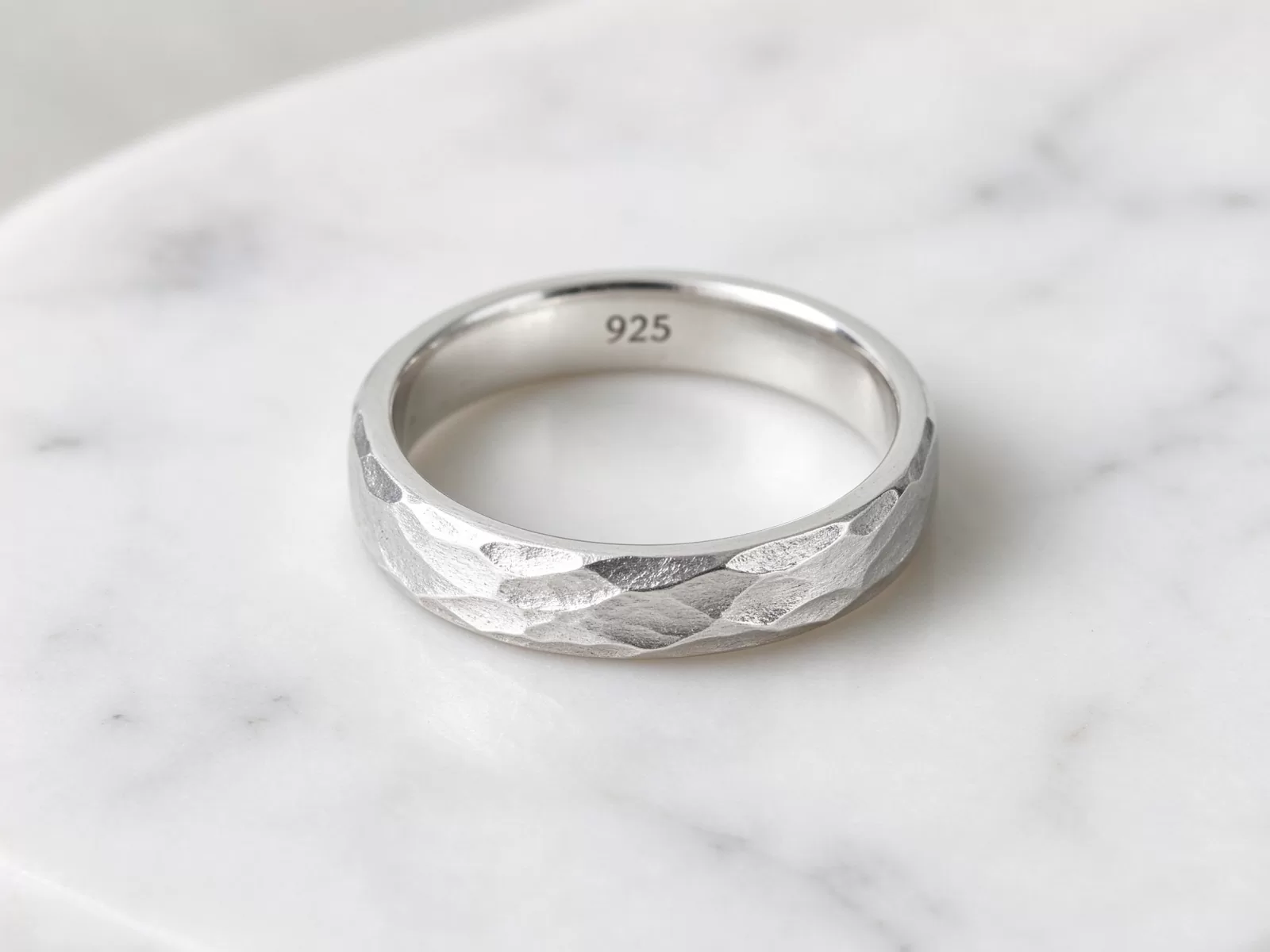
The 925 mark should be crisp, centered, and deep enough to survive polishing. A shallow or double-struck mark is a red flag on a 925 sterling silver wholesale shipment because it usually means the pieces were finished on a rushed line. Check the clasp tag, the inner band, and the back of pendants. If a piece carries no stamp at all, pull it and ask why.
Magnet and acid spot checks
A strong magnet should not grab the body of the piece. It may lightly attract a steel spring in a clasp, which is normal. For a spot check, use a drop of 925 test solution on an inconspicuous area of three pieces per lot. Color change to dark grey means the alloy is not sterling, and that is a conversation you want to have on day one.
05Minutes 30 to 45: stones, settings, and finish
For moissanite and lab-grown goods, this is where the money sits. Tilt each piece under the lamp and look for stones sitting proud of the seat, uneven prong heights, and gaps under the girdle. A stone that rattles when you flick the piece with a fingernail is coming back to you as a repair.
- Prong tips rounded and touching the stone, not digging into it
- No glue residue visible around pavé or channel settings
- Rhodium or plating coverage even at the underside and between prongs
- Chain links closing flush, no sharp edges at the solder joint
- Clasp spring tension tested ten open-close cycles
Certificate numbers matter here too. Match each GRA or IGI number on the card to the piece it shipped with. Cards and goods get separated in packing more often than suppliers admit.
06Minutes 45 to 60: the wear test and the write-up
Put on three pieces and wear them for ten minutes. Fasten and unfasten every clasp, hang a pendant, roll a ring over your knuckle. Your hands find defects your eyes miss, especially on earring posts and hinge joints.
Then write it down. One page per lot: SKU, defect type, quantity affected, photo reference. A supplier who argues with photos and counts is a supplier you can still work with. A supplier who argues with impressions is not.
If a lot fails more than two stations, do not sort it on your own floor. Quarantine the carton, send the report within 48 hours, and ask for a replacement or credit before the goods get mixed into sellable stock.
07Where the 20% advantage actually comes from
Buyers ask why our cost, speed, and yield run roughly 20% better than typical trading companies. It is not a discount trick. Trading companies quote you, then place your order with a factory, then wait in a queue. We cast, set, polish, and QC under one roof, so there is no margin layer and no second-hand scheduling. Fewer hands touching the order means fewer defects and a shorter clock.
Practical numbers: MOQ is 1 pc on stock designs and 30 pcs per SKU on custom work. Production runs 12 to 18 days. Payment is T/T with 30% deposit, and PayPal is fine for samples. Delivery is DDP, typically 5 to 8 days to a US or EU address. Certificates are GRA and IGI as applicable.
08Frequently Asked Questions
What is the minimum order for 925 sterling silver wholesale?
One piece per design on stock items, and 30 pcs per SKU for custom casting or custom stone setting. Sample orders can mix several stock SKUs in a single carton.
How long does production and delivery take?
Production is 12 to 18 days after deposit and artwork approval. DDP delivery adds about 5 to 8 days to most US and EU destinations, so plan roughly three to four weeks door to door.
How is price calculated, and what does QC cover?
Price is based on silver weight, stone grade and size, and setting labor, quoted per SKU. QC covers incoming stone check, in-process inspection, and pre-ship AQL sampling, with GRA or IGI certificates issued where the order requires them.
Send us your SKU list and target quantities and we will come back with a per-piece quote and a sample plan, or ship a stock sample first so you can run this checklist yourself before committing to a full lot. Reach the floor directly at service@holycome.com or WhatsApp +86 133 7744 7107.