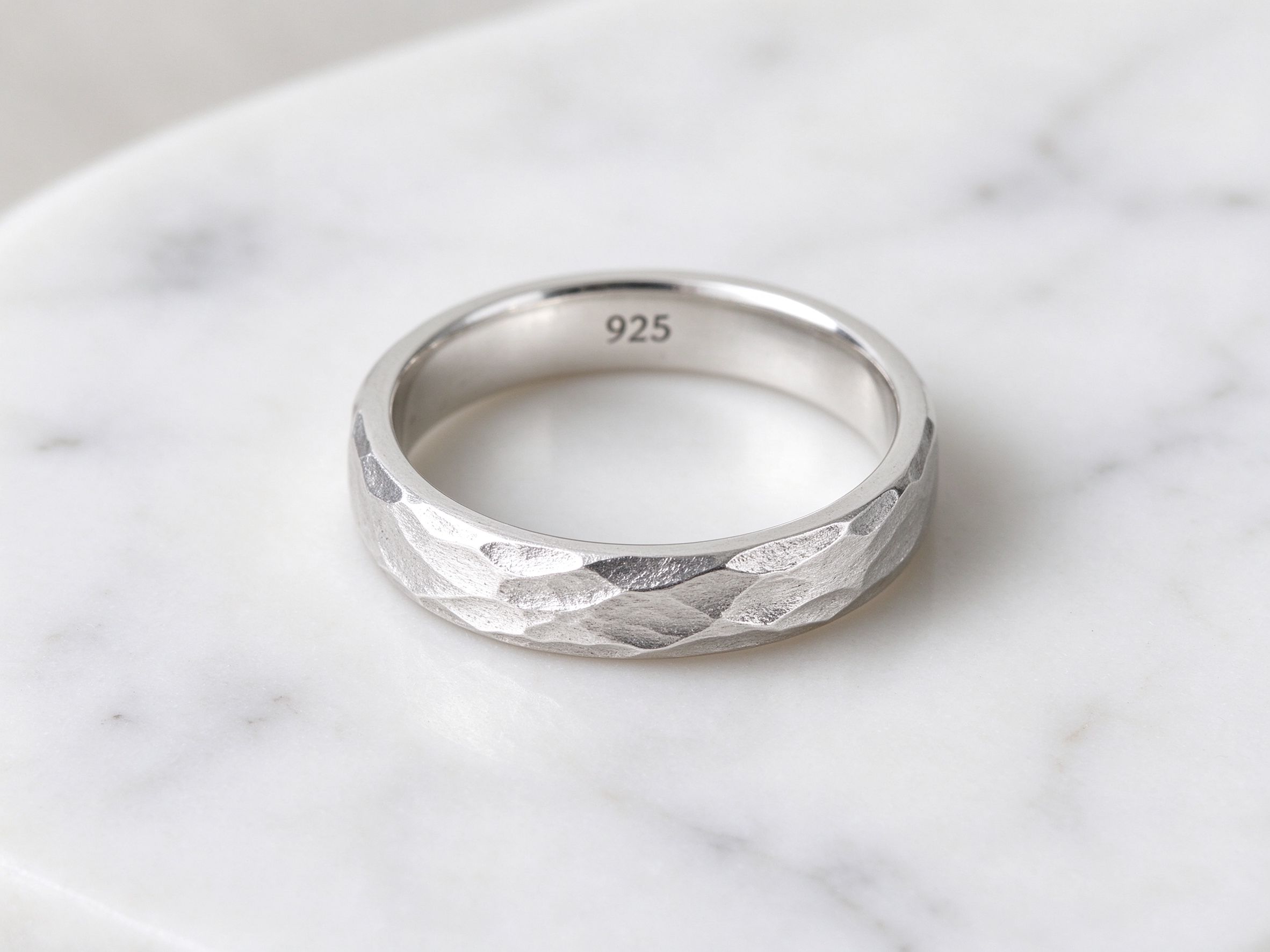
Sterling Silver Weight Per Gram: How Factories Price What Retailers Pay
If you have ever asked a silver factory for a quote and received back a number expressed as a rate per gram, you already know the skeleton of how wholesale silver pricing works. What you probably have not been shown is how that per-gram rate is built, why it moves from piece to piece even when the alloy is identical, and where the gap sits between the price we charge you and the price your customer pays at retail. This article lays the system out the way our production and pricing teams actually use it, from the scale we weigh your casting on, through the multiplier we apply for labor and finishing, to the margin structure that makes a 3-gram stud earring retail for more than its silver weight would suggest.
The short version is that sterling silver jewelry is priced on three stacked numbers: the actual weight of silver in the finished piece, a manufacturing multiplier that covers casting, setting, polishing, and plating labor, and a margin that covers packaging, QC, and warranty. The silver weight itself is the smallest of the three on most fashion pieces, which is why a 2-gram stud earring can retail for thirty dollars even though its metal is worth under two dollars at spot. Understanding those three numbers is the difference between negotiating a price and guessing at one.
How Weighing Actually Works on the Factory Floor
The first rule of per-gram pricing is that the weight on your spec sheet is not the weight we pour. A casting tree goes into the crucible weighing several times the finished piece weight, and the piece that comes off the tree after sawing, grinding, and polishing weighs noticeably less than it did the day it left the mold. When we quote you a piece, we are quoting the finished, polished, plated weight that your customer will receive, not the casting weight. That number is measured on a calibrated digital scale that reads to 0.01 grams, and it is the number printed on your packing slip.
There are two weights worth knowing. The gross weight is what the piece weighs with the stone and the earring back or ring box insert included. The net silver weight is what the piece weighs with the stone removed and any plating stripped, and it is the number we use when we calculate the raw material cost. For a moissanite ring, the stone itself weighs almost nothing by comparison to the band, so gross and net are close. For a pair of heavy silver hoop earrings with no stone, the two are identical. For a charm with a large enamel fill, the enamel adds weight that you pay for in casting but does not contain silver.
When we quote a per-gram rate, we quote it on the net silver weight, because that is the commodity we are buying and recycling. The labor and finishing charges are then added on top as a multiplier, not as a separate line. A simple flat band might carry a multiplier of 1.8 to 2.2 times the silver material cost, while a piece with heavy engraving, pavé setting, or complex 3D forms can carry a multiplier of 3.0 or more. That multiplier is the real lever in the negotiation, because the silver spot number is public and non-negotiable, but the labor multiplier moves with design complexity, order volume, and finish.
Why the Same Gram Weight Costs Different Money
Two pieces that both weigh 5 grams can have very different factory prices, and the reason is never the silver itself. It is the time our bench spends on them. A plain flat wedding band weighs 5 grams and takes two minutes on the polishing wheel. A 5-gram statement ring with a large center setting, six pavé stones, and hand-engraved shoulders might take twenty-five minutes of bench time, plus a trip to the stone setter and a trip to the plater. The labor is the difference, and the per-gram rate we charge reflects that labor, not the metal.
This is the part of pricing that surprises first-time buyers. They see two pieces of the same weight, assume the silver cost is the same, and expect the same quote. They forget that a factory is a workshop, not a vending machine, and that the price we charge is what it costs us to put the piece in a finished state. A piece that comes out of the casting looking like a rough little statue has to be filed, ground, sanded, polished, and plated before it looks like jewelry. The more steps, the more the per-gram rate climbs, even when the weight does not change.
Volume also moves the multiplier. A 500-piece run of the same band lets us set up the polishing line once, batch the plating, and amortize the mold cost across many units. A 50-piece run of the same band forces us to set up the same line for a small batch, and the per-unit labor cost doubles or triples. This is why our MOQ tiers exist, and why a buyer who pushes for smaller quantities has to accept a higher per-gram rate. The math on the scale does not lie; the scale just measures silver, and the rest of the price is people-time.
How the Spot Silver Price Flows Into the Quote
The silver material cost is the easiest number to understand, because it is public. We quote in US dollars, and we peg the silver component to the LME spot price at the moment the quote is issued. When you see a quote that says silver at 0.92 dollars per gram, that number is the spot price on the day we built the sheet, plus a small refining and handling charge. It is not a markup we invented, and it changes every time the spot chart moves.
Most factories hold a quote valid for seven to fourteen days. Ours is usually seven days on small orders and fourteen days on confirmed POs. The reason for the short window is that we are carrying silver inventory on our books, and if spot moves against us between quote and production, we eat the difference. A buyer who places an order at a favorable spot price and then waits three weeks to send the deposit is asking us to gamble on the silver market, and we are not in that business. Locking the price on deposit day is normal, and it protects both sides.
For brands that buy silver jewelry every month, we offer a hedging arrangement. We hold a rolling silver position, and we price your orders off that average rather than the daily spot. The average smooths out the spikes and crashes, and your monthly cost becomes predictable. This is how large retailers keep their silver jewelry margins stable even when the silver chart swings twenty percent in a quarter. It is not a trick; it is treasury management, and any factory that ships serious silver volume can offer it.

How Weight Changes Between CAD and Finished Piece
One of the most common misunderstandings between design team and factory is what the CAD file says about weight. A 3D model built in CAD software can estimate the silver weight of a casting down to a fraction of a gram, but that estimate is always heavier than the finished piece, because the CAD assumes a solid body with no holes, no shell thinning, and no polishing loss. The real piece comes out of the crucible with a thin oxide skin on the surface, and that skin is ground off during finishing, taking a few tenths of a gram with it. By the time the piece is polished and plated, it is typically five to eight percent lighter than the CAD estimate.
We handle this by building a weight tolerance into every quote. If the CAD says a ring will weigh 4.0 grams, we will quote you a target of 3.7 to 3.9 grams finished, because we know the polishing will remove the difference. If a piece comes back from polishing at 3.4 grams, that is outside tolerance and we either rework it or flag it, because a piece that loses more than ten percent of its CAD weight is usually a sign of over-polishing that has thinned the walls or softened the prongs. The tolerance is not a loophole for lightening the piece to save silver; it is a quality control window that tells us when the bench has gone too far.
For hollow or tubular pieces, the weight math is even more important. A hollow hoop earring can be made with a wall thickness of 0.4 millimeters or 0.8 millimeters, and the two weights are very different. The 0.4mm wall feels light and can dent easily, while the 0.8mm wall feels solid and holds its shape. Buyers who only compare weight per gram often mistake a thin wall for a bargain, until the piece arrives and flexes in the customer's hand. We show wall thickness on every spec sheet, and we recommend a minimum wall gauge for pieces that will see daily wear, because the weight saved is never worth the return rate.
The Retail Markup Stack, From Factory to Customer
Once we hand a finished piece to you, the price continues to climb as it moves toward the customer. Understanding that climb helps you price your own line without guessing. A typical sterling silver piece moves through four price points: the factory price, the wholesale price you charge your retail accounts, the retail price the customer pays in store, and the eventual resale or pawn value if the piece is ever sold.
On a simple stud earring that we sell to you for 3.50 dollars a pair, you might wholesale it to a boutique for 9 dollars, and the boutique retails it for 24 to 32 dollars. That markup looks steep until you remember that the boutique is paying for rent, staff, packaging, display, and returns, and that it only sells a fraction of the pieces it buys. The factory markup itself, from our raw silver cost to our selling price, is usually 30 to 60 percent on a simple piece and 100 percent or more on a complex one. We are not taking a huge margin; we are carrying the working capital, the tooling, and the warranty.
The resale value of a sterling silver piece is the one that surprises customers. If they ever sell the piece to a pawn shop or a secondhand dealer, they will be offered somewhere between the melt value of the silver and slightly above it, often less than twenty percent of the original retail price. That gap is normal for any fashion jewelry, and it is why sterling silver is worn for enjoyment, not treated as an investment. The silver itself holds its commodity value, but the labor and retail markup do not.
What Buyers Can Do to Lower the Per-Gram Cost
If you are a brand owner trying to keep your silver line price competitive, there are four levers that actually move the per-gram number, and none of them involve asking us to use thinner metal or softer alloy.
The first lever is order size. Moving from a 100-piece MOQ to a 500-piece run typically drops the multiplier by fifteen to twenty percent, because the setup time is amortized. The second lever is finish. A mirror polish takes more bench time than a matte or sandblasted finish, and the difference shows up in the multiplier. The third lever is design simplicity. A plain band is cheaper per gram than a band with heavy texture, filigree, or hand engraving, because each of those features is bench time. The fourth lever is alloy planning. If you order several pieces that use the same casting tree height and the same ring size range, we can batch the pouring and the polishing across your whole order, which lowers the per-piece setup cost.
The fifth lever, and the one most buyers miss, is accepting our standard sizes. A custom size run that includes half sizes and unusual numbers forces us to make extra castings that never sell. A standard size run from US 6 to US 9 lets us pour only the sizes we know will move, and the savings flow straight back to your unit cost. We can show you the size distribution data from our other customers when you plan a line, and choosing the sizes that actually sell is one of the fastest ways to cut cost without cutting quality.
Plating and Finishing Charges You Will See on a Quote
The per-gram rate usually covers casting, basic polishing, and the standard finish, but plating and specialty finishing are often added as separate line items because their cost is driven by chemistry and line time, not by silver weight. Rhodium plating, for example, is charged per piece because the plating solution is expensive and the line runs in batches, not by weight. A pair of small stud earrings costs the same to plate as a heavy 10-gram pendant, because both spend the same time in the plating bath, even though the silver weight is very different.
Other finishes that carry extra charges include gold plating over silver, black rhodium or oxidised finishes, two-tone plating, and hand engraving. Each of these is a separate process step with its own setup, and each adds a few cents to a few dollars per piece depending on the line. If you are comparing quotes from two factories, look at whether plating is included in the per-gram rate or listed separately. A factory that quotes a lower per-gram rate but adds plating on top can easily land on a higher unit price than one that quotes a slightly higher rate with plating included.
We also charge a small inspection and packaging fee per piece, because every piece goes through a visual QC, a prong check, a weight log, and a poly bag with a card. This fee is usually under ten cents, but it adds up on large orders, and it is one of the few places we can absorb when a buyer moves to a bigger MOQ. The fee exists because we do not ship pieces that have not been inspected, and we would rather tell you upfront that inspection costs money than surprise you later.
Common Misconceptions About Per-Gram Silver Pricing
If silver spot drops, why is my quote still the same? Because your quote includes labor and finishing, which do not move with the silver market. A ten percent drop in silver spot might move your unit price by two or three percent, because silver is only one component of the final cost. The rest of the number is people, tooling, and overhead.
Why is a heavier ring not proportionally more expensive? Because the labor component is mostly fixed. A 6-gram band takes the same bench time as a 3-gram band, give or take a minute of polishing. The silver material is proportionally heavier, but the labor is not, so the per-gram rate actually drops on heavier pieces. This is why a heavy men's band often has a lower per-gram price than a delicate ladies band.
Can I provide my own silver to cut the material cost? Some factories offer tolling, where you supply the silver and we charge only for labor. We do not recommend it for most brands, because you carry the inventory risk and the refining cost, and the savings rarely exceed the silver handling fee we would otherwise charge. It is worth considering only if you buy very large volume and already have a treasury operation.
How do I know the weight on my packing slip is honest? We weigh every piece on a calibrated scale before QC, and the weight is recorded on the inspection sheet. You are welcome to request the weight log for any shipment, and to spot-check it yourself on arrival. A factory that fudges weight will not survive long in this cluster, because the scale does not lie and buyers compare notes.
Does a heavier piece always mean better quality? No. A well-designed piece hits a target weight that balances strength, comfort, and cost. A ring that is deliberately over-weighted is not better; it is just more expensive, because you are paying for silver that does not add function. The right number is the weight that makes the piece feel solid without being bulky, and a good factory will tell you when a design is heavier than it needs to be rather than charging you for extra metal.
How to Read Your Next Quote
When our sales team sends you a quote, it will show you the per-piece weight, the silver component, the labor multiplier, the plating charge, and the unit price. If any of those numbers are missing, ask for them. A quote that only shows a single unit price without breaking out weight and labor is a black box, and it is hard to negotiate against a black box. The more transparent the quote, the easier it is to find the specific lever that will lower your cost.
If you are planning a silver collection and want to see how weight and finish move the price on your own designs, send us the CAD or a hand sketch and a target retail price. We will cost it out against the standard per-gram formula and show you where the money goes, so you can decide whether to simplify the design, adjust the finish, or accept the price. Most of the brands we work with come back after the first quote saying they had no idea the labor multiplier was that visible, and once they see the breakdown they can usually tweak the design to land exactly where their retail price needs to be.
For more on the cost structure behind our silver lines, read our breakdown of wholesale sterling silver pricing and our guide to how silver price fluctuation moves our quotes. You can also reach our team directly at service@holycome.com with a spec sheet, and we will turn a detailed quote around within two working days.