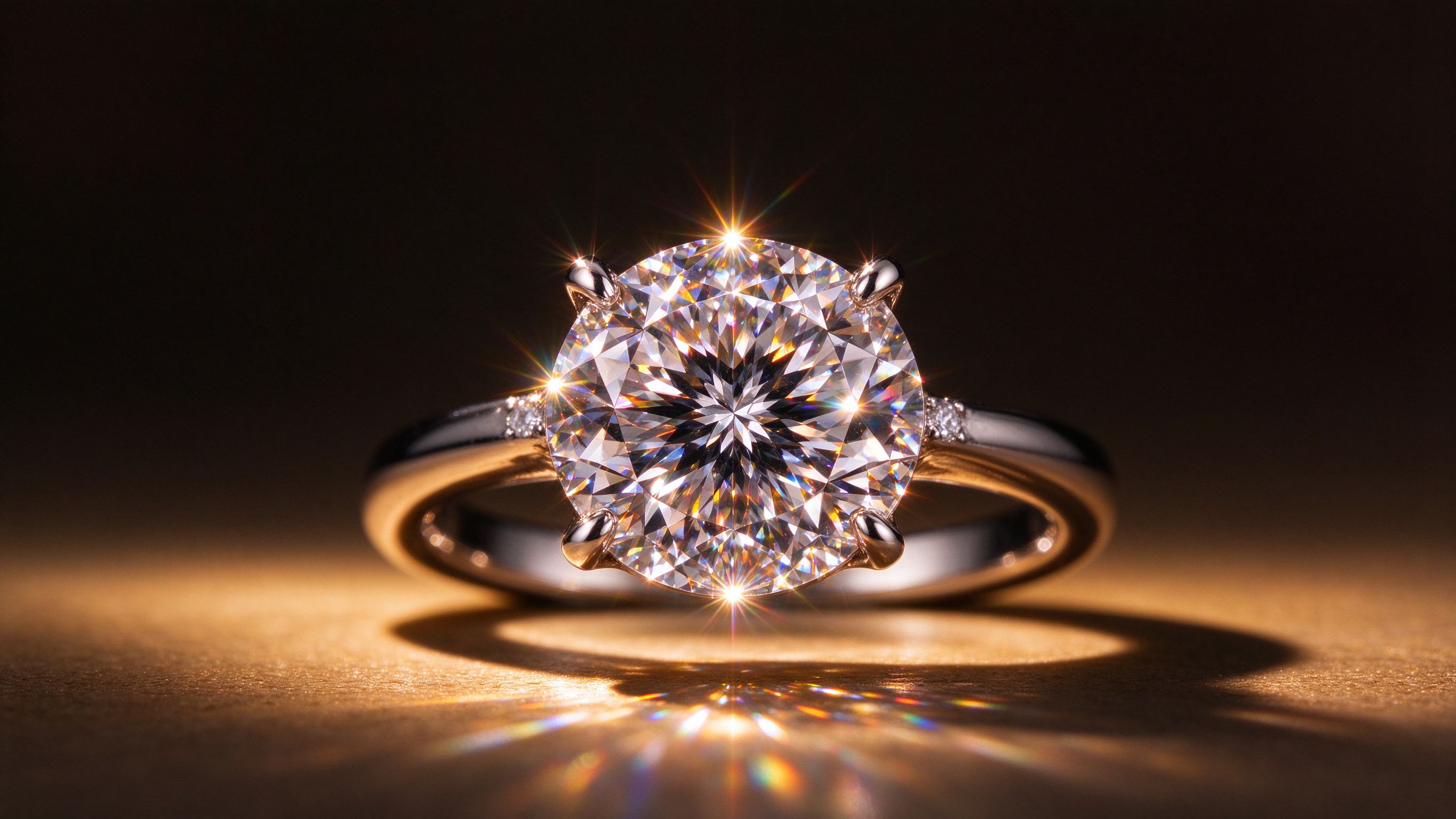
When buyers build a ring collection, the solitaire versus halo question comes up constantly. Both are beautiful, but they use very different amounts of metal and stone, and their cost structure is not obvious at first glance. Here is a breakdown for buyers choosing what to stock.
The solitaire: simple but metal-heavy
A solitaire puts all the visual weight on one center stone. The band is usually plain, with prongs holding the stone. Metal cost is moderate, but the center stone dominates the price. Because a single stone is large, the per-unit cost is driven by that stone's size and cut.
The halo: small stones, more labor
A halo surrounds the center stone with a ring of smaller stones. The halo makes the center look larger and adds sparkle. Metal cost is similar, but the total stone count rises. The tiny accent stones are cheap individually, but setting them is labor-intensive. That labor cost is what makes a halo not as cheap as it looks.
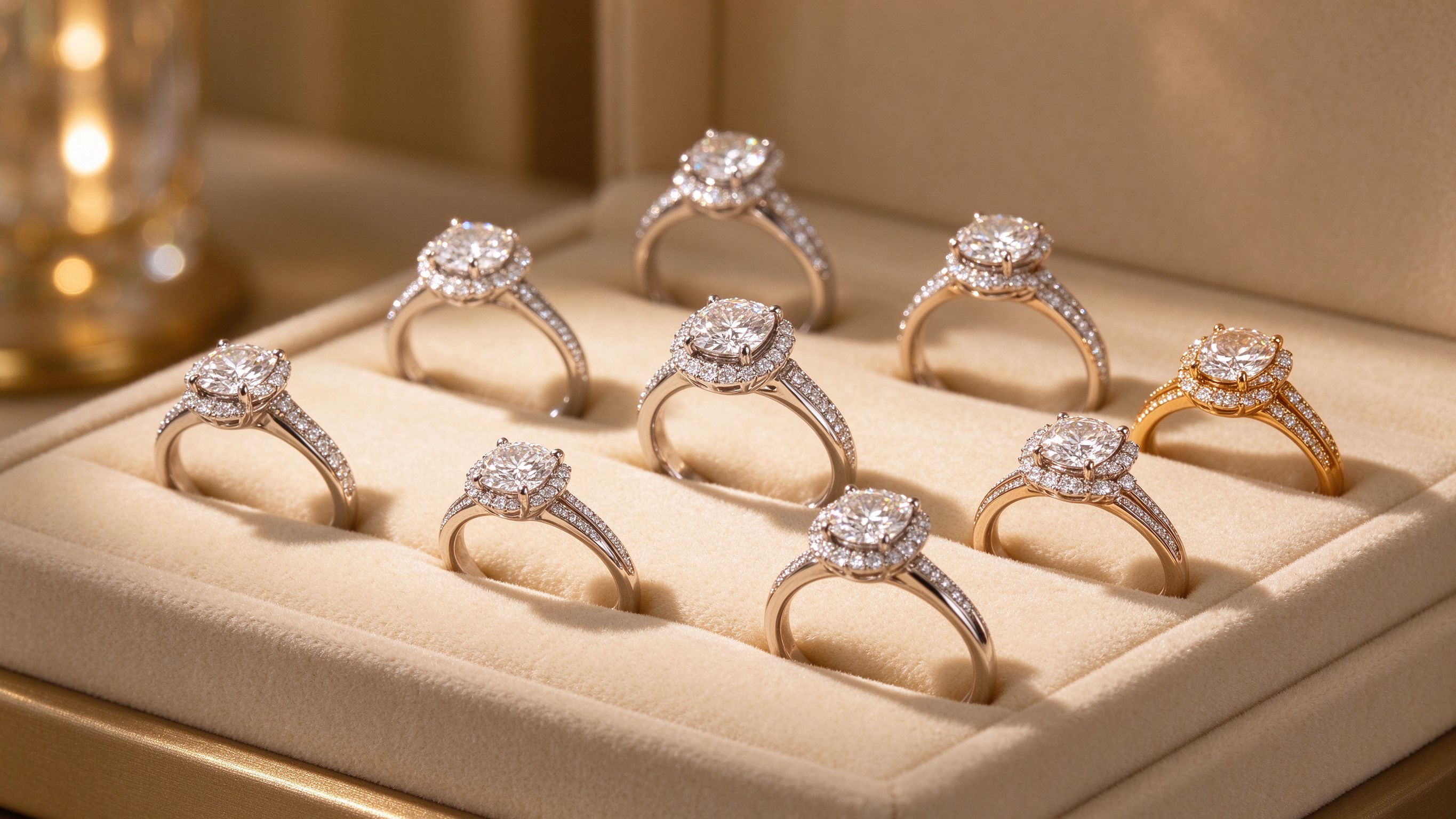
Cost breakdown comparison
- Solitaire: one large stone + simple band + minimal setting labor.
- Halo: center stone + 20-60 small stones + more setting and polishing time.
- Retail look: halo reads as larger and more ornate; solitaire reads as classic.
- Repair risk: halos have more prongs that can loosen over time.
Margin considerations
Because moissanite is affordable, halos become very attractive: the "big look" is achieved without a diamond price tag. Solitaires remain the safest evergreen style. A balanced range stocks both, with solitaires as the entry price and halos as the upsell.
Which holds up better
Solitaires are easier to clean and maintain, with fewer places for dirt to hide. Halos trap soap and lotion behind the small stones and need more frequent cleaning. They also catch on fabrics more. Buyers should mention this to customers choosing an everyday ring.
FAQ
Does a halo make the ring more expensive than a solitaire?
Usually yes, because of the extra small stones and setting labor, even though each small stone is cheap.
Are halos out of style?
They remain popular, though solitaire styles cycle back as minimalist trends grow.
Which resizes more easily?
Solitaires, because there are no side stones to disturb.
Setting choice affects both cost and wear. Explore Rings Value and the knowledge library.
How wear changes each style
Solitaire and halo rings age differently. A solitaire is easy to clean because there are few places for dirt to hide. It is also easy to resize, because no side stones get in the way. Over years, a solitaire only needs occasional prong tightening. A halo traps soap and lotion behind the small stones and needs more frequent cleaning. It also has more prongs that can loosen, and resizing it is more complex. For a ring worn daily, the solitaire is the lower-maintenance choice.
Style trends matter too. Solitaires are timeless and rarely look dated. Halos follow fashion cycles, and a very wide halo can look retro in ten years. Buyers stocking a range should treat solitaires as evergreen inventory and halos as trend-driven pieces that may need refreshing.
Matching style to the customer
The best selling is matching the ring to the wearer, not pushing the more expensive one. A customer who works with their hands and wants low maintenance should get a solitaire or a bezel. A customer who wants maximum sparkle and a large look should get a halo. A customer who prefers minimalist, modern design leans solitaire. Asking about lifestyle and style preference guides the choice, and the customer feels understood rather than upsold.
Bottom line
Solitaires are simple, low-maintenance and timeless. Halos add sparkle and make the center look larger, but they cost more in labor and need more cleaning. Stock both, with solitaires as the evergreen entry and halos as the upsell. Match the style to the wearer: low-maintenance customers lean solitaire, sparkle lovers lean halo.
A worked example: choosing for daily wear
A nurse wanted an engagement ring she never took off. She loved the look of a halo, but her work involves washing hands constantly and handling equipment. We recommended a six-prong solitaire instead. The halo looked beautiful, but its small stones would trap soap and its prongs would catch on gloves. The solitaire is easy to clean, low maintenance and secure. The lesson is that the ring should match the wearer's hands, not just a Pinterest photo. Haloes are gorgeous; they just suit less active lifestyles.
Stocking both for margin
For retailers, solitaires are the reliable evergreen. They sell steadily and require little explanation. Halos are the upsell: they look larger and more glamorous, and they command a higher price because of the extra stones and setting labor. Stock solitaires as the entry price and halos as the premium option. Customers who want the big look choose the halo; customers who want timeless simplicity choose the solitaire. Both sell; you are matching the customer, not picking a winner.
Quick reference checklist
- Solitaires are low maintenance and timeless.
- Halos sparkle more but trap dirt and cost more in labor.
- Match the setting to the wearer's lifestyle.
- Stock solitaires as the entry, halos as the upsell.
- Active hands suit a solitaire or bezel.
There is no wrong choice; there is only the right ring for the person. Solitaires never go out of style and survive daily wear easily. Halos deliver the big, glamorous look customers love. Offer both, listen to how the ring will be worn, and the right choice becomes clear.
In the end, both styles sell because they suit different people. The goal is not to pick a winner but to listen. Ask how the ring will be worn, then recommend the setting that matches. That honest matching is what turns a sale into a customer for life.
Offer both styles in the same metal so customers can compare in person. Seeing a solitaire next to a halo helps them decide, and the side-by-side display often upsells the halo. Let the customer choose the look that matches their daily life.