These twelve questions come up on almost every Size Guide inquiry. The answers are written to be used directly in a listing, a support reply or a supplier brief.
01Questions about material and wear
What is it made of, will it tarnish, can it be repaired, and how long will it last. On Size Guide, the honest answer names the base metal, the plating microns and the replating path.
A vague answer to a material question is the start of a return.
Ask for the plating thickness in microns, then test the contact points on the first lot. A thirty-second cloth rub shows color transfer before a customer does.
02Questions about size and fit
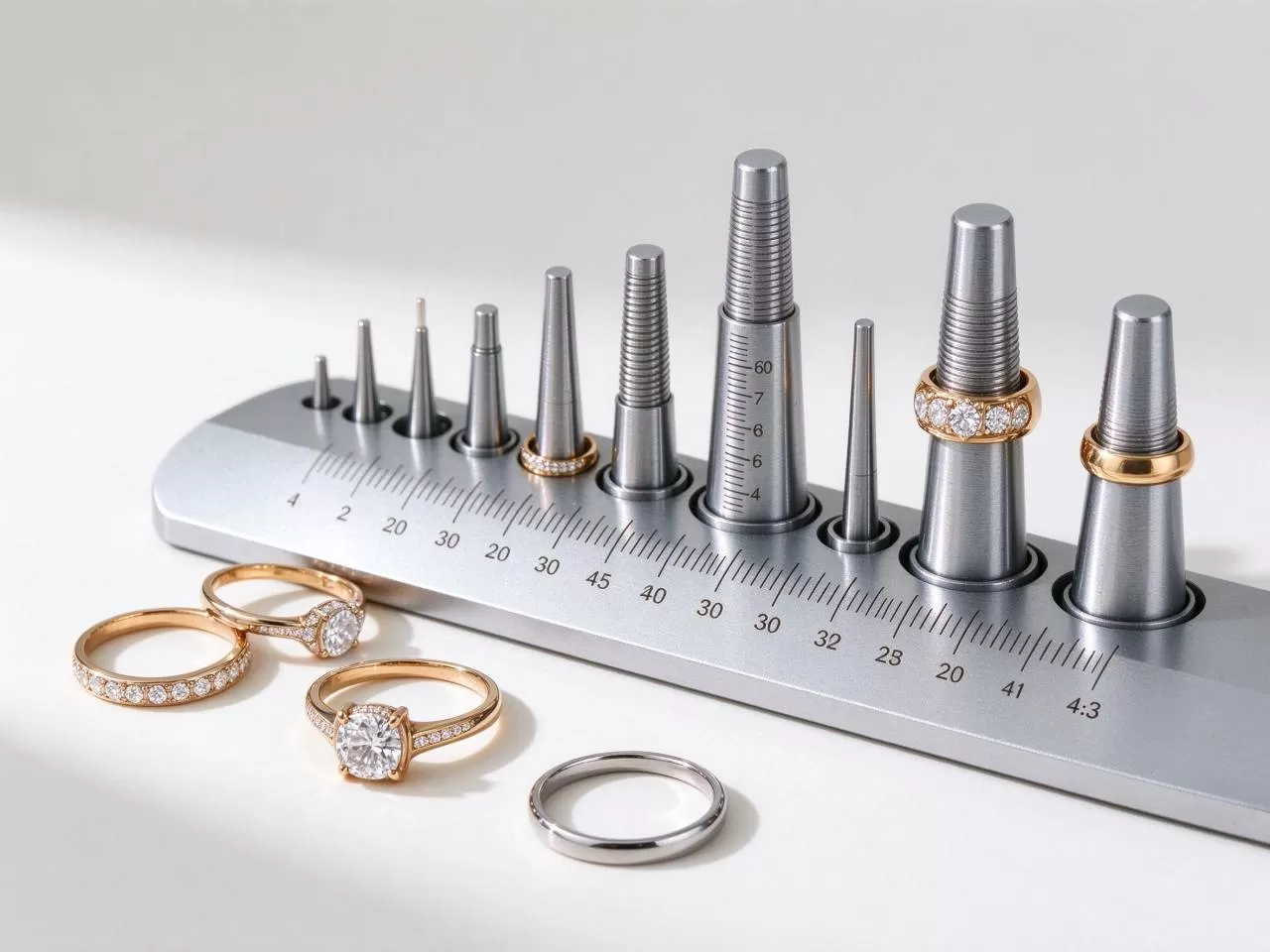
What size should I order, does a wide band fit differently, can it be resized, and what is the chain length. Publish a chart, a tolerance and a resize limit.
On Size Guide, those three published lines remove most size tickets.
| Question | Short answer | Where to publish |
|---|---|---|
| What is it made of | Base metal, purity, microns | Spec sheet |
| Will it tarnish | Plate thickness, care | Care card |
| Which size | Chart plus tolerance | Size guide |
| Is it a diamond | Type, lab, number | Listing |
| MOQ and lead time | Tier and schedule | Wholesale page |
Read the table as a checklist rather than a recommendation. The right row depends on the price band, the wear pattern and the channel you sell into.
Put the forecast window in writing. Capacity priority follows predictability, not friendship.
What size should I order, does a wide band fit differently, can it be resized, and what is the chain length. Publish a chart, a tolerance and a resize limit.
03Questions about stones and claims
Is it a diamond, is it lab grown, does it come with a certificate, and what grade is it. Answer with the type, the lab and the number where one exists.
Never answer a stone question with a comparison. Answer with the specification.
04Questions about orders and terms
What is the MOQ, what is the lead time, what are the payment terms, and what happens if a piece is defective. Four commercial answers that belong on the page, not in a reply.
On Size Guide, publishing those four reduces the inquiry volume and improves the quality of the inquiries that remain.
The cheapest correction happens at the sample. A seat that is 0.2 mm shallow costs a CAD revision at one piece and a rework bill at five hundred.
05What to check before the order
Run the five checks below in order. The first two protect the money, the last three protect the launch date.
- Answer material questions with numbers.
- Publish the size chart and the tolerance.
- Answer stone questions with the type and lab.
- Put MOQ and lead time on the page.
- Publish the defect remedy path.
If a supplier cannot answer three of the five, treat the quote as a starting point rather than a plan. Ask again in writing and keep the answer with the PO.
06Frequently Asked Questions
What do buyers ask most about Size Guide?
Material, size and stone claims. Those three account for most inquiries and most returns.
How should I answer a stone question?
With the type, the size, the grade and the lab number if one exists. A comparison is not an answer.
Should MOQ be public?
Yes, at tier level. It filters the inquiries and saves both sides time.
What is the best size answer?
A chart with diameter in millimetres, a tolerance and a note on wide bands.
How do I reduce inquiry volume?
Publish the twelve answers. Most inquiries exist because the page did not answer them.
What belongs in the first email to a new supplier?
Spec, quantity, target price, delivery date and the QC standard. Five lines get a useful reply.
Send the Size Guide product page. We return the twelve answers written for your spec and your channel. See the full range at HOLYCOME.
None of this is exotic. It is a document, a measurement and a date, repeated until it becomes a process.