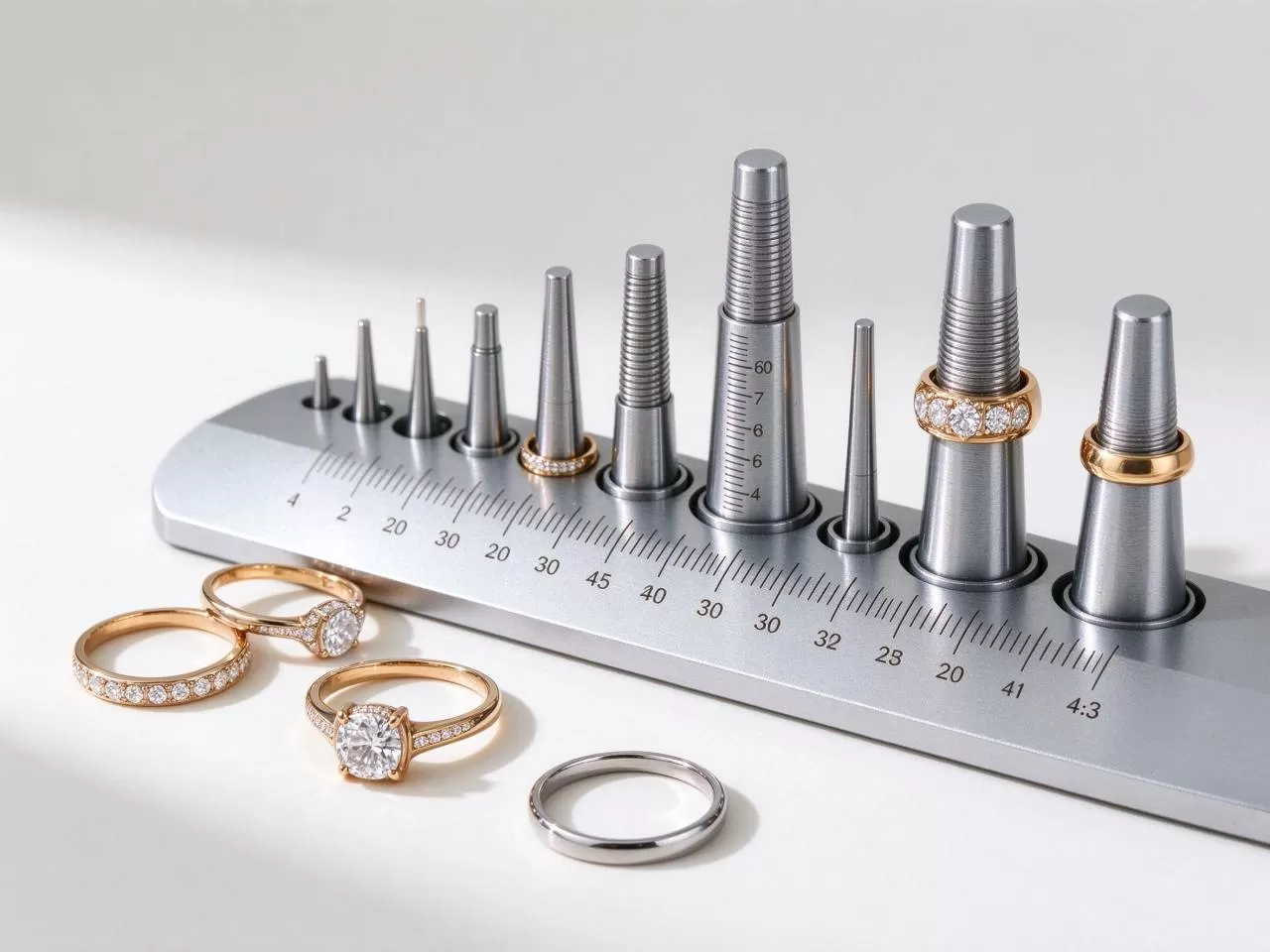
Three price tiers of Size Guide usually share a silhouette and differ in four places: metal weight, stone grade, setting finish and plating. Once you can name those four, tiering stops being guesswork.
01The entry tier: what is actually different
Entry uses lighter metal, a smaller or lower-grade stone, a simpler setting and thinner plating. On Size Guide, that combination is legitimate if it is disclosed, and a problem if it is sold as core.
The honest entry tier states the weight, the stone grade and the plating. The dishonest one states a look.
Ask for the mill certificate and the stone invoice. Two documents turn a material claim into something an auditor can check.
02The core tier: the volume workhorse
Core adds metal weight, a better cut and a thicker plate. It is the tier that carries most of the volume and most of the repeat purchase.
On Size Guide, core is where the QC standard pays for itself: a better plate means fewer claims, and fewer claims mean a lower landed cost.
| Variable | Entry | Core | Premium |
|---|---|---|---|
| Metal weight | Light | Standard | Heavy |
| Stone | Small, lower grade | Good cut | Certified |
| Setting | Simple | Refined | Hand finished |
| Plating | 0.3-0.5 micron | 0.8 micron | 1.0+ micron |
Read the table as a checklist rather than a recommendation. The right row depends on the price band, the wear pattern and the channel you sell into.
Ask for the mill certificate and the stone invoice. Two documents turn a material claim into something an auditor can check.
Core adds metal weight, a better cut and a thicker plate. It is the tier that carries most of the volume and most of the repeat purchase.
03The premium tier: where the cost sits
Premium moves to a higher metal purity, a certified stone and a hand-finished setting. The cost is in the stone and the bench time, not in the marketing.
Ask for the certificate cost as a separate line. Bundling it hides the real premium.
04How to tier without confusing the buyer
Give each tier a visible difference in one dimension the customer can see: stone size, metal color, or setting style. Do not tier on invisible variables only.
On Size Guide, a tier the customer cannot see is a tier the customer will not pay for.
Keep the approved sample and the CAD together. One proves what was agreed, the other proves what was made.
05What to check before the order
Run the five checks below in order. The first two protect the money, the last three protect the launch date.
- Tier on four visible variables.
- State the grade at every tier.
- Keep the certificate cost separate.
- Make the difference visible to the customer.
- Do not sell entry as core.
If a supplier cannot answer three of the five, treat the quote as a starting point rather than a plan. Ask again in writing and keep the answer with the PO.
06Frequently Asked Questions
How do I tier Size Guide without cheapening it?
Change one visible dimension per tier and disclose the rest. A smaller stone at entry is honest; a thinner plate sold as core is not.
Should each tier have its own SKU?
Yes. One SKU per tier keeps the spec, the photos and the claims separate.
Is the premium tier worth it?
When the stone is certified and the setting is hand finished. Those two carry the price, not the label.
How much price gap between tiers?
Roughly 1.5x from entry to core and 1.8x from core to premium for the same silhouette.
Can I use one photo for all tiers?
No. The visible difference is the reason to buy up. Shoot each tier separately.
How do I compare two quotes for this item?
Split both into metal, stone, labor, finishing and overhead, then compare line by line. A single total hides the specification difference.
Send the Size Guide silhouette and price points. We return a three-tier matrix with the four variables and the certificate cost split out. See the full range at HOLYCOME.
Buyers who get consistent lots are not luckier. They wrote the spec down and checked the first carton against it.