Resizing Moissanite Rings: What a Factory Can and Cannot Adjust
Customers often assume any ring can be resized later, but moissanite settings tell a more nuanced story. This guide explains which designs resize cleanly, which are fixed at their size, and how the moissanite itself is protected during the process.
Moissanite Itself Handles Resizing Fine
First, the good news: moissanite is hard and heat-tolerant enough to survive resizing. Unlike organic gems such as pearls or opals, moissanite will not crack or discolour from the gentle heat of soldering, provided it is shielded or removed during the work. The constraint in resizing is never the stone; it is the silver setting geometry around it. This is why moissanite solitaires resize well, while the same stone in a full eternity band does not - the stone is fine, the construction is the limit.
Temperature and time of day change finger size. Fingers swell in heat, after exercise, and late in the day, so our guidance to retailers is to measure when the finger is relaxed and at room temperature, and to measure the finger that will actually wear the ring. A good sizer slides on with gentle resistance and comes off over the knuckle without forcing.
Inner finishing matters as much as the size number. A correctly sized band with a rough interior shank will catch on skin and feel smaller than it is, which is why every ring we ship is polished on the inside until the edge is rounded. Size is not just a diameter; it is the whole sensory experience the customer feels sliding the band on.
Bulk size runs are planned around demand data. Retailers tell us which sizes move, and we bias production runs toward those sizes while still covering the long tail. This is why factory-direct wholesale rings are available in the sizes you actually sell, rather than a one-size-fits-all handful that forces every customer to resize later.
We keep master rings for every common size so a production run can be checked against a known reference, not a guessed number. When a buyer questions a measurement, we measure against the master set together, which resolves the dispute in minutes. Reference equipment like this is what turns sizing from an argument into a measurement.
Sizing is one of the few areas where small staff habits cause big returns. A sizer kept on the wrong finger, or used on a cold morning, will mislead even a careful assistant. We give retail teams a short measuring protocol that takes seconds and removes the most common errors. Consistency at the counter prevents the inconsistency that ends in the post.
For rings sold online, a printable size guide and a physical trial-ring sample dramatically reduce size returns. Customers who measure themselves against a real, wide trial ring choose correctly far more often than those who guess. We supply these tools because an accurate measurement at home is the closest thing to being in the shop.
Settings That Resize Without Issue
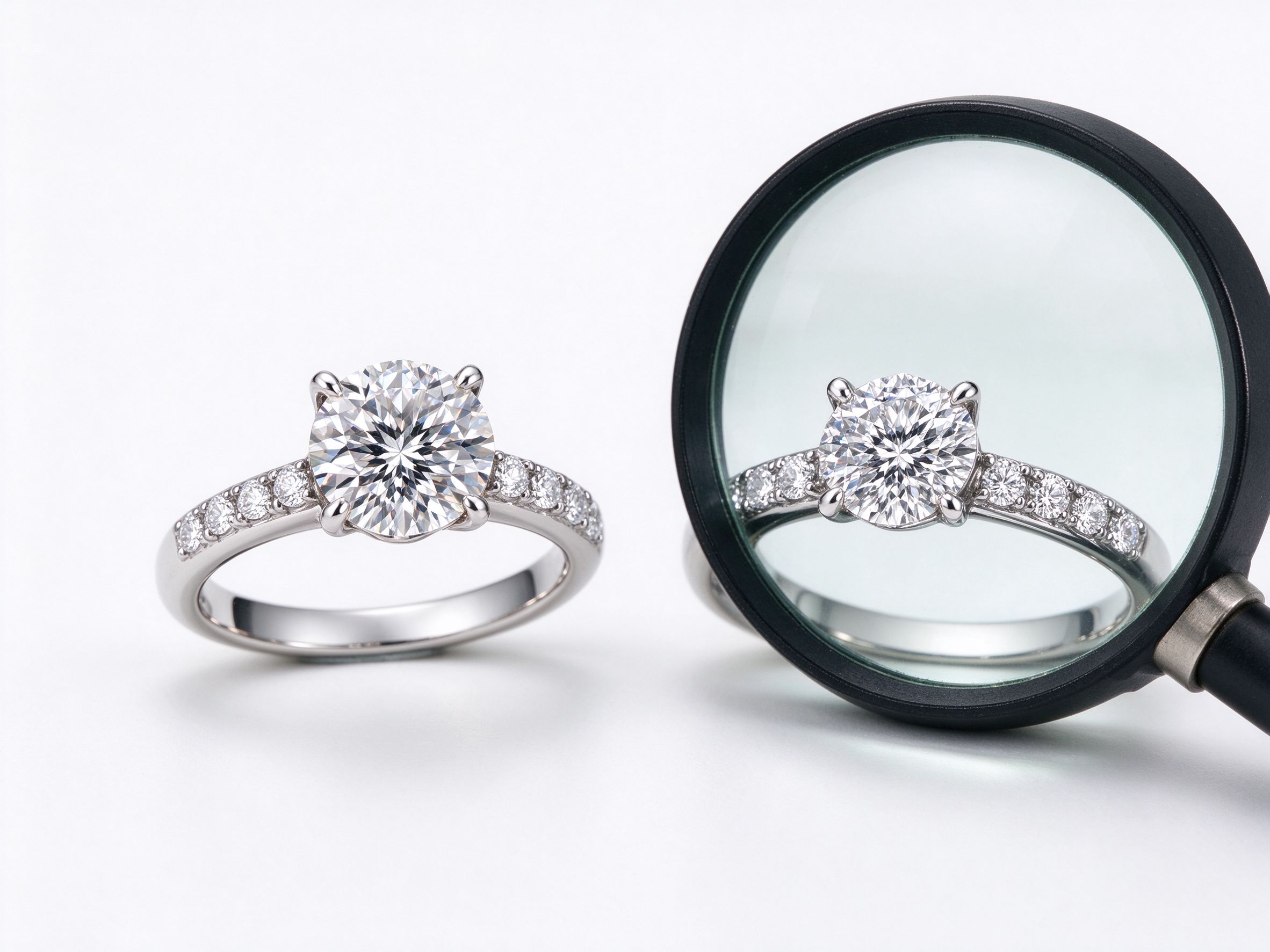
A solitaire with a simple shank, a three-stone ring with stones along the top only, and a simple band all resize reliably. The bottom of the shank, away from the stones, is cut and adjusted, and the rest of the setting is undisturbed. For these designs, resizing to a neighbouring size is routine and the finish can be restored invisibly. Retailers can confidently tell customers that a solitaire can be adjusted up or down by a couple of sizes, within reason, without affecting the moissanite.
The size stamped inside a ring is a promise we stand behind. If a batch measures outside our tolerance, we replace it rather than argue. Buyers learn quickly that our sizes are reliable, which is why they reorder without re-checking every unit. Trust in the size label is built one verified shipment at a time.
Wide and comfort-fit designs are where sizing tables earn their keep, because the correction is built into production rather than improvised at sale. A customer who orders a wide band in the corrected size gets a ring that fits the first time. That attention to profile detail is what separates a precise factory from a generic wholesaler.
Ring sizing on an industrial line is a tolerance problem, not a guessing problem. Each size is machined to a target inside diameter with a controlled plus-or-minus band, because a ring that measures halfway between labels will feel wrong on the customer and trigger a return. Our gauges are calibrated weekly against master rings traceable to a standard, so every batch measures the same way.
Mass production favours the whole, half and quarter sizes that sell. We stock tooling for the highest-volume sizes and hold them ready, while less common sizes are produced by adjusting the shank during the finishing pass. This is why a factory can offer dozens of sizes at scale without tooling up a new die for every single one.
Comfort fit changes the measured size. A domed, comfort-fit band sits looser on the finger than a flat band of the same number, so our size charts always note the fit profile. A retailer selling comfort-fit rings should measure customers over a similar profile, otherwise the printed size and the on-hand feel will not match and the ring will be returned.
Wide bands need a half-size up. A band wider than about six millimetres grips more of the finger and feels tighter than a narrow band of the same diameter, so our sizing tables add a half size for wide designs. Building this correction into production means the size stamped on the inside matches the way the ring actually feels, not just the diameter.
Settings That Cannot Be Resized
Full eternity bands with moissanite all the way around, channel-set rings, and pav bands with stones close to the resize point cannot be resized safely. Stretching or cutting the shank shifts the stone seats, loosens prongs, and risks cracking settings. These designs are fixed at the size they are made. The honest advice is to measure carefully before ordering an eternity band, because there is no later correction. We flag this clearly on product pages for eternity designs, and we recommend professional sizing for these pieces specifically.
Custom resizing on factory work is governed by the setting. A plain band can be opened and closed reliably, but a pav or channel-set eternity ring cannot be resized because stretching the shank shifts every stone seat. Our quoting process flags which designs are resizable before the order is confirmed, so retailers never promise a customer a resize the construction will not allow.
Measurement standards differ by country. The US uses numerical sizes, the EU uses a circumference in millimetres, the UK uses letters, and Asia uses yet another set of internal diameters. Our factory produces to whichever standard the buyer specifies and stamps the shank accordingly, and we supply a conversion chart so retail staff never have to approximate between systems.
Reusable ring sizers are a wholesale tool, not a gimmick. We ship a plastic circumference gauge and a set of metal mandrels to retail partners so their staff can measure customers accurately rather than guessing from a ring already on a finger. Accurate measurement at the point of sale is the single biggest driver of low ring-size return rates.
Temperature and time of day change finger size. Fingers swell in heat, after exercise, and late in the day, so our guidance to retailers is to measure when the finger is relaxed and at room temperature, and to measure the finger that will actually wear the ring. A good sizer slides on with gentle resistance and comes off over the knuckle without forcing.
Inner finishing matters as much as the size number. A correctly sized band with a rough interior shank will catch on skin and feel smaller than it is, which is why every ring we ship is polished on the inside until the edge is rounded. Size is not just a diameter; it is the whole sensory experience the customer feels sliding the band on.
Bulk size runs are planned around demand data. Retailers tell us which sizes move, and we bias production runs toward those sizes while still covering the long tail. This is why factory-direct wholesale rings are available in the sizes you actually sell, rather than a one-size-fits-all handful that forces every customer to resize later.
How We Protect the Stone During Resizing
When a resize does involve a stone, we manage the heat carefully. Soldering the shank generates local heat, so we apply heat sinks around the setting and avoid direct flame near the stone. For larger resizes, it is cleaner to remove the moissanite, resize the shank, and re-set the stone. After the work, every prong is re-tension-tested and the setting re-plated so the repaired area is invisible. The moissanite emerges unaffected; that is the whole point of the careful process.
We keep master rings for every common size so a production run can be checked against a known reference, not a guessed number. When a buyer questions a measurement, we measure against the master set together, which resolves the dispute in minutes. Reference equipment like this is what turns sizing from an argument into a measurement.
Sizing is one of the few areas where small staff habits cause big returns. A sizer kept on the wrong finger, or used on a cold morning, will mislead even a careful assistant. We give retail teams a short measuring protocol that takes seconds and removes the most common errors. Consistency at the counter prevents the inconsistency that ends in the post.
For rings sold online, a printable size guide and a physical trial-ring sample dramatically reduce size returns. Customers who measure themselves against a real, wide trial ring choose correctly far more often than those who guess. We supply these tools because an accurate measurement at home is the closest thing to being in the shop.
The size stamped inside a ring is a promise we stand behind. If a batch measures outside our tolerance, we replace it rather than argue. Buyers learn quickly that our sizes are reliable, which is why they reorder without re-checking every unit. Trust in the size label is built one verified shipment at a time.
Wide and comfort-fit designs are where sizing tables earn their keep, because the correction is built into production rather than improvised at sale. A customer who orders a wide band in the corrected size gets a ring that fits the first time. That attention to profile detail is what separates a precise factory from a generic wholesaler.
Ring sizing on an industrial line is a tolerance problem, not a guessing problem. Each size is machined to a target inside diameter with a controlled plus-or-minus band, because a ring that measures halfway between labels will feel wrong on the customer and trigger a return. Our gauges are calibrated weekly against master rings traceable to a standard, so every batch measures the same way.
Size Limits: How Far Can a Ring Move
Resizing is not unlimited. Moving a ring more than about two sizes up or down stresses the shank, changes the stone's angle, and can distort the setting. For big changes, it is better to recommend a new ring than to force a resize. We tell retailers the safe range for each design - typically one to two sizes either way - so customers have realistic expectations. A resize that claims to move a ring five sizes is usually cutting corners on the very steps that keep it looking good afterwards.
Mass production favours the whole, half and quarter sizes that sell. We stock tooling for the highest-volume sizes and hold them ready, while less common sizes are produced by adjusting the shank during the finishing pass. This is why a factory can offer dozens of sizes at scale without tooling up a new die for every single one.
Comfort fit changes the measured size. A domed, comfort-fit band sits looser on the finger than a flat band of the same number, so our size charts always note the fit profile. A retailer selling comfort-fit rings should measure customers over a similar profile, otherwise the printed size and the on-hand feel will not match and the ring will be returned.
Wide bands need a half-size up. A band wider than about six millimetres grips more of the finger and feels tighter than a narrow band of the same diameter, so our sizing tables add a half size for wide designs. Building this correction into production means the size stamped on the inside matches the way the ring actually feels, not just the diameter.
Custom resizing on factory work is governed by the setting. A plain band can be opened and closed reliably, but a pav or channel-set eternity ring cannot be resized because stretching the shank shifts every stone seat. Our quoting process flags which designs are resizable before the order is confirmed, so retailers never promise a customer a resize the construction will not allow.
Measurement standards differ by country. The US uses numerical sizes, the EU uses a circumference in millimetres, the UK uses letters, and Asia uses yet another set of internal diameters. Our factory produces to whichever standard the buyer specifies and stamps the shank accordingly, and we supply a conversion chart so retail staff never have to approximate between systems.
Reusable ring sizers are a wholesale tool, not a gimmick. We ship a plastic circumference gauge and a set of metal mandrels to retail partners so their staff can measure customers accurately rather than guessing from a ring already on a finger. Accurate measurement at the point of sale is the single biggest driver of low ring-size return rates.
Planning Sizing Up Front to Avoid Resizing
The best resize is the one you never need. For wholesale buyers, this means getting the size distribution right at the order stage. Producing an eternity band in the sizes your customers actually wear means no one ever needs to resize it. For solitaire lines where resizing is easy, a smaller size range is acceptable because adjustments are available. We help buyers decide which designs need precise sizing coverage and which can rely on later adjustment, based on how resizable each design is.
Temperature and time of day change finger size. Fingers swell in heat, after exercise, and late in the day, so our guidance to retailers is to measure when the finger is relaxed and at room temperature, and to measure the finger that will actually wear the ring. A good sizer slides on with gentle resistance and comes off over the knuckle without forcing.
Inner finishing matters as much as the size number. A correctly sized band with a rough interior shank will catch on skin and feel smaller than it is, which is why every ring we ship is polished on the inside until the edge is rounded. Size is not just a diameter; it is the whole sensory experience the customer feels sliding the band on.
Bulk size runs are planned around demand data. Retailers tell us which sizes move, and we bias production runs toward those sizes while still covering the long tail. This is why factory-direct wholesale rings are available in the sizes you actually sell, rather than a one-size-fits-all handful that forces every customer to resize later.
We keep master rings for every common size so a production run can be checked against a known reference, not a guessed number. When a buyer questions a measurement, we measure against the master set together, which resolves the dispute in minutes. Reference equipment like this is what turns sizing from an argument into a measurement.
Sizing is one of the few areas where small staff habits cause big returns. A sizer kept on the wrong finger, or used on a cold morning, will mislead even a careful assistant. We give retail teams a short measuring protocol that takes seconds and removes the most common errors. Consistency at the counter prevents the inconsistency that ends in the post.
For rings sold online, a printable size guide and a physical trial-ring sample dramatically reduce size returns. Customers who measure themselves against a real, wide trial ring choose correctly far more often than those who guess. We supply these tools because an accurate measurement at home is the closest thing to being in the shop.
Frequently Asked Questions
Can moissanite be damaged by resizing?
No. Moissanite is hard and heat-tolerant. We shield or remove it during soldering and re-test prongs afterwards. The limit is the silver setting, never the stone.
Which moissanite rings can be resized?
Solitaires, three-stone rings and simple bands resize cleanly within about two sizes. Full eternity, channel and pav bands cannot be resized because altering the shank shifts the stone seats.
Can an eternity band ever be resized?
Not safely. It is fixed at its production size, so measure carefully before ordering. We recommend a professional measure for eternity designs.
How many sizes can a ring be adjusted?
Usually one to two sizes either way. Larger changes distort the setting and are better solved with a new ring.
Should I stock every size for resizable designs?
Solitaires can be stocked in fewer sizes since later adjustment is easy; eternity bands need precise size coverage up front because there is no correction later.
Conclusion
Moissanite survives resizing beautifully; the setting decides whether it can happen. Solitaires move freely, eternity bands do not. Know which designs are flexible and which are fixed, measure the fixed ones precisely, and size your wholesale range so customers rarely need a correction at all.