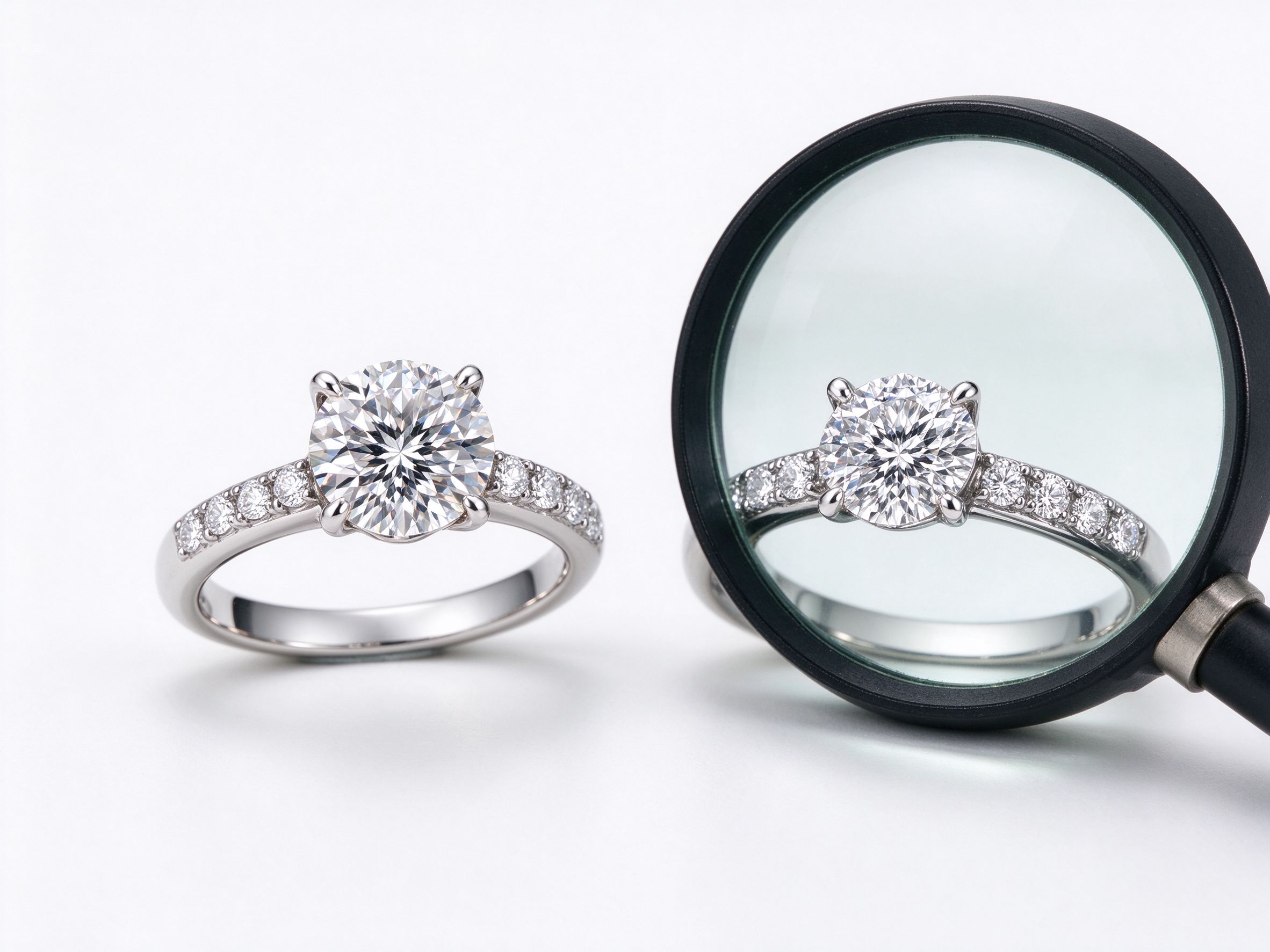
Moissanite vs CZ vs Diamond Pendant - HOLYCOME
A pendant is one of the easiest places to overspend or underspend. The stone hangs away from the hand, takes very little abuse, and is viewed at conversational distance, so the gap between a great-looking pendant and a mediocre-looking one is smaller than customers think. Yet the price gap between a cubic zirconia pendant, a moissanite pendant, and a mined diamond pendant is enormous. As a factory that sets all three types on a daily basis, we see which stone sells, which stone comes back as a return, and which stone earns its price. This guide compares the three on cost, look, durability, resale, and the margin a brand can build around each.
The Three Stones at a Glance
Cubic zirconia is a cheap, lab-grown simulant. It is not related to diamond; it is a crystalline form of zirconia glassed under heat. It sparkles brightly when new, scuffs within months, and turns cloudy within a year of daily wear. It costs pennies per stone at wholesale and is the standard stone for fast fashion jewelry under $20 retail.
Moissanite is a lab-grown silicon carbide. It is a real gemstone, not a simulant in the CZ sense. It is nearly as hard as diamond, more fiery, and retains its clarity for decades. Wholesale pricing on a 6.5mm round moissanite is a few dollars per stone, and retail pendants sit in the $40 to $150 range. It is the workhorse stone for affordable luxury brands.
Mined diamond is the historic standard. A 0.5ct to 1ct round brilliant in a sterling silver or gold pendant costs hundreds of dollars wholesale, and retails for $500 to $2,000 depending on color and clarity. It holds its place as the most recognized stone, but for a pendant worn at conversational distance, the visual advantage over moissanite is nearly invisible to anyone not carrying a loupe.
| Factor | CZ pendant | Moissanite pendant | Diamond pendant |
|---|---|---|---|
| Wholesale stone cost (6.5mm) | $0.20-$0.80 | $4-$12 | $120-$400 (0.5-0.7ct) |
| Typical retail price | $10-$35 | $49-$149 | $500-$1,800 |
| Hardness (Mohs) | 8-8.5 | 9.25 | 10 |
| Stays clear for | 6-12 months | 20+ years | Forever |
| Resale value | None | Minimal | Some, but low vs retail |
Look and Sparkle at Conversational Distance
The most important fact about a pendant is that it is not an engagement ring. A customer views an engagement ring at six inches, held out on an extended hand. A pendant is viewed at twelve to eighteen inches, across a dinner table, under room lighting. At that distance, the difference between a well-cut moissanite and a well-cut mined diamond is genuinely hard to see. The difference between either and a CZ is also hard to see on day one, which is why CZ pendants sell so well online.
The difference shows up over time. A CZ pendant cut with bright, heavy faceting will look like a diamond in the product photo, but within six months the facet edges round from daily contact with clothing, perfume, and cleaning, and the stone develops a milky, abraded surface. Customers describe it as looking cheap, cloudy, or old. A moissanite pendant at the same price tier never develops that haze, because the stone is hard enough to hold its facet edges for decades. For a deeper look at the optical differences, see moissanite vs cubic zirconia value.
Moissanite actually out-sparkles diamond in one specific way: fire, which is the rainbow light dispersion. Moissanite has roughly 2.5 times the fire of diamond. In a pendant worn under bright daylight or chandelier light, a moissanite pendant throws more colored flashes than a diamond of the same size. This is a feature, not a flaw, for customers who want visible sparkle. It is also the reason some purists prefer diamond: a more restrained, white brilliance rather than the rainbow display of moissanite.
Cost and What Each Tier Buys You
At the wholesale level, the stone cost is only one input. The pendant setting, the chain, the plating, and the labor to set the stone all add up. A CZ pendant that costs $0.50 in stone might land at $4 to $6 fully set on a 925 silver chain. A moissanite pendant that costs $8 in stone lands at $12 to $18 fully set. A diamond pendant that costs $200 in stone lands at $260 to $320 fully set. The multiplier from stone to finished pendant is roughly the same across all three, but the absolute numbers tell the margin story.
For a brand choosing between the three, the math is straightforward. A CZ pendant retails at $19 to $35 with a 70 to 80 percent markup, but the product fails within a year and generates returns. A moissanite pendant retails at $59 to $99 with a 75 to 80 percent markup, lasts for years, and generates positive reviews. A diamond pendant retails at $600 to $1,500 with a 2.5x to 3x markup, but requires trust, certification, and a customer base that is ready to spend. We cover the cost breakdown in moissanite pendant size guide and cast vs stamped pendant value.
The hidden cost of CZ is not the stone. It is the return rate. A CZ pendant that clouds in six months triggers a chargeback, a negative review, and a customer who never buys again. Over a year, that cost dwarfs the $7.50 you saved on the stone. This is the reason we do not recommend CZ for brands positioning above $30 retail. Below that price, CZ is fine, because the customer expects a disposable product. Above it, the warranty economics flip against you.
Durability and Daily Wear
Pendants take less abuse than rings or bracelets, but they are not invincible. The pendant bounces against the sternum, the chain twists, and the pendant flips over in the course of the day. Over years, the back of the pendant wears where it rubs on clothing, and the prongs that hold the stone flex with every turn. This is why pendant durability is about prong design as much as stone hardness.
Moissanite scores 9.25 on the Mohs scale, second only to diamond at 10. It resists scratching from keys, purse clasps, and the occasional knock against a doorframe. CZ scores 8 to 8.5, which sounds close but is enough difference to matter over years: CZ scratches from dust, which routinely contains quartz at 7 on the scale, and those scratches accumulate. Diamond is effectively scratch-proof but is not tougher in the impact sense; a diamond can chip if struck hard at the right angle, which is why pendants with diamond still use protective bezel or halo settings.
For a pendant that will be worn daily, we recommend a bezel or four-prong setting rather than a six-prong solitaire. Pendants flip, and a six-prong setting is more likely to catch on hair sweaters. A bezel-set moissanite pendant is the most durable everyday pendant we make, because the metal wraps the edge of the stone and there are no prongs to loosen. Moissanite durability in daily wear is covered in moissanite durability guide.
Resale and Long-Term Value
Customers ask about resale on all three stones. The honest answer is that none of the three holds anything close to retail price in the secondhand market. A mined diamond pendant bought at $1,000 might resell for $200 to $400, because the buyer is paying for the stone at wholesale prices, not the retail markup. A moissanite pendant bought at $89 resells for $20 to $35, because there is no organized secondary market. A CZ pendant resells for effectively nothing.
The difference is that moissanite is sold and priced on its beauty and wear, not on its resale. Customers who buy a moissanite pendant do not expect to resell it; they expect to wear it daily for years. This is the correct mental model. We lay this out plainly in do moissanite pendants hold resale value. If resale is the goal, a diamond is the only option, and even then you should expect to lose half the retail price.
For a brand, the resale question matters because of how you position the product. Selling moissanite as if it were a diamond substitute on resale grounds will disappoint customers. Selling it as an affordable, durable, beautiful everyday stone that you will not worry about losing will delight them. The marketing angle is the difference between a return rate of 5 percent and a return rate of 20 percent. This is the single most important positioning decision a pendant brand makes.
Ethics, Sourcing, and Story
Modern buyers ask about origin. Mined diamonds carry the legacy of conflict diamonds, even though the Kimberley Process has reduced the worst trade. Moissanite and CZ are both lab-grown, so there is no mining footprint. Between the two, moissanite is a manufactured gemstone with no resale in the secondary market, while CZ is the cheapest possible lab product. The ethical story for a brand is therefore stronger with moissanite than with CZ, because the customer can feel they bought a real gemstone without a mining supply chain.
Lab-grown diamonds sit in between. They are ethically grown but carry a higher price point and a more complex certification story. For a pendant, the ethical gap between moissanite and lab-grown diamond is small, but the price gap is large. Brands that want the lab-grown story without the lab-grown price build moissanite lines. Brands that want the diamond certification story build lab-grown diamond lines. We discuss the value difference in lab diamond vs moissanite value.
The factory origin of the stone is another story point. Moissanite cut and graded in the Wuzhou manufacturing cluster in China costs a fraction of a comparable American-cut stone, with no visible difference to the customer. Brands that want to tell a transparent factory story can source directly from the cluster, while brands that want a US-cut narrative can pay the premium. There is no right answer; it depends on the customer.
Which Stone Belongs in Which Pendant Tier
After years of watching pendant categories sell, we have a simple tiering recommendation. The entry tier, $19 to $35 retail, is CZ. This is the impulse-buy, the gift-for-a-friend, the trendy shape that will be replaced next season. Customers expect disposability, and CZ delivers it. Do not overpromise; do not warranty beyond 90 days.
The everyday tier, $49 to $149 retail, is moissanite. This is the pendant a customer wears every day, showers in, never takes off, and expects to last. Moissanite on a 925 silver chain with a rhodium plating is the sweet spot. Offer a one-year warranty on plating and a lifetime warranty on the stone. This tier builds repeat customers and positive reviews.
The statement tier, $400 and up, is mined or lab-grown diamond. This is the anniversary, the push present, the heirloom. Customers expect certification, a retail experience, and a brand story that justifies the price. Do not compete in this tier with moissanite; the customer is buying the name and the certificate, not the sparkle.
Setting and Plating: The Other 80 Percent of the Pendant
The stone is the headline, but the setting is what customers actually feel. A moissanite pendant set in thin 925 silver with 0.05 micron plating will tarnish in a year and feel cheap. The same moissanite set in solid 925 with 0.2 micron rhodium plating will look expensive for five years. The cost difference is about $1.50 per pendant. We cover plating choices in rhodium plating thickness on necklaces.
The bail is the other detail. A bail that is soldered on loosely will flip and twist. A bail that is cast as part of the pendant body sits straight. A bail that opens lets the customer swap chains; a fixed bail does not. Choose the bail style deliberately, because it changes how the pendant wears. The pendant chain itself should be sized to the bail opening; a heavy rope chain on a tiny bail looks awkward and wears the hole out over time.
Polishing and finishing are the last detail. A pendant that comes back from the caster with visible mold lines, uneven prong tips, or a cloudy rhodium coat reads as cheap no matter how good the stone is. Our QC standard rejects any pendant where the customer can see a mold line at arm's length. This is a factory discipline, not a design decision, and it is the difference between a $59 pendant that feels like $150 and a $59 pendant that feels like $30.
Pendant Shapes and Which Stone Works Best
Not every stone shape reads the same in a pendant. The round brilliant is the safest choice because it hides small inclusions and distributes light evenly from every angle. Pear and oval shapes work well on longer necklines because the elongated silhouette draws the eye downward. Emerald and cushion cuts read more modern and are best on customers who want a less traditional look. Which shape you choose changes which stone performs best.
CZ works fine in round and oval shapes because the stone is uniform anyway. Moissanite is strongest in round, oval, and pear, where the fire and dispersion show to advantage. Diamond works in every shape, but the cost premium for fancy shapes is significant. A good rule is that if you want an emerald or cushion pendant, moissanite delivers the look at a fraction of diamond, because those cuts rely more on clarity than on brilliance. We discuss shape pricing in fancy shapes and cutting yield cost.
Size also matters in pendants. A 4mm stone reads delicate and is best on children or teens. A 6.5mm stone is the classic everyday size and matches a typical stud earring. An 8mm stone reads bold and is a statement piece. Going above 9mm on a sterling silver chain starts to pull on the neck and feels top-heavy. The sweet spot for most customers is 6.5mm to 7.5mm, which balances presence against comfort. For size detail, see moissanite pendant size guide.
Care and Cleaning of Each Pendant Type
Care instructions differ by stone. CZ pendants should be washed in warm soapy water and dried with a soft cloth, but should never go in an ultrasonic cleaner, because the solution can seep into setting gaps and cloud the stone from behind. Moissanite pendants are safe in ultrasonic cleaners, in steam, and under most jewelry cleaning solutions, which makes them low-maintenance for daily wear. Diamond pendants are also safe for ultrasonic and steam, but prongs should be checked annually because repeated cleaning can loosen them.
The plating on the chain and setting needs separate care. Rhodium-plated sterling silver should never be dipped in silver dips, because the dip strips the rhodium off and exposes the silver underneath. Instead, wash the piece in warm soapy water and polish with a treated cloth. Perfume, hairspray, and hand lotion should be applied before putting the pendant on, because those chemicals accelerate plating wear. We cover the broader care routine in how to clean moissanite jewelry at home.
Storage is the last piece. A pendant that rattles around in a jewelry box scratches its own prongs and chain. Store it in a soft pouch or a compartmented tray, ideally hanging by the chain so the stone does not rest against another piece. Travel pouches with individual slots are worth the few dollars they cost, because pendant scratches are the most common reason customers return an otherwise healthy piece to a jeweler for repolishing.
FAQ: Moissanite vs CZ vs Diamond Pendants
Can you tell a moissanite pendant from a diamond pendant at a glance?
Not at conversational distance. Under a loupe, moissanite shows double refraction that diamond does not, but the naked eye sees a bright, sparkling stone in both. The main giveaway is price, not appearance.
Will CZ turn my neck green?
The stone itself will not. The green tint comes from the metal beneath, usually cheap brass that has tarnished. A CZ pendant on sterling silver does not turn the skin green, while a CZ pendant on plated brass often does within a year.
Does moissanite pass a diamond tester?
Most basic diamond testers read moissanite as diamond because its thermal conductivity is close. More advanced testers distinguish the two. This is irrelevant to daily wear; it matters only if you intend to pass moissanite off as diamond, which we do not recommend.
Which pendant holds up best for showering and swimming?
A moissanite pendant on a solid 925 silver chain with a bezel setting is the most shower-friendly. Avoid CZ in the shower because soap film builds up behind the stone and clouds it. Avoid any fine platinum or gold pendant in a chlorinated pool.
Is a diamond pendant worth the price for everyday wear?
Only if the price is not a concern and the customer specifically wants the diamond name. For everyday sparkle, a well-set moissanite pendant gives the visual result at a fraction of the cost and with no worry about loss. Diamond pendants shine on special occasions and as heirlooms, not on the gym bag.
Buying Moissanite Pendants Wholesale
If you are a brand deciding which stone to stock, start with a small moissanite test order of 50 to 100 pendants across three to four shapes. Track the sell-through over 90 days. If it beats your CZ line, reorder. If it underperforms, the issue is usually the shape or the chain, not the stone. We recommend round, pear, and emerald cut as the three best-selling pendant shapes, with a 6.5mm to 8mm stone size as the sweet spot. Pendant sizing is detailed in moissanite pendant size guide.
Match your pendant order to your chain order. A pendant without a chain is a return. Buy chains in the same order, pre-threaded through the bail, so the customer gets a wearable product on day one. The chain length should be 40 to 45 cm with a 5 cm extender, which fits 90 percent of customers. This single standardization cuts your SKU count by four and simplifies inventory.
For a quote on moissanite pendants for your brand, email service@holycome.com with your target retail price, preferred stone shape, and estimated first order quantity. We will send back a tiered price sheet with sample lead time, plating options, and kitting into your branded packaging. We ship worldwide from Shenzhen and keep tooling on file for reorders. Our QC team photographs every batch before export so you can approve the finish, the stone color, and the chain drape before the parcel leaves China.