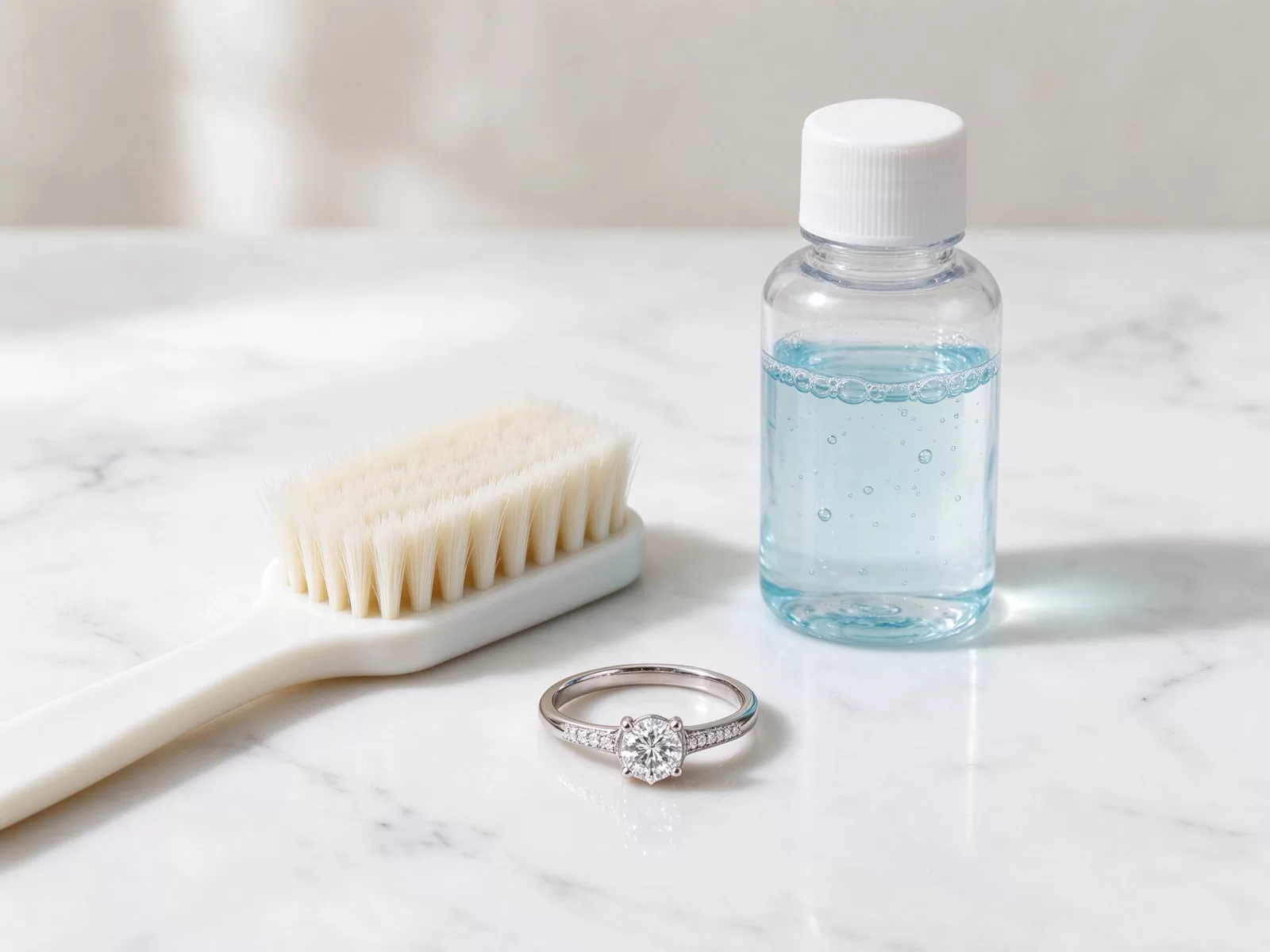
One of the most common questions wholesale buyers and their end customers ask is how to care for and clean moissanite jewelry so it stays bright, sparkly, and structurally sound for decades. Moissanite's hardness (9.25 on the Mohs scale) makes it extremely durable for daily wear, but like any fine jewelry it still needs appropriate care, proper cleaning, and common-sense storage to maintain its appearance and prevent damage to settings, prongs, and plating. HOLYCOME has manufactured and sold moissanite for over 13 years, and in that time we have seen exactly what causes moissanite pieces to lose luster, chip, develop cloudy stones, or fail in settings, and almost every issue traces back to avoidable care mistakes rather than material defects. This factory guide covers daily care practices, safe and unsafe cleaning methods, professional cleaning schedules, storage, prong and setting maintenance, and answers the most common care questions wholesale buyers and consumers ask.
01Why Moissanite Stays Brighter Than Most Gemstones
Before getting into care instructions, it is worth understanding why moissanite is inherently low-maintenance. With a Mohs hardness of 9.25, moissanite is harder than sapphire, ruby, cubic zirconia, and emerald, and only softer than diamond (10) and a handful of ultra-rare gemstones. That hardness means it resists scratching from almost anything encountered in daily life: keys, coins, counter tops, dust, glass, and most metal objects will not mark a moissanite surface. The only common material that can scratch moissanite is diamond itself, so storing moissanite pieces loose alongside diamond jewelry is the primary scratch risk to avoid.
Moissanite also has a very high refractive index (2.65, higher than diamond's 2.42) and high dispersion (0.104, more than double diamond's 0.044), which means even with minor surface oil or soap film it still displays visible sparkle. When it does dull from built-up oil or dirt, cleaning restores full fire immediately, unlike softer gems that can accumulate permanent surface scratches that reduce luster over time. Properly cared for, a HOLYCOME moissanite will look identical in 50 years to the day it was purchased.
02Daily Wear Do's and Don'ts
Moissanite is suitable for everyday wear including engagement rings, wedding bands, stud earrings, and pendants worn continuously. There are a few activities where we recommend removing moissanite jewelry to prevent avoidable damage.
Remove rings during: Heavy lifting, gym workouts, weight training, contact sports, gardening with hand tools, dishwashing without gloves, swimming in chlorinated pools or hot tubs, showering (especially with harsh shampoos and conditioners that build up film), applying lotion, perfume, hairspray, or hand sanitizer directly on jewelry, cooking with raw meat or dough that can pack under prongs, and any work that involves striking metal against hard surfaces. These activities are not dangerous to the moissanite stone itself, but they can bend prongs, wear down metal over time, crack shanks, chip plated coatings, or pack debris under settings that dulls sparkle.
Safe to wear during: Office work, typing, driving, regular walking, shopping, cooking without heavy hand use, hugging, hand washing with mild soap (rinse well), sleeping (for most solitaire designs; high-profile halo rings can catch bedding), and most everyday indoor activities. You do not need to treat moissanite as fragile; it is built for daily wear and occasional knocks will not harm it. The care rules above are about preventing rare high-impact damage and preserving settings over years, not about babying the stone.
Moissanite is suitable for everyday wear including engagement rings, wedding bands, stud earrings, and pendants worn continuously. There are a few activities where we recommend removing moissanite jewelry to prevent avoidable damage.
03Safe At-Home Cleaning Methods
Cleaning moissanite at home is straightforward and requires no special equipment. We recommend cleaning worn pieces every 1 to 2 weeks for daily-wear engagement rings, and every 1 to 2 months for occasional pieces like pendant necklaces or dress earrings.
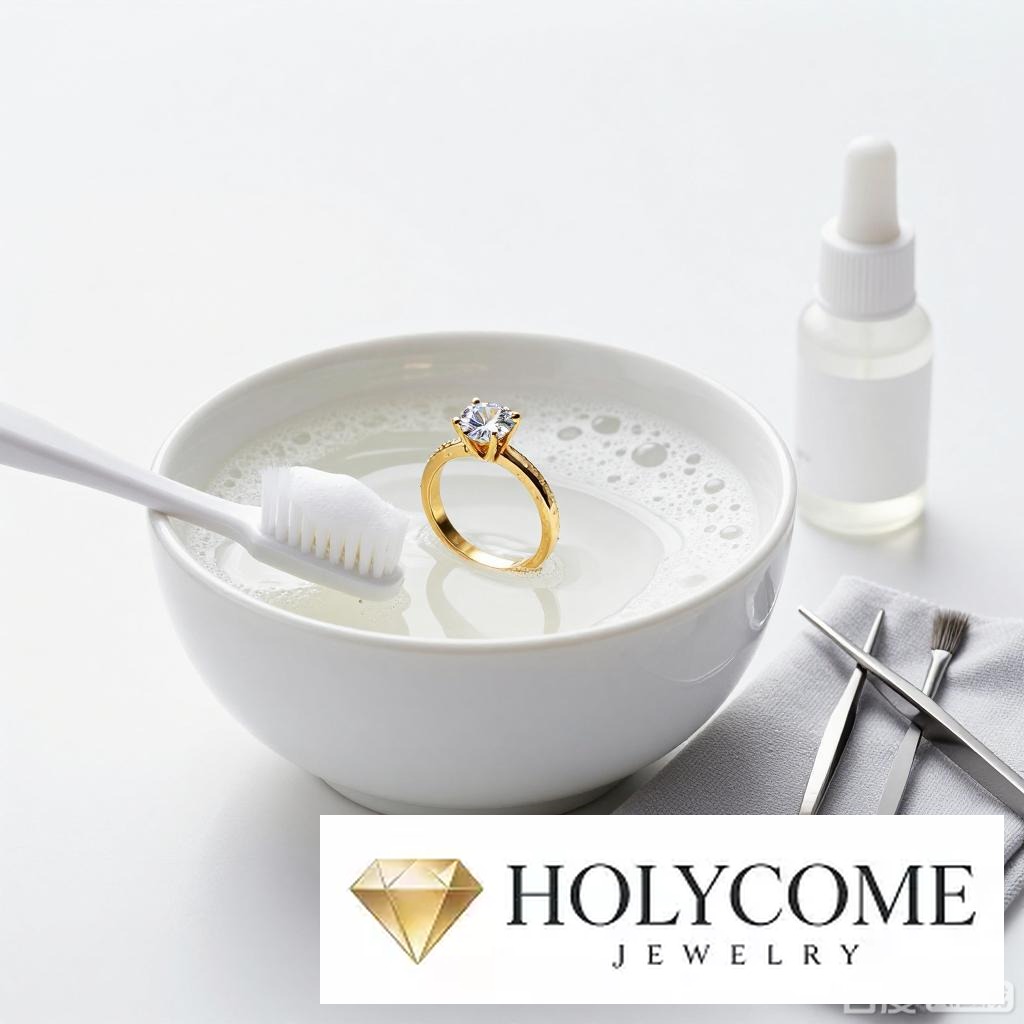
Method 1: Warm soapy water (recommended regular cleaning): Fill a small bowl with warm (not boiling) water and add a few drops of gentle dish soap without added moisturizers or fragrances. Soak the moissanite piece for 10 to 20 minutes to loosen oil and debris. Use a soft-bristled toothbrush (a baby toothbrush or dedicated jewelry brush works best) to gently scrub the stone, paying special attention to the back of the stone where oil and dirt accumulate most heavily and the areas around prongs. Rinse thoroughly under warm running water and dry completely with a lint-free microfiber cloth or jewelry polishing cloth before wearing. This method is safe for all moissanite pieces in any metal, including plated silver and solid gold.
Method 2: Jewelry cleaning solution: Commercial over-the-counter jewelry cleaning solutions formulated for diamond and precious metal jewelry are safe for moissanite. Follow the product instructions for soak time (usually 3 to 5 minutes), brush gently with the included brush, rinse, and dry. Avoid solutions marketed for silver only if your piece has gold plating, as some silver dips can strip gold plating.
Method 3: Ultrasonic cleaner (occasional deep cleaning): Most commercial home ultrasonic jewelry cleaners (40 kHz) are safe for moissanite in solid gold or platinum settings without accent stones or with moissanite accents. We do not recommend ultrasonic cleaning for pieces with melee-size diamond accents, soft gemstone accents (emerald, opal, pearl, tanzanite), glued-in stones, or heavily plated silver pieces, as ultrasonic vibration can loosen settings or damage plating. Use plain water or jewelry cleaning solution in the ultrasonic, run for 2 to 3 minutes, and rinse and dry after. Avoid using ultrasonic more than once per month for plated pieces.
What to never use on moissanite: Chlorine bleach, abrasive household cleaners, baking soda as a scrub (it scratches metal and plating), toothpaste (it is abrasive and leaves dull film), acetone or nail polish remover on glued settings, harsh silver dips on gold or plated pieces, boiling water (can loosen some settings or damage enamel accents), and pressure water jets (can bend thin prongs). These can permanently damage metal, discolor plating, or loosen stones even though they will not harm the moissanite itself.
04Polishing and Metal Maintenance
Moissanite stones do not need polishing, but the metal setting around them will develop minor scratches and patina over time just like any precious metal jewelry.
Sterling silver pieces naturally tarnish when exposed to sulfur in air. Polish silver with a silver polishing cloth 2 to 4 times per year, or use a gentle silver polish solution when tarnish is heavy. Avoid silver dip solutions on pieces with gold or rose gold plating, as they strip plating. Gold-plated and vermeil pieces should only be polished with a soft jewelry cloth; do not use abrasive polishing compounds that will wear through the plating.
Solid gold (10K, 14K, 18K) and platinum develop a soft patina that many wearers prefer, but if you want the high-polish factory finish restored, a professional jeweler can polish and re-plate white gold (which has rhodium plating that wears every 2 to 3 years) or buff gold and platinum to remove scratches. This is a simple, inexpensive service any local jeweler can do and does not affect the moissanite.
05Storage Best Practices
Store moissanite pieces individually in soft fabric jewelry pouches or separate compartments in a lined jewelry box, rather than tossing all jewelry loose into a single box. This prevents moissanite from being scratched by diamond pieces (the only common material hard enough to mark it) and prevents moissanite itself from scratching softer gems like pearls, opals, and emeralds that may be stored alongside it. For long-term storage, silver pieces benefit from anti-tarnish strips placed in the jewelry box to slow oxidation.
Keep jewelry away from extreme temperature changes (like leaving a ring on a hot car dashboard or near a heater vent) and away from direct sunlight for prolonged periods, which is mainly a concern for pieces with pearl, opal, or enamel accents rather than moissanite itself.
06Prong and Setting Inspections
The most common point of failure in moissanite jewelry is not the stone itself but the prongs or setting holding it. We recommend having a professional jeweler inspect prongs on engagement rings worn daily once per year, especially after any hard knock or impact. A jeweler can check for worn, bent, or loose prongs and retipping (adding a small amount of new metal to worn prong tips) before a stone becomes loose enough to fall out. Most prong repairs are $20 to $50 at a local jeweler and take a few days; replacing a lost stone costs far more.
Between professional inspections, you can do a quick home check by holding the ring up to your ear and tapping it gently with a fingernail next to the stone. If you hear any rattling sound, the stone is loose in its setting and you should stop wearing the ring until a jeweler tightens the setting. Visually check that prongs still sit flat against the stone surface with no visible gaps, especially on rings worn daily for more than a year.
07Common Problems and Solutions
Cloudy or dull moissanite: Almost always caused by built-up oil, soap film, or lotion residue coating the back of the stone. Clean with warm soapy water and a soft brush, scrubbing the back of the stone thoroughly; full sparkle returns immediately. Permanent cloudiness from material defects is extremely rare and covered by HOLYCOME's lifetime stone warranty.
Scratched moissanite: Moissanite cannot be scratched by any common material except diamond. If a stone appears scratched, it is almost always surface dirt that looks like a scratch; clean the piece and re-examine. True scratches on moissanite require contact with diamond or materials of similar hardness and can be polished out by a professional gem cutter in most cases.
Loose stone: Stop wearing the piece immediately and take it to a jeweler for prong tightening or re-setting. Never attempt to glue a loose moissanite; settings are designed to hold stones mechanically, not with adhesive.
Chipped moissanite: Chipping is rare with proper cutting and setting but can occur if the girdle is struck at a hard angle with a hard object, especially on very thin or poorly cut stones. Chipped moissanite can sometimes be recut by a gem cutter to a slightly smaller size, or replaced through your jeweler or HOLYCOME warranty.
Plating wear: White gold rhodium plating and gold plating on silver naturally wears in 1 to 3 years depending on wear. Re-plating is an inexpensive service at any jeweler and restores the original finish.
08Frequently Asked Questions
Can I shower with my moissanite ring?
We do not recommend it. Shampoo, conditioner, and body wash leave a thin film on moissanite that dulls sparkle over time, and soap scum builds up under prongs. Occasional accidental exposure is fine; just clean the ring afterwards.
Can I wear moissanite in a pool or hot tub?
No. Chlorine can pit and discolor gold alloys and damage plating over time, and cold water shrinks fingers making it easier for rings to slip off unnoticed. Remove rings before swimming.
Can I use hand sanitizer while wearing moissanite?
Hand sanitizer alcohol will not damage moissanite, but repeated exposure can dull plating and dry out skin under rings. Apply sanitizer, let it dry completely, then put rings back on, or rinse rings under water after sanitizing throughout the day.
Will moissanite cloud over time like CZ?
No. Unlike cubic zirconia, which can absorb oils and develop permanent cloudiness after 1 to 3 years of daily wear, moissanite is non-porous and will never cloud from age or wear. Any dullness is surface film that cleans off completely.
How often should I have moissanite professionally cleaned?
Professional cleaning once per year alongside prong inspection is ideal, especially for daily-worn engagement rings. At-home cleaning between professional visits keeps stones bright.
Moissanite is one of the lowest-maintenance fine jewelry materials you can sell, which makes it an easy recommendation for retail customers who want the look of diamond without the high maintenance or cost of frequent professional cleanings. The care routine is simple: avoid harsh chemicals and high-impact activities, clean gently at home every couple of weeks, inspect prongs once a year, and store pieces separately. Following these rules keeps HOLYCOME moissanite jewelry sparkling for generations of wear. Source wholesale moissanite directly from our Wuzhou factory, or browse our moissanite collection for engagement rings, earrings, necklaces, and bracelets suitable for daily wear.
Related reading: Moissanite Jewelry Private Label OEM Factory Guide, What Is Moissanite: Wholesale Factory Guide for Jewelry Buyers, Moissanite Ring Care: Cleaning & Maintenance Guide.