Moissanite rings are built to last a lifetime of daily wear, but even the hardest gemstone and best-made setting benefit from simple, regular care. Customers who know how to clean their rings, when to take them off, how to have prongs checked, and what to expect from normal wear keep their moissanite rings sparkling for decades—and customers who understand maintenance report far higher long-term satisfaction than those who assume moissanite is completely indestructible and ignore basic care.
As a moissanite manufacturer producing over 150,000 pieces of moissanite jewelry annually, HOLYCOME handles customer care questions from brands and end customers every day. This guide covers everything your customers need to know about cleaning, wearing, maintaining, and protecting their moissanite rings, drawn from 14 years of production and after-care data. It is the reference we recommend all our brand partners share with their customers at the time of purchase.
01Moissanite Durability: What Customers Realistically Need to Know
Let us start with what moissanite can handle. At 9.25 on the Mohs hardness scale, moissanite is harder than every gemstone except diamond and moissanite itself. It cannot be scratched by anything in normal daily life except diamond and other moissanite—meaning keys, coins, metal, granite countertops, glass, and most workplace surfaces will not mark it. Moissanite also will not cloud, craze, or change color with exposure to heat, household chemicals, soap, perfume, or UV light. Those properties are real and they matter for daily wear.
What moissanite is not is indestructible. A hard, sharp impact at the right angle can chip any gemstone, including moissanite, particularly at the girdle edge and at pointed corners on fancy shapes. Prongs can bend if the ring is caught on something heavy and pulled, and any stone can come loose if its prongs wear down over years without maintenance. Setting clear expectations prevents customers from assuming "hard enough to scratch everything" means "nothing can ever go wrong."
| Activity | Recommendation | Why |
|---|---|---|
| Hand washing / showering | Safe to wear | Soap and water do not harm moissanite; soap film may dull sparkle temporarily |
| Dish washing (household) | Generally safe; rubber gloves recommended | Detergents are fine; hitting ring on sink or dishes can bend prongs over time |
| Swimming (pool/ocean) | Remove | Chlorine can pit and discolor gold alloys over time; cold water shrinks fingers, risk of ring slipping off |
| Gym / weightlifting | Remove | Metal bars compress bands and bend prongs; weights impact the ring top directly |
| Contact sports | Remove | Hard direct impact can chip stones and bend bands; also risk of injuring others |
| Gardening / construction / manual labor | Remove or wear protective gloves | Abrasive grit can dull polish; hard impacts can chip stones and bend prongs |
| Cleaning with bleach / abrasives | Remove | Bleach damages gold alloys; abrasive cleaners scratch metal |
| Cooking / baking | Safe to wear | Food and cooking temperatures cause no damage |
| Sleeping | Personal preference; remove if ring catches on bedding | Prolonged pressure on prongs from sleeping on the hand can bend them over many years |
| Applying lotion / sunscreen / perfume | Put ring on after products absorb | Product residue builds up under setting and dulls sparkle; requires more frequent cleaning |
GIA provides general gemstone care guidance applicable to all jewelry, noting that even diamond requires regular cleaning and occasional prong inspection, despite its reputation as the hardest material. GIA's gem care recommendations emphasize that gem hardness means scratch resistance—not chip resistance, not setting invincibility—and that no gemstone or setting is maintenance-free. That principle applies equally to moissanite.
02How to Clean a Moissanite Ring at Home
The sparkle customers see on day one gradually dulls over weeks of wear as skin oils, soap residue, hand lotion, cooking grease, and dust accumulate on the back of the stone and between prongs. This is not damage—it is normal buildup, and it restores completely with a simple cleaning.
The Basic Daily/Weekly Clean
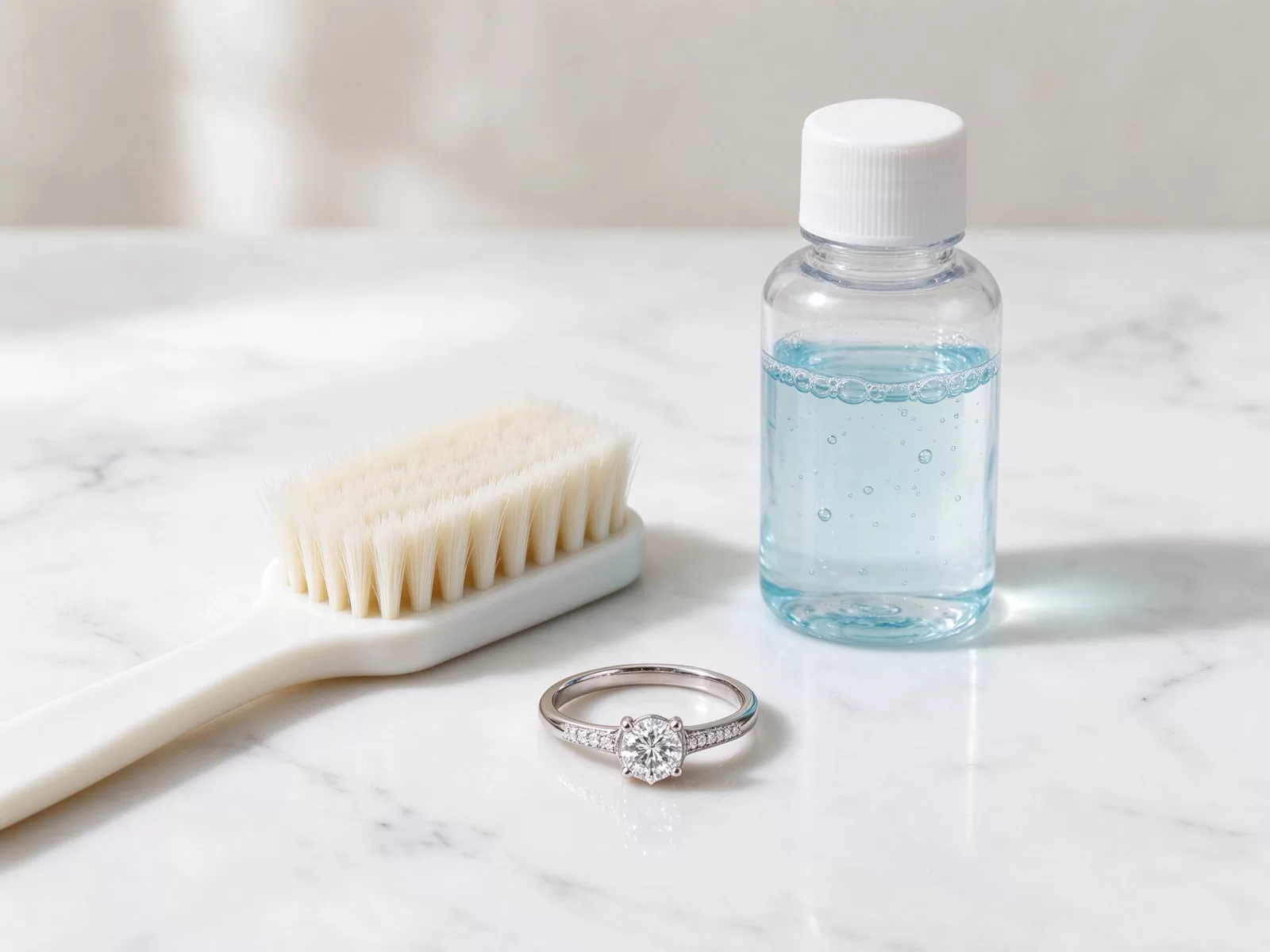
For regular maintenance, all a customer needs is warm water, a few drops of plain dish soap (not moisturizing soap, which leaves residue), and a soft baby toothbrush reserved specifically for jewelry. Submerge the ring in warm (not boiling) soapy water for 5–10 minutes to loosen buildup, then gently brush the back of the center stone (pavilion side), around prongs, in between melee stones, and along the inside of the band. Rinse thoroughly under warm running water (close the drain first or use a strainer), and pat dry with a lint-free cloth or air dry. Done once a week, this keeps moissanite sparkling like new.
Deeper Cleaning for Heavy Buildup
For rings worn daily through lotion, sunscreen, and cooking for months without cleaning, a soak in a jewelry cleaning solution (commercial jewelry cleaner formulated for gold and gemstones) followed by gentle brushing will remove heavier buildup. White vinegar and water (1:1) works as a DIY alternative for a 10–15 minute soak before brushing. Avoid harsh household chemicals like bleach, ammonia at high concentrations, and abrasive powdered cleaners—they are safe for moissanite itself but can damage gold alloys, pit rhodium plating, and accelerate wear on softer solder joints.
Ultrasonic and Steam Cleaners
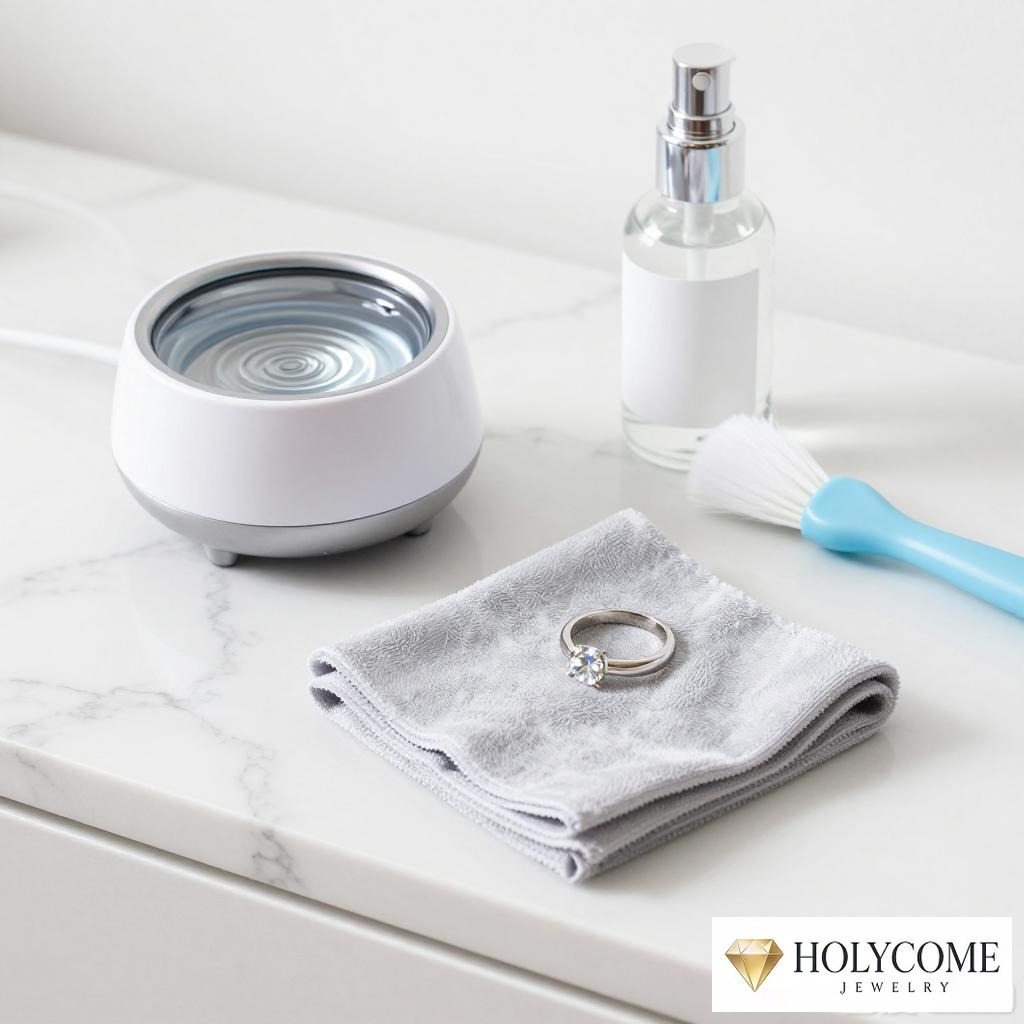
Professional ultrasonic cleaners are safe for moissanite and for solid gold/silver settings without tension settings or glued elements. The high-frequency vibrations dislodge buildup from under stones and between prongs that brushing cannot reach. Steam cleaners (high-pressure steam blast) are also safe for moissanite and are the fastest way to restore a freshly polished look. Customers should avoid at-home ultrasonic units for pieces with heavy melee if the prongs are known to be loose, but under normal conditions both ultrasonic and steam cleaning are safe and effective.
What Never to Use
- Toothpaste: it is abrasive and will scratch gold and rhodium plating over time
- Baking soda or powdered cleansers: abrasive and scratch metal
- Bleach or chlorine-based cleaners: pit and discolor gold alloys, especially white gold
- Acetone/nail polish remover: safe for moissanite itself but can damage certain glued elements in some fashion jewelry and may strip antique finishes; avoid as a precaution
The sparkle customers see on day one gradually dulls over weeks of wear as skin oils, soap residue, hand lotion, cooking grease, and dust accumulate on the back of the stone and between prongs. This is not damage—it is normal buildup, and it restores completely with a simple cleaning.
03Prong and Setting Maintenance
More moissanite rings require repair for loose or broken prongs than for damaged stones. Prongs are thin metal elements that hold each stone, and over years of daily wear they can wear thin from friction, catch on clothing or objects and bend up, or break at the tip from repeated stress. A loose prong leads to a loose stone, which leads to a lost stone if not addressed.
Annual Prong Inspections
We recommend customers have a professional jeweler check their ring's prongs under magnification once a year, especially for rings worn every day. The jeweler checks for:
- Thinning prongs (prongs that have worn down to less than half their original thickness from friction against other fingers, surfaces, and wedding bands)
- Bent or lifted prongs (caused by catching on clothing, bags, or equipment)
- Stone movement (stones that wiggle slightly in their seats, indicating a loose setting)
- Loose melee stones in halos and pavé sections
Repairing a worn prong or tightening a loose stone is a 10–15 minute, low-cost job. Replacing a lost center stone is expensive. Annual inspection is the single most effective thing customers can do to prevent stone loss, and it costs almost nothing.
Rhodium Plating Maintenance (White Gold)
White gold rings are plated with rhodium to create their bright white finish. Over 1–3 years of daily wear, rhodium plating gradually wears thin on the bottom of the shank and around prongs, revealing the slightly warmer white color of the underlying white gold alloy. This is normal wear, not a defect. Re-plating is a simple, inexpensive process that any jeweler can do, and it restores the original bright white finish. How often plating is needed depends on wear patterns and skin chemistry—customers with acidic skin wear plating faster, as do customers who wear their ring during heavy manual work.
04Ring Sizing and Fit
Correct ring size matters for both comfort and safety. A ring that is too tight is uncomfortable and hard to remove; a ring that is too loose can slip off without the wearer noticing, especially when hands are cold or wet. Finger size changes throughout the day (fingers are smaller in the morning and in cold weather, larger in the evening, in heat, and after exercise), and fluctuates with weight changes, pregnancy, medication, and even hydration. Customers who get sized in the middle of the day at room temperature, when they are not unusually hot or cold, get the most accurate measurement.
How Wide Bands Affect Fit
Wider bands (6mm and above) fit tighter than narrow bands because they cover more surface area on the finger. Customers ordering 6mm+ bands (including most men's rings) should go up half a size from their measured thin-band size to get a comfortable fit. Stacked ring sets also fit tighter than a single ring, and customers wearing stacks of three or more bands often need to go up half a size as well.
Resizing: What Is Possible
- Plain bands and simple solitaire rings: Can be resized up or down by up to 2 sizes without issues; the jeweler cuts the shank, adds or removes metal, and re-solders
- Halo and pavé rings: Can typically be resized up or down by about one size; resizing more than that disturbs the pavé melee on the sides and requires resetting stones
- Full eternity bands: Cannot be resized because stones are set all the way around the band; must be ordered in exact size or remade
- Titanium, tungsten, and alternative metal bands: Cannot be resized; must be ordered in exact size
- Rings with extensive hand engraving on the shank: Resizing damages engraving at the solder point and requires re-engraving
05Warranty and What Is Covered
HOLYCOME provides a lifetime manufacturing warranty on all our rings covering defects in materials and workmanship: loose stones due to faulty setting, cracked shanks from casting porosity, and metal quality issues. This warranty does not cover normal wear and tear (prong wear, rhodium plating wear, surface scratches from daily wear), accidental damage (bent bands from impact, chipped stones from hard knocks, lost stones from worn prongs that were not inspected), or damage from improper cleaning or repair by non-professionals.
Warranties vary by brand partner, and we encourage our partners to clearly communicate what their warranty covers and what is considered normal maintenance. The best warranty programs include complimentary prong inspections and rhodium plating for the first year or two of ownership, which builds customer loyalty and prevents the most common causes of stone loss.
06Insurance and Long-Term Protection
For engagement rings and high-value pieces, we recommend customers insure their ring through a jewelry-specific insurance policy or a homeowner's insurance rider. Moissanite engagement rings are far less expensive than comparable diamond rings, but they still represent a meaningful purchase that customers want to protect against loss, theft, or major damage. Insurance typically costs $1–2 per $100 of value per year, and it covers loss, theft, and accidental damage that normal warranties exclude.
07FAQ: Moissanite Ring Care and Maintenance
How often should I clean my moissanite ring?
Most customers who wear their ring daily need a quick brush cleaning every one to two weeks to keep it sparkling, with a deeper clean every one to two months. Customers who wear lotion, sunscreen, or work with food daily will notice buildup faster and may need weekly cleaning. If the stone looks dull or less sparkly than usual, a good cleaning is almost always all it needs.
Can moissanite chip or crack?
Yes, under a hard enough direct impact at the right angle, moissanite can chip—just like diamond can. Chips almost always occur at the girdle edge or at the pointed corners of fancy shapes (marquise, pear, princess) when caught sharply between hard surfaces. Under normal daily wear with an annual prong inspection, chipping is extremely rare: our warranty data shows chip rates under 0.15% of pieces over five years, which is comparable to diamond in similar settings.
Why is my moissanite ring cloudy-looking?
Moissanite itself never clouds or changes. If your ring looks cloudy, it is almost always a buildup of soap, lotion, or skin oils on the back of the stone blocking light from passing through. A good cleaning with warm soapy water and a soft brush will restore full sparkle immediately. If cleaning does not restore it, the issue may be a damaged rhodium plate on white gold (which can look cloudy as it wears) or heavy scratching on the metal surface—both fixable with re-polishing and re-plating.
How often should prongs be checked?
Once a year for rings worn daily. If the ring takes a hard knock (caught on something, dropped, hit against a hard surface), have the prongs checked promptly even if you see nothing wrong—prongs can bend up slightly from impacts without being visible to the naked eye, and catching them early prevents lost stones.
Can I wear my moissanite ring every day forever without taking it off?
Many customers do wear their rings every day and never take them off, and well-made moissanite rings hold up beautifully for decades of continuous wear. That said, we recommend removing rings for weightlifting, contact sports, swimming, and heavy manual labor to prevent avoidable damage. Continuous wear also means prongs wear slightly faster, so annual inspection becomes even more important for customers who never remove their rings.
08Caring for Your Ring, Caring for Your Investment
A moissanite ring from a quality manufacturer is designed to be worn every day for a lifetime, and the care routine it requires is simple: clean regularly, remove for high-risk activities, and have prongs checked once a year. That is less maintenance than most people expect from fine jewelry, and it keeps the ring looking as brilliant decades from now as it did on day one. When customers understand the basics, they enjoy their rings more and encounter far fewer preventable issues.
For brands, providing clear care information at the time of purchase—along with our warranty and product quality guarantees—reduces customer service questions, prevents unnecessary returns (most "my ring is dull" inquiries are just dirty rings), and sets the foundation for long-term customer satisfaction. Browse our full rings collection, or read our broader moissanite gemstone guide for more detail on moissanite properties. Pair ring purchases with proper care guidance available through our brand partner resources, and consider coordinating with matching earrings and pendants for complete collections.
Moissanite rings thrive on being worn—not locked in a box. With a simple care routine and annual maintenance checks, your customers can wear their moissanite rings every day with confidence, through everything life brings, and pass them on looking as brilliant as the day they first put them on.
09Frequently Asked Questions
Is moissanite a viable diamond alternative for retail?
Yes for price-sensitive buyers who want brilliance and hardness. It ranks 9.25 on the Mohs scale and costs a fraction of a natural diamond of the same size, so it turns fast in bridal and fashion lines.
What is the minimum order?
MOQ starts at 50 pieces per design for stock items; custom cuts and private-label settings start at 100 to 300 pieces.
Are certificates included?
Yes. Every parcel ships with GRA or IGI documentation listing carat weight, color grade and cut.
What are the lead times?
Samples 3 to 5 days. Bulk 15 to 20 days under 500 pieces, 25 to 30 days for custom work.