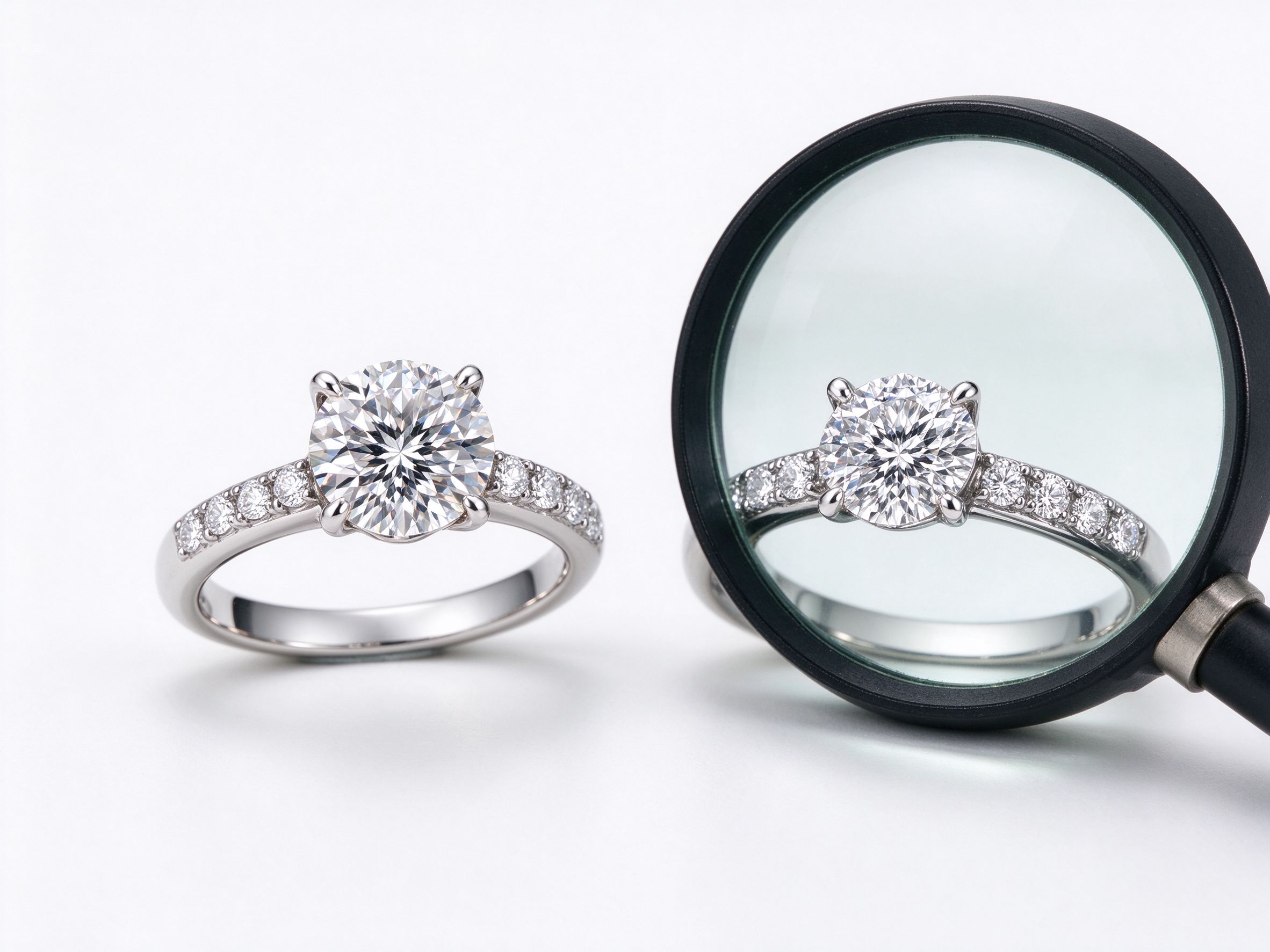
Moissanite Engagement Ring Wholesale: How Factory Pricing Is Built
Engagement rings are the heart of the moissanite business, but their wholesale price can look opaque. This guide breaks down how a factory builds the price of a moissanite engagement ring, so retailers understand the components and price their own margin intelligently.
The Components of an Engagement Ring Price
A moissanite engagement ring price is built from several clear parts: the centre stone's grade and carat, the silver setting and its weight, the setting labour, any accent stones, plating and finishing, plus overhead and margin. Unlike a diamond ring, where the stone dominates, a moissanite ring's price splits between stone and setting more evenly. This means the setting design - a slim solitaire versus an ornate halo - materially changes the total. Understanding these components lets a buyer see why two rings price differently, rather than treating the total as a black box.
Lead times are quoted honestly, including the slowest realistic stage, because a promise the floor cannot keep is worse than a longer but truthful timeline. Buyers plan launches around dates we actually meet. That reliability is a quiet reason brands reorder with the same factory season after season.
Bulk runs are quality-checked in samples from start, middle and end of production, so a buyer does not discover that the final rings drifted from the first. Consistency across a run is what makes a wholesale line dependable. We sample-measure plating and sizing on every batch before it ships.
Private label buyers receive the same production quality as our own brand would, because the manufacturing line does not change when the logo does. The only difference is the mark inside the shank. That consistency lets a new brand sell with confidence from its very first order.
The most successful wholesale partnerships grow by sharing data: what sells, what returns, what customers ask for. We use that feedback to refine grades, sizes and designs with the buyer. A factory that listens becomes a product-development partner, not just a supplier, and the range improves together.
Ring tooling is the entry cost of private label. Developing a new die, model or wax pattern for an OEM design is a fixed one-time charge that only makes sense when the order volume spreads it. For repeat ODM catalogues, tooling already exists, which is why off-the-shelf designs price far below fully custom pieces.
Setting method drives labour cost. Prong settings are quick and stone-friendly; bezel settings use more silver and more hours; micro-pav demands the most skilled bench time per stone. When you see a quote jump between two similar-looking rings, the setting method is usually the reason.
Why the Centre Stone Sets the Price Floor
The centre stone establishes the price floor. A larger, better-cut, whiter stone costs more and sets the base of the ring's price. The setting builds on that. A buyer choosing the stone grade determines where the ring sits: an entry stone for affordable bridal, a premium cut for a statement piece. The stone choice is the biggest single lever on the wholesale price, and it should match the target customer. Buyers who understand this can offer tiers of engagement ring - same setting, different stone grades - at different prices, giving customers choice without redesigning the product.
Production lead times are planned backwards. A moulded, stock-design ring can move in days; a custom ODM piece with new tooling needs weeks for sampling, approval and bulk casting. We quote the realistic timeline up front so retailers can plan marketing around stock arrival rather than promising dates the floor cannot meet.
Ring weight and material cost move together. Each gram of 925 silver is accounted for, plus the silver lost in casting and polishing. A bulky cathedral setting costs materially more silver than a slim solitaire, and that difference is visible both in the quote and in how the ring feels in the hand.
Finishing touches are a cost centre retailers forget. Hand polishing, rhodium plating, prong tightening, inspection and anti-tarnish packing are real labour and chemistry steps. A factory quote bundles them; a bargain quote that omits them quietly skips them, and the finish you receive will tell the story.
Minimum order quantities exist because of changeover. Switching a line from one ring to another costs setup, plating bath change and tooling alignment, so small runs carry a high per-unit setup charge. Consolidating designs and colours into a planned run is how wholesale buyers bring unit cost down.
Matched wedding sets are manufactured as a pair. We cast and finish engagement and band together so the metal tone, width and finish match exactly, rather than hoping two separate orders happen to align. Selling a set raises ticket value and removes the mismatch complaint entirely.
Private label is a workflow, not a sticker. We adapt our existing models to your sizing, plating, engraving and packaging, apply your logo, and produce under your brand name. The moissanite quality and 925 construction stay ours; the customer-facing identity becomes yours.
How Setting Design Moves the Price Up
Once the stone is chosen, the setting design drives the rest. A slim solitaire uses minimal silver and labour; a halo with surrounding pavé adds stones, silver and hours of setting. Cathedral settings and decorative shanks add casting and finishing work. Each design element has a cost. This is why a halo engagement ring prices well above a solitaire of the same centre stone. Buyers can use setting design to create a ladder of looks at different price points, from a clean solitaire to an elaborate halo, around the same stone. The setting is where retailers can tailor price to market.
Quality control on rings is multi-point. Casting inspection for porosity, setting inspection for seat contact, plating thickness by X-ray, and a final prong-tension and polish review. Each gate catches a different defect, and skipping any one gate is how a ring reaches a customer with a stone already working loose.
Pricing logic is transparent once you see the build. Ring price equals silver weight plus stone cost plus setting labour plus finishing and plating plus a share of tooling and overhead. When a buyer understands those five components, negotiating a fair quote becomes a conversation about quantities and processes rather than a haggling contest.
We treat the first sample as the start of a conversation, not a final verdict. Buyers request tweaks, we adjust the model, and we iterate until the design matches the vision. This collaborative loop is why OEM customers end up with rings that feel like their own, not generic catalogue pieces.
Lead times are quoted honestly, including the slowest realistic stage, because a promise the floor cannot keep is worse than a longer but truthful timeline. Buyers plan launches around dates we actually meet. That reliability is a quiet reason brands reorder with the same factory season after season.
Bulk runs are quality-checked in samples from start, middle and end of production, so a buyer does not discover that the final rings drifted from the first. Consistency across a run is what makes a wholesale line dependable. We sample-measure plating and sizing on every batch before it ships.
Private label buyers receive the same production quality as our own brand would, because the manufacturing line does not change when the logo does. The only difference is the mark inside the shank. That consistency lets a new brand sell with confidence from its very first order.
Silver Weight and Labour in the Build
Two settings that look similar can differ in silver weight and labour. A heavier, solid shank costs more silver but feels more premium; a lightweight shank saves cost but may feel flimsy. Labour differs too: a simple four-prong setting is fast, while detailed engraving or pav takes skilled time. Our pricing reflects the actual silver weight and setting hours, not a generic look. Buyers should choose the weight tier that matches the product - solid for daily-wear engagement, lighter for fashion pieces. The feel and durability of the setting, derived from weight and labour, are what customers experience and judge.
The most successful wholesale partnerships grow by sharing data: what sells, what returns, what customers ask for. We use that feedback to refine grades, sizes and designs with the buyer. A factory that listens becomes a product-development partner, not just a supplier, and the range improves together.
Ring tooling is the entry cost of private label. Developing a new die, model or wax pattern for an OEM design is a fixed one-time charge that only makes sense when the order volume spreads it. For repeat ODM catalogues, tooling already exists, which is why off-the-shelf designs price far below fully custom pieces.
Setting method drives labour cost. Prong settings are quick and stone-friendly; bezel settings use more silver and more hours; micro-pav demands the most skilled bench time per stone. When you see a quote jump between two similar-looking rings, the setting method is usually the reason.
Production lead times are planned backwards. A moulded, stock-design ring can move in days; a custom ODM piece with new tooling needs weeks for sampling, approval and bulk casting. We quote the realistic timeline up front so retailers can plan marketing around stock arrival rather than promising dates the floor cannot meet.
Ring weight and material cost move together. Each gram of 925 silver is accounted for, plus the silver lost in casting and polishing. A bulky cathedral setting costs materially more silver than a slim solitaire, and that difference is visible both in the quote and in how the ring feels in the hand.
Finishing touches are a cost centre retailers forget. Hand polishing, rhodium plating, prong tightening, inspection and anti-tarnish packing are real labour and chemistry steps. A factory quote bundles them; a bargain quote that omits them quietly skips them, and the finish you receive will tell the story.
Pricing for Retail Margin
Understanding the wholesale build lets a retailer price confidently. The cost components are known, so a retailer can apply a sensible margin that competes with diamond alternatives while remaining profitable. Moissanite's lower cost base means a retailer can offer a visually large, brilliant ring at an accessible price point and still keep healthy margin. The key is positioning: sell moissanite engagement rings as brilliant, durable value, not as cheap imitations. When the retail price reflects the real cost structure and the product's quality, customers feel they are getting a beautiful ring at a fair price, and the retailer's margin holds.
Minimum order quantities exist because of changeover. Switching a line from one ring to another costs setup, plating bath change and tooling alignment, so small runs carry a high per-unit setup charge. Consolidating designs and colours into a planned run is how wholesale buyers bring unit cost down.
Matched wedding sets are manufactured as a pair. We cast and finish engagement and band together so the metal tone, width and finish match exactly, rather than hoping two separate orders happen to align. Selling a set raises ticket value and removes the mismatch complaint entirely.
Private label is a workflow, not a sticker. We adapt our existing models to your sizing, plating, engraving and packaging, apply your logo, and produce under your brand name. The moissanite quality and 925 construction stay ours; the customer-facing identity becomes yours.
Quality control on rings is multi-point. Casting inspection for porosity, setting inspection for seat contact, plating thickness by X-ray, and a final prong-tension and polish review. Each gate catches a different defect, and skipping any one gate is how a ring reaches a customer with a stone already working loose.
Pricing logic is transparent once you see the build. Ring price equals silver weight plus stone cost plus setting labour plus finishing and plating plus a share of tooling and overhead. When a buyer understands those five components, negotiating a fair quote becomes a conversation about quantities and processes rather than a haggling contest.
We treat the first sample as the start of a conversation, not a final verdict. Buyers request tweaks, we adjust the model, and we iterate until the design matches the vision. This collaborative loop is why OEM customers end up with rings that feel like their own, not generic catalogue pieces.
Volume and Lead Time Considerations
Engagement ring wholesale pricing also depends on order structure. Stock ODM designs price lower because tooling and models already exist; custom OEM engagement rings carry tooling and sample costs. Larger runs spread overhead and lower per-unit cost. Lead times vary: stock designs ship quickly, while custom designs need sampling and approval. We help buyers balance availability, customisation and price. For a bridal line, a mix of proven ODM bestsellers at accessible pricing and a few custom exclusives gives both margin and differentiation. Understanding how volume and lead time affect price completes the picture.
Lead times are quoted honestly, including the slowest realistic stage, because a promise the floor cannot keep is worse than a longer but truthful timeline. Buyers plan launches around dates we actually meet. That reliability is a quiet reason brands reorder with the same factory season after season.
Bulk runs are quality-checked in samples from start, middle and end of production, so a buyer does not discover that the final rings drifted from the first. Consistency across a run is what makes a wholesale line dependable. We sample-measure plating and sizing on every batch before it ships.
Private label buyers receive the same production quality as our own brand would, because the manufacturing line does not change when the logo does. The only difference is the mark inside the shank. That consistency lets a new brand sell with confidence from its very first order.
The most successful wholesale partnerships grow by sharing data: what sells, what returns, what customers ask for. We use that feedback to refine grades, sizes and designs with the buyer. A factory that listens becomes a product-development partner, not just a supplier, and the range improves together.
Ring tooling is the entry cost of private label. Developing a new die, model or wax pattern for an OEM design is a fixed one-time charge that only makes sense when the order volume spreads it. For repeat ODM catalogues, tooling already exists, which is why off-the-shelf designs price far below fully custom pieces.
Setting method drives labour cost. Prong settings are quick and stone-friendly; bezel settings use more silver and more hours; micro-pav demands the most skilled bench time per stone. When you see a quote jump between two similar-looking rings, the setting method is usually the reason.
Frequently Asked Questions
What makes up a moissanite engagement ring price?
Centre stone grade and carat, silver setting weight, setting labour, accent stones, plating and overhead. Unlike diamond, stone and setting costs are more balanced.
Which component drives the price most?
The centre stone sets the price floor, then the setting design - solitaire versus halo - moves it up. Stone grade is the biggest single lever.
Why does a halo cost more than a solitaire?
A halo adds accent stones, more silver and hours of pavé setting around the same centre stone. The design, not the centre stone, drives the extra cost.
How should I price engagement rings for margin?
Use the known wholesale build to set a competitive margin. Position moissanite as brilliant, durable value rather than cheap, and offer stone-grade tiers at different prices.
Do custom engagement rings cost more?
Yes, they carry tooling and sampling on top of production. Start with proven ODM bestsellers, then add custom exclusives once demand is proven.
Conclusion
Engagement ring pricing is transparent once broken into stone, setting, silver and labour. Buyers who understand the build can offer tiers at different price points, choose the right setting design, and price for healthy margin while selling moissanite as the brilliant value it is.