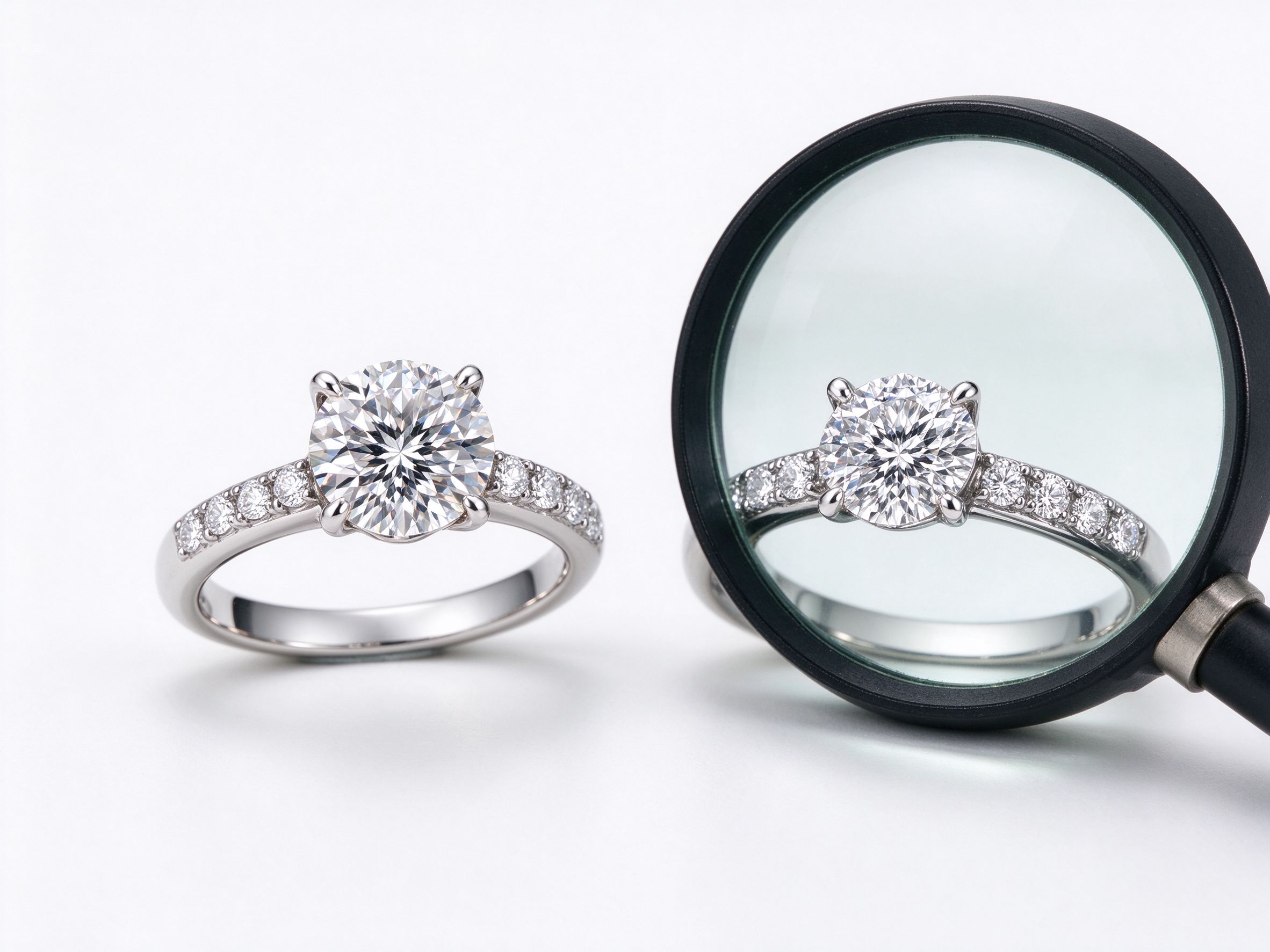
When buyers shop for moissanite, they see letters like D, E, F attached to stones and wonder what they actually mean. Moissanite does not use the diamond grading scale officially, but the labels have become a marketing shortcut. Understanding them helps you buy with confidence and talk to customers clearly.
Where the letters come from
Diamond color grading runs from D (colorless) down to Z (yellow or brown). Moissanite is a different stone, so it does not truly map onto that scale. However, sellers borrow the letters to describe how white a moissanite looks. A "DEF" moissanite is sold as the whitest, most colorless grade available. Lower grades may carry a slight warm tint, usually more visible in larger stones.
What you actually see
Moissanite is known for strong fire, which can make it look slightly colorful under light regardless of grade. A well-cut near-colorless stone looks white face-up in normal lighting. The difference between a "DEF" grade and a slightly lower grade is subtle and easiest to see when stones are compared side by side on a white background, face down.
Why buyers care about consistency
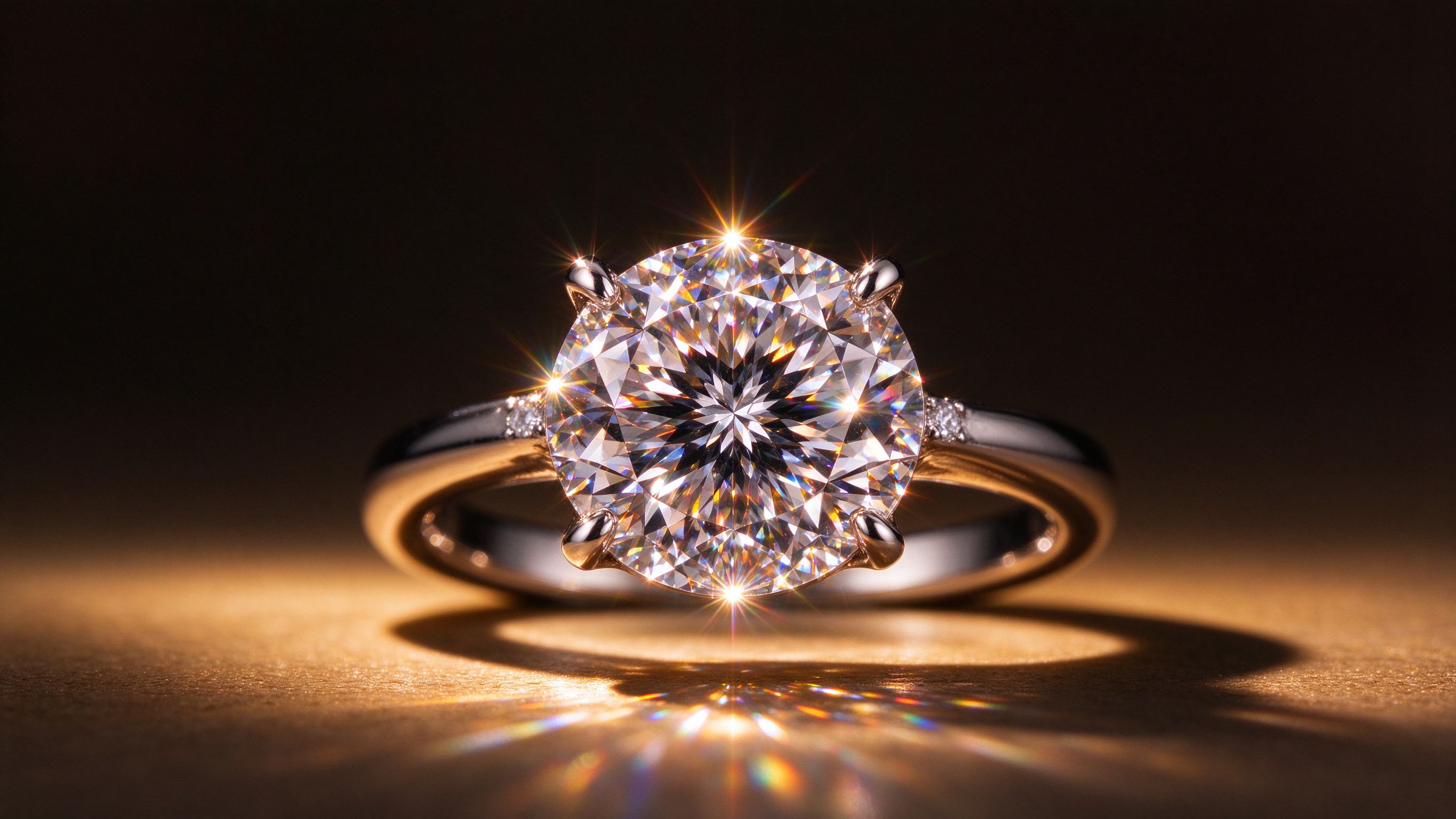
For retailers, the real issue is not one stone's grade but consistency across a stock. If stud earrings are graded DEF, both stones should match. If a solitaire is reordered later, it should look the same as the first. Reputable factories sort stones by color into batches so that pieces from the same run match.
Does higher color grade cost more?
Yes, but the premium is modest compared with diamonds. Moissanite is already far more affordable, so choosing the whitest grade adds only a small percentage. For engagement rings and high-end studs, the premium is usually worth it. For fashion pieces sold by weight, a near-colorless grade is often indistinguishable to customers.
How to judge color yourself
- View the stone face-down on a pure white surface in daylight.
- Compare several stones side by side rather than judging one alone.
- Check the edges, where any tint shows first.
- Look at the mounted ring in white gold or platinum, which exaggerates warmth.
FAQ
Is DEF moissanite truly colorless like a D diamond?
No. It is marketed that way, but moissanite has its own optical character and slight warmth that most experts can distinguish.
Does color grade affect durability?
No. Color grade is about appearance only; all moissanite is equally hard and durable.
Should I pay extra for DEF?
For center stones and studs, yes. For small accents, the difference is barely visible.
Color is one part of moissanite value. Compare it with moissanite value guides or return to the Knowledge library.
How lighting changes the color you see
Moissanite color looks different depending on where you view it. Under warm indoor light, near-colorless stones can show a slightly warmer face-up tone. In cool daylight, they look whiter. Under harsh LED showroom light, the fire can exaggerate any warmth. This is why comparing stones on a phone photo is misleading: the lighting is always different. When judging color, view the stone on a plain white surface in natural daylight, and compare several stones together. That reveals the true grade.
Mounting metal also changes perceived color. A moissanite in yellow gold looks warmer than the same stone in white gold or platinum. If you are buying a stone for a yellow gold setting, you can sometimes choose a slightly lower color grade and save money, because the warm metal flatters the stone. For a white setting, choose the whiter grade to avoid any visible tint.
Buying color consistently across a range
For retailers, the hardest part is not one stone but matching across a product line. If studs are sold as a pair, both stones must match. If a solitaire is reordered months later, customers expect the same white. Ask the factory to sort stones into color batches and to label each batch. That way, reorders match the first run. Document the grade you sell and do not mix grades in the same product line. Consistency builds trust far more than chasing the absolute whitest stone on one order.
Bottom line
Moissanite color grades are a marketing shorthand, not a strict diamond scale. The whitest grades matter most for center stones and white settings. For small accents, the difference is barely visible. Buy by real daylight photos and by batch consistency, not by the letters alone. Consistent, well-sorted stones build trust more than chasing the absolute top grade on every order.
A worked example: matching a reorder
A retailer sold out of a moissanite solitaire and reordered the same style from her factory. The new stone arrived and looked slightly warmer than the first one. The customer noticed. The cause was that the two stones came from different color batches. The fix is to ask the factory to sort stones by color and to label each batch, so reorders match. This is a wholesaler issue, not a defect. When stones are sorted consistently, a reorder looks identical to the first run. Document the batch on your side so future orders pull from the same grade.
Setting expectations with customers
Tell customers that no two stones are absolutely identical, even within a grade. Moissanite, like any gem, has slight natural variation. What you guarantee is a consistent, near-colorless grade, not a computer-perfect match. Most customers never notice a difference until they compare two stones side by side. Set expectations honestly and the rare comparison becomes a non-issue rather than a complaint.
Quick reference checklist
- Choose the whiter grade for center stones and white settings.
- Lower grades are fine for small accents.
- Compare stones on white paper in daylight.
- Ask the factory for color-sorted batches for consistent reorders.
- Judge by real photos, not by letter labels alone.
Moissanite color is a subtle thing, and consistency matters more than chasing the top grade. Buy by what you actually see in daylight, and keep batches consistent. Your customers will notice a uniform, bright range far more than they will argue about a single letter on a report.