The 90-Day Jewelry Care Calendar: A Factory Maintenance Routine
Most jewelry care advice is either a one-time deep clean or a vague reminder to get your ring checked once a year. Neither tells you what to actually do on a Tuesday. After years of shipping moissanite pieces and seeing what comes back for service, we have settled on a simple rhythm: a ninety-day calendar of small checks and cleans, spaced so nothing is neglected and nothing is overdone. Each block takes minutes, the whole quarter adds up to less than an hour, and it catches the problems, loose prongs, worn plating, built-up film, before they become lost stones or dull finishes. This guide lays out that calendar, step by step, the way our own QC bench thinks about it.
The idea is not to turn jewelry care into a chore. It is to spread the work so you never face a panicked morning where the ring has gone dull or a stone has gone loose without warning. A ninety-day cycle matches the way wear actually accumulates: film builds up over weeks, plating thins over months, and prongs start to move after seasons. Worked into a calendar, those changes become visible while they are still cheap to fix. If you only ever do one thing, do the monthly clean and the quarterly prong check. Everything else is refinement on top of that.
The Monthly Clean: Every 30 Days
Once a month, give every piece you wear regularly a proper wash. Warm water, a drop of clear dish soap, a soft brush under the prongs, a thorough rinse, and an immediate dry. This removes the soap film, skin oils, and lotion that build up between wears, and it is the single habit that keeps a moissanite looking the way it did on day one. We describe the method in detail in our guide to cleaning moissanite at home, but the monthly rhythm matters as much as the technique.
While the piece is in the bowl, look at it. This is the moment to notice a new scratch, a dull patch, or a prong that no longer looks right. Most people never actually inspect their jewelry; they just wear it. The monthly clean forces a two-minute look, and that look is where problems get caught. Earrings and necklaces, which collect hairspray and perfume, deserve the same monthly soak even if you wear them less often.
Once a month is the right cadence for daily-wear pieces. If you shower with your ring on or live in a hard-water area, move to every two weeks. If you wear a piece only on weekends, once a quarter is enough. The calendar is a default, not a rule. The tactile check, a smooth band versus a tacky one, tells you when you are behind.
The Prong Check: Every 90 Days
Every three months, give every stone a gentle nudge with a fingertip. Work around the center stone first, then around any pavé or halo stones. A secure stone does not move at all. A stone that shifts even slightly comes off and goes to a jeweler. This ninety-day prong check is the highest-value task on the whole calendar, because it is the only thing that catches a loosening prong before the stone falls out. We explain how to read the feel of a loose stone in our article on prong security.
Also run a fingernail across each prong tip. A tip that catches on your nail is bent outward and needs retipping. Look for any prong that looks shorter or straighter than its neighbors, and for any gap between the prong and the stone. Do this in good light, and do it dry, because water changes how a stone feels. Ninety days is frequent enough that a bent prong has not yet worked the stone loose, which is why the check is cheap insurance rather than a repair appointment.
If you wear pavé or a halo, shorten this to every sixty days. Small stones loosen faster, and the small ones are also the easiest to lose without noticing. A ninety-day cycle is fine for a solitaire; a pavé ring deserves the extra look. We set pavé prongs slightly heavier on pieces built for active wear, but even a well-set pavé benefits from a quarterly nudge.

The Plating and Finish Check: Every 180 Days
Twice a year, look at the finish. On a rhodium-plated ring, watch for the bottom of the band and the high-contact edges starting to show a faint yellow or grey tint. That is the plating wearing through, and it is your cue to schedule a re-plate, not an emergency. On silver pieces, look for a dull grey bloom that polishing cloth is not clearing, which signals heavier tarnish. We cover plating lifespans in our rhodium care guidance, but the practical trigger is visual, not calendared.
You do not need to re-plate on a fixed schedule. Re-plate when the finish bothers you or when the underlying metal shows through on a visible surface. Most daily-wear rings need it once every twelve to twenty-four months, and a biannual check simply means you will notice the wear at the right moment rather than suddenly one day. Wholesale partners often batch their customers' rings for re-plating at six-month intervals, which is how the rhythm scales.
Use the same check to notice scratches. If the band has developed a matte look that distracts you, this is the moment to book a repolish alongside the re-plating, because the two services go together. Bundling them costs less and leaves the ring uniformly finished. Do not polish on a schedule; polish when the scratches start to bother you, which the biannual check helps you judge honestly.
The Seasonal Reset: Every 12 Months
Once a year, do a fuller pass. Take every piece out, clean it, inspect it, and lay it out. Look at chains for kinks, at clasps for looseness, at earring posts for wear, and at bracelets for stretched links. This annual review is where the small pieces, the earrings you rarely check, get their turn. We cover seasonal factors in our article on seasonal jewelry care, but the annual reset is the same idea: a deliberate look rather than a habit you have forgotten.
At the annual reset, also review storage. Replace anti-tarnish strips, refresh silica gel packs, and check that pieces are still separated. If you live in a damp climate, this is the moment to confirm your storage is doing its job. The annual pass is short, usually under twenty minutes for a small collection, and it prevents the slow problems that months of storage can create.
Once a year, consider a professional checkup. A jeweler or the factory will tighten prongs, test chains, and polish with professional tools for less than the cost of replacing a lost stone. This is the one task on the calendar that leaves your house, and it is the best insurance you have. If your warranty requires annual service to stay valid, this is the visit that keeps it alive.
What the Factory Does on the Same Cycle
It may help to know that our own QC cycle mirrors this calendar. When pieces come back from wholesale customers for service, we run them through a ninety-day-equivalent review: ultrasonic clean, prong tension check under magnification, plating thickness check, and a final inspect under light. The rhythm we recommend to owners is the rhythm we use ourselves, because it matches how wear actually develops. A piece we shipped six months ago should come back needing a clean and perhaps a re-plate, not a rebuild.
This is also why we tell wholesale brands to include a care card with every sale. The card maps the same monthly clean and quarterly check onto the customer's year, and it dramatically reduces the "my ring looks dull" support emails. Customers who know the ninety-day rhythm keep their pieces looking new, and they keep coming back rather than returning the product. The calendar is not just care advice; it is a retention tool.
The Few Tools the Calendar Actually Needs
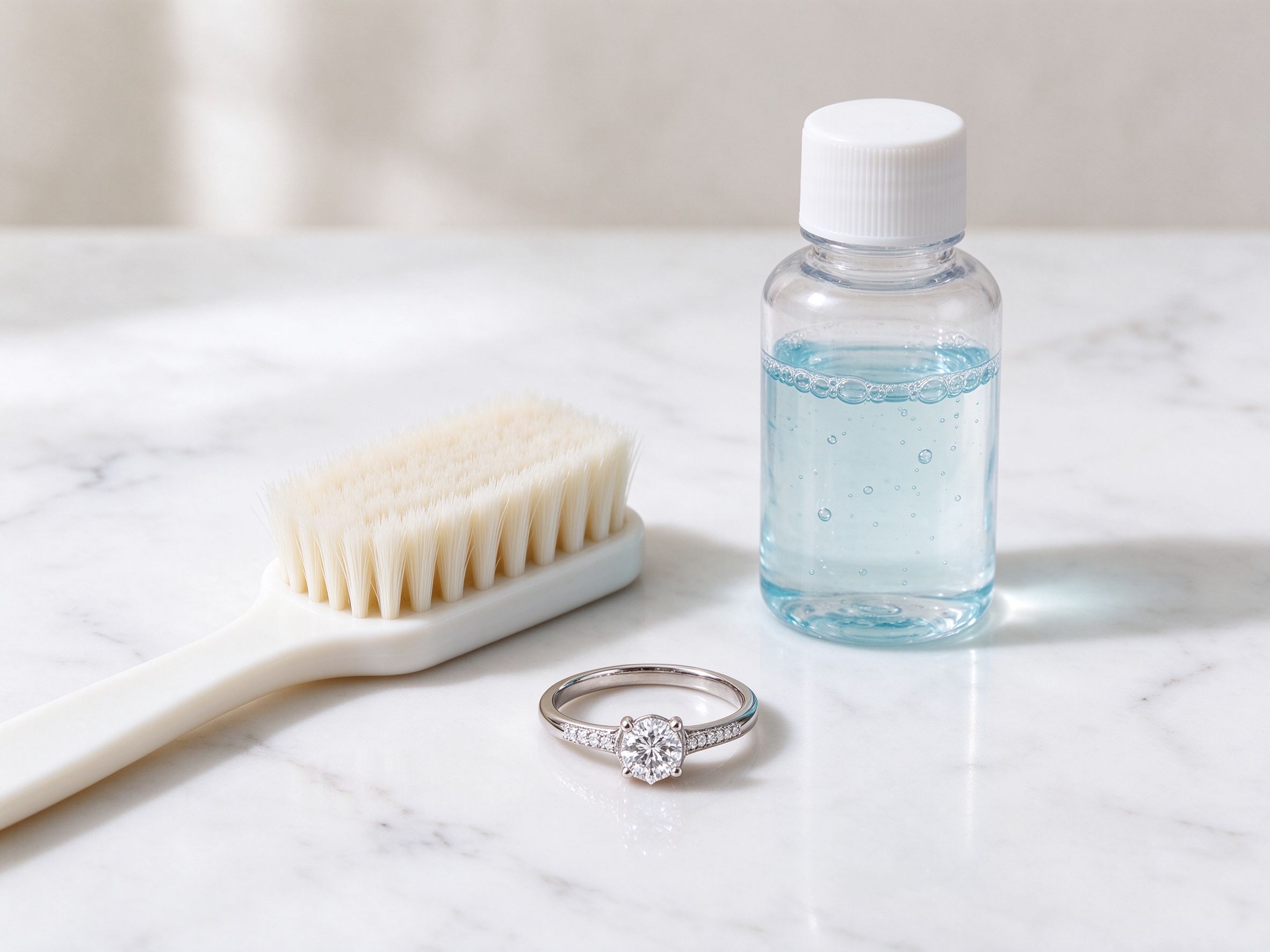
You do not need a workshop. The whole ninety-day routine runs on four cheap items. First, a small soft-bristled brush, the kind you would never use on your teeth, for getting under prongs. Second, a bottle of clear, non-moisturizing dish soap. Third, a couple of lint-free microfiber cloths, one for drying and one for polishing. Fourth, a small anti-tarnish pouch or strip for storage. That is the complete list. Everything else sold as jewelry care is optional, and much of it is actively unhelpful.
A small home ultrasonic is a nice upgrade, not a requirement. If you own one, it speeds the monthly clean dramatically, and moissanite handles it well. But a soft brush and warm water do the same job over ten extra minutes. We do not recommend steam cleaners at home, because thermal shock is real on older settings, and we discourage silver dips for the reasons covered in our scratch and plating guidance. The four-item toolkit is enough for life.
Keep the toolkit in one place so the routine is frictionless. A small dish on the bathroom shelf, or a pouch in the jewelry box, means the monthly clean happens because the tools are already there. If the brush is in a drawer somewhere, the clean does not happen. We tell wholesale customers this, because a care kit bundled with a ring is more likely to get used than instructions alone. We supply branded care kits with bulk orders for exactly this reason.
Running the Calendar Across a Whole Collection
If you own more than a ring, the calendar scales, but you do not need to triple the work. Group the pieces. Clean all of them in one monthly sitting, because the bowl of soapy water holds several pieces at once. Do the prong checks while the pieces are laid out to dry, which means you inspect everything in the same ten minutes. Treat the collection as one system rather than ten separate routines, and the whole quarter still takes under an hour.
Pieces you wear rarely need lighter maintenance. An occasional necklace worn to weddings only needs a quarterly wipe and an annual inspect, not a monthly soak. Pieces you wear daily, a wedding ring, everyday earrings, a watch bracelet, need the full monthly cycle. Sort your collection into daily and occasional, and run the calendar only on the daily group each month. This prevents the routine from feeling like a second job.
For wholesale and retail customers, the same grouping principle applies. A store that sells a care card with each ring is teaching the customer the rhythm. A store that hands over the ring in a pouch with no guidance gets the support emails six months later when the ring dulls. The calendar is a product feature, not just advice, and the brands that treat it that way have happier customers and fewer returns.
What the Calendar Reveals, and What to Do Next
The whole point of the calendar is that it turns surprises into scheduled events. When the monthly clean reveals a dull film, the fix is another clean. When the quarterly prong check reveals a wiggle, the fix is a retipping appointment. When the biannual finish check reveals worn plating, the fix is a re-plating. None of these are emergencies, because the calendar catches them early, while they are still small and cheap. The disasters we hear about, a lost stone, a snapped chain, a cracked band, are almost always cases where the calendar was skipped and a small problem aged into a large one.
Keep a simple note of what you find. A small phone note with the date and the observation, "prong felt loose March 3, retipped March 10," helps you track the cycle. If a prong needs retipping six months in a row, that setting has a chronic issue and may need a rebuild rather than repeated quick fixes. If plating wears through in three months instead of twelve, the ring may be living a harder life than expected, and a heavier plating or a different finish is worth discussing. The calendar turns the ring into something you can trend, rather than something you only notice when it goes wrong.
When you do send a piece in for service, send the whole set if you wear one. The jeweler can match plating, refit the band, and check the set together, which leaves everything consistent. Bring the note of what you found, because it tells the bench where to look. A two-sentence description saves time and prevents a long search for the loose prong you already located yourself. We treat the customer's observation as the starting point on our bench, because you have been living with the ring and we have not.
The calendar also tells you when you are doing fine. Most quarters, the clean works, the prongs feel solid, and the finish looks even. That is not a wasted check; it is the quiet success of a well-cared-for piece. Do not skip the routine just because nothing is wrong, because the nothing-is-wrong state is exactly what the routine protects. A ring that never needs a repair is the goal, and the calendar is how you reach it.
Frequently Asked Questions
What if I only wear one ring? Do I still need the calendar? Yes, but simplified. Monthly clean, quarterly prong check, and an annual professional visit. The calendar is shorter for a one-piece collection, but the rhythm stays the same.
Can I skip the monthly clean and just do the annual checkup? You can, but the ring will look dull for most of the year. The monthly clean is what keeps the fire visible between annual visits. It takes five minutes, and it is worth doing.
What if I forget the ninety-day prong check? Set a phone reminder tied to the seasons, or tie the check to an existing habit like changing your toothbrush. A reminder beats memory, because the check only works if you actually do it.
Does the calendar change for earrings and necklaces? The clean stays monthly. The prong check applies to stones, and the clasp check applies to chains and bracelets. Each jewelry type has one specific point to inspect, and the calendar tells you when.
The moissanite in your ring does not care about the calendar. It will sit quietly in its prongs, brilliant and unchanged, whether you think about it or not. What the calendar protects is the metal around it, the thin layers of plating, the tiny prongs, the soft band that meets the world every day. Those parts are consumables, and they need a schedule. Build the schedule, attach it to a reminder, and the jewelry takes care of itself. The ring you wore this morning will look the same on your tenth anniversary, not because it is indestructible, but because you washed it on time, checked it on time, and sent it in on time.
If you are unsure where to start, begin with the monthly clean this week. Do the prong check at the same time. Set the reminder for ninety days out. That is the whole habit, and everything else on the calendar grows naturally from it. You do not need to be a jeweler to keep a moissanite ring for decades. You just need to show up on schedule.
We are glad to look at a maintenance calendar and tune it for your specific pieces, whether you wear one solitaire or a whole collection. The rhythm we describe works for both, and we can tell you honestly whether any of your pieces need more or less attention than the default.There is no award for the most elaborate care routine. The owners who keep jewelry looking new for decades are not the ones with expensive machines; they are the ones who show up on the simple schedule. Five minutes a month, ten minutes a quarter, half an hour twice a year. That is the whole job. Treat it like taking the bins out or replacing the toothbrush, a small recurring task that disappears into life. The ring never complains, never asks for more, and never needs more than this. Build the calendar, set the reminders, and trust that the moissanite is taking care of its end of the bargain. It always does.
Compare this to the alternative, which is no routine at all. A ring worn daily and never cleaned looks dull within months. A prong never checked loosens over a year and eventually drops its stone. Plating never refreshed wears through to a patchy mess. These are not dramatic failures, they are the slow results of skipping the small scheduled tasks. The calendar exists to keep you out of that story, and it costs almost nothing to follow. Set the reminders, do the minutes, and the ring stays bright and secure for decades.
A Calendar Removes the Guesswork
Jewelry care does not need to be complicated, and it does not need expensive equipment. It needs a rhythm: wash monthly, check prongs quarterly, review the finish twice a year, and do a full pass annually. Worked into the calendar, those tasks disappear into ordinary life, and the ring stays bright and secure for decades. The moissanite never asks for anything; it is the metal that needs the scheduled attention, and the calendar is how you give it without thinking. Set the reminders, do the minutes, and let the ring take care of itself between visits. That is all there is to it, and it works, year after year, on ring after ring.
If you want the full service schedule your wholesale customers should follow, or if you are ordering pieces built for low-maintenance daily wear, talk to us. We are a moissanite manufacturer in Wuzhou, China, and we supply care cards, polishing cloths, and anti-tarnish packaging along with our rings. Reach our team at service@holycome.com for a maintenance checklist you can print, or to arrange a factory checkup. For the monthly method, start with our home cleaning guide, and for prong security, read the factory standards article. If you want a printable one-page checklist to pin by the jewelry box, just ask, and we will send one over. We look forward to helping you keep every piece on schedule.