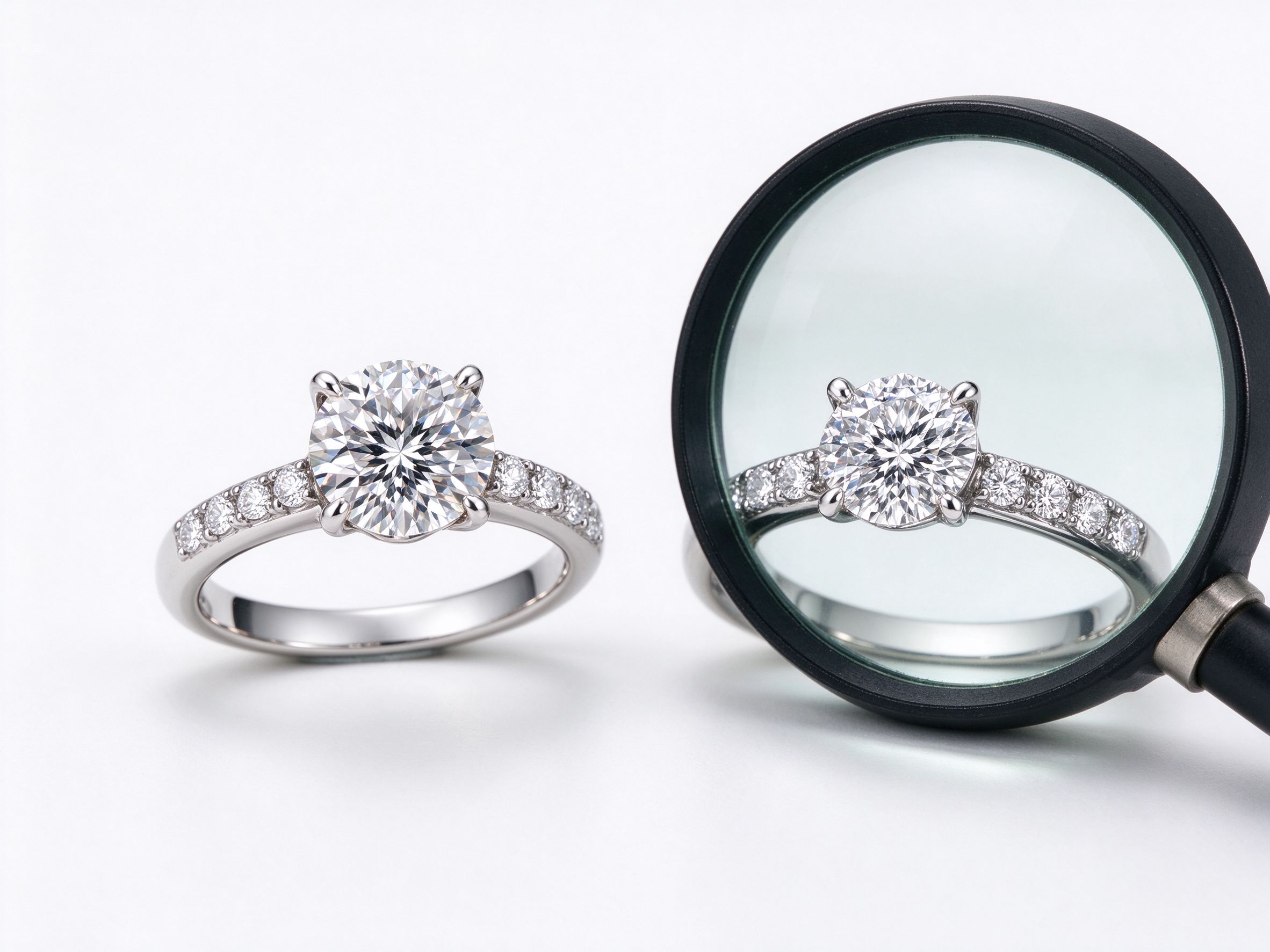
Why Moissanite Jewelry Looks Dull After a Shower
A customer brought a ring back to us last year, convinced the center stone had lost its quality. It was the same stone we had cut and set six months earlier, and under our microscope it was flawless. The problem was not the moissanite. It was a thin, invisible film of soap and hard-water minerals coating every facet, built up one shower at a time. Fifteen minutes in our ultrasonic tank and the ring looked new again. This story is so common on our production floor that we treat dull-looking moissanite as a cleaning problem until proven otherwise, and almost every time we are right.
Moissanite has a higher refractive index than diamond, which means its sparkle depends entirely on light entering clean facets. The moment a layer of film covers those facets, light scatters instead of reflecting, and the stone looks grey, flat, and lifeless. The good news is that this dullness is not damage, and it is reversible. This guide explains what hard water and soap film actually do to jewelry, why a shower makes things worse rather than better, and how our factory rinses and dries pieces so they leave the workshop looking as bright as they should.
What Makes a Stone Look Dull: It Is Almost Never the Gem
Before blaming the stone, it helps to separate the three things that can make jewelry look tired. The first is genuine scratching, which is rare on moissanite because it sits at 9.25 on the Mohs scale. The second is a loose or misaligned setting, which changes how light exits the stone. The third, and by far the most common, is surface contamination: oil, lotion, soap residue, skin sebum, and the minerals left behind when water evaporates. That contamination sits on top of the facets, and it comes off.
Because moissanite is so brilliant when clean, the contrast between clean and dirty is dramatic. A dirty moissanite does not look subtly less shiny; it looks like a different stone. Owners who bought the ring expecting diamond-level sparkle every day are often shocked by how quickly a few showers can flatten the fire. The reaction is understandable, but the cause is mundane. The stone has not degraded. The water has simply left a skin on it.
The setting matters in this picture too. Soap film does not only sit on the stone. It climbs up the prongs, settles into the gap under the stone, and coats the inside of the band where you cannot see it. That hidden buildup is what makes a ring feel slightly greasy to the touch. We cover the deeper cleaning method in our guide to cleaning moissanite at home, but the root cause of the buildup is what this article focuses on.
Hard Water: The Invisible Film Left After Every Shower
Hard water is water that contains dissolved minerals, mostly calcium and magnesium, picked up as it moves through rock and soil. When that water evaporates off a ring, the minerals stay behind as a fine white residue. On a glass shower door you see the same effect as those spotty marks. On jewelry, the spots are microscopic, but they cover every horizontal surface where water sits and dries. Over a few weeks of daily showering, those layers build up into a continuous film that diffuses light.
The severity depends on where you live. In regions with very hard water, owners notice dullness within days. In soft-water areas, the effect is slower and the problem is more about soap than minerals. Either way, the mechanism is the same: water carries dissolved solids onto the stone, and evaporation leaves them behind. Hot water makes this worse, because it evaporates faster and leaves minerals concentrated more quickly on a warm band and stone.
This is why, in our factory, we never let rinsed pieces air dry. We rinse with deionized water that has had the minerals removed, then we blow the piece dry with filtered air and polish it by hand. If we let a ring air dry, even our own fresh polish would spot. Retail customers do not have deionized water, but they can copy the principle by blotting and polishing immediately rather than letting the water evaporate on its own.
Why Soap Makes It Worse Than Water Alone
Soap is the other half of the problem. Body wash, shampoo, hand soap, and shaving cream all leave surfactants behind. Surfactants are the ingredients that grab dirt and oil, and they grab onto jewelry surfaces just as readily. A thin layer of dried surfactant acts like glue, trapping microscopic dust and skin cells against the stone. That mixture of soap, dust, and oil is the film that turns a bright stone into a dull one.
Moisturizing soaps are the worst offenders. Products that promise extra hydration leave oils intentionally, and those oils bond to the metal and the stone. Antibacterial soaps and gels with added moisturizers behave the same way. The dish soap we recommend for home cleaning works because it is designed to cut grease without leaving moisturizing residue. The bar soap in your shower is designed to leave your skin feeling soft, which is exactly why it leaves a film on your ring.
Conditioner and hairspray add another layer. These products are heavier and oilier than body wash, and they drift onto necklaces, earrings, and the sides of rings near the hands. On earrings, the buildup hides in the posts and backings, which is why stud earrings often look dull long before the center stone does. The fix is not to stop showering, it is to remove jewelry before you shower, or to rinse and wipe it properly afterward.
Why Moissanite Shows Film Faster Than Other Stones
Moissanite is punishingly honest about cleanliness, and that comes down to its optics. The stone's refractive index sits above diamond, which means it bends and returns light with unusual efficiency. That efficiency is a feature on a clean stone and a liability on a dirty one. A thin film that would be nearly invisible on a quartz ring diffuses the intense light beam inside a moissanite, turning the rainbow fire into a flat, milky wash. Owners notice the difference immediately because they bought the stone specifically for its sparkle, and the sparkle is the first thing film attacks.
The cut amplifies this too. Round brilliant and many fancy shapes are faceted to bounce light around a pavilion, the back of the stone. Any film on the pavilion, which faces the setting and is hard to see from above, steals a disproportionate amount of the return light. This is why a ring can look slightly dull from the front even when the top facet looks clean. The hidden back is the part that needs the brushing, and it is exactly where soap film and water minerals accumulate because water pools there and dries.
At our workbench, we judge cleanliness under a 10x loupe, not by eye. A facet that looks clean to the naked eye can still carry a hazy film that the loupe reveals. When we tell customers that a stone is dirty, we are not guessing; we are looking at the same microscopic layer that their own eyes perceive as dullness even when they cannot name the cause. It is the reason a professional clean feels like magic, and the reason home cleaning works best when you are thorough rather than quick.
The Factory Rinsing and Drying Protocol
When we finish setting and polishing a ring, the piece goes through a multi-stage wash before it is photographed and packed. We start with a warm ultrasonic bath in a mild solution to lift polishing compound and skin-contact oils, then we follow with a hand brush under the prongs. After that we rinse in running water, then in deionized water, and finally we blow the piece dry with oil-free compressed air. The last step is a hand polish with a lint-free cloth, turning the ring under magnification so we catch every speck.
We use deionized water for the final rinse because tap water would leave the same mineral spots on a fresh polish that it leaves on your ring at home. The compressed air matters too. We do not rely on blotting alone, because a cloth can lint and because water trapped under prongs will weep out later and spot the metal. Factory drying is aggressive on purpose: we want every facet bone dry before the piece goes into its pouch.
For retail and wholesale partners, this protocol is worth understanding because it sets the standard your customers should expect. If a ring arrives from a supplier already spotted or filmed, it has not been finished properly, and the same shortcuts usually appear in the setting and polish. We compare factory finishing with home methods in our article on home versus factory moissanite cleaning.
How to Remove the Film at Home
You do not need a factory bench to reverse shower dullness. The method is the same one we use in miniature. Fill a small bowl with warm water and a drop of clear, non-moisturizing dish soap. Drop the ring in and let it soak for five minutes, which gives the soap film time to loosen. Then take a soft, unused toothbrush and gently brush every surface: around the stone, under the prongs, along the inside of the band, and especially in the gap where the stone meets the seat.
Rinse the ring thoroughly under warm running water. This is the step most people rush. Hold the ring under the water for a full minute, turning it, because soap residue hidden under the prongs needs time to flush out. Then, instead of letting it air dry, pat it immediately with a lint-free cloth and finish with a jewelry polishing cloth. The polishing cloth is what removes the last mineral haze. If you live in a hard-water area, consider doing this rinse every week rather than every month.
An ultrasonic machine speeds this up dramatically. Ten minutes in a small home ultrasonic with warm water and a drop of solution will lift film that brushing barely touches. Moissanite handles ultrasonics well, as we explain in our guide to ultrasonic cleaner safety, but always check that the setting is secure first, because a loose stone can rattle in the bath.
The Towel and Lint Problem
One detail that surprises people is the cloth itself. A cotton bath towel sheds lint, and lint sticks to wet metal and wet stone like static. If you dry your ring on the same towel you dry your body with, you may be trading a soap film for a lint film, and a ring covered in fuzz looks almost as dull as one covered in soap. We keep separate, lint-free polishing cloths for jewelry, the kind sold cheaply in rolls, and we never use paper towels, because paper towel contains wood fibers that can lightly scratch soft silver over time. A microfiber cloth dedicated to your jewelry costs almost nothing and lasts months.
If you have just rinsed your ring and it still looks streaky, look closely. Streaks are usually lint or a thin soap film you did not rinse fully, not water spots. Wipe again with a dry part of the cloth, turning the ring as you go. Streaks that refuse to leave after two wipes are soap residue, and the answer is another rinse, not harder rubbing.
How Often to Clean Based on Your Routine
There is no single correct schedule, because buildup depends on how the ring lives. If you shower with the ring on every day and live in a hard-water area, a weekly gentle soak is the right cadence. If you take the ring off at night and apply your lotions well before you put it on, monthly is plenty. Earrings and necklaces, which collect hairspray and perfume, benefit from a quick cloth wipe after every wear and a deeper soak every few weeks. The mistake is treating the schedule as a fixed rule rather than a response to what the ring is touching.
A useful self-test is to run a fingertip around the inside of the band. If it feels smooth, the ring is clean. If it feels slightly tacky or catches on your fingerprint, film has started to build, and it is time for a wash. That tactile check takes two seconds and replaces any guessing.
Small Habits That Prevent the Buildup
Prevention is easier than removal, and the habits take seconds. The most effective one is also the simplest: take your rings off before you shower. Leave them on the edge of the sink on a small cloth, not where they can roll into the drain. If you prefer to wear them, wipe them with a soft cloth after every shower while they are still warm, which catches the film before it dries.
- Apply lotions, perfumes, and hair products before you put jewelry on, not after.
- Use a non-moisturizing dish soap for cleaning, never hand cream or body wash.
- Blot and polish immediately after rinsing; never let jewelry air dry.
- Clean once a week if you shower with your ring on, or once a month if you take it off.
- Check the gap under the stone, because that is where the film hides first.
For owners in very hard-water regions, a cheap filtration shower head reduces mineral exposure across your whole body, and it noticeably slows spotting on glasses and jewelry alike. It is not necessary, but it helps. The bigger lever is always the immediate dry.
Myth: Dullness Means the Stone Is Low Grade or Fake
We see this worry constantly. A customer buys a bright, well-cut moissanite, wears it for a few months, watches it go grey, and assumes they were sold a cheap or poorly graded stone. The grading was fine. The stone is the same one that sparkled in our inspection light. What changed is that real-world living added a layer of film that the showroom never had to deal with. Grading, color, and cut grade all describe the stone itself under clean, controlled conditions. They say nothing about how quickly an owner's soap and hard water will coat the surface.
This matters especially for wholesale buyers, because end customers often blame the brand when a stone dulls. The fix is not to sell a more expensive stone. It is to include a short care card and a small polishing cloth with every ring, and to tell customers up front that weekly cleaning is normal maintenance. We supply these care cards and cloths with bulk orders, because we know a cleaned-and-worn customer is a repeat customer, while a confused customer who thinks their stone is defective is a refund.
If you want a quick diagnostic before assuming the worst, do the soapy wash described above. If the fire comes back, the stone was always fine. If it does not, then look for a loose setting, a scratch, or a plating issue, as covered in the next section. Nine times out of ten, the wash settles it.
When Dullness Means Something Else
Almost always, a dull moissanite is a dirty moissanite. Occasionally, though, the dullness has a different cause. If a thorough soapy clean does not bring the fire back, look closely at the stone. A scratch on the pavilion, the back of the stone, is possible if the ring took a serious impact, though rare. A cloudy patch under the stone can mean the adhesive or seat has failed, which needs a jeweler. And if the stone rocks or feels loose, stop wearing it and get it serviced.
Metal dullness is another separate case. If the band looks grey or yellow while the stone looks fine, you are probably seeing worn rhodium plating or light tarnish on silver, not a problem with the moissanite. Polishing the stone will not fix a plating issue, and cleaning the metal with abrasive cloths will only thin it faster. We cover plating refresh in our care guidance, and it is an inexpensive professional service.
Frequently Asked Questions
Is it safe to shower with moissanite? The stone is safe in shower water, but soap and shampoo leave film and hard water leaves spots, so the ring will look dull faster. If you shower with it on, rinse and wipe it afterward. Removing it is easier.
Why does my moissanite look cloudy after I clean it? Cloudiness after cleaning usually means you let it air dry and minerals settled on the wet surface, or you used a moisturizing soap. Rinse again with clear warm water and polish immediately with a dry cloth.
Will a water softener help my jewelry stay bright? A water softener reduces mineral spotting, yes, but the bigger cause of dullness is soap film and skin oils. Softened water helps, but weekly soapy cleaning is still the reliable fix.
Can hard water permanently damage moissanite? No. Moissanite is chemically stable and does not react with calcium or magnesium. Any dullness from hard water is a removable surface deposit, never permanent etching.
Brightness Is a Maintenance Job, Not a Birthright
Factory-fresh sparkle is the easiest kind to achieve, because a clean bench and deionized water remove every film before the stone ships. Keeping that sparkle at home is a smaller version of the same routine: wash, rinse, dry immediately, and polish. Treat the weekly clean as the price of the intense fire you bought, and the moissanite will keep rewarding you for decades. The stone is not fading. It is simply asking to be wiped.
If your moissanite jewelry has gone dull despite regular cleaning, or if you are ordering for a brand and want your pieces finished to factory standards, talk to us. We are a moissanite manufacturer in Wuzhou, China, and every stone we set goes through the rinse, blow-dry, and inspect process before it leaves. Reach our team at service@holycome.com for finishing guidance, re-polishing, or wholesale care standards. For the step-by-step home method, start with our cleaning guide, and for professional versus DIY options, see our comparison article.