
After a long period of shared surfaces, gym sessions and public transport, many owners want to know how to disinfect their jewelry without ruining it. Rhodium-plated 925 silver, in particular, is delicate: the thin bright-white coating can wear away if you use the wrong products, and the stones can lose their sparkle. This guide explains which disinfecting methods are safe, which to avoid, and how often you really need to clean.
Why rhodium plating needs gentle handling
Rhodium is plated onto sterling silver in a thin layer, often measured in fractions of a micron. It gives the metal a bright, tarnish-resistant white finish. Alcohol, chlorine and abrasive creams can all attack this layer. When rhodium thins, the cooler silver beneath shows through, and the piece looks slightly dull or slightly yellow next to a freshly plated one. You cannot restore the shine by rubbing harder; the piece simply needs re-plating.
The goal of disinfecting is to reduce surface germs, not to apply harsh chemicals. Most everyday jewelry only needs a light refresh, not a chemical soak.
What you can use safely
- Mild dish soap and warm water. A drop of neutral soap in lukewarm water, a soft bristle brush and a microfiber cloth removes oils and most surface germs safely.
- 70% isopropyl alcohol on a cloth. Dampen (do not soak) a lint-free cloth, wipe the metal briefly, then dry immediately. This is fine for solid stones like moissanite and most settings.
- Hydrogen peroxide diluted half with water. A short 30-second dip for rings and earrings, followed by thorough rinsing, works for sturdy pieces.
- Ultrasonic units occasionally. These are fine for moissanite, but check the setting first because loose prongs and glued stones can be shaken loose.
What to avoid
Bleach, chlorine and household cleaners are the biggest enemies. Chlorine can pit silver and discolor plating over time, and it is especially damaging in hot water. Avoid spraying perfume, hairspray or cleaning sprays directly onto the jewelry. Skip silver dips and polishing creams on plated pieces, because they strip rhodium faster than normal wear. Rough paper towels and tissue can leave micro-scratches, so use a 100% cotton or microfiber cloth.
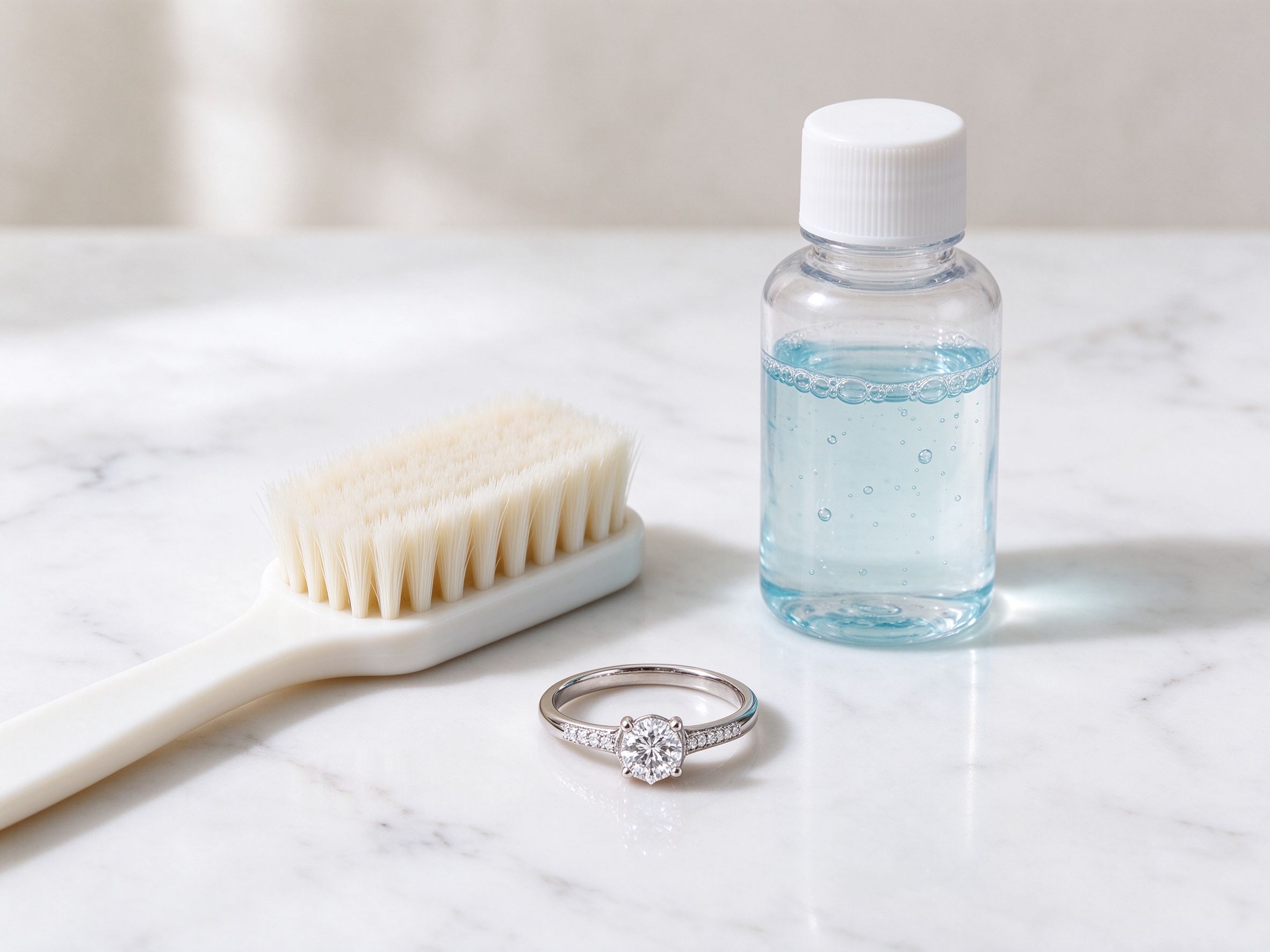
Step-by-step safe disinfection
- Remove the jewelry and inspect prongs and clasps under good light.
- Mix warm water with a drop of neutral dish soap.
- Dip a soft brush and gently scrub around prongs and behind the stone.
- Rinse under clean warm water, catching the drain so nothing falls in.
- If you want extra disinfection, wipe briefly with an alcohol-dampened cloth.
- Pat dry with a lint-free cloth and leave to air dry completely before storing.
How often should you disinfect?
For daily-wear rings and earrings, a gentle soap clean once every one to two weeks is enough. You do not need to disinfect after every wear unless you have been in a hospital, around sick people, or handling raw food. Over-cleaning is a real issue: the more you polish and soak, the faster the plating wears. Less, gentler cleaning extends the life of the finish.
FAQ
Can I use hand sanitizer on my ring?
Alcohol-based sanitizer is not ideal because it is gel-like and can build up behind stones. Better to remove rings before applying sanitizer, then wipe the ring with a dry cloth afterward.
Does moissanite get damaged by alcohol?
No. Moissanite is highly resistant to common chemicals. The risk is always the metal setting and the plating, not the stone.
How do I know when my rhodium needs redoing?
If the ring looks grey or yellow in spots, especially where the band touches skin, the rhodium has worn thin. A jeweler can re-plate it for a modest fee.
Disinfecting jewelry is about balance: clean gently, avoid harsh chemicals, and let the plating age naturally. For more maintenance tips, browse the Jewelry Care guides or the full Knowledge library.
Signs you cleaned it wrong
Most people do not damage jewelry by accident; they damage it by overdoing it. If your ring suddenly looks dull after cleaning, you probably used a product that stripped the plating rather than removed the dirt. Watch for a few telltale signs. A milky or filmy appearance means soap residue built up behind the stone and needs a gentle brush. A yellowish or grey cast on a white ring means the rhodium is wearing through, not that you cleaned it badly. Tiny fine scratches appearing on the metal mean you used a rough cloth or an abrasive cream, which you should stop immediately.
If you notice these, do not reach for stronger cleaner. Stronger cleaner makes plating problems worse. Instead, switch to the gentlest routine: mild soap, warm water, soft brush, dry cloth. When the plating finally thins, a jeweler can re-finish the ring for a modest fee, and it will look new again.
A weekly routine that takes two minutes
A practical schedule removes the guesswork. Once a week, soak the piece in warm soapy water for a few minutes. Lightly brush around prongs, clasps and chain links. Rinse under clean water, catching the drain. Pat dry and leave it on a soft cloth to air dry. Once a month, wipe with a jewelry polishing cloth to restore shine. Once or twice a year, have a jeweler inspect prongs and prongs and re-plate if needed. This routine keeps jewelry clean and bright without wearing the finish. Over-cleaning is a real mistake, and a gentle weekly habit beats an occasional aggressive scrub.
A worked example: refreshing a dull silver ring
Imagine a customer wears a rhodium-plated moissanite ring every day. After three months, it looks grey and the stone looks dull. She assumes the stone has clouded and wants a replacement. The real cause is simpler. She applies hand sanitizer without removing the ring, sprays perfume near her hand, and never cleans the setting. The fix is not a new ring. She soaks the ring in warm soapy water for five minutes, brushes behind the stone with a soft toothbrush, rinses and dries it. The stone looks bright again. The grey band is worn rhodium, which a jeweler re-plates. Within an hour the ring looks new, and the customer learns that most dullness is cleaning, not damage.
What to tell customers in the care card
Include three rules in every care card. Remove jewelry before sanitizer, perfume and cleaning sprays. Clean gently with soap and water, never with abrasive creams. Store pieces dry and separately. These three lines prevent most "the jewelry is damaged" complaints. When customers understand that rhodium is a thin, renewable finish, they stop panicking when it wears and instead plan a re-plating. Honest care instructions reduce returns and build a relationship that lasts for years of repeat purchases.