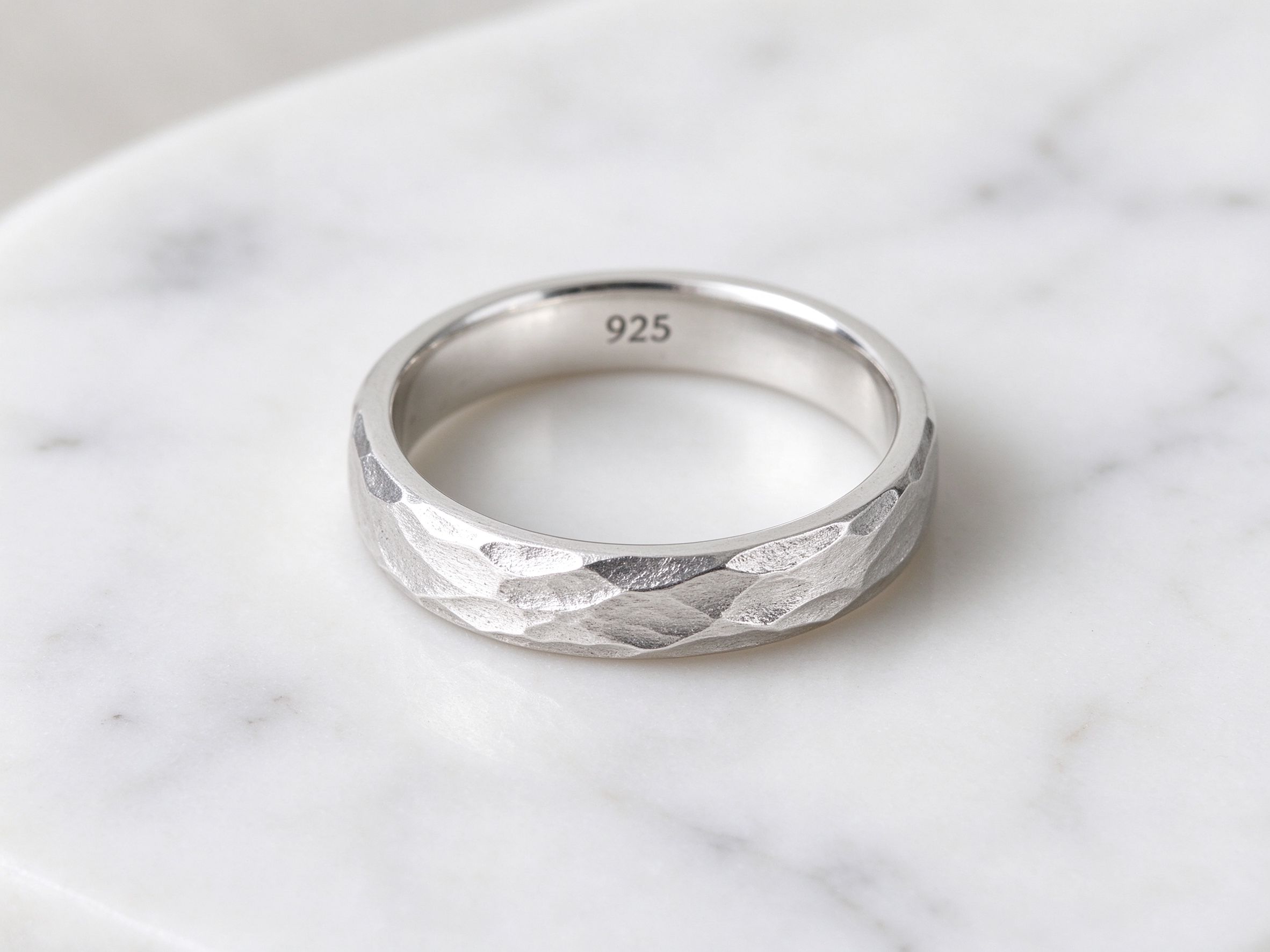
Wedding bands are sold across a huge range of prices, and the metal is the biggest reason why. A band that costs ten dollars and one that costs three hundred can look similar at first glance. Understanding the metal price points helps buyers match stock to their customers.
Sterling silver bands
Sterling silver is the affordable entry point. It looks bright when rhodium plated and can be engraved and resized. It is softer than gold, so it scratches and dents over years of wear. Silver bands are ideal for budget weddings, promise rings and couples who want a piece they can replace.
Tungsten bands
Tungsten carbide is extremely hard and scratch-resistant. It keeps a polished look for years. It is also cheap relative to gold. The trade-off is that tungsten cannot be resized and can crack under severe impact. It is popular for men who want a durable, low-maintenance band at a moderate price.
Titanium bands
Titanium is light, strong and hypoallergenic. It is lighter than tungsten and can be colored or anodized. Like tungsten, it is hard to resize. It suits people with metal allergies and those who dislike heavy rings. It sits in the middle price range.
Gold and platinum bands
Gold bands are the traditional choice, priced by karat and weight. They can be resized and repaired for decades. Platinum is even more durable and valuable but significantly more expensive. These are the heirloom options.
Price comparison at a glance
- Sterling silver: lowest entry, resizable, softer.
- Titanium: mid price, light, hypoallergenic, hard to resize.
- Tungsten: low-mid price, very hard, cannot resize.
- Gold: higher price, resizable, classic.
- Platinum: premium, very durable.
FAQ
Which metal lasts longest for daily wear?
Gold and platinum wear and age gracefully; tungsten and titanium resist scratches but cannot be repaired.
Can a tungsten band be resized?
No. It must be replaced with a different size.
Is silver a good wedding band choice?
For budget or promise rings, yes. For a lifetime heirloom, gold or platinum is better.
Metal choice sets price and longevity. Compare in Rings Value and Silver Value.
Comfort and how the band feels daily
Price is not the only difference between band metals; comfort is. Gold and platinum rings are warm against the skin and adjust to body temperature. Tungsten is heavy and can feel cold at first. Titanium is remarkably light, which some people prefer and others find odd. Silver sits in the middle: light, warm, but softer. When recommending a band, let the customer try the weight, because the feel on the finger matters for something worn every day.
Allergies matter too. Platinum and titanium are the most hypoallergenic. Gold can contain nickel or copper depending on the alloy. Silver usually suits most people unless the alloy is cheap. Tungsten is generally tolerated. For a customer with known metal sensitivity, platinum or titanium is the safe recommendation.
Long-term value of each band
Cheap is not always economical. A tungsten band that cannot be resized or repaired must be replaced entirely if it cracks. A gold band can be resized, repaired and worn for decades, eventually outlasting the cheaper option. A silver band is affordable but soft, so it shows dents. Think of cost over ten years, not on the day of purchase. For a wedding band meant to last, the resizable, repairable metals win even if they cost more upfront.
Bottom line
Silver is the affordable entry, titanium is light and hypoallergenic, tungsten is ultra-hard but cannot be resized, and gold and platinum are the heirloom metals. Choose by budget, lifestyle and whether you may need to resize. Over ten years, a resizable gold or silver band often beats a cheap unrepairable one. Think long-term, not just on day one.
A worked example: a band that cracked
A man bought a cheap tungsten wedding band for its durability. A year later, he knocked his hand hard and the band cracked. Because tungsten cannot be resized or repaired, he had to replace it entirely. If he had chosen a gold or silver band, the same knock would have dented it, and a jeweler could have bent it back. The lesson is that hardness is not the same as toughness. Tungsten resists scratches but can crack; gold and silver dent but can be repaired. Choose the trade-off that fits the risk.
Deciding by the decade
When choosing a band, think ten years ahead. A gold or platinum band can be resized, repaired and worn for decades, eventually becoming an heirloom. A tungsten or titanium band is low maintenance but cannot be adjusted, so if your finger size changes you replace it. Silver is affordable and resizable but softer. For a promise ring or budget wedding, silver or tungsten is fine. For a lifelong band, gold or platinum is the long-term choice. Price over the decade, not just the day.
Quick reference checklist
- Silver is affordable and resizable but soft.
- Tungsten is ultra hard but cannot be resized or repaired.
- Titanium is light and hypoallergenic.
- Gold and platinum are resizable heirloom metals.
- Think ten years ahead, not just the purchase day.
Price the band over the decade, not on the day. A resizable gold or silver band outlasts a cheap unrepairable one. Choose the metal that fits your budget, your hands and your future. The right band is one you will still be happy wearing in ten years.
Choosing a band is a long-term decision. Match the metal to your budget, your hands and whether you may need to adjust later. A little more thought now means a band you still love wearing years from now, rather than a cheap one that cracks or needs replacing.
If budget is tight, a silver band today can be upgraded to gold later when the budget allows. Many couples start with silver and replace it with a gold band for an anniversary. Plan for that upgrade path rather than seeing the first band as final.
Compare how each band feels on before deciding. Weight, warmth and the ability to resize should weigh more than the price tag. A band worn daily for decades is worth choosing carefully, because it will be part of your hand every day.